Best Cloud Inventory Management Software in 2026: 8 Tools Compared
We compared the best cloud inventory management software for small and midsize sellers, covering stock tracking, orders, warehouses and pricing today.
- Editor's choice
 Zoho Inventory
Low cost cloud inventory for small sellers
Starts at$29 per monthVisit zoho.comFull review - Great alternative
 Cin7 Core
Complex multichannel operations
Starts at$349 per monthVisit cin7.comFull review - Also consider
 inFlow Inventory
Wholesale and B2B order management
Starts at$99 per monthVisit inflowinventory.comFull review
TL;DR:
- Cloud inventory tools differ mainly by order volume, warehouse count and sales channel coverage, not by basic stock tracking.
- Zoho Inventory is the best low cost start, with a free plan for low volume sellers and paid plans from $29 per month billed annually.
- Cin7 Core and inFlow suit multichannel and wholesale sellers that need purchase orders, B2B portals and deeper reporting.
- Fishbowl suits QuickBooks centred warehouse and manufacturing teams, while Sortly suits visual, field-based stock tracking.
- Check user limits, order limits and integration costs before signing, because those limits drive the real monthly price.
Quick comparison
| Tool | Best for | Starts at | Free plan? | |
|---|---|---|---|---|
| Zoho Inventory | Low cost cloud inventory for small sellers | $29 per month | Yes | Visit |
| Cin7 Core | Complex multichannel operations | $349 per month | No | Visit |
| inFlow Inventory | Wholesale and B2B order management | $99 per month | Free trial | Visit |
 Fishbowl | QuickBooks warehouse and manufacturing | See website | No | Visit |
 Sortly | Visual barcode and field stock tracking | Free | Yes | Visit |
 Katana | Manufacturing inventory and production | See website | Free trial | Visit |
 Veeqo | Shipping focused multichannel sellers | Free | Yes | Visit |
 Ordoro | Multichannel order and shipping management | See website | Free trial | Visit |
The best cloud inventory management software
Cloud inventory software should show true stock across warehouses and channels, trigger reorders before stock runs out, and keep purchase and sales orders in one place. The eight tools below do that for different seller types, from a single online shop to a wholesale distributor.
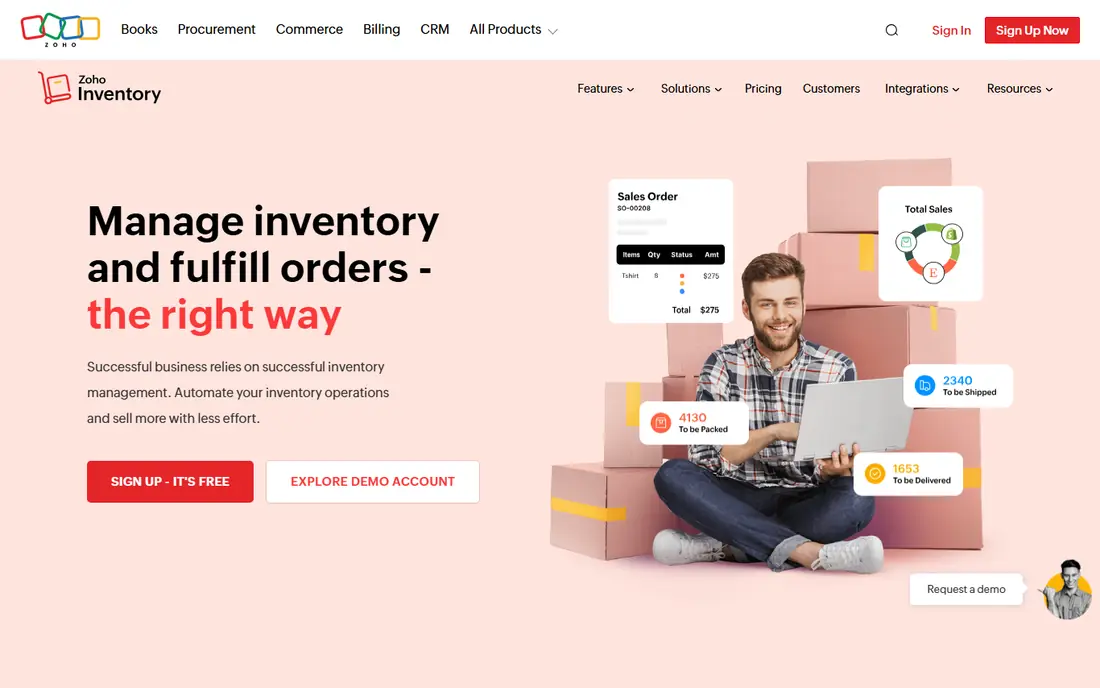
Zoho Inventory is the most affordable cloud start for small sellers. The free plan covers 50 orders per month, with paid Standard at $29 per month billed annually for 500 orders and two users. It tracks stock across warehouses, syncs orders from Shopify, Amazon, eBay and Etsy, and handles purchase orders, invoices and shipments in one system.
The limit is scale per plan. Standard through Premium support only two users, so teams larger than two people need Enterprise at $249 per month for seven users. Order limits also matter for growing sellers. For a small team inside the Zoho ecosystem, Zoho Inventory is excellent value. For larger teams, check Enterprise pricing early.
- Free plan for low volume
- Multi-channel order sync
- Batch and serial tracking on higher plans
- Native Zoho Books link
- User counts are low on mid tiers
- Order and warehouse limits rise only with higher plans
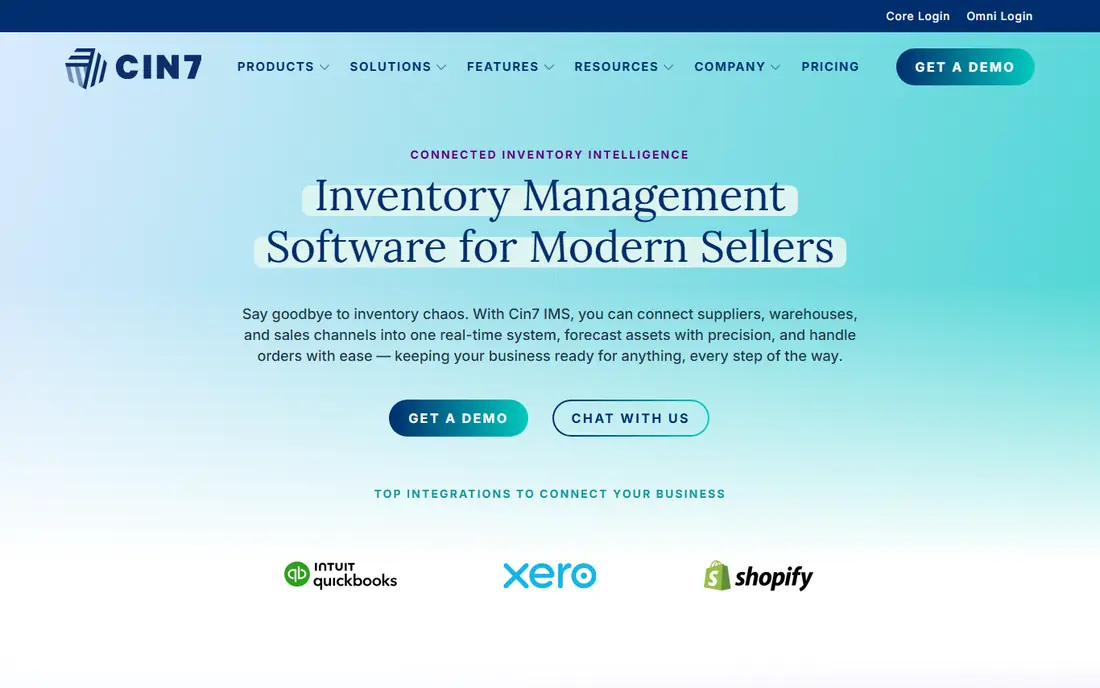
Cin7 Core suits sellers juggling many channels, warehouses and suppliers. Shopify, Amazon, a B2B portal and a warehouse can feed into one dashboard, with inventory, orders and purchasing kept in sync. Forecasting tools are available as an add-on once enough sales history exists, which helps larger sellers plan replenishment.
The cost is the main barrier. Standard starts at $349 per month and includes only two integrations, so extra connections add cost. Smaller teams can also feel overwhelmed by the depth of options. For complex multichannel sellers, Cin7 Core is a strong, scalable choice.
- Multichannel inventory and order management
- Multiple warehouses
- B2B portal and forecasting add-ons
- Higher starting price
- Only two bundled integrations on Standard
- Implementation can be deep

inFlow is cloud inventory and order management for small and midsize businesses, with a clear strength in wholesale. It handles price lists, B2B orders, reorder points and supplier purchase orders, and its Showroom portal lets each customer see only their products and prices. Barcode scanning and label printing are included on every plan.
Pricing starts at $99 per month billed annually for Lite, with Core at $299 per month and Pro at $499 per month. Core and up require a one-time $499 onboarding package, and Showroom is a $39 per month add-on on Lite and Core. For B2B wholesalers with one to five warehouses, inFlow is a practical, complete pick.
- Purchase and sales orders with reorder points
- B2B Showroom portal
- Barcode scanning
- QuickBooks and Xero links
- Onboarding package required on Core and up
- Showroom is an add-on on lower plans
Fishbowl is the classic choice for QuickBooks centred teams that need warehouse control or light manufacturing. It links inventory, barcodes and purchasing to the accounting ledger, so stock movements and costs stay tied to finance. Manufacturing editions add bills of material and production tracking for firms that assemble products.
Implementation is the catch. Fishbowl projects often need data migration, training and setup time, so it is not a same-day switch from a spreadsheet. Pricing also varies by edition. For QuickBooks firms with warehouse or manufacturing needs, Fishbowl remains a proven option.
- Deep QuickBooks integration
- Warehouse and manufacturing features
- Barcode and lot tracking on higher plans
- Implementation can take weeks
- Pricing varies by edition and user count
Sortly suits teams that need to see stock, not just count it. Items carry photos, barcodes and locations, and staff can scan and update stock from a phone in a warehouse, store room or field site. That visual approach helps teams that manage equipment, parts or retail stock across locations without a full ERP.
The trade-off is order depth. Sortly is weaker on purchase order management, demand forecasting and multichannel order sync than Cin7 or inFlow. For visual tracking and simple stock control, it is excellent. For complex order operations, a fuller inventory system will fit better.
- Visual item tracking with photos and barcodes
- Mobile scanning for field teams
- Free plan for small inventories
- Weaker purchase order and forecasting depth than Cin7 or inFlow
- Higher plans needed for team features
Katana, also known as Katana MRP, is built for makers and small manufacturers. It links raw materials, production orders and finished goods, so a team can see whether it has enough material to complete a production run before promising a delivery date. That production view is missing from most retail inventory tools.
Pure retail sellers may find Katana narrower than Cin7 or Zoho, because its strength is manufacturing workflow. Pricing should be confirmed in a demo for your user count and integrations. For small manufacturers that sell online, Katana is one of the best cloud picks.
- Production planning linked to inventory
- Material and finished goods tracking
- Integrations with Shopify and accounting tools
- Pricing by quote or plan tiers that need checking
- Less suited to pure retail multichannel sellers
Veeqo is free to use for sellers, because it charges shipping partners based on shipment volume directed through the system rather than charging sellers a subscription. It covers multichannel orders, inventory and shipping, which suits ecommerce sellers who ship daily and want one order workflow.
Buyers should read the shipping terms carefully and confirm that carrier rates and fulfilment options suit their business. Veeqo is not a full warehouse management system for large distributors, but for shipping focused online sellers, the free core platform is a strong value proposition.
- Free core platform for multichannel sellers
- Order and shipping management
- Marketplace and carrier links
- Business model relies on shipping partners, so check shipping terms
- Advanced warehouse features vary
Ordoro helps multichannel sellers manage orders, inventory and shipping from one dashboard. It syncs orders from marketplaces and online stores, creates shipping labels, and tracks stock as orders ship. Supplier and dropship support helps sellers who do not hold all stock themselves.
Ordoro is an order and shipping tool first, not a manufacturing system. Firms that assemble products will need Katana or Fishbowl instead. For online sellers who want reliable order and shipping flow with inventory tracking, Ordoro is a solid, practical choice.
- Multichannel order sync and shipping labels
- Inventory tracking across channels
- Supplier and dropship support
- Pricing varies by plan
- Deeper manufacturing features are outside its scope
How we picked these
We compared official feature pages, pricing pages and inventory guides, with a focus on cloud deployment, order and warehouse limits, channel coverage and accounting links. We favoured tools with a current cloud product in 2026 and a clear seller fit, from low cost starters to wholesale and manufacturing systems. We did not claim hands-on testing, and we used vendor pricing where published and quote based pricing where vendors do not publish a price.
How to choose cloud inventory software
Start with your order and warehouse reality, not a feature list. Count monthly orders, warehouses, users and sales channels, then check those numbers against plan limits. A tool that looks cheap at entry level can become expensive once order limits or user limits force an upgrade.
Map channels and accounting first
List every sales channel, marketplace, shipping carrier and accounting system that must connect. Confirm each integration is included in the plan you would buy, not just available as a paid add-on. A missing QuickBooks, Xero or Shopify link can add manual work every day.
Test stock accuracy in a trial
Run a trial with real products, barcodes and a few purchase and sales orders. Check low stock alerts, reorder points, batch or serial tracking if you need it, and how stock changes when an order is cancelled or returned. Stock accuracy is the core job, and a trial reveals it faster than a demo.
Plan for growth and data export
Ask how data can be exported if you leave, and what happens to order history and product data. Check whether the tool handles multiple warehouses, locations and user roles as you grow. A system that works for one warehouse may struggle with five.
FAQ
What is the best cloud inventory management software for small businesses?
Zoho Inventory is the best low cost start, with a free plan and paid plans from $29 per month billed annually. Sortly suits visual stock tracking, while inFlow suits small wholesalers that need purchase orders and B2B sales.
Is there free cloud inventory management software?
Yes. Zoho Inventory offers a free plan for 50 orders per month, Sortly offers a free plan for small inventories, and Veeqo offers a free core platform for sellers. Free plans limit orders, users or features, so check limits before relying on them.
Does cloud inventory software work with Shopify and Amazon?
Most tools on this list do, including Zoho Inventory, Cin7 Core, Veeqo and Ordoro. Confirm that your exact channels are included in the plan you buy, because some tools limit integrations on entry plans.
What is the difference between inventory software and warehouse management software?
Inventory software tracks stock levels, orders and purchasing across locations. Warehouse management software adds deeper warehouse operations such as picking, packing and bin locations. Fishbowl and Cin7 Core cover more warehouse depth than Sortly or Zoho Inventory.
How much does cloud inventory software cost?
Entry prices range from free to $29 per month for small sellers, $99 to $349 per month for midsize multichannel and wholesale tools, and quote based pricing for larger warehouse and manufacturing systems. Check order, user and integration limits, because they drive total cost.
Can I switch from spreadsheets to cloud inventory software?
Yes, and most tools offer import from spreadsheets for products, stock levels and suppliers. Clean up duplicate product names and stock counts before import, and run a trial with a small product set first to catch errors.