Best Cloud Infrastructure for Large Companies in 2026: 8 Providers Compared
Our guide to best cloud infrastructure for large companies compares compute, storage, AI, hybrid cloud, security and pricing for enterprise workloads.
- Editor's choice
 Amazon Web Services
Broadest enterprise service range
Starts atSee websiteVisit aws.amazon.comFull review - Great alternative
 Microsoft Azure
Microsoft enterprise estates
Starts atSee websiteVisit azure.microsoft.comFull review - Also consider
 Google Cloud
Data, AI and Kubernetes
Starts atSee websiteVisit cloud.google.comFull review
TL;DR:
- Amazon Web Services offers the broadest service range, Microsoft Azure suits Microsoft heavy enterprises, and Google Cloud suits data, analytics and Kubernetes workloads.
- IBM Cloud and Oracle Cloud suit regulated and database heavy enterprises, while Alibaba Cloud and Tencent Cloud suit companies with a strong Asia presence.
- Akamai Cloud suits teams that want simpler pricing and edge delivery alongside core compute, though its service range is narrower than the largest providers.
- For most large companies, the choice depends on existing software, data location, AI needs and total cost, not only on headline compute prices.
Quick comparison
| Tool | Best for | Starts at | Free plan? | |
|---|---|---|---|---|
| Amazon Web Services | Broadest enterprise service range | See website | Free trial | Visit |
| Microsoft Azure | Microsoft enterprise estates | See website | Free trial | Visit |
| Google Cloud | Data, AI and Kubernetes | See website | Free trial | Visit |
 IBM Cloud | Regulated and hybrid workloads | See website | Free trial | Visit |
 Oracle Cloud Infrastructure | Database heavy enterprises | See website | Free trial | Visit |
 Alibaba Cloud | Asia focused enterprises | See website | Free trial | Visit |
 Tencent Cloud | Asia and media workloads | See website | Free trial | Visit |
 Akamai Cloud | Simpler pricing and edge delivery | See website | No | Visit |
The best cloud infrastructure for large companies
We compared official service pages, pricing calculators, compliance listings and public reviews for cloud providers, and we kept providers with enterprise infrastructure offers in 2026.
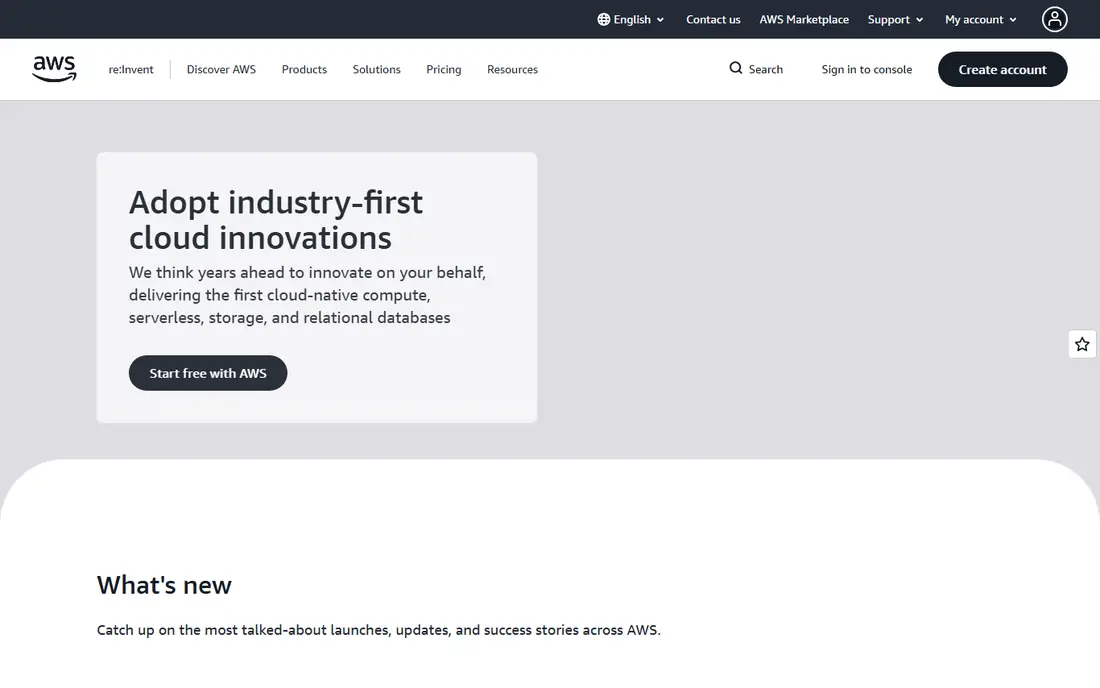
Amazon Web Services is the default enterprise cloud for breadth. It offers compute, storage, databases, networking, AI, analytics and security services in many global regions, with a large partner network for migration and managed services. For a large company with varied workloads, from web apps to data warehouses to AI training, AWS usually has a managed service for each need without a second provider.
The weakness is cost management. On demand prices, data transfer fees and the sheer number of services make bills hard to predict without tagging, budgets and regular reviews. Recent pricing comparisons put a small 2 vCPU server near 70 dollars per month on AWS, similar to Azure, while egress and managed services add cost on top. Use the AWS pricing calculator for your exact workload, and set budgets and alerts from day one.
- Largest service catalogue and global regions
- Mature enterprise support and partner network
- Strong AI, data and security services
- Pricing complexity and egress fees can surprise teams
- Cost control needs dedicated FinOps work
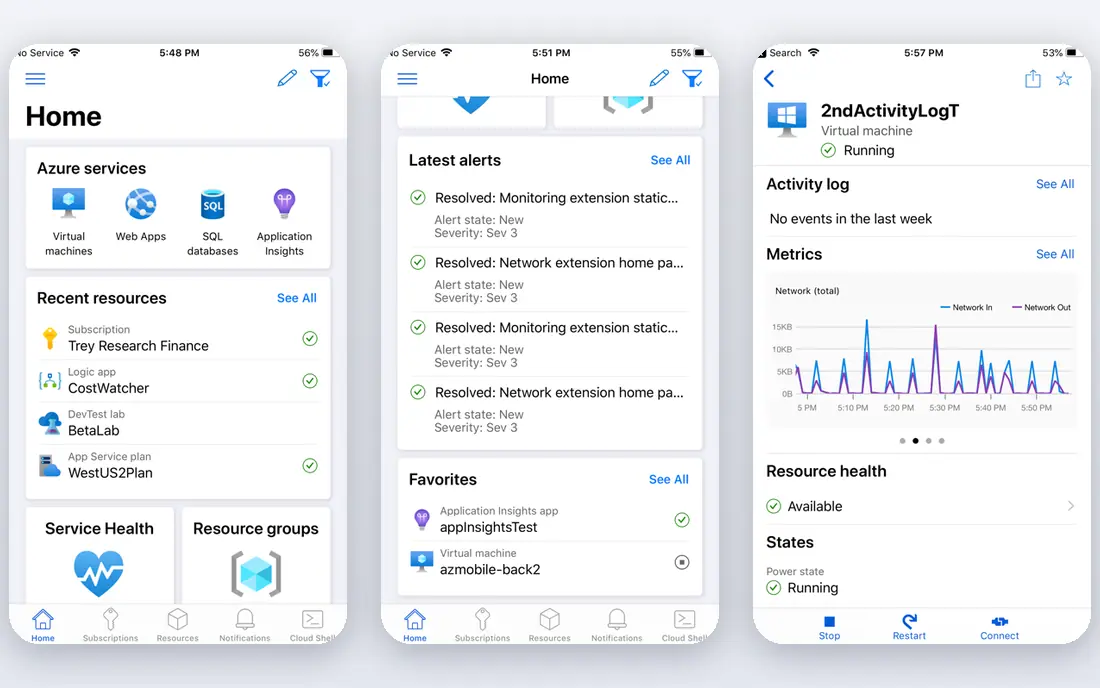
Microsoft Azure is the natural pick for a large company already running Windows Server, Active Directory, Microsoft 365 and SQL Server. Azure Hybrid Benefit can lower Windows and SQL licensing costs for customers with existing licences, and native identity integration avoids a separate identity project. Hybrid tools such as Azure Arc also help a company manage on premises servers and Azure resources together, which suits regulated firms that cannot move everything to public cloud at once.
The limit is complexity and cost in premium tiers. Azure has many service tiers and naming conventions, and a team without Azure experience can overprovision easily. Recent total cost comparisons have shown Azure cheaper than AWS for Windows heavy estates with existing licences, but more expensive if those licence benefits do not apply. Model your licence position before comparing headline compute prices.
- Native Active Directory, Microsoft 365 and SQL Server integration
- Strong hybrid cloud with Azure Arc
- Hybrid Benefit licensing savings
- Service naming and portal complexity
- Costs can rise with premium tiers and data transfer

Google Cloud suits large companies whose main workloads are data analytics, AI and containerised apps. BigQuery handles large analytical queries without managing a warehouse cluster, Vertex AI covers model training and serving, and Google Kubernetes Engine is widely regarded as a strong managed Kubernetes service. Sustained use discounts can lower compute cost automatically for workloads that run all month, without a one year commitment.
The trade off is breadth and enterprise habit. Google Cloud has fewer services than AWS and a smaller traditional enterprise sales footprint in some regions, so a company with many legacy workloads may still need AWS or Azure for some services. Check region availability for the exact services you need, since not every Google Cloud service runs in every region.
- Strong BigQuery analytics, Vertex AI and Kubernetes Engine
- Sustained use discounts on compute
- Simple per second billing in many services
- Smaller enterprise service catalogue than AWS
- Enterprise sales and support experience varies by region
IBM Cloud suits regulated banks, insurers and public sector bodies that need hybrid cloud with strong controls and a clear path from on premises systems. Its Red Hat OpenShift platform lets teams run containers on premises and in cloud with a consistent model, which helps a company that must keep some data on premises for legal reasons. IBM also offers mainframe and legacy integration that the largest clouds handle mainly through partners.
The limit is scale. IBM Cloud has fewer regions and a smaller service catalogue than AWS, Azure or Google Cloud, so a global consumer app may find gaps. For a regulated enterprise with a hybrid plan, that trade off can be acceptable, but a company that needs the widest service range should compare IBM Cloud service by service against AWS or Azure.
- Strong hybrid and regulated industry focus
- Red Hat OpenShift for portable containers
- Mainframe and legacy integration options
- Smaller public cloud market share
- Service catalogue and region count trail the largest providers
Oracle Cloud Infrastructure suits large companies that run Oracle Database, Oracle enterprise apps or other database heavy workloads. Oracle designs its cloud for database performance and offers pricing that, in recent comparisons, competes well for compute heavy enterprise workloads. Dedicated regions and sovereign cloud options also suit regulated customers that need data residency controls.
The catch is ecosystem fit. A company that does not run Oracle software may find less reason to choose Oracle Cloud over AWS or Azure, since the general service range is narrower. Database licensing and support terms should be modelled carefully, since Oracle Cloud value often depends on existing Oracle licences and support contracts.
- Strong Oracle Database and enterprise app performance
- Competitive compute pricing in recent comparisons
- Dedicated regions for regulated customers
- Best value is tied to Oracle Database and apps
- General purpose service range is narrower than AWS
Alibaba Cloud is the pick to check first for a large company with customers, suppliers or operations in China and wider Asia Pacific. Its region coverage in China, where AWS and Google Cloud face restrictions, gives it a practical advantage for local performance and compliance. It also offers ecommerce, data, AI and media services drawn from Alibaba group experience, which suits retail and consumer companies in the region.
The complexity is regulatory. Operating in China brings data, licensing and content rules that differ from Western markets, and a company should take local legal advice before choosing a region. Outside Asia, Alibaba Cloud partner depth and enterprise support are thinner than AWS or Azure, so a global company may use Alibaba Cloud for Asia and another provider elsewhere.
- Strong Asia Pacific region coverage, including China
- Ecommerce, data and AI services
- Competitive pricing in Asia markets
- China compliance and data rules add complexity
- Western enterprise support and partner depth vary by region
Tencent Cloud suits large companies with media, gaming, social or consumer workloads in Asia, where its content delivery, live streaming and gaming services reflect Tencent group experience. Its Asia region coverage and media tooling can give lower latency and better local support for a consumer app than a Western cloud with fewer Asia points of presence. Pricing in Asia markets is also competitive in recent comparisons.
The limit is general enterprise breadth. Outside media and Asia consumer workloads, Tencent Cloud has a narrower service catalogue than AWS, Azure or Google Cloud, and English documentation quality varies by service. A global enterprise should treat Tencent Cloud as a regional or workload specific choice, not as a single global standard, unless its workloads fit that profile.
- Strong Asia presence and media, gaming and social services
- Content delivery and live streaming strengths
- Competitive Asia pricing
- Enterprise breadth outside Asia is limited
- Documentation and support in English vary by service
Akamai Cloud, built on the Linode platform Akamai acquired, suits teams that want predictable compute pricing and strong edge delivery without the complexity of a hyperscale catalogue. Its pricing model is easier to forecast for standard virtual machines, storage and networking, and its global edge network helps deliver content close to users. For a large company with a defined set of web, app and media workloads, that simplicity can reduce FinOps overhead.
The trade off is range. Akamai Cloud does not match AWS, Azure or Google Cloud for managed AI, data warehousing, enterprise databases and specialised services, so a company with varied workloads will still need another provider for those needs. Use Akamai Cloud where its services fit the workload, and do not force a complex AI or data workload onto a simpler platform to save on headline compute cost.
- Simpler, predictable pricing on compute and storage
- Strong content delivery and edge network
- Linode heritage for developers
- Service catalogue is much narrower than the largest clouds
- Enterprise AI and data services are limited
How we picked these
We compared official service pages, pricing calculators, region lists and compliance information, and we kept providers with enterprise cloud infrastructure, including compute, storage and networking, in 2026. We included the three largest hyperscalers, two enterprise focused providers, two Asia focused providers and one simpler priced provider, so readers can compare models rather than only market share. Cloud pricing depends on region, instance type, commitment and data transfer, so we show See website and advise readers to price their exact workload.
How to choose for a large company
Start with existing software and data
List your current databases, identity system, enterprise apps and data residency needs. A provider that integrates with those systems will cost less to adopt than a cheaper provider that needs a rebuild.
Price the full workload, not one server
Include compute, storage, databases, networking, egress, support and licence costs in the calculator. A low compute price can be offset by high egress or licence fees.
Test hybrid and exit options
Check how you would run part of the workload on premises or move it to another cloud if needed. Portable containers, open data formats and infrastructure as code reduce lock in.
Assign FinOps ownership
Give one team responsibility for tagging, budgets, alerts and regular cost reviews. Without ownership, cloud spend grows with each new project, regardless of provider.
FAQ
Which cloud is cheapest for a large company?
There is no single cheapest cloud, since cost depends on workload, region, commitment and licences. Recent comparisons show AWS, Azure and Google Cloud within a few dollars per month for a small server, while licence benefits and egress can change the total by far more.
Should a large company use one cloud or several?
Many large companies use several clouds, with one primary provider and a second provider for specific workloads such as analytics, AI or Asia delivery. Multi cloud adds management cost, so use it for a clear benefit, not only to avoid lock in in theory.
What is hybrid cloud?
Hybrid cloud combines public cloud with on premises or private cloud resources, managed together. It suits regulated firms and companies with legacy systems that cannot move fully to public cloud at once.
How do egress fees work?
Egress fees charge for data leaving a cloud provider network to the internet or to another provider. They are often overlooked in a headline compute comparison, but they matter for media, backup and multi cloud workloads that move large data volumes.
Do I need a cloud commitment to get a discount?
No, though commitments usually lower unit prices. Google Cloud sustained use discounts apply automatically for full month use, while AWS and Azure offer larger discounts for one year or three year reserved and savings plan commitments.
How important is region choice?
Region choice affects latency, data residency, compliance and price. Choose regions close to your users and compliant with local data rules, and check that every service you need is available in that region.