Best Card Value Scanner App in 2026: 8 Apps Compared
We compared the best card value scanner app options for sports and trading cards, so collectors can scan, price, and track a collection with less guesswork.
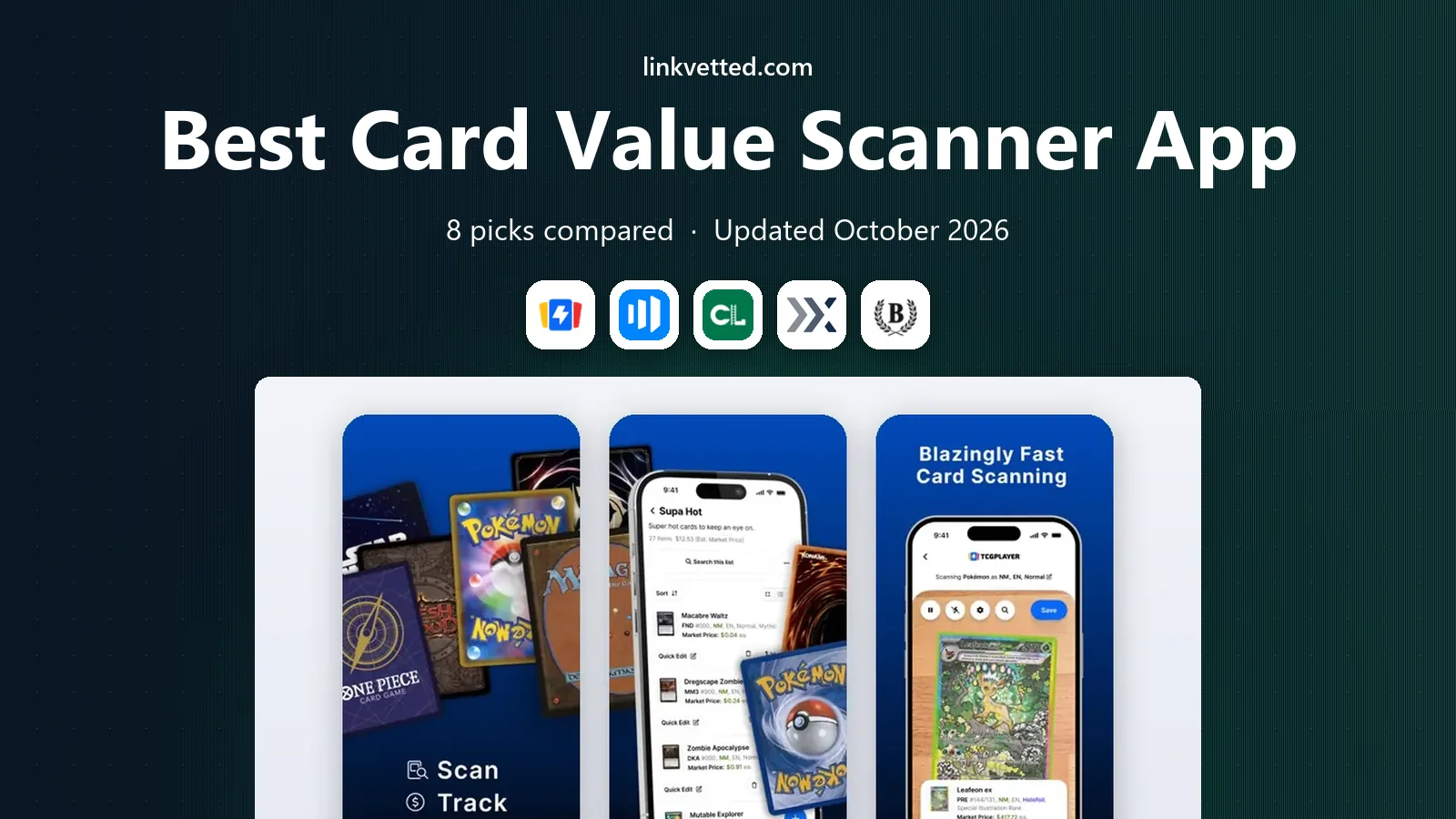
- Editor's choice
 TCGplayer App
Trading card game values
Starts atFreeVisit tcgplayer.comFull review - Great alternative
 CollX
Fast sports card scanning
Starts atFreeVisit collx.appFull review - Also consider
 Card Ladder
Collection tracking and values
Starts atFreeVisit cardladder.comFull review
TL;DR:
- A card scanner should identify the card, pull recent sales, and track your collection, not only show one list price.
- TCGplayer suits trading card games, while CollX, Card Ladder, and Beckett suit sports cards, so match the app to your cards first.
- Prices move with condition, grading, and recent sales, so treat any scan value as an estimate until you check comparable sales.
- Scan in good light, capture front and back, and store graded cards safely, since condition drives value more than any app.
Quick comparison
| Tool | Best for | Starts at | Free plan? | |
|---|---|---|---|---|
| TCGplayer App | Trading card game values | Free | Yes | Visit |
| CollX | Fast sports card scanning | Free | Yes | Visit |
| Card Ladder | Collection tracking and values | Free | Yes | Visit |
 Ludex | Sports card scanning and pricing | Free | Yes | Visit |
 Beckett | Graded and vintage card values | Free | Yes | Visit |
 PriceCharting | Video game and trading card prices | Free | Yes | Visit |
 Sports Cards Pro | Sports card price checks | Free | Yes | Visit |
 Alt | High-end card tracking | Free | Yes | Visit |
The best card value scanner app
Card values change fast, and a scan is only useful when it matches the right card, set, and condition. The apps below help collectors scan, price, and organize with less manual searching.

The TCGplayer app is the first pick for trading card game collectors, because its prices come from a large marketplace where those cards actually sell. Scanning or searching a card shows market prices, set details, and seller listings, which helps you judge whether a scan value is realistic. Collection tools let you track what you own and what it might be worth as a group.
Sports collectors should look elsewhere, since TCGplayer focuses on trading card games. Prices also vary by condition, edition, and seller, so a near-mint card and a played card will not share a value. For Magic, Pokemon, Yu-Gi-Oh, and similar games, TCGplayer is the most useful scanner and price guide in one app.
- Deep Magic, Pokemon, and Yu-Gi-Oh data
- Market prices from real marketplace sales
- Collection and deck tools
- Sports card coverage is limited
- Prices vary by condition and seller, so check listings
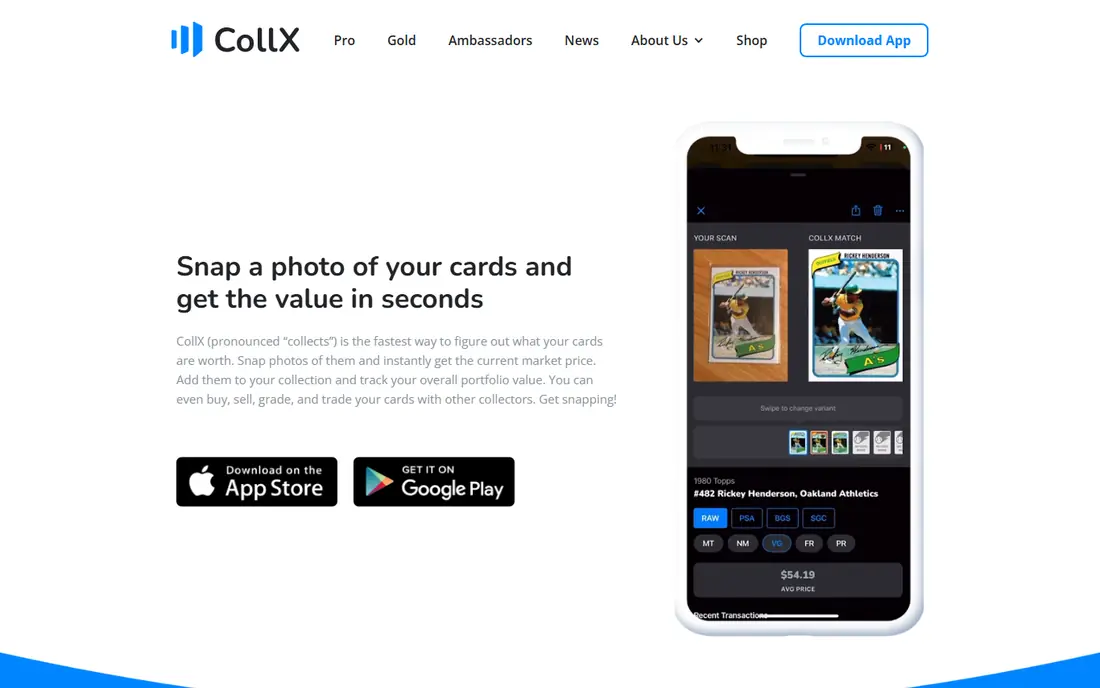
CollX made its name with fast sports card scanning. Point your camera at a card, and CollX tries to match it to a database entry with a value estimate and recent sales context. Collection tracking then totals your cards, which helps collectors see which cards drive most of the value and which ones are worth grading.
Scan accuracy depends on light, glare, and card type, so scan in bright, even light and check the match before trusting the value. Premium features, such as deeper price history, need a paid plan. For sports collectors who want quick scans at a show or shop, CollX is one of the easiest apps to start with.
- Fast camera scanning for sports cards
- Collection value tracking
- Trade and marketplace features
- Scan accuracy varies with light and card type
- Premium features need a subscription
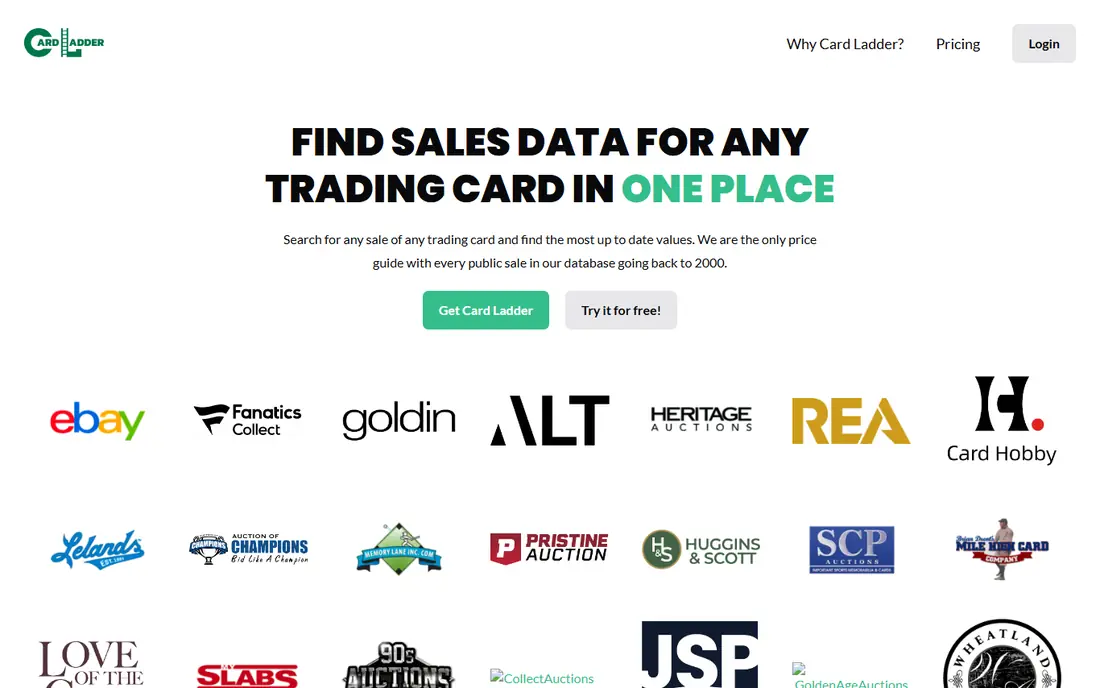
Card Ladder suits collectors who care about tracking over time, not only a single scan. It lets you build a collection, follow price history, and see charts that show how a card value moved. That history helps when you decide whether to sell now, hold, or grade a card, since a single day price can mislead.
The interface takes a little learning, and deeper tracking features sit behind a paid plan. New users should start with a small collection to learn the tools before importing hundreds of cards. For serious collectors who track value like a portfolio, Card Ladder offers depth that quick scanners lack.
- Strong collection tracking and price history
- Sports and trading card coverage
- Sales data charts
- Some advanced tracking needs a paid plan
- Interface has a learning curve for new users
Ludex is another sports-focused scanner that pairs camera matching with price estimates and collection tracking. Its trade features help collectors swap cards with other users, which suits hobbyists who collect sets rather than only investing. The app is easy to open at a card show and scan a handful of finds before buying.
Value estimates are only as good as recent sales data, so a rare or very new card may show a wide range or a thin history. Always check comparable sales and condition before paying a premium. For sports collectors who want scanning plus trading in one app, Ludex is a solid alternative to CollX.
- Camera scanning for sports cards
- Price estimates and collection tools
- Trade features
- Value estimates can vary by source
- Newer cards may have thinner sales data
Beckett has priced cards for decades, first in print guides and now through its site, app, and grading service. That history helps with vintage cards and graded cards, where condition and grade drive value more than a quick scan alone. Beckett price guides and grading population data add context that marketplace apps sometimes lack.
Full price guide access often needs a paid subscription, while the free app covers basics and news. The app experience also varies across Beckett products, so check which Beckett tool fits your cards. For vintage collectors and graded card owners, Beckett remains a trusted reference point.
- Long history in card pricing
- Grading services and price guides
- Vintage and modern coverage
- Full price guide access needs a subscription
- App experience varies by product line
PriceCharting is known for video game prices, but it also tracks trading card prices with historical charts and collection tools. That breadth helps collectors who own both games and cards, or who want to check a card value against a longer price history. Charts show trends rather than a single snapshot, which helps avoid buying at a short-term peak.
Scanning is less central here than in CollX or Ludex, so users may search by name and set more often. Coverage also varies by game and set, so check your exact cards before relying on it. For price history and cross-hobby tracking, PriceCharting is a useful second reference.
- Broad price data for cards and games
- Historical price charts
- Collection tracking tools
- Scanning is less central than on CollX
- Card coverage varies by game and set
Sports Cards Pro keeps the job simple: look up a sports card and see price data drawn from sales, including eBay context. That simplicity suits collectors who do not want a full portfolio tool, just a fast check before buying or selling. The free core tools cover the main use, with no need to learn a complex system first.
The trade is depth. Collection tracking, grading tools, and advanced charts are thinner than in Card Ladder or Beckett, and app polish varies. Use Sports Cards Pro as a quick price check, then confirm a high-value card with a second source. For fast, free sports card checks, it does the job well.
- Simple sports card price lookup
- EBay sales data for context
- Free core tools
- Smaller feature set than Card Ladder
- App polish varies
Alt focuses on higher-value cards and alternative assets, with portfolio tracking, marketplace features, and vault storage options for graded cards. That focus helps collectors with valuable cards who want secure storage, insurance context, and a clear portfolio view in one place. Sales and market data help owners judge timing for high-end cards.
Casual collectors with low-value cards may find Alt more than they need, and some services carry fees or eligibility rules. Check those terms before moving a card into a vault or marketplace. For high-end sports and trading card collectors, Alt offers a premium tracking and storage path that quick scanners do not.
- Focus on high-value cards and alternative assets
- Portfolio tracking
- Marketplace and vault options
- High-end focus suits fewer casual collectors
- Some services need fees or eligibility checks
How we picked these
We compared official app pages, pricing pages, and app store listings for card scanner and price apps that are live in October 2026. We favored apps that identify cards by scan or search, show sales-based values, and offer collection tracking, and we mixed trading card game, sports, and high-end options. Where a full price guide needs a subscription, we say so, since free scans alone can mislead on high-value cards.
We also stressed condition and comparables. No app can grade a card from a photo with full accuracy, so our guide tells readers to check condition, grading, and recent sales before buying, selling, or insuring a card.
How to get an accurate card value
Start with the exact card, not only the player or character. Check the set, year, card number, parallel or variant, and condition, since a small difference can change value a lot. Scan in bright, even light, capture front and back, and confirm the app matched the right variant before you trust the price.
Next, compare sales, not only list prices. Look at recent completed sales for the same card in similar condition, and note whether the card is graded, raw, or altered. A graded card with a high grade usually commands more than a raw card, while a damaged card falls below both. For a card worth a large sum, consider professional grading and a second price source before selling.
Storing and protecting your collection
Store valuable cards in sleeves, top loaders, or graded slabs, away from heat, moisture, and sunlight. Keep a digital inventory with photos and purchase records, so insurance or a sale is easier later. For very high-value cards, ask about secure storage, insurance, and authentication options from a trusted service, and keep records separate from the cards themselves.
FAQ
What is the best card value scanner app?
TCGplayer suits trading card games, while CollX and Ludex suit fast sports card scanning, and Card Ladder suits collection tracking. Pick by card type first, since no single app covers every sport and game equally well.
How accurate are card scanner values?
Scanner values are estimates based on recent sales and database matches, and accuracy varies with condition, variant, and sales volume. Always confirm the exact card match, check comparable sales, and treat a scan as a starting point, not a final appraisal.
Do I need to grade a card to know its value?
No, you can estimate a raw card value from sales of similar raw cards, but grading gives a trusted condition score that buyers pay more for on high-value cards. For low-value cards, grading fees may exceed any value gain, so grade selectively.
Can I sell cards directly from a scanner app?
Some apps, such as TCGplayer, CollX, Ludex, and Alt, offer marketplace or trade features, while others focus on pricing and tracking only. Check fees, payout timing, and seller rules in each app before listing a card for sale.
What affects a trading card value most?
Condition, rarity, grading, player or character demand, set, and recent sales affect value most. A mint, rare, graded card from a popular set usually holds more value than a played common card, even when the art looks similar.