The 6 Best Build Automation Tools for Monorepos in 2026, Ranked
Weighing the best build automation tools for monorepos? We lined up 6 products by cost, free access and fit. Caveats come with every verdict. Jump to the table.
- Editor's choiceTurborepo
Light build system for JavaScript monorepos
Starts atPricing on requestVisit turborepo.comFull review - Great alternativeGradle
Java, Android, and Kotlin builds
Starts atPricing on requestVisit gradle.orgFull review - Also considerBazel
Large multi-language, multi-platform builds
Starts atPricing on requestVisit bazel.buildFull review
Direct answer
This list puts Turborepo first for light build system for JavaScript monorepos. If your case is different, Gradle suits Java, Android, and Kotlin builds and Bazel suits large multi-language, multi-platform builds. The other 3 tools in the list cover narrower or pricier cases. None of these vendors publish plan prices, so pricing is on request for every option.
TL;DR:
- The list opens with Turborepo, aimed at light build system for JavaScript monorepos.
- Every tool from Turborepo to Pants works by quote, with no list price shown.
- Check the limits for Gradle before you commit: less focused on non-JVM languages.
- None of the 6 tools, from Turborepo to Pants, has a free plan, so budget for a subscription or use a trial.
Last checked November 2026. Pricing on request: vendors did not publish plan prices when this guide was last checked (November 2026), so ask each vendor for a written quote.
Quick comparison
| Tool | Best for | Starts at | Free plan? | |
|---|---|---|---|---|
| Turborepo | Light build system for JavaScript monorepos | Pricing on request | Not stated | Visit |
| Gradle | Java, Android, and Kotlin builds | Pricing on request | Not stated | Visit |
| Bazel | Large multi-language, multi-platform builds | Pricing on request | Not stated | Visit |
| Nx | Full-featured monorepo product with AI support | Pricing on request | Not stated | Visit |
| Moon | Developer productivity and codebase management | Pricing on request | Not stated | Visit |
| Pants | Multi-language monorepos with fine-grained control | Pricing on request | Not stated | Visit |
The 6 tools in detail
Short on time? The summary and table above give the quick view of 6 build automation tools for monorepos, and the profiles that follow give the detail behind each entry.
Turborepo
Best for: Light build system for JavaScript monorepos
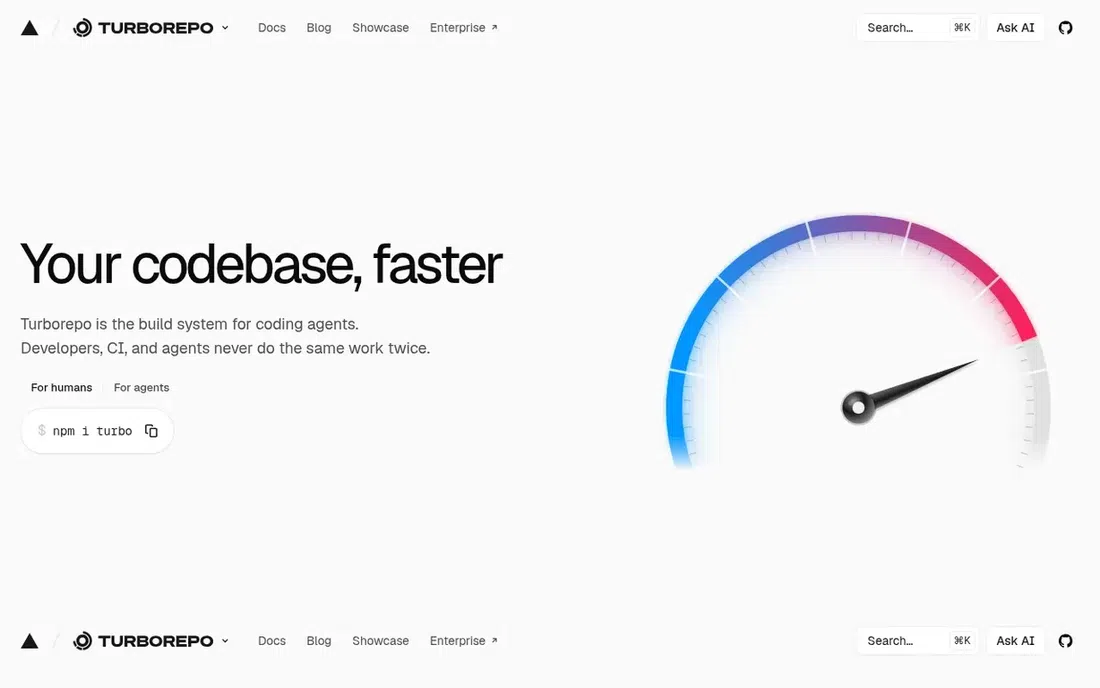
Turborepo targets light build system for JavaScript monorepos. Turborepo is described as the build system for coding agents, with a focus on speed and simplicity. If your monorepo spans Java, Go, or C++, Bazel or Gradle may be more appropriate.
Beyond that, the tool suits teams that want a light build system without a full product, and it integrates well with existing package managers. From a buyer's view, Turborepo is less suited to multi-language repositories or teams that require deep system features like code generation and module boundaries. No starting price is listed for Turborepo here; confirm pricing on the vendor site. Free access: Not stated.
The main drawbacks: Fewer integrated platform features than Nx.
- Focused build system for coding agents
- Quick task orchestration
- Primarily oriented toward JavaScript and TypeScript
Gradle
Best for: Java, Android, and Kotlin builds
Think of Gradle for Java, Android, and Kotlin builds. Gradle is the open source build system for Java, Android, and Kotlin developers, presented by Develocity. It is widely used in the JVM ecosystem for its adaptability and performance, with features like incremental builds and build caching.
Its plugin ecosystem and integration with IDEs make it a typical choice for enterprise Java development. Also, Gradle is less suited to monorepos that mix plenty of non-JVM languages, where Bazel or Pants might offer broader support. This comparison lists no price for Gradle; ask the vendor. As for free access: Not stated.
The main drawbacks: Less concentrated on non-JVM languages.
- Backed by Develocity
- Open source build system
- Configuration can become complicated
Bazel
Best for: Large multi-language, multi-platform builds
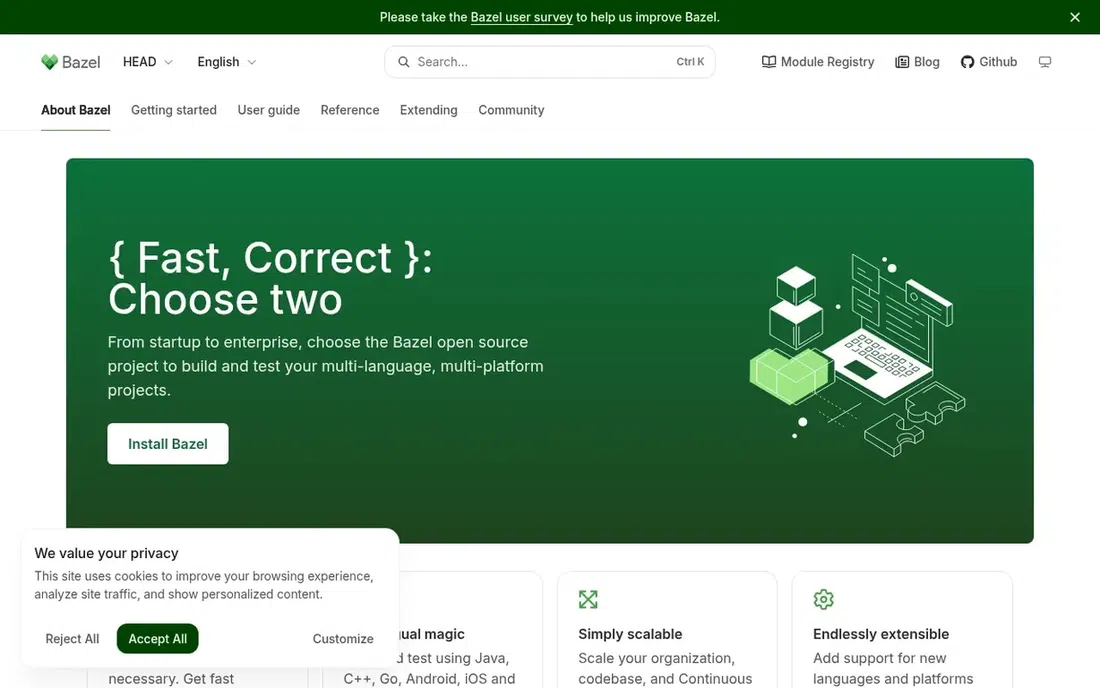
Where Bazel fits: large multi-language, multi-platform builds. Bazel is an open source build system that promises fast, correct builds for multi-language, multi-platform projects. Its homepage notes it is used from startup to enterprise, indicating scalability.
From a buyer's view, if you need a more focused build system for Java or Kotlin, Gradle might be a better fit. Choose Bazel when you need solid, scalable builds across numerous languages and systems. This comparison lists no price for Bazel; ask the vendor. Free options: Not stated.
Where it is weaker: Steep ramp-up time.
- Supports several languages and products
- Scales from startup to enterprise
- Needs investment in setup and maintenance
Nx
Best for: Full-featured monorepo product with AI support
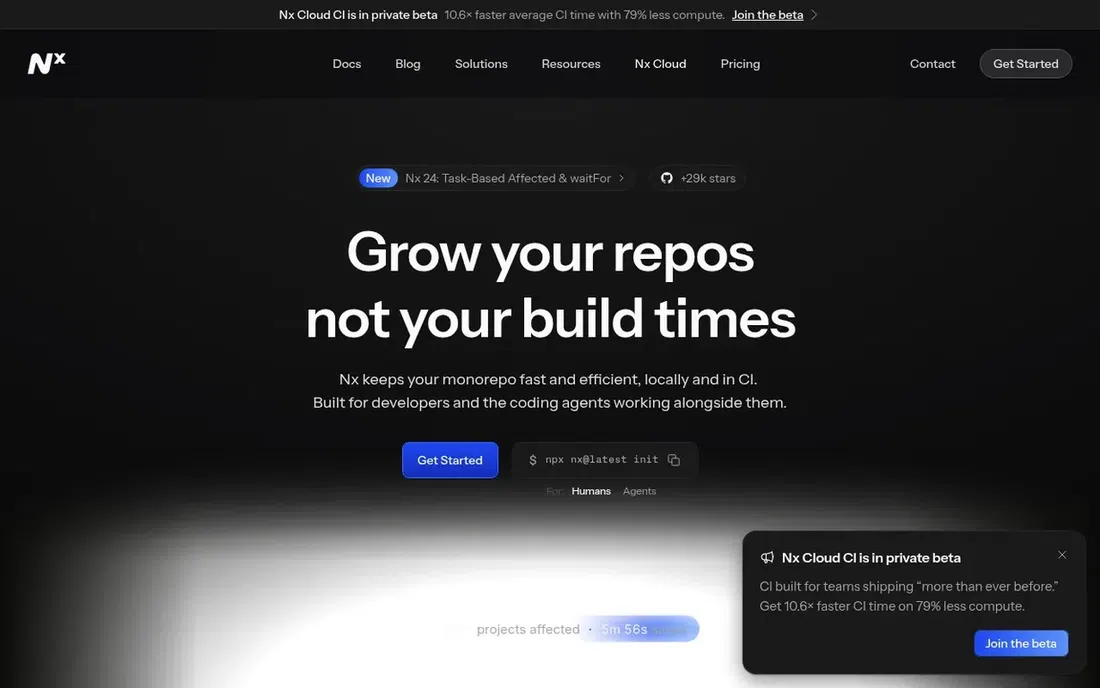
Choose Nx for full-featured monorepo product with AI support. Nx is a decent choice when you need a full system instead of just a build runner.
For very large multi-language codebases with strict correctness needs, Bazel could be a better alternative. Consider Nx when you want a wide platform with built-in tooling. Check the vendor site for Nx pricing; none is listed in this comparison. Free options: Not stated.
Trade-offs to know: Opinionated structure may not suit all teams.
- Amplifies developers and AI agents
- Grows repos without expanding build times
- Can be complicated for small repos
Moon
Best for: Developer productivity and codebase management
Moon is a good fit for developer productivity and codebase management. Teams with highly specific needs might find it less adaptable than Bazel or Gradle. Choose Moon when you prioritize developer productivity and want a product that handles build and deployment workflows in a monorepo.
Also, if you need broad multi-language support, Pants or Bazel could be better. On top of that, Moon is less established than some competitors, so its ecosystem and community may be smaller. Check the vendor site for Moon pricing; none is listed in this comparison. Trial and free access: Not stated.
Where it falls short: May need adapting to its conventions.
- Focus on developer productivity
- Aims to save developer time
- Less established than some competitors
Pants
Best for: Multi-language monorepos with fine-grained control
Pants was built for multi-language monorepos with fine-grained control. It emphasizes fine-grained dependency tracking and incremental builds, aiming to accelerate development workflows. Pants has a smaller community and ecosystem compared with Bazel or Gradle, which can mean fewer external resources.
Its configuration model needs some learning, and it may not be a strong match for very small projects. Pants supports languages for example Python, Java, Scala, and Go, making it a fit for polyglot repositories. From a buyer's view, if your monorepo is primarily JavaScript, Turborepo or Nx could be more straightforward. No starting price is listed for Pants here; confirm pricing on the vendor site. Free access: Not stated.
Limits to weigh: Needs learning its configuration model.
- Made for large codebases
- Supports several languages
- Smaller community than some alternatives
Selection criteria
Selection started from tools commonly considered for build automation tools for monorepos, then narrowed to 6 that have clear pricing information or a clear quote process. Figures are shown as the vendors publish them. Billing terms, seat minimums and add-ons can change the real cost. The ranking is editorial: typical fit first, then clear pricing, then free access. If your needs are unusual, read the profiles rather than relying on position.
A buyer's checklist
- Ask each vendor, from Turborepo to Pants, for a written quote; none of them publishes a starting price.
- Before choosing Turborepo, weigh its main limit: primarily oriented toward JavaScript and TypeScript.
- Before rolling out Nx, verify the integrations your workflow depends on.
- Work out what Moon costs with your real seat count, add-ons and usage, not just the entry price.
- Look at which plan of Turborepo unlocks the features you need; entry tiers are often cut down.
FAQ
Do these tools publish their prices?
No. None of the tools, from Turborepo to Pants, shows a fixed starting price here, so budget time for quotes.
How are the tools for build automation tools for monorepos ordered?
Turborepo sits first and Pants last because the order follows typical fit for build automation tools for monorepos, then price clarity and free access. It is a judgement call, so read each profile for fit and limits.
How does Gradle compare to Bazel for monorepos?
Gradle is concentrated on Java, Android, and Kotlin builds, whereas Bazel supports several languages and products with a solid emphasis on hermetic builds. Gradle may be more familiar to JVM developers, whereas Bazel supplies broader language support but needs more setup.
Is Turborepo the right pick for everyone comparing build automation tools for monorepos?
No single tool suits every team. Turborepo comes first because it fits lightweight build system for JavaScript monorepos, while Gradle suits Java, Android, and Kotlin builds and Bazel suits large multi-language, multi-platform builds. Match the tool to your own size, budget and workflow before deciding.
Can Bazel be used for small monorepos?
Bazel can be used for small monorepos, but its complexity and ramp-up time may outweigh the benefits for smaller teams. It is aimed at large-scale, multi-language projects where correctness and speed are critical.
Does any tool for build automation tools for monorepos here have a free plan?
No tool in this list, Turborepo and Pants included, has a permanent free plan. Trials and quotes are the usual route, so plan a short evaluation period.
Sources
- https://turborepo.com
- https://gradle.org
- https://bazel.build
- https://nx.dev
- https://moonrepo.dev
- https://www.pantsbuild.org