Best Alternatives to Make for Workflow Automation in 2026: 8 Tools Compared
best alternatives to make for workflow automation compared: eight tools for no-code, code-first, and enterprise automation, with pricing and limits today.

- Editor's choice
 Zapier
Teams that want the widest app library
Starts at$19.99 per monthVisit zapier.comFull review - Great alternative
 n8n
Technical teams and self-hosting fans
Starts atFreeVisit n8n.ioFull review - Also consider
 Workato
Enterprises that need governance and scale
Starts atSee websiteVisit workato.comFull review
TL;DR:
- The cheapest starting price on this list is $19.99 per month, but the best value depends on how much you send, seat, or use each month.
- Zapier leads for teams that want the widest app library, while n8n suits buyers who want a simpler setup.
- Check the full cost before you sign, including add-ons, per-seat charges, and any annual billing terms on the vendor pricing page.
- A free plan or trial is worth using with real data, since setup effort and daily ease matter as much as the headline price.
Quick comparison
| Tool | Best for | Starts at | Free plan? | |
|---|---|---|---|---|
| Zapier | Teams that want the widest app library | $19.99 per month | Yes | Visit |
| n8n | Technical teams and self-hosting fans | Free | Yes | Visit |
| Workato | Enterprises that need governance and scale | See website | No | Visit |
 IFTTT | Personal and smart-home automations | $2.99 per month | Yes | Visit |
 Activepieces | Business teams that want open-source automation | $20 per month | Yes | Visit |
 Integrately | Beginners who want one-click automations | $19.99 per month | Yes | Visit |
 Microsoft Power Automate | Teams that live in Microsoft 365 | $15 per user per month | Free trial | Visit |
 Pabbly Connect | High task volume on a small budget | $14 per month | Free trial | Visit |
The best alternatives to Make for workflow automation
We compared official pricing pages, feature pages, and public documentation for each tool below, and we focused on what a buyer actually gets at the entry price. Use the list to shortlist two or three options, then test them with your own data before you commit.
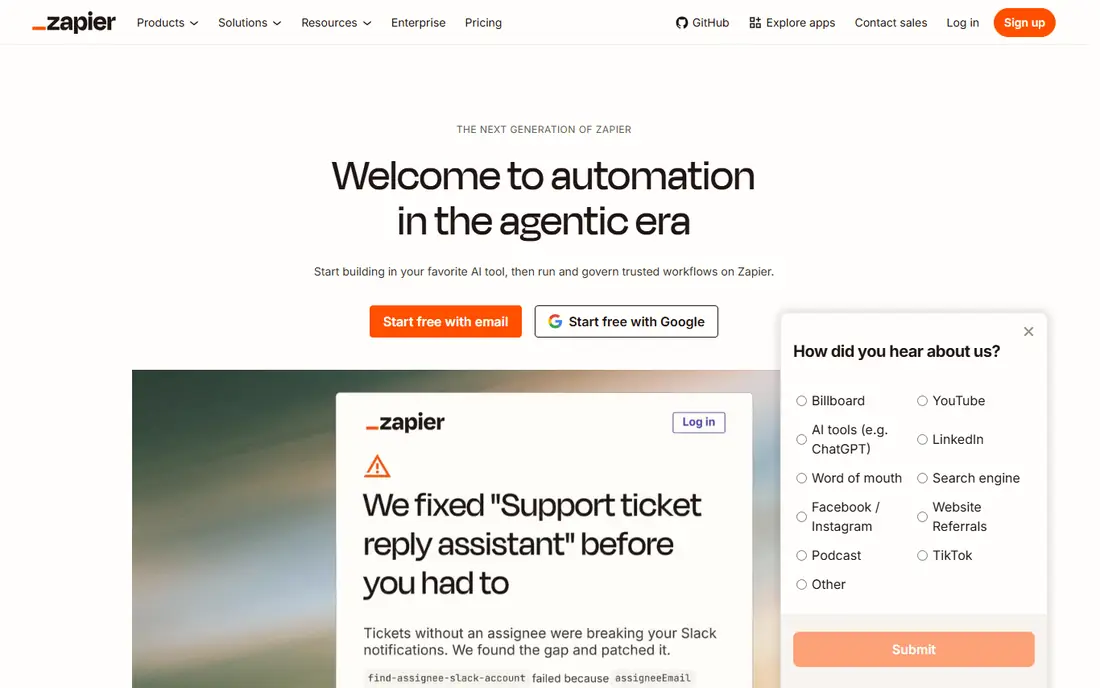
Zapier remains the easiest automation tool to start with, since most popular apps already have a ready connection and a template. If you need Zapier is worth a shortlist spot when teams that want the widest app library is the main job, and the entry price makes it easy to trial without a large contract.
It costs more at volume than Make, but teams that value breadth and speed of setup often accept the premium. The honest catch is tied to the limits above, so buyers should test the exact workflow they run most often, not just the demo path, before moving a team across.
Our pick logic for Zapier is simple: if the strengths above match your daily work and the limits do not block your main workflow, it earns a place on a shortlist of two or three tools for a trial.
- Largest app library
- Easy setup
- Many templates
- Free plan caps at 100 tasks
- Task-based pricing can rise fast

n8n gives technical teams a visual builder with code nodes, so a workflow can stay simple or grow into a custom integration. Our view is that n8n is worth a shortlist spot when technical teams and self-hosting fans is the main job, and the entry price makes it easy to trial without a large contract.
Self-hosting keeps data in your own setup, while the cloud plan suits teams that want managed hosting without server work. The honest catch is tied to the limits above, so buyers should test the exact workflow they run most often, not just the demo path, before moving a team across.
Our pick logic for n8n is simple: if the strengths above match your daily work and the limits do not block your main workflow, it earns a place on a shortlist of two or three tools for a trial.
- Self-hosted Community edition
- Visual plus code
- AI workflow options
- Cloud pricing is in euros
- Self-hosting needs server care

Workato serves large firms that need automation with approvals, audit trails, and IT control across many systems. In practice, Workato is worth a shortlist spot when enterprises that need governance and scale is the main job, and the entry price makes it easy to trial without a large contract.
Small teams should skip it, since the contract and setup reflect enterprise needs rather than a quick personal workflow. The honest catch is tied to the limits above, so buyers should test the exact workflow they run most often, not just the demo path, before moving a team across.
Our pick logic for Workato is simple: if the strengths above match your daily work and the limits do not block your main workflow, it earns a place on a shortlist of two or three tools for a trial.
- Enterprise governance
- Recipes for business apps
- Strong security controls
- Quote-only pricing
- Overkill for small teams
IFTTT stays the simplest tool on this list, with one trigger and one action per applet and broad smart-home support. For buyers who IFTTT is worth a shortlist spot when personal and smart-home automations is the main job, and the entry price makes it easy to trial without a large contract.
It suits personal routines and home devices, while business teams needing branches and data transforms should pick a deeper tool. The honest catch is tied to the limits above, so buyers should test the exact workflow they run most often, not just the demo path, before moving a team across.
Our pick logic for IFTTT is simple: if the strengths above match your daily work and the limits do not block your main workflow, it earns a place on a shortlist of two or three tools for a trial.
- Very low entry price
- Simple trigger-action applets
- Smart-home support
- Free plan caps at two applets
- Business depth is limited
Activepieces offers business automation with an open-source core and flat pricing, so a run counts once no matter how many steps it holds. When we compared Activepieces is worth a shortlist spot when business teams that want open-source automation is the main job, and the entry price makes it easy to trial without a large contract.
It fits teams that want a modern builder without task-count surprises, though niche app coverage is thinner than the biggest rivals. The honest catch is tied to the limits above, so buyers should test the exact workflow they run most often, not just the demo path, before moving a team across.
Our pick logic for Activepieces is simple: if the strengths above match your daily work and the limits do not block your main workflow, it earns a place on a shortlist of two or three tools for a trial.
- Open-source core
- Flat monthly pricing
- Many business app pieces
- Smaller app library than Zapier
- AI steps add credits
Integrately focuses on ready automations that can be switched on in a click, which helps beginners who do not want to build from scratch. For teams that Integrately is worth a shortlist spot when beginners who want one-click automations is the main job, and the entry price makes it easy to trial without a large contract.
It works well for common app pairs, while teams needing deep branching should look at Zapier, n8n, or Activepieces. The honest catch is tied to the limits above, so buyers should test the exact workflow they run most often, not just the demo path, before moving a team across.
Our pick logic for Integrately is simple: if the strengths above match your daily work and the limits do not block your main workflow, it earns a place on a shortlist of two or three tools for a trial.
- One-click ready automations
- Many templates
- Simple pricing
- Free plan caps at 100 tasks
- Custom logic is limited
Microsoft Power Automate fits firms already on Microsoft 365, since flows can start in Teams, Outlook, SharePoint, and Excel. If you need Microsoft Power Automate is worth a shortlist spot when teams that live in microsoft 365 is the main job, and the entry price makes it easy to trial without a large contract.
It can also run desktop automations, which helps teams with older apps that lack an API. The honest catch is tied to the limits above, so buyers should test the exact workflow they run most often, not just the demo path, before moving a team across.
Our pick logic for Microsoft Power Automate is simple: if the strengths above match your daily work and the limits do not block your main workflow, it earns a place on a shortlist of two or three tools for a trial.
- Deep Microsoft 365 and Teams links
- Desktop automation
- Included in some plans
- Best value needs Microsoft licences
- Non-Microsoft app depth varies
Pabbly Connect appeals to small firms with steady, repetitive workflows, since the entry price buys a useful task allowance. Our view is that Pabbly Connect is worth a shortlist spot when high task volume on a small budget is the main job, and the entry price makes it easy to trial without a large contract.
It lacks the polish of the biggest builders, but the price makes it worth a trial for budget-conscious teams. The honest catch is tied to the limits above, so buyers should test the exact workflow they run most often, not just the demo path, before moving a team across.
Our pick logic for Pabbly Connect is simple: if the strengths above match your daily work and the limits do not block your main workflow, it earns a place on a shortlist of two or three tools for a trial.
- Low entry price
- Many app integrations
- Lifetime offers have appeared
- Interface feels less polished
- Support response times vary
How we picked these
We started with the topic in the brief and listed only products that exist today and truly fit that topic, using vendor pricing pages, feature pages, app store listings, and public documentation as the main sources. We left out tools that are retired, that need a workaround to fit the topic, or that could not be verified on an official homepage.
We then compared entry prices, free plans, and the features that matter at the starting tier, not just on the top tier. Where a vendor does not publish a price, we say so with See website rather than guessing a number, and we note when a low headline price rises with seats, usage, or add-ons.
How to pick an automation tool that matches your skill level
Start with the job you run every week, not the longest feature list. Write down the three tasks that must work on day one, then check those tasks on the entry plan, since many tools gate useful features behind higher tiers. A tool that covers your core job well will beat a broader tool that makes that job harder.
Check the full price, not just the headline
Add seats, usage, and add-ons to the entry price, and ask whether annual billing is required for the quoted rate. Some tools look cheap until a second seat, a text message bundle, or an AI add-on is added, so a written quote for your team size is worth the extra email.
Trial with real work
Run a trial with real records, real messages, or real files, and invite the people who will use the tool daily. A trial that only covers the demo path can hide slow setup, awkward permissions, or missing exports, and those issues tend to appear in the first busy week after launch.
Plan the move
Before you switch, list what must move across, including contacts, history, templates, and integrations, and check export options on both sides. A clean move with a short overlap period costs less time than a rushed cutover, and it gives staff a chance to learn the new tool while the old one still runs.
FAQ
What is the best best alternatives to make for workflow automation option for most people?
There is no single winner, since the best pick depends on team size, budget, and the job you run most often. Start with the top three tools on this list, compare their entry plans, and trial the one whose strengths match your daily work.
Are there free best alternatives to make for workflow automation options?
Yes, several tools on this list offer a free plan or a free trial, though limits on seats, sends, or features apply. Use the free tier to test the core workflow, and check the paid price for the team size you will reach in a year.
How much should I expect to pay?
Entry prices vary widely, from free plans to quote-based enterprise pricing, and the total depends on seats and usage. Price the plan you will need in twelve months, not just the first month, and include add-ons in that total.
Can I switch later if I pick the wrong tool?
In most cases yes, but the ease of switching depends on export options and integrations. Check how to export your data before you sign, and keep a copy of templates and records outside the tool during the trial.
Do I need a paid plan to start?
Not always, since a free plan or trial covers many small teams at the start. Paid plans become worth it when you need more seats, higher limits, automation, or support, so upgrade when a limit starts to slow real work.