5 Best B2B Platform for Huge Databases for 2026, Vetted and Compared
Weighing the best B2B platform for huge databases? We lined up 5 products by cost, free access and fit. Each profile ends with a plain caveat. No filler.
- Editor's choice
 Google BigQuery
Cloud-native analytics at scale
Starts atPricing on requestVisit cloud.google.comFull review - Great alternative
 MongoDB
Adaptable document data at scale
Starts atPricing on requestVisit mongodb.comFull review - Also consider
 Amazon Redshift
Managed cloud data warehousing on AWS
Starts atPricing on requestVisit aws.amazon.comFull review
Direct answer
For cloud-native analytics at scale, Google BigQuery is where this list starts. Look at MongoDB for adaptable document data at scale, and at Amazon Redshift for managed cloud data warehousing on AWS. Free plan facts and limits for all 5 tools follow. None of these vendors publish plan prices, so pricing is on request for every option.
TL;DR:
- Google BigQuery is the opening pick, best for cloud-native analytics at scale.
- Microsoft SQL Server suits Microsoft-centric enterprise data teams.
- Just one of the 5 tools, MongoDB, has a free plan.
- Google BigQuery comes with a trade-off: costs can be hard to predict at volume.
Last checked November 2026. Pricing on request: vendors did not publish plan prices when this guide was last checked (November 2026), so ask each vendor for a written quote.
Quick comparison
| Tool | Best for | Starts at | Free plan? | |
|---|---|---|---|---|
| Google BigQuery | Cloud-native analytics at scale | Pricing on request | Not stated | Visit |
| MongoDB | Adaptable document data at scale | Pricing on request | Yes | Visit |
| Amazon Redshift | Managed cloud data warehousing on AWS | Pricing on request | Not stated | Visit |
 Oracle Database | Mission-critical high-volume workloads | Pricing on request | Not stated | Visit |
 Microsoft SQL Server | Microsoft-centric enterprise data teams | Pricing on request | Not stated | Visit |
B2B Platform for Huge Databases compared in detail
LinkVetted put together this guide to B2B platform for huge databases for readers who want a clear shortlist without reading every vendor page. It compares 5 tools on starting price, free plans, who each one suits and where each one falls short.
For cloud-native analytics at scale, Google BigQuery is a natural candidate. BigQuery is described as an autonomous data and AI platform that automates the whole data life cycle, moving teams from data to AI to action quicker. It is aimed at analytics rather than classic transactional systems, and spend can be hard to forecast as query volumes grow.
Limits to weigh: Less suited to traditional transactional workloads.
Pick BigQuery when analytical scale and automation are the central goals. Also, organizations needing strict relational OLTP behavior should look elsewhere. Google BigQuery does not show a starting price in this comparison, so check the vendor site for current pricing. On free options: Not stated.
- Autonomous platform automating the data life cycle
- Capable analytics and AI orientation
- Costs can be hard to predict at volume
MongoDB is aimed squarely at adaptable document data at scale. It is not a drop-in replacement for relational warehousing, and adaptable schemas need governance to stay manageable.
On top of that, pick MongoDB when application adaptability and live access matter more than classic relational reporting. Pricing for MongoDB is not stated here, so ask the vendor for current figures. You can start on MongoDB without paying.
Trade-offs to know: Not a traditional relational warehouse.
- Scales across major clouds
- Live data orientation
- Schema adaptability demands discipline
Amazon Redshift is built with managed cloud data warehousing on AWS in mind. Amazon Redshift is a quick, completely managed cloud data warehouse that the vendor says makes it straightforward and economical to analyze all your data.
Limits to weigh: Tuning still matters for large workloads.
Performance at scale still rewards careful schema and workload design, and the system is most convenient inside AWS. Teams on other clouds may find the fit awkward. Amazon Redshift does not show a starting price in this comparison, so check the vendor site for current pricing. Free options: Not stated.
- Positioned for economical analysis of all data
- Completely managed warehouse operations
- Most convenient for AWS-centric teams
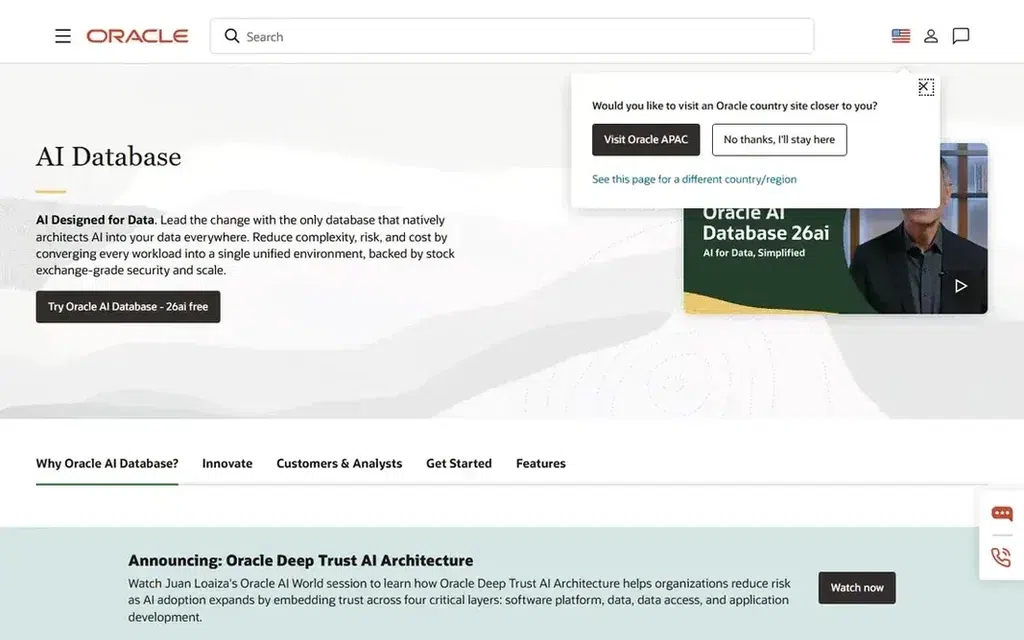
Oracle Database is a good fit for mission-critical high-volume workloads. Oracle Database is a mature relational product made for critical workloads, and its current release emphasizes AI-assisted development and data operations.
The system carries real operational weight: tuning, patching and licensing all demand experienced staff. Also, choose Oracle when depth of features and proven handling of critical scale matter more than simplicity. Pricing for Oracle Database is not stated here, so ask the vendor for current figures. Free plan details: Not stated.
Downsides: Licensing can be intricate.
- Manages demanding transactional and analytical work
- Long-standing enterprise reliability
- Complicated to administer
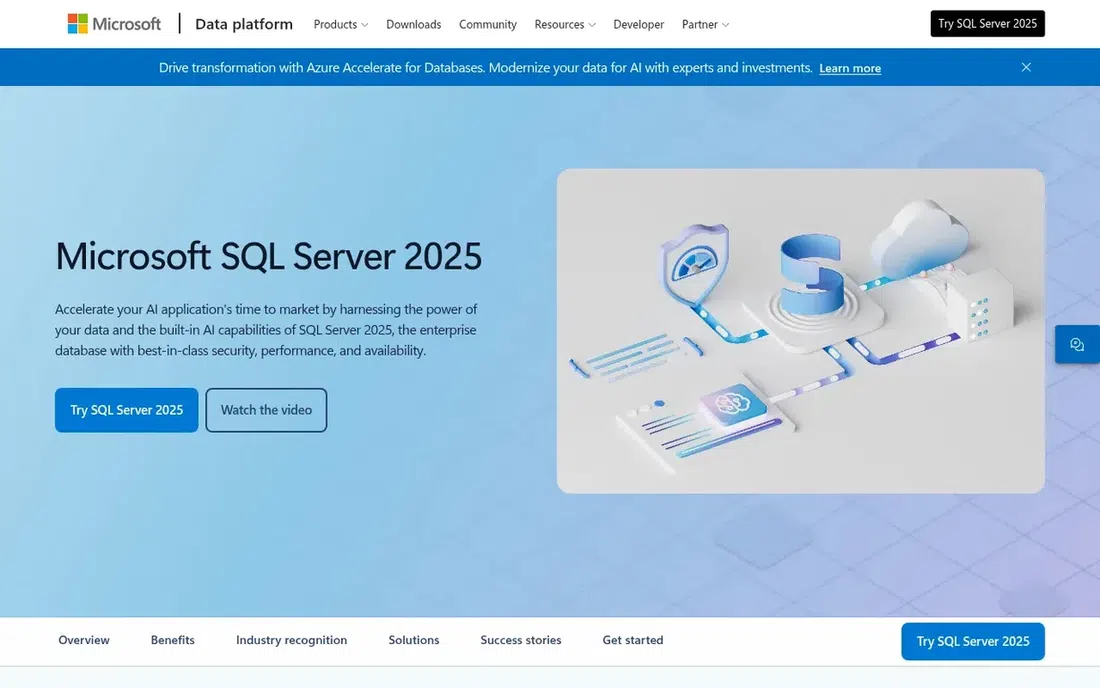
Think of Microsoft SQL Server for Microsoft-centric enterprise data teams. Microsoft SQL Server is an enterprise data system whose recent releases stress developer-first features and integration with analytics and AI models.
Limits to weigh: Large deployments need careful capacity planning.
Very large analytical workloads might be better served by a dedicated cloud warehouse. As for the details, pick SQL Server when ecosystem alignment and developer familiarity outweigh those trade-offs. Check the vendor site for Microsoft SQL Server pricing; none is listed in this comparison. Trial and free access: Not stated.
- Capable developer tooling and familiarity
- Deep integration with Microsoft analytics and AI tooling
- Best value inside the Microsoft ecosystem
Selection criteria
The comparison looks at four things: starting price, free access, how well the feature set matches B2B platform for huge databases, and the main limit of each tool. Where a vendor does not publish a price, the entry says quote. Where a price depends on seats or billing term, the entry says so. The ranking is editorial: typical fit first, then clear pricing, then free access. If your needs are unusual, read the profiles rather than relying on position.
What to check before you buy
- Request quotes from Google BigQuery, Microsoft SQL Server and the others; the list shows no fixed prices.
- Test the free plan from MongoDB against your real workload before relying on it.
- Before choosing Google BigQuery, weigh its main limit: costs can be hard to predict at volume.
- Test how quickly Amazon Redshift answers a pre-sales question; it hints at how support will feel later.
- Map your must-have features to a specific Google BigQuery plan before you compare prices.
FAQ
What should I check before committing?
Confirm workload fit, administration demands, integration with existing tools and data protection requirements. Validate with a realistic proof of concept instead of relying on feature lists alone.
Which B2B platform for huge databases have a free plan?
MongoDB is the only tool in this list with a free plan. Free plans usually cap users, projects or features, so check the limits on the vendor page.
Do these tools publish their prices?
No. None of the tools, from Google BigQuery to Microsoft SQL Server, shows a fixed starting price here, so budget time for quotes.
How are the B2B platform for huge databases ordered?
Google BigQuery sits first and Microsoft SQL Server last because the order follows typical fit for B2B platform for huge databases, then price clarity and free access. It is a judgement call, so read each profile for fit and limits.
Is Google BigQuery the right pick for everyone comparing B2B platform for huge databases?
No single tool suits every team. Google BigQuery comes first because it fits cloud-native analytics at scale, while MongoDB suits flexible document data at scale and Amazon Redshift suits managed cloud data warehousing on AWS. Match the tool to your own size, budget and workflow before deciding.
Sources
- https://cloud.google.com/bigquery
- https://www.mongodb.com
- https://aws.amazon.com/redshift
- https://www.oracle.com/database
- https://www.microsoft.com/en-us/sql-server