Best B2B Ecomm Platforms for Tco Reduction in 2026: Prices, Free Plans and 5 Picks
Best B2B ecomm platforms for tco reduction in 2026: 5 tools with starting prices, free plans and limits. Hidden costs and gaps are flagged. Quick to scan.
- Editor's choice
 BigCommerce
Mid-market B2B across regions and channels
Starts atPricing on requestVisit bigcommerce.comFull review - Great alternative
 commercetools
Composable commerce across plenty of channels
Starts atPricing on requestVisit commercetools.comFull review - Also consider
 Shopify Plus
Managed commerce with lower operational overhead
Starts atPricing on requestVisit shopify.comFull review
Direct answer
BigCommerce leads the list, best for mid-market B2B across regions and channels. Alternatives: commercetools for Composable commerce across numerous channels, and Shopify Plus for managed commerce with lower operational overhead. The full list of 5 tools follows, with prices and free plan facts. None of these vendors publish plan prices, so pricing is on request for every option.
TL;DR:
- Top of the list is BigCommerce, which targets mid-market B2B across regions and channels.
- Salesforce Commerce Cloud is the one to check for Commerce tied to the Salesforce ecosystem.
- No starting price is shown for any of the 5 tools, BigCommerce and Salesforce Commerce Cloud included, so plan time for sales calls.
- A permanent free plan is missing from all 5 tools, BigCommerce and Salesforce Commerce Cloud included; plan for a trial or a premium start.
Last checked November 2026. Pricing on request: vendors did not publish plan prices when this guide was last checked (November 2026), so ask each vendor for a written quote.
Quick comparison
| Tool | Best for | Starts at | Free plan? | |
|---|---|---|---|---|
| BigCommerce | Mid-market B2B across regions and channels | Pricing on request | Not stated | Visit |
| commercetools | Composable commerce across plenty of channels | Pricing on request | Free trial | Visit |
| Shopify Plus | Managed commerce with lower operational overhead | Pricing on request | Not stated | Visit |
 VTEX | Unified commerce modernization for large enterprises | Pricing on request | Not stated | Visit |
 Salesforce Commerce Cloud | Commerce tied to the Salesforce ecosystem | Pricing on request | Not stated | Visit |
The best B2B ecomm platforms for tco reduction
LinkVetted put together this guide to B2B ecomm platforms for tco reduction for readers who want a clear shortlist without reading every vendor page. It compares 5 tools on starting price, free plans, who each one suits and where each one falls short.
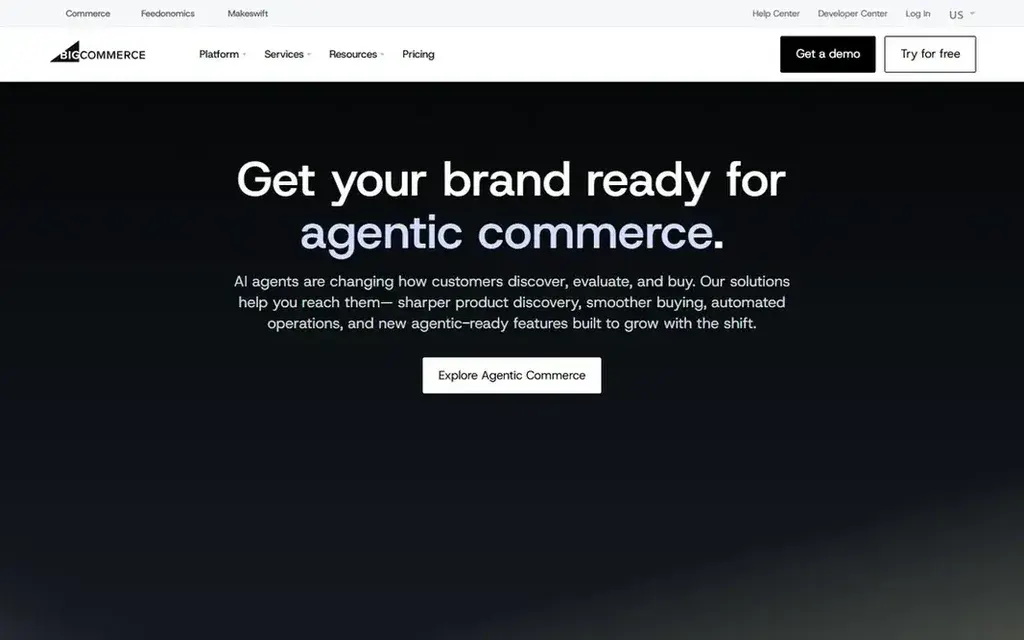
Pick BigCommerce if this describes you: mid-market B2B across regions and channels. BigCommerce describes itself as commerce aimed at momentum, powering buying experiences across brands, regions and channels from a single scalable foundation.
That consolidation story matters for TCO: fewer separate systems can mean less integration and administration work. Teams needing completely composable infrastructure or deep ERP-native commerce may find a different model suits better. No starting price is listed for BigCommerce here; confirm pricing on the vendor site. Trial and free access: Not stated.
What to check first: Advanced B2B features vary by setup.
- Open SaaS architecture
- Multi-channel selling support
- Complicated catalogs need planning
commercetools is built with Composable commerce across numerous channels in mind. A composable approach shifts cost from licensing toward integration, governance and specialist staffing, so TCO depends heavily on internal capability. Also, commercetools markets itself as a digital commerce AI company, offering enterprise commerce infrastructure for AI agents and commerce experiences across online, in-store, in-chat and agent-to-agent channels from one unified engine.
Its composable model lets teams replace or reuse components instead of rebuild everything, which can lower long-term change costs. Teams without engineering depth, or those wanting a single managed suite, should consider other choices. This comparison lists no price for commercetools; ask the vendor. Free plan details: Free trial.
Points against: Needs engineering investment.
- Supports agent and in-chat channels
- API-first composable model
- Assembled stack needs governance

Choose Shopify Plus for managed commerce with lower operational overhead. For TCO reduction, its primary appeal is the managed model: hosting, security and core operations sit with the vendor, so internal teams spend less on infrastructure and maintenance.
Organizations with unusual integration requirements or strict data-residency needs should compare against composable and enterprise-native choices before committing. Check the vendor site for Shopify Plus pricing; none is listed in this comparison. Free plan details: Not stated.
Trade-offs to know: Complicated B2B logic may need apps.
- Designed for scale across brands
- Wide app ecosystem
- Deep customization can need workarounds
VTEX is designed for unified commerce modernization for large enterprises. As an enterprise-oriented suite, the value case relies on how much fragmentation it replaces. If existing systems are already lean, gains may be restricted.
Drawbacks to consider: Enterprise-oriented engagement model.
Buyers should validate B2B-specific requirements and integration scope during evaluation. On top of that, VTEX presents itself as an AI-native commerce suite of choice for CIOs and CEOs, centred on modernizing the stack and driving operational results with a unified commerce option. Its pitch centers on replacing fragmented systems with one suite, which can cut integration and maintenance overhead over time. Pricing for VTEX is not stated here, so ask the vendor for current figures. As for free access: Not stated.
- Stack modernization focus
- Operational results orientation
- Fit relies on existing stack
Salesforce Commerce Cloud is a good fit for Commerce tied to the Salesforce ecosystem. Buyers should map required B2B commerce capabilities against the system before assuming ecosystem savings.
Check the vendor site for Salesforce Commerce Cloud pricing; none is listed in this comparison. Free options: Not stated.
The main drawbacks: Configuration needs specialist help.
- Supports B2B and B2C selling
- Enterprise-scale positioning
- Value relies on Salesforce adoption
How these tools were picked
Selection started from tools commonly considered for B2B ecomm platforms for tco reduction, then narrowed to 5 that have clear pricing information or a clear quote process. Prices and plan limits come from vendor pages and can change, so confirm them on the vendor site before you buy. Order on the page follows fit for the typical buyer first, then price transparency and free access. Your own requirements should decide the final pick.
What to confirm before you sign up
- Ask each vendor, from BigCommerce to Salesforce Commerce Cloud, for a written quote; none of them publishes a starting price.
- Use real work to test the free trial from commercetools, rather than a demo project.
- Read the limits listed for BigCommerce first: advanced B2B features vary by setup.
- Confirm minimum seats and billing terms with commercetools before you commit to an annual plan.
- The entry price of BigCommerce is only the starting point; model the full cost with seats and extras.
FAQ
Is a managed system always cheaper than composable commerce?
Managed systems cut infrastructure and maintenance effort, whereas composable approaches can lower change costs for teams with solid engineering capacity. The better choice relies on internal skills and how frequently requirements change.
What drives total cost of ownership in B2B ecommerce?
Continuing integration work, administration, customization and change requests normally outweigh initial setup in the long run. A system that suits existing systems and cuts custom code tends to lower TCO over time.
Does any tool for B2B ecomm platforms for tco reduction here have a free plan?
A permanent free plan is not offered by BigCommerce, Salesforce Commerce Cloud or the other tools here. commercetools offer a trial. Plan a short evaluation period instead.
Is BigCommerce the right pick for everyone comparing B2B ecomm platforms for tco reduction?
No single tool suits every team. BigCommerce comes first because it fits mid-market B2B across regions and channels, while commercetools suits Composable commerce across many channels and Shopify Plus suits managed commerce with lower operational overhead. Match the tool to your own size, budget and workflow before deciding.
How should B2B buyers compare these products fairly?
Define required capabilities first, then score each product on integration effort, operational overhead and fit with existing systems. Confirm current details straight with vendors, since features and terms evolve.
Do these tools publish their prices?
No. None of the tools, from BigCommerce to Salesforce Commerce Cloud, shows a fixed starting price here, so budget time for quotes.
Sources
- https://www.bigcommerce.com
- https://commercetools.com
- https://www.shopify.com/plus
- https://vtex.com
- https://www.salesforce.com/commerce