Best B2B CRM Software in 2026: 8 Tools Compared
Compare the best b2b crm software in 2026, from Salesforce and HubSpot to Pipedrive and Zoho, with pricing, pipeline tools and practical buying advice.

- Editor's choice
 HubSpot CRM
Growing B2B teams wanting one hub
Starts atFreeVisit hubspot.comFull review - Great alternative
 Salesforce Sales Cloud
Enterprise B2B sales at scale
Starts at$25 per user per monthVisit salesforce.comFull review - Also consider
 Pipedrive
Sales-focused teams wanting visual pipelines
Starts at$14 per user per monthVisit pipedrive.comFull review
TL;DR:
- The best b2b crm software handles long sales cycles, multiple buyers at one account and clear handoffs from marketing to sales.
- HubSpot suits teams that want a free start and a broad ecosystem, while Salesforce suits large teams with dedicated admins.
- Pipedrive and Zoho CRM offer strong value for smaller B2B teams, with paid plans from $14 per user per month.
- Free plans help you test, but check user limits, deal limits and reporting gates before you roll a tool out to a whole team.
- Our pick for most B2B teams is HubSpot, because it balances pipeline, marketing and reporting without forcing a complex setup on day one.
Quick comparison
| Tool | Best for | Starts at | Free plan? | |
|---|---|---|---|---|
| HubSpot CRM | Growing B2B teams wanting one hub | Free | Yes | Visit |
| Salesforce Sales Cloud | Enterprise B2B sales at scale | $25 per user per month | Free trial | Visit |
| Pipedrive | Sales-focused teams wanting visual pipelines | $14 per user per month | Free trial | Visit |
 Zoho CRM | Budget teams wanting automation | $14 per user per month | Yes | Visit |
 Freshsales | AI-assisted selling for smaller teams | $9 per user per month | Yes | Visit |
 monday CRM | Visual workflows and team boards | $12 per user per month | Free trial | Visit |
 Microsoft Dynamics 365 Sales | Teams already on Microsoft 365 | See website | Free trial | Visit |
 Close | Outbound teams needing calling built in | $29 per user per month | Free trial | Visit |
The best b2b crm software
We compared official pricing pages, feature documentation and public reviews for CRMs that handle company accounts, contacts, deals and multi-step B2B pipelines. Each entry notes who it fits and where it strains.
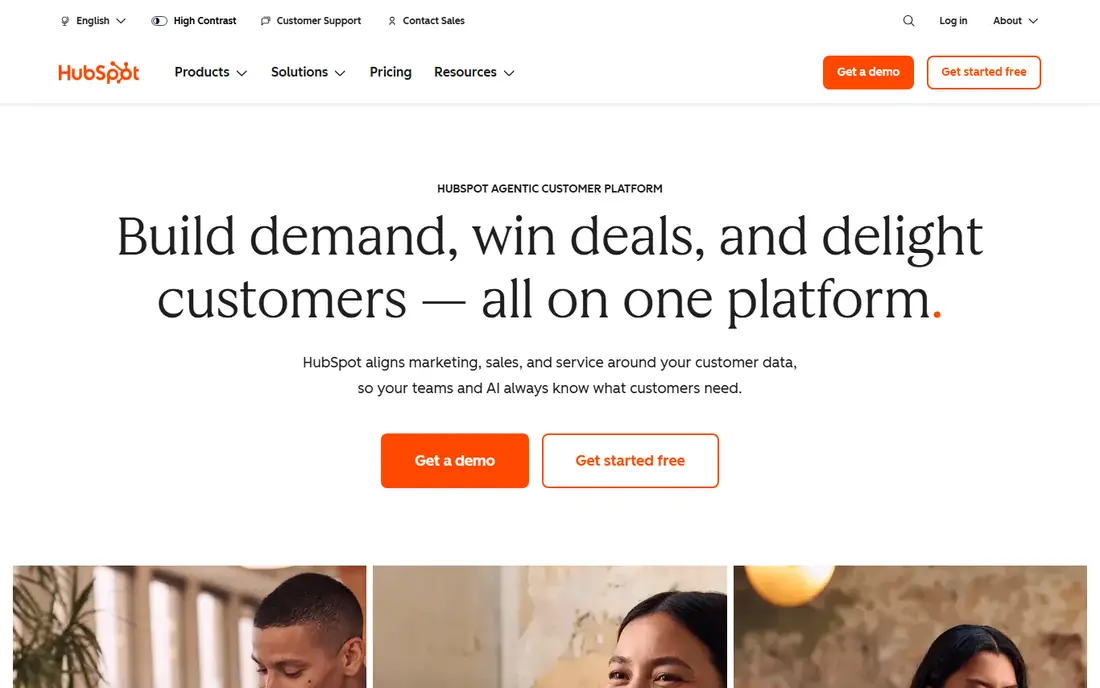
HubSpot is the easiest B2B CRM to start with, because the free tier covers contacts, companies, deals, tasks and email tracking without a time limit. As a team grows, Sales Hub adds sequences, playbooks, forecasting and AI assistance, while Marketing Hub and Service Hub share the same contact record. That shared record helps B2B teams stop losing context between marketing, sales and support.
The catch is cost at scale. Paid seats start around $20 per seat per month for Sales Hub on recent pricing, and Professional tiers add onboarding and higher seat costs. Small teams should start free, define their pipeline stages clearly, and upgrade only when reporting or automation limits actually block work.
- Generous free CRM with contacts, deals and tasks
- Strong marketing and sales integration
- Large app marketplace
- Paid hubs get expensive at scale
- Advanced reporting sits on higher tiers
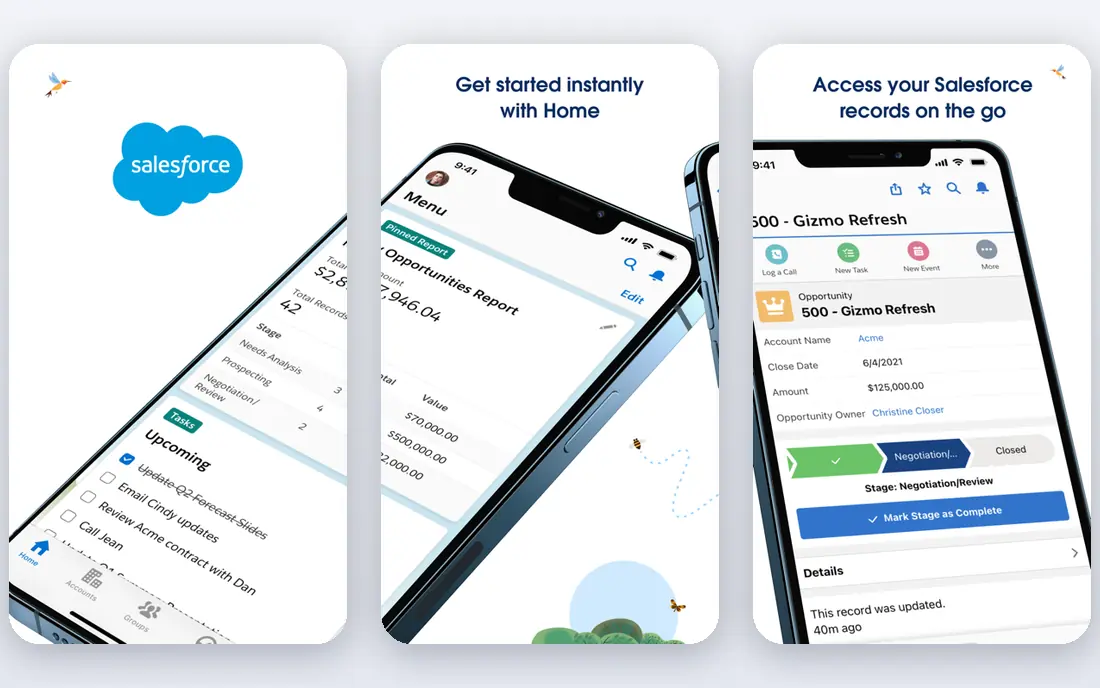
Salesforce remains the enterprise standard for B2B sales, especially when deals involve many contacts, products, price books and approval steps. Starter pricing has been listed from $25 per user per month, with Pro and Enterprise tiers adding automation, forecasting and deeper controls. The AppExchange gives access to thousands of integrations, from CPQ to contract tools.
Salesforce rewards teams that invest in setup. Without a clear data model and an admin owner, it can become a cluttered database that salespeople avoid. For large B2B teams with complex territories and forecasts, that investment is worth it. For a five-person team, it is often more than needed.
- Deep customization for accounts, opportunities and forecasting
- Huge integration ecosystem
- Strong AI and analytics options
- Needs admin time to configure well
- Total cost rises with add-ons and implementation
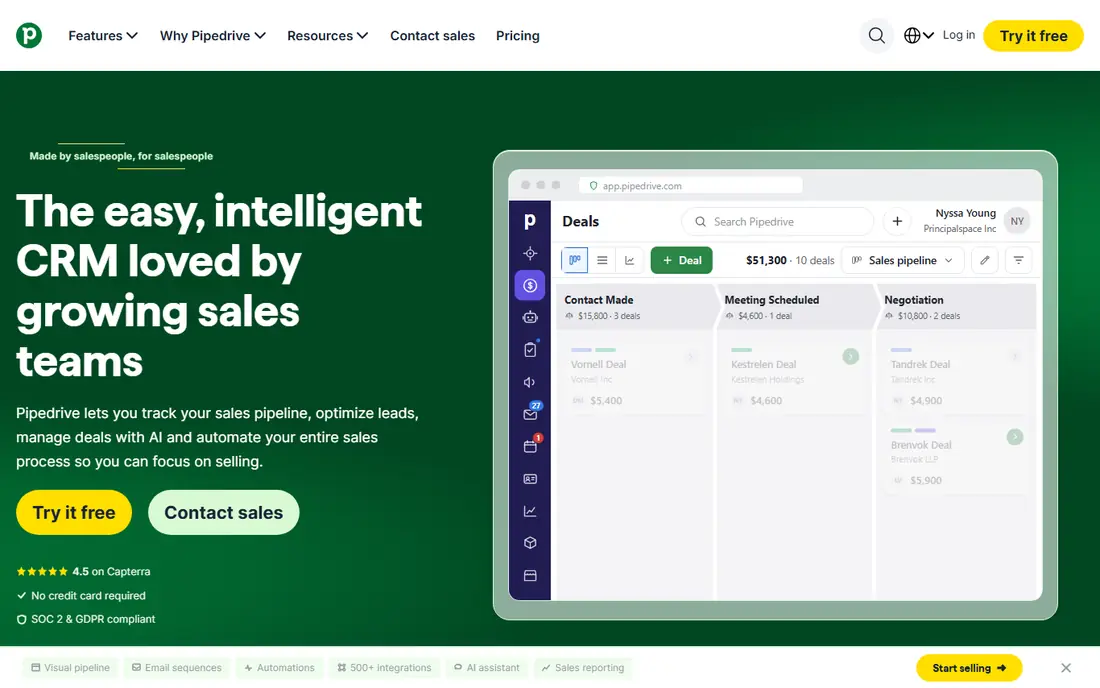
Pipedrive wins on focus. It is built around deals moving through stages, with activities, reminders and email sync keeping next steps visible. Starting at $14 per user per month, it is affordable for small B2B teams that sell by phone, email and meetings rather than large marketing campaigns.
Pipedrive is less suited to teams that need deep marketing automation or complex account hierarchies out of the box. It also has no free plan, only a trial, so budget for seats from day one. For a sales-led B2B team that wants adoption fast, the clarity of the pipeline is a real advantage.
- Clear visual pipeline that salespeople actually use
- Simple automation and email sync
- Fast setup
- Marketing tools are lighter than HubSpot
- Reporting depth needs higher tiers
Zoho CRM gives budget B2B teams enterprise-style tools at a small-team price. Standard pricing has been listed from $14 per user per month, with a free plan for up to 3 users. Workflows, lead scoring, email templates and forecasting cover most B2B needs, and Zoho apps for email, books and projects share data.
The interface takes learning, and the sheer number of settings can overwhelm a new admin. Teams that invest a day in setup and templates get a lot for the price. Zoho is a strong pick when cost matters but you still need automation, custom fields and multi-stage pipelines.
- Free plan for up to 3 users
- Strong automation and customization at low cost
- Broad Zoho app ecosystem
- Interface feels busy
- Some advanced features need higher tiers or add-ons
Freshsales, part of Freshworks, suits small B2B teams that want calls, emails and deals in one place. Paid plans have started from $9 per user per month, with a free plan for up to 3 users. The interface is clean, setup is fast, and AI features help prioritize leads and suggest next steps.
Freshsales is not as deep as Salesforce for complex enterprise sales, and its marketplace is smaller than HubSpot. For a team of 3 to 20 sellers who need a simple, affordable CRM with calling built in, it is a strong value choice. Test the phone quality and email deliverability in your region before you commit.
- Low starting price
- Built-in phone and email
- AI insights and lead scoring on paid tiers
- Smaller ecosystem than Salesforce or HubSpot
- Advanced customization needs higher tiers
monday CRM appeals to teams that think in boards, not forms. Leads, accounts and deals live on visual boards with status columns, automations and dashboards that managers can read at a glance. Pricing has been listed from $12 per seat per month, with a free plan for up to 2 seats.
The trade-off is CRM depth. Complex opportunity management, forecasting and CPQ are not its strengths. monday CRM fits B2B teams that also manage projects and delivery in the same tool, and who value a visual workflow over deep sales configuration. Check seat minimums, since they affect the real monthly bill.
- Highly visual boards and dashboards
- Flexible workflows for sales and delivery
- Easy for non-technical teams
- Minimum seat rules can raise small-team cost
- CRM depth is lighter than Salesforce
Dynamics 365 Sales makes sense when a B2B team already lives in Outlook, Teams and SharePoint. Emails, meetings and documents link to accounts and opportunities without constant switching, and managers get forecasting and pipeline analytics in a familiar Microsoft environment. Enterprise security and compliance controls are a plus for regulated buyers.
Licensing is the hard part. Plans, bundles and add-ons vary, so get a clear quote for your exact user mix. Implementation also benefits from someone who knows Dynamics well. For Microsoft-centric enterprises, the integration payoff is high. For a small team without Microsoft admins, HubSpot or Pipedrive will be faster.
- Deep Outlook, Teams and Office integration
- Strong account and opportunity management
- Enterprise security and compliance
- Pricing and licensing are complex
- Setup benefits from Microsoft expertise
Close is built for outbound B2B teams that live on the phone. Sellers can call, text and email from the same record, with a power dialer and automatic logging that cuts admin work. Starting at $29 per user per month, it costs more than Pipedrive, but it replaces a separate dialer for many teams.
Close is less suited to inbound marketing teams that need landing pages, nurture campaigns and deep analytics. It is also overkill for a team that makes few calls. For outbound prospecting, where call volume and speed matter, Close keeps sellers in one workflow instead of jumping between tools.
- Native calling, SMS and email in one workspace
- Power dialer for outbound
- Fast for high-volume prospecting
- Higher starting price
- Marketing automation is lighter than HubSpot
How we picked these
We compared official pricing pages, feature documentation and public B2B reviews for CRMs in active use in 2026. We favored tools with account and contact management, multi-stage pipelines, automation, reporting and integrations that B2B teams actually use. Where pricing is quote-based, we say so. Prices change often, so confirm the current price on the vendor site before you buy.
What to check before you buy a B2B CRM
Start with your sales process, not a demo. Write down your stages from first contact to closed deal, who owns each stage, what a qualified deal looks like and what data you need for forecasting. Then test each CRM with a real deal, not sample data. A tool that cannot model your account structure will cause workarounds that salespeople hate.
Adoption beats features
The best CRM is the one your team updates daily. Check mobile access, email sync, calendar sync and how fast a seller can log a call or move a deal. If logging a deal takes five screens, adoption will drop. Pilot with two or three sellers for two weeks and measure how many deals are updated on time.
Price for growth, not only day one
Model seat costs at your team size in 12 months, plus add-ons for automation, reporting and AI. A free plan that caps users or deals can force a sudden jump. Ask about contract terms, data export and what happens to your data if you leave, before you import your full pipeline.
FAQ
What is the best b2b crm software for a small team?
Pipedrive or Zoho CRM are strong value picks, with paid plans from $14 per user per month. HubSpot is also strong if you want a free start and marketing tools in the same system. Choose Pipedrive for pure sales focus, Zoho for low-cost automation and HubSpot for a broader hub.
Is HubSpot really free?
HubSpot CRM has a free tier with contacts, companies, deals and tasks, with no time limit for core features. Paid Sales Hub seats add automation, forecasting and advanced reporting, and those costs rise with team size and tier. Start free and upgrade only when you hit a real limit.
How much does Salesforce cost for a small B2B team?
Salesforce Starter pricing has been listed from $25 per user per month, with higher tiers for automation and forecasting. Implementation, add-ons and admin time can raise total cost, so get a full quote. Small teams often find HubSpot or Pipedrive cheaper to run.
What makes a CRM good for B2B rather than B2C?
B2B CRMs handle company accounts with multiple contacts, long deal cycles, role-based buying groups and complex approvals. They also need forecasting, territory management and handoffs between marketing, sales and customer success. A simple contact list will not cover those needs.
Do we need marketing automation in our CRM?
Not always. Sales-led teams can start with a pipeline CRM such as Pipedrive or Close and add marketing tools later. Inbound teams that rely on content, email nurture and lead scoring get more value from HubSpot or Zoho. Match the tool to how you actually win deals.
Can we migrate from spreadsheets to a CRM easily?
Yes, if you clean data first. Remove duplicates, standardize company names and define pipeline stages before import. Most CRMs offer CSV import and migration help. Pilot with recent deals first, then import history once the team trusts the new system.