Best B2B Platforms in 2026: 8 Platforms Compared
Compare the best b2b platforms for wholesale, sourcing, and B2B selling. We checked fees, buyer reach, controls, and fit for brands and suppliers today.
- Editor's choice
 Alibaba
Global sourcing and wholesale
Starts atSee websiteVisit alibaba.comFull review - Great alternative
 Amazon Business
Broad US buyer reach
Starts atFreeVisit business.amazon.comFull review - Also consider
 Faire
Boutique wholesale
Starts atFreeVisit faire.comFull review
TL;DR:
- Marketplaces such as Alibaba, Amazon Business, and Faire give fast reach, but fees and competition differ sharply.
- Owned storefronts on Shopify, BigCommerce, and WooCommerce give more control over pricing, branding, and customer data.
- Faire suits boutique brands selling to independent retailers, while Alibaba suits global sourcing and large wholesale orders.
- Amazon Business offers broad US buyer reach, with Business Prime starting around $179 per year plus referral fees.
- Start with one channel, prove pricing and fulfillment, then add a second channel rather than launching everywhere at once.
Quick comparison
| Tool | Best for | Starts at | Free plan? | |
|---|---|---|---|---|
| Alibaba | Global sourcing and wholesale | See website | Yes | Visit |
| Amazon Business | Broad US buyer reach | Free | Yes | Visit |
| Faire | Boutique wholesale | Free | Yes | Visit |
 Shopify | Owned B2B storefront | See website | Free trial | Visit |
 BigCommerce | Flexible B2B storefront | See website | Free trial | Visit |
 WooCommerce | WordPress B2B selling | Free | Yes | Visit |
 Adobe Commerce | Large enterprise B2B | See website | No | Visit |
 DHgate | Small batch wholesale | Free | Yes | Visit |
The best b2b platforms
The term B2B platform covers two different jobs: selling to other businesses through a marketplace, and running your own wholesale store. The best choice depends on whether you need buyers now, control over your brand, or both.
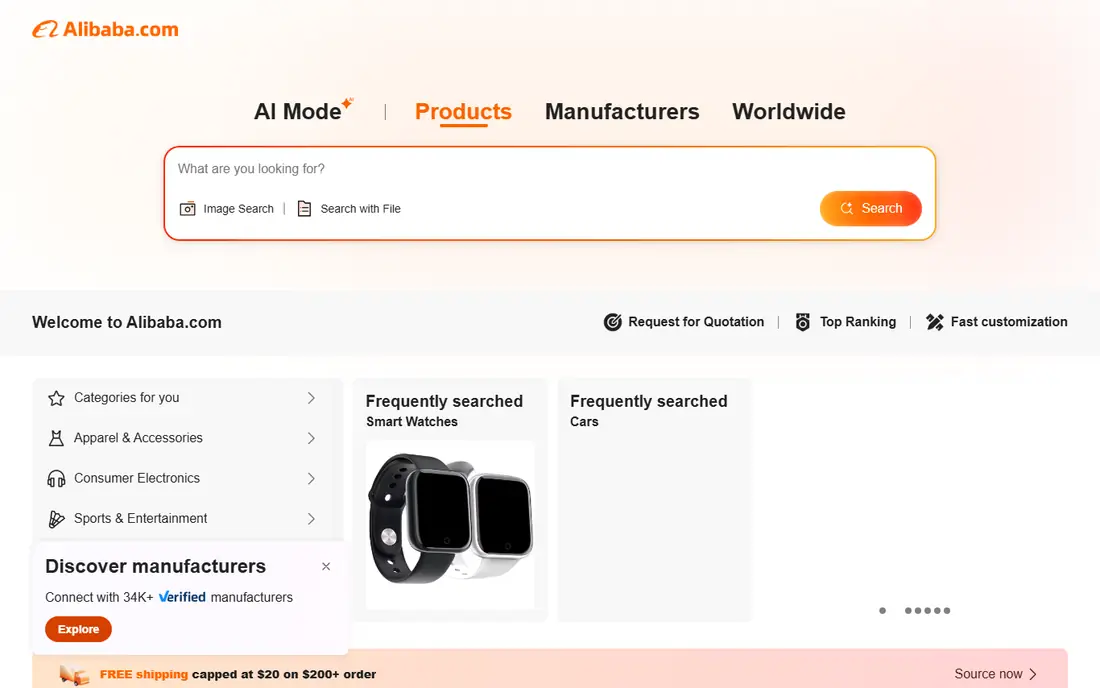
Alibaba remains the largest global B2B marketplace for sourcing and wholesale selling. Buyers can find manufacturers, wholesalers, and exporters across electronics, apparel, home goods, and industrial products. Sellers get a storefront, buyer inquiries, and tools for listing and messaging, while buyers can request quotes and compare suppliers side by side. For US sellers, supplier plans have been listed from $1,999 per year, though you should confirm the current package on the vendor site.
The risk is diligence. Supplier quality, lead times, and shipping costs vary widely, so request samples, verify business details, and read Trade Assurance terms before a large order. Alibaba suits businesses that can manage cross border logistics and want scale. Small buyers who need one or two units should look at DHgate or a domestic marketplace first.
- Huge global supplier and buyer network
- Product range across almost every category
- Trade Assurance on many orders
- Quality varies by supplier
- Minimum order quantities can be high
- Communication and shipping take care
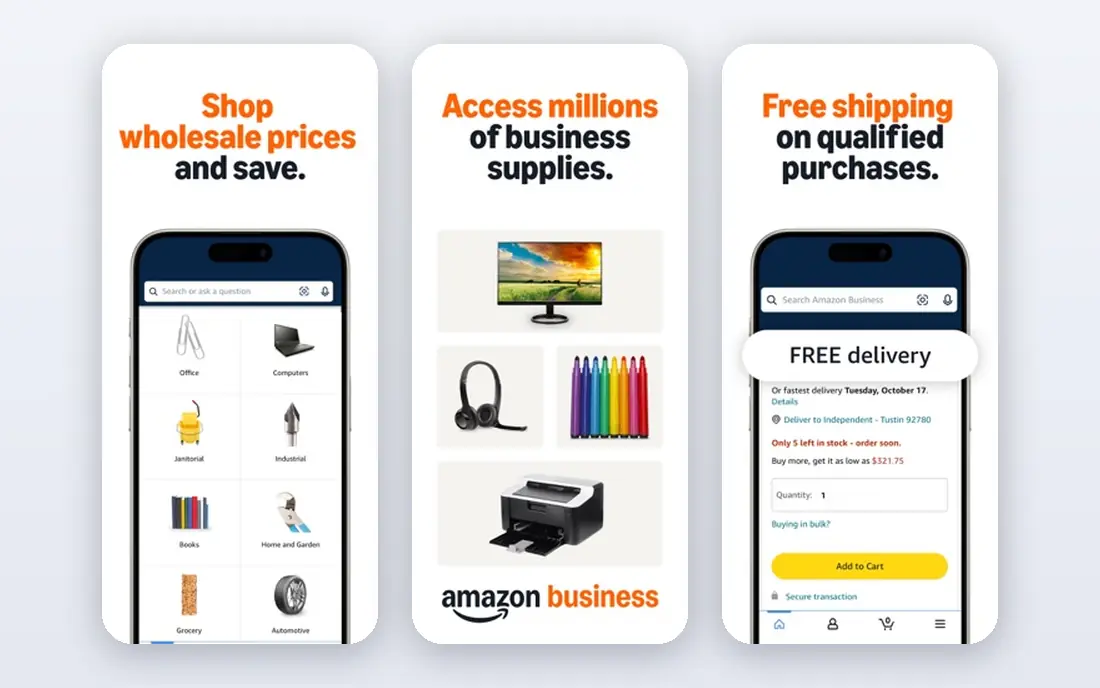
Amazon Business gives sellers instant access to a huge pool of US business buyers, from small offices to large institutions. Joining is free, and Business Prime plans start around $179 per year, with referral fees on sales. Sellers can offer business only pricing, quantity discounts, and tax exempt purchasing, which helps with repeat corporate orders. Fulfillment through Amazon can also speed delivery for eligible products.
The trade off is control. You compete on the same product pages as other sellers, price pressure is strong, and Amazon owns much of the customer relationship. That makes Amazon Business a strong second channel rather than a sole home for a brand. Use it for reach and volume, while keeping your own store for margin, branding, and direct buyer relationships.
- Large US business buyer base
- Familiar checkout and delivery
- Business pricing and quantity discounts
- Referral fees apply
- Competition on price is intense
- Brand control is weaker than an owned store
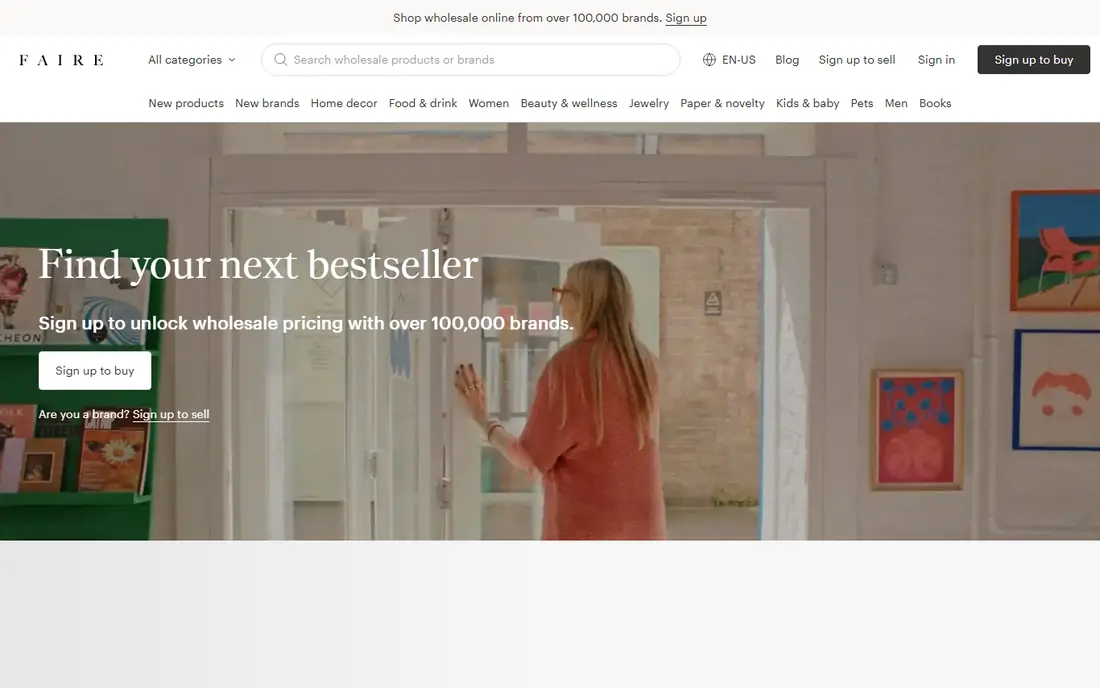
Faire is a wholesale marketplace built for independent brands and boutique retailers. Brands list products, retailers discover them, and Faire handles much of the ordering and payment flow. For small makers, that discovery is the main value, since finding hundreds of retailers one by one would take months. Buyers join for free, while brands pay commission on sales made through the platform.
Faire is not a fit for every category. It works best for home, gift, apparel, beauty, and food products with strong visual appeal and clear wholesale margins. Industrial parts, raw materials, and high volume commodity goods belong on Alibaba or a direct sales channel. Brands should check commission terms and return policies before listing, since those costs affect wholesale pricing.
- Curated network of independent retailers
- Free for buyers
- Helps small brands find new stockists
- Commission on sales
- Less suited to industrial or bulk commodity products
- Brand approval can limit entry
Shopify has become a serious B2B platform, not just a direct to consumer store builder. Current plans include B2B features such as company profiles, buyer roles, price lists, quantity rules, and net terms from Net 7 to Net 90. That lets a brand run wholesale and retail from one store, with separate catalogs for different buyer groups. Apps add quoting, order forms, and rep ordering where needed.
The limit is scale and discovery. Non Plus plans allow a limited number of active B2B catalogs, and unlimited catalogs require Shopify Plus, which is priced for larger brands. Shopify also does not bring buyers to you, so you need your own sales, email, and trade outreach. For brands with an existing buyer list, Shopify offers control that marketplaces cannot match.
- Built in B2B tools on current plans
- Company profiles, catalogs, and net terms
- Large app ecosystem
- Unlimited catalogs need Shopify Plus
- Monthly costs rise with scale
- Marketplace discovery is not included
BigCommerce suits growing B2B sellers who want flexibility without building everything from scratch. Customer groups, custom price lists, quote requests, and bulk ordering are part of the platform story, and the open API helps connect ERP, CRM, and inventory systems. That makes it a good fit for distributors and manufacturers with large catalogs and varied buyer pricing.
The cost and setup need care. Plans are tiered in part by sales volume, so a fast growing store can move tiers sooner than expected. Complex catalogs, custom pricing rules, and integrations may need developer help at launch. If your team wants a hosted store with room to grow and fewer apps to manage, BigCommerce deserves a trial alongside Shopify.
- Strong B2B features without heavy app reliance
- Customer groups and price lists
- Open API for integrations
- Learning curve for complex catalogs
- Pricing depends on sales volume tier
- Design work may need help
WooCommerce turns a WordPress site into a B2B store. The core plugin is free, and extensions add wholesale pricing, customer roles, bulk order forms, quote requests, and net terms. That control appeals to businesses that already run WordPress and want to own their data, design, and checkout without monthly platform fees tied to sales. Small teams can start cheaply and add extensions as orders grow.
The cost is time and responsibility. You must arrange hosting, backups, security, and updates, and B2B extensions add their own annual fees. A poorly maintained WooCommerce store can become slow or insecure, so budget for maintenance or a managed host. For WordPress users with technical help, WooCommerce offers the lowest platform lock in of any option here.
- Free core plugin
- Full control over site and data
- Large extension library for B2B pricing and roles
- Hosting, security, and updates are your job
- B2B features need paid extensions
- Setup takes longer
Adobe Commerce, formerly Magento Commerce, is built for large B2B operations with complex needs. It supports multiple storefronts, detailed customer segments, negotiated pricing, requisition lists, approval workflows, and integrations with ERP and PIM systems. Enterprises with large catalogs, multiple regions, and custom checkout rules often choose it for that depth. Support and partner networks are also mature.
For most small and mid sized sellers, Adobe Commerce is too much. Pricing is quote based, implementation can take months, and ongoing development costs add up. Choose it only when your B2B workflows cannot fit Shopify, BigCommerce, or WooCommerce without heavy workarounds. Smaller brands will move faster and spend less on the other platforms in this list.
- Deep customization for complex B2B workflows
- Strong catalog, pricing, and integration options
- Enterprise support
- Quote based pricing
- Implementation costs are high
- Overkill for small wholesale programs
DHgate is a cross border wholesale marketplace that suits small batch buying. Unlike Alibaba, where custom orders often need hundreds of units, DHgate sellers frequently offer single units or small batches. That makes it useful for product testing, dropshipping trials, and small retailers who want to check demand before a large order. Browsing and buying are free for buyers, with seller commissions behind the scenes.
Quality and delivery need the same care as any global marketplace. Check seller ratings, read product details closely, order samples, and confirm shipping times and return terms before scaling. DHgate is not the best source for custom manufacturing or strict quality control, but for low cost testing and small wholesale orders, it fills a gap that larger B2B platforms leave open.
- Free for buyers
- Small batch and single unit options
- Wide product range for testing
- Supplier quality varies
- Shipping times can be long
- Less suited to large custom manufacturing
How we picked these
We compared official platform pages, marketplace fee guides, and public reviews for platforms that help businesses buy or sell to other businesses. We included both marketplaces and owned storefronts, since the best B2B software choice depends on that split. We favored platforms still active in October 2026, with clear US buyer or seller paths, and left out dead marketplaces and narrow single feature apps. Fees and plans change, so confirm current terms on the vendor site before listing or building.
Choosing between a marketplace and your own store
A marketplace gives you buyers, trust, and checkout on day one, but takes commission and limits branding. An owned store gives you pricing control, customer data, and margin, but you must bring your own traffic. Many successful B2B sellers use both: a marketplace for discovery and an owned store for repeat buyers. Start with the channel that matches your current buyer list, then add the other once fulfillment and pricing are stable.
Fees, terms, and fulfillment
Read fee tables line by line, including referral fees, commissions, payment processing, and return costs. Check payment terms, since net terms can help buyers but strain cash flow for sellers. Confirm who handles shipping, returns, and tax, and test the full order flow with a small order before you scale. A platform that looks cheap on commission can become costly if fulfillment or returns are poorly handled.
FAQ
What is the best b2b platform for small brands?
Faire suits small boutique brands that want retailer discovery, while Shopify suits small brands with their own buyer list. Faire brings retailers to you but charges commission, while Shopify gives control but needs your own outreach. Many small brands start on Faire for discovery and add Shopify for repeat wholesale orders.
What are the best b2b apps for wholesale selling?
Shopify B2B tools, BigCommerce, and WooCommerce extensions cover owned wholesale selling, while Faire and Amazon Business cover marketplace selling. The best b2b software for your team depends on catalog size, pricing complexity, and whether you need buyer discovery. Test order forms, price lists, and net terms with real buyers before you commit.
Is Alibaba a good b2b platform for US buyers?
Yes, for sourcing and large orders, with care. Alibaba offers scale and choice, but buyers should verify suppliers, order samples, and understand shipping, duties, and Trade Assurance terms. For small batches, DHgate or a US marketplace may be faster and simpler.
What is the best b2b software for enterprises?
Adobe Commerce suits large enterprises with complex catalogs, pricing, and integrations. Shopify Plus and BigCommerce also serve large B2B sellers with less implementation time. Enterprises should compare implementation cost, integration needs, and approval workflows, not just monthly fees.
Do B2B platforms charge buyers or sellers?
Most marketplaces are free for buyers and charge sellers through commissions, referral fees, or supplier plans. Owned storefronts charge the seller a subscription, plus payment processing, while buyers usually pay no platform fee. Always check both sides of the fee table, since a free buyer account does not mean free selling.