Best B2B Data Enrichment Tools for CRM Accuracy in 2026: 9 Tools Compared
Compare the best B2B data enrichment tools for CRM accuracy, with coverage, CRM integrations, and pricing for sales teams to compare and review in 2026.

- Editor's choice
 Clay
Waterfall enrichment workflows
Starts at$185 per monthVisit clay.comFull review - Great alternative
 Apollo
Prospecting plus enrichment
Starts at$49 per monthVisit apollo.ioFull review - Also consider
 ZoomInfo
Enterprise coverage and intent
Starts atSee websiteVisit zoominfo.comFull review
TL;DR:
- Clay offers the strongest waterfall enrichment for teams that want to combine many data sources in one workflow.
- Apollo suits smaller teams that want prospecting and enrichment in one seat, while ZoomInfo suits enterprises with large budgets.
- Clearbit, now HubSpot Breeze Intelligence, is the natural pick for HubSpot users, but it does not serve other CRMs the same way.
- Match rate and data freshness matter more than database size claims, so test with your own CRM records before buying.
- Check privacy and compliance practices, especially for phone data and European contacts, before enriching at scale.
Quick comparison
| Tool | Best for | Starts at | Free plan? | |
|---|---|---|---|---|
| Clay | Waterfall enrichment workflows | $185 per month | Yes | Visit |
| Apollo | Prospecting plus enrichment | $49 per month | Yes | Visit |
| ZoomInfo | Enterprise coverage and intent | See website | No | Visit |
 Clearbit Breeze Intelligence | HubSpot-native enrichment | See website | No | Visit |
 Cognism | EU phone-verified data | See website | No | Visit |
 Lusha | Quick LinkedIn lookups | $29 per month | Yes | Visit |
 RocketReach | Email discovery at scale | See website | Yes | Visit |
 Hunter | Email finding and verification | $34 per month | Yes | Visit |
 FullEnrich | Budget waterfall enrichment | $29 per month | Free trial | Visit |
The best b2b data enrichment tools for crm accuracy
We compared data coverage, match rates in public tests, CRM integrations, waterfall options, pricing, and compliance features, using vendor pages and public comparisons from 2026.
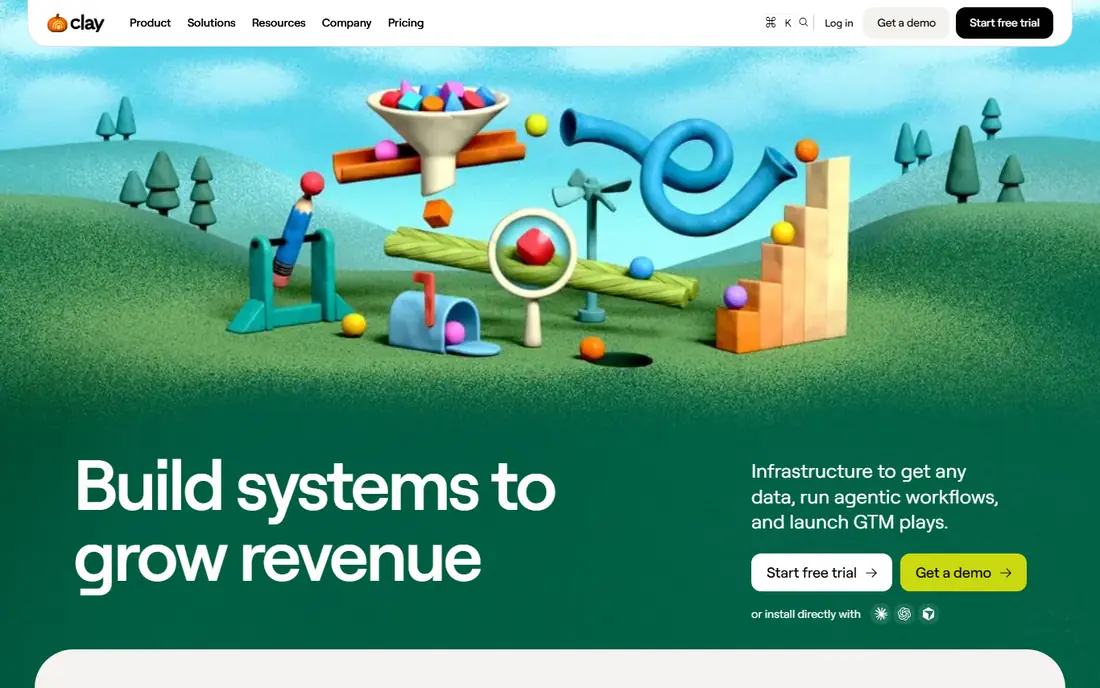
Clay stands out because it does not rely on a single database. Its waterfall approach queries many providers in sequence, filling gaps that any one source misses, which often lifts match rates for emails and firmographics. Teams can also add AI research steps, scoring, and CRM syncs inside the same workflow, turning enrichment into a repeatable RevOps process.
That power comes with complexity. Building good workflows takes time, and credit costs vary by provider, so budgeting needs care. For RevOps teams that own CRM accuracy as a job, Clay offers the most control in this list.
- Waterfall across many data providers
- Flexible workflows and AI research
- CRM sync options
- Price and complexity grow with usage
- Setup takes time to learn
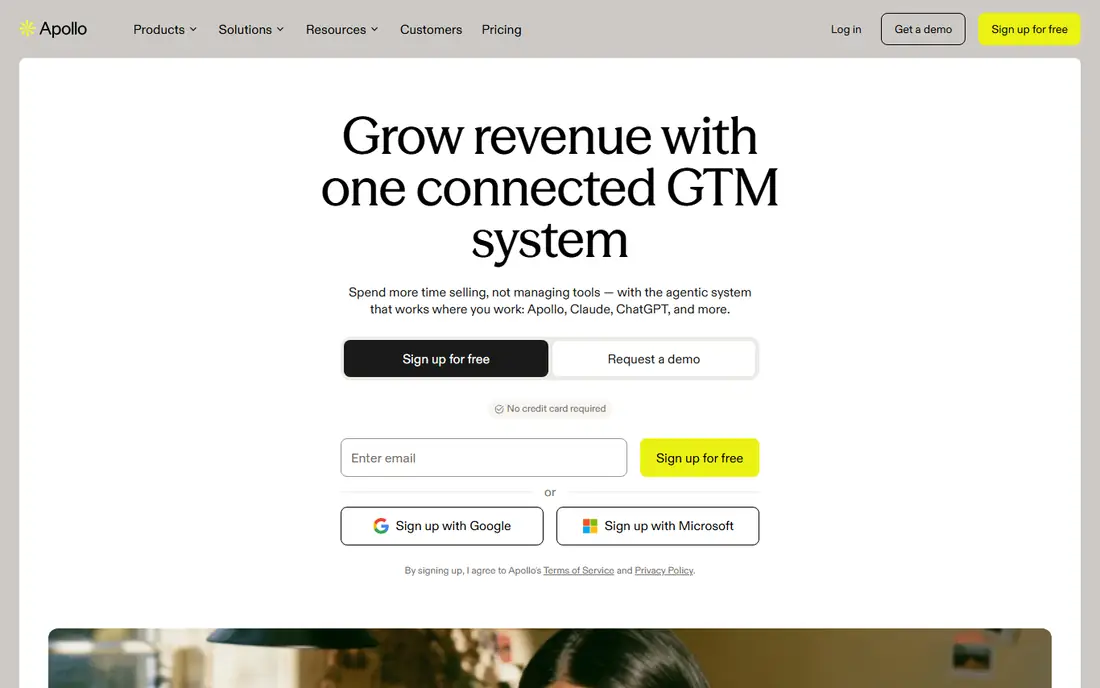
Apollo combines a large B2B database with prospecting, enrichment, and outreach, which suits small and mid-market teams that want one seat for several jobs. You can find contacts, enrich CRM records, and run sequences without buying separate tools for each step. CRM integrations help keep enriched data flowing back to HubSpot or Salesforce.
Accuracy is not uniform across every industry and region, so spot-check results for your market before scaling. Credit limits also shape high-volume enrichment. For SMB teams that need prospecting and enrichment together, Apollo offers strong value.
- Large contact database
- Prospecting and outreach in one tool
- CRM integrations for HubSpot and Salesforce
- Data accuracy varies by segment
- Enrichment credits limit high-volume use

ZoomInfo is the enterprise standard for B2B data, with broad coverage, org charts, intent signals, and technographics that help large teams prioritize accounts. Its Salesforce integration and workflow tools suit organizations where CRM accuracy supports a large sales and marketing operation. For enterprise GTM teams, that breadth is hard to match with a single smaller tool.
Pricing is the main barrier. ZoomInfo uses quote-based annual contracts, often with seat minimums, so small teams will find it costly. If your budget and team size fit enterprise terms, ZoomInfo delivers depth that justifies a demo.
- Deep company and contact coverage
- Org charts and intent signals
- Strong Salesforce integration
- Quote-based pricing is high
- Contracts often require multiple seats and annual terms
Clearbit, now HubSpot Breeze Intelligence, enriches HubSpot records automatically, adding company size, industry, location, and contact details as records enter the CRM. That native fit helps HubSpot teams keep data clean without manual imports or separate sync tools. Workflows can route, score, and segment leads based on enriched fields.
The limit is scope. Breeze Intelligence only works inside HubSpot, so Salesforce, Pipedrive, and other CRM users need a different tool. Credit pricing on top of HubSpot also adds up at volume. For HubSpot teams, it is the most convenient option. For others, skip it.
- Enrichment built into HubSpot workflows
- Strong company firmographics
- Automatic record updates
- Only works inside HubSpot
- Credit-based pricing on top of a paid HubSpot plan
Cognism focuses on compliant, phone-verified contact data, with particular strength in European markets where other tools have thinner mobile coverage. Its Diamond Data approach verifies numbers, and its compliance features help teams that must respect do-not-call lists and privacy rules. CRM integrations keep enriched data in sync with sales workflows.
Pricing is quote-based and geared to mid-market and enterprise teams, so small teams may find it expensive. For companies selling into Europe or calling mobile numbers at scale, Cognism offers coverage and compliance that cheaper tools often lack.
- Phone-verified mobile data for Europe
- Compliance-focused practices
- Strong CRM integrations
- Quote-based pricing
- Less suited to small teams on a tight budget
Lusha is built for quick lookups, especially from LinkedIn profiles, where a rep can reveal an email or direct dial without leaving the page. That speed suits prospecting teams that enrich records one by one during research. A free tier lets new users test coverage for their market before paying.
Bulk enrichment and waterfall depth are weaker than Clay or FullEnrich, so Lusha is less suited to cleaning thousands of CRM records at once. For individual prospecting and small-team use, its simplicity and low entry price are appealing.
- Fast browser extension for LinkedIn
- Simple credit model
- Useful European direct dials
- Match rates trail waterfall tools
- Bulk CRM enrichment is less deep than Clay
RocketReach helps teams find emails at scale, with bulk lookup, a browser extension, and CRM connections for common platforms. It suits sales teams that need to enrich lists quickly and are willing to verify results before outreach. The free tier offers a way to test coverage for your target market.
As with any single-source database, accuracy varies, and some segments will have better coverage than others. Verify a sample of enriched records against your CRM before trusting the data for large campaigns. For email discovery volume, RocketReach remains a practical option.
- Large email database
- Bulk lookup and enrichment options
- CRM and browser extension support
- Accuracy varies by industry
- Pricing and limits vary by plan
Hunter does one job well: finding and verifying professional email addresses. Domain search reveals contacts at a company, verification checks whether an address is deliverable, and bulk tools handle lists. That focus makes Hunter easy to learn and reliable for email-led outreach and CRM email cleanup.
It does not enrich phones, job changes, or deep firmographics, so teams needing full CRM records must pair it with another tool. For email accuracy as the priority, Hunter is a clean and affordable choice.
- Fast email finding and verification
- Domain search for company contacts
- Simple API and integrations
- Email-only focus
- No phone or deep firmographic enrichment
FullEnrich offers waterfall enrichment at a budget price, querying multiple sources to fill email and phone gaps that single providers miss. Triple email verification helps reduce bounces, which protects sender reputation for outreach teams. That combination suits smaller teams that want waterfall benefits without Clay pricing.
Support, integrations, and phone coverage are less extensive than enterprise vendors, so test it with your own data first. For budget waterfall enrichment, FullEnrich delivers strong value and is worth a trial alongside Clay.
- Waterfall across many sources
- Triple email verification
- Lower price than Clay
- Smaller brand and support range than larger vendors
- Phone coverage varies
How we picked these
We compared vendor pricing pages, public match-rate tests, CRM integration lists, and compliance documentation from 2026, focusing on tools that enrich existing CRM records rather than only selling lists. We included waterfall, database, and HubSpot-native options, so different CRM stacks have a fit. We did not claim hands-on testing, and we recommend testing any tool with a sample of your own records, since coverage varies by industry and region.
We also weighed pricing transparency, since quote-based enterprise tools and credit models make true costs hard to compare. That is why several entries list See website for price and note credit limits.
How to improve CRM accuracy with enrichment
Start by defining which fields actually change decisions, such as job title, company size, industry, and verified email. Enriching every field for every record wastes credits and creates noise, while enriching decision fields improves routing, scoring, and segmentation. Agree on those fields with sales and marketing before you buy a tool.
Testing, syncing, and maintaining data
Test each vendor with the same sample of 200 to 500 CRM records, and measure match rate, email validity, and firmographic accuracy for your market. Set sync rules that avoid overwriting good manual data with weaker vendor data, and log the source of each enriched field. Re-enrich on a schedule, since job changes and company data decay quickly, and remove or correct records that bounce or prove outdated.
Privacy and compliance
Only enrich data you have a lawful basis to use, and respect opt-outs, do-not-call lists, and regional privacy rules. Phone data deserves extra care, especially in Europe, where consent and screening rules differ from email outreach. Choose vendors that document their data sources and compliance practices, and keep a record of how enriched data is used.
FAQ
What are the best data enrichment tools for CRM accuracy?
Clay leads for waterfall workflows, Apollo suits SMB prospecting plus enrichment, and ZoomInfo suits enterprise coverage. Clearbit Breeze Intelligence is best for HubSpot users, while Cognism suits European phone data.
What is the best data enrichment tool for HubSpot?
Clearbit Breeze Intelligence is the HubSpot-native option, with enrichment built into HubSpot workflows. Apollo and Clay also integrate with HubSpot, and may suit teams that want prospecting or waterfall features as well.
How do I test data enrichment accuracy?
Run the same sample of CRM records through each vendor, then check match rate, email deliverability, and firmographic correctness for your industry. Do not rely on vendor database size claims alone, since coverage varies by market.
Is B2B data enrichment compliant with privacy rules?
It can be, when vendors document sources and teams respect opt-outs and regional rules. Phone data and European contacts need extra care, so choose compliance-focused vendors such as Cognism for those markets and keep usage records.
How often should I enrich CRM data?
Re-enrich key records at least quarterly, since job titles and company data change often. High-value accounts and active pipeline records deserve more frequent updates than old, inactive contacts.