Top 5 Application Server Software for Remote Teams for 2026 (Prices and Free Plans)
Best application server software for remote teams in 2026: 5 tools with starting prices, free plans and limits. Strengths and weak spots are spelled out.
- Editor's choice
 Apache Tomcat
Light servlet container
Starts atPricing on requestVisit tomcat.apache.orgFull review - Great alternative
 WildFly
Full Java EE with open source adaptability
Starts atPricing on requestVisit wildfly.orgFull review - Also considerOracle WebLogic Server
Large-scale enterprise Java deployments
Starts atPricing on requestVisit oracle.comFull review
Direct answer
Apache Tomcat is the first pick on this list for light servlet container. WildFly is better for full Java EE with open source flexibility, and Oracle WebLogic Server is better for large-scale enterprise Java deployments. The remaining 2 options are covered below with pricing notes and limits. None of these vendors publish plan prices, so pricing is on request for every option.
TL;DR:
- Top of the list is Apache Tomcat, which targets light servlet container.
- Red Hat JBoss Enterprise Application Platform suits Java EE 8 compliance and portability.
- No starting price is shown for any of the 5 tools, Apache Tomcat and Red Hat JBoss Enterprise Application Platform included, so plan time for sales calls.
- A permanent free plan is missing from all 5 tools, Apache Tomcat and Red Hat JBoss Enterprise Application Platform included; plan for a trial or a premium start.
Last checked November 2026. Pricing on request: vendors did not publish plan prices when this guide was last checked (November 2026), so ask each vendor for a written quote.
Quick comparison
| Tool | Best for | Starts at | Free plan? | |
|---|---|---|---|---|
| Apache Tomcat | Light servlet container | Pricing on request | Not stated | Visit |
| WildFly | Full Java EE with open source adaptability | Pricing on request | Not stated | Visit |
| Oracle WebLogic Server | Large-scale enterprise Java deployments | Pricing on request | Not stated | Visit |
 Payara Server | Supported open source middleware | Pricing on request | Not stated | Visit |
| Red Hat JBoss Enterprise Application Platform | Java EE 8 compliance and portability | Pricing on request | Not stated | Visit |
The 5 tools in detail
LinkVetted put together this guide to application server software for remote teams for readers who want a clear shortlist without reading every vendor page. It compares 5 tools on starting price, free plans, who each one suits and where each one falls short.
Apache Tomcat was built for lightweight servlet container. It is light and simple to set up, making it a widely used choice for remote teams deploying straightforward Java web applications.
Where it is weaker: Restricted to servlet and JSP support.
For basic servlet-based applications, Tomcat is a very good choice; for full Java EE, consider JBoss or WildFly. Tomcat is a strong match for projects that do not need the full Java EE feature set and benefit from a small footprint and fast startup times. No starting price is listed for Apache Tomcat here; confirm pricing on the vendor site. Free options: Not stated.
- Widely used and well-documented
- Lightweight and quick
- Not a full Java EE server
WildFly is built with full Java EE with open source adaptability in mind. WildFly is an adaptable, open source application server that implements the Java EE (now Jakarta EE) specifications.
It provides a modular architecture and supports a broad set of enterprise features, making it a good match for remote teams that require full Java EE capabilities without commercial licensing. From a buyer's view, WildFly is a solid fit for organizations that prefer community-driven development and are comfortable with self-support. This comparison lists no price for WildFly; ask the vendor. As for free access: Not stated.
Watch-outs: Commercial support optional.
- Open source and community-driven
- Full Java EE support
- Configuration can be complicated
Oracle WebLogic Server
Best for: Large-scale enterprise Java deployments
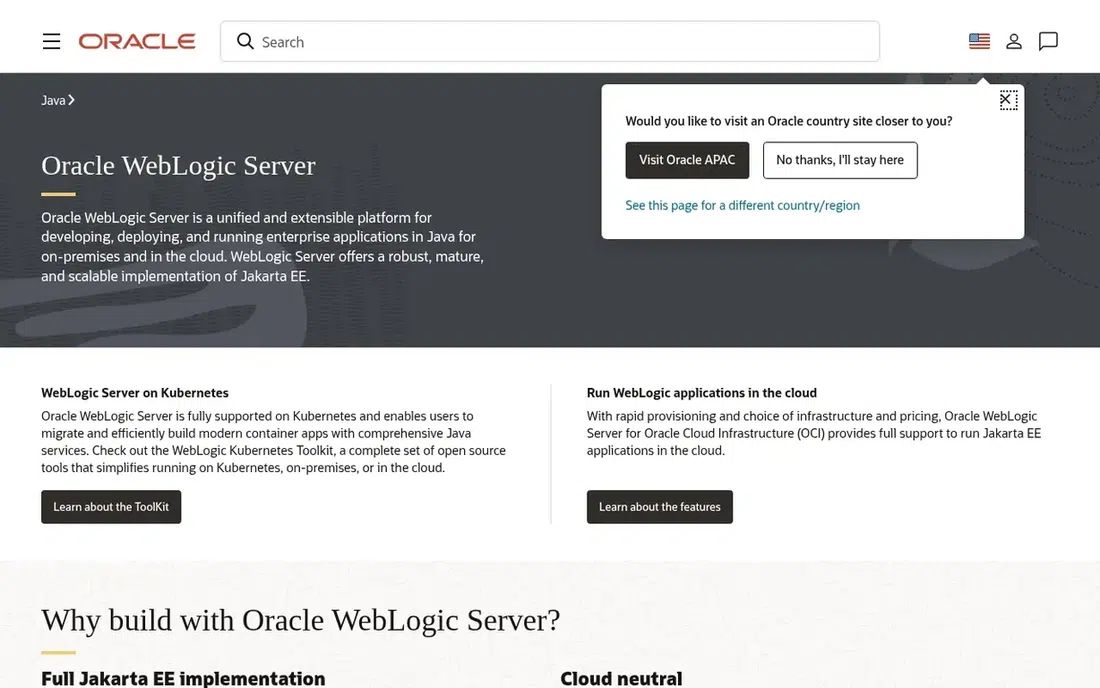
Oracle WebLogic Server works best for large-scale enterprise Java deployments. It is made for large organizations that require a solid, scalable environment with broad management and monitoring capabilities.
Main advantages: Supports on-premises and cloud.
What to check first: Commercial licensing required.
From a buyer's view, if you need a more straightforward or more economical option, consider Apache Tomcat or WildFly. Pick WebLogic when enterprise-grade features and Oracle ecosystem integration are priorities. This comparison lists no price for Oracle WebLogic Server; ask the vendor. On free options: Not stated.
- Extensible system
- Solid enterprise feature set
- Complicated setup and management
Think of Payara Server for supported open source middleware. Payara Server is a solid, stable, and completely supported middleware application server derived from GlassFish. It is made for enterprises that require a dependable Java EE environment with commercial support choices.
Watch-outs: Commercial support required for full benefits.
Its community is smaller compared with more established servers like Tomcat or JBoss. As for the details, for teams needing commercial support and a stable Java EE product, Payara Server is a capable contender. For purely community-driven projects, WildFly might be preferable. This comparison lists no price for Payara Server; ask the vendor. Trial and free access: Not stated.
- Derived from GlassFish
- Solid and stable
- Smaller community than some alternatives
Red Hat JBoss Enterprise Application Platform
Best for: Java EE 8 compliance and portability
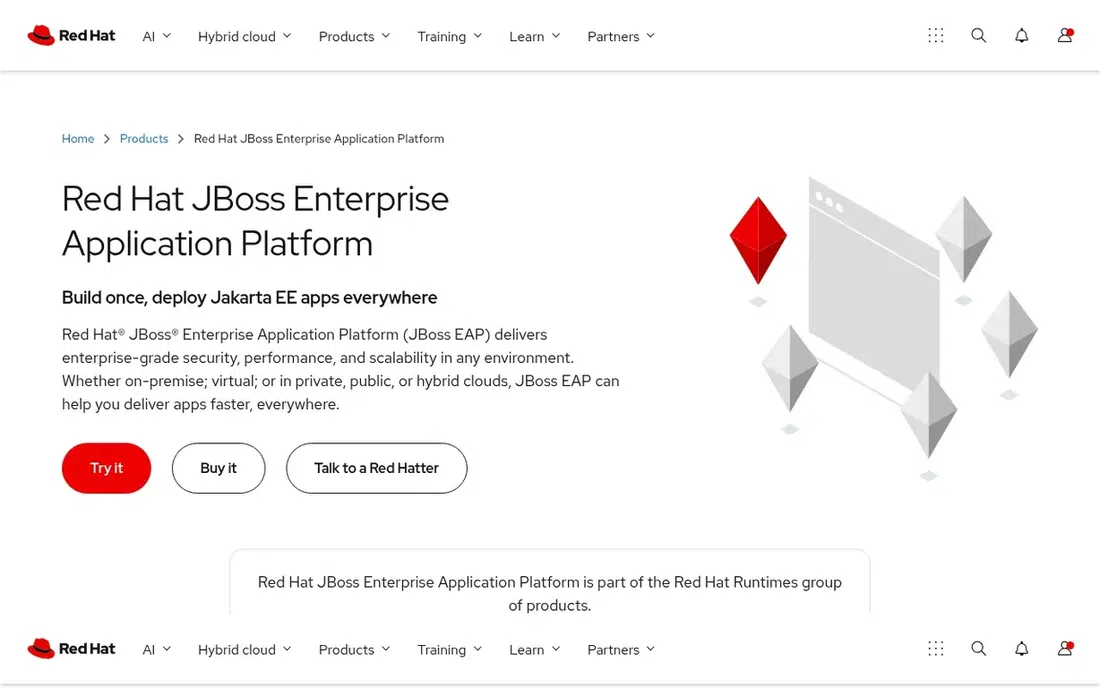
Red Hat JBoss Enterprise Application Platform targets Java EE 8 compliance and portability. It lets teams build Java applications once and deploy them across environments, which fits remote teams that require consistency between development and production. From a buyer's view, the server can be resource-intensive compared with light alternatives.
Teams without Java EE experience may face a ramp-up time. Choose JBoss when you need full Java EE capabilities and a supported open source path. More specifically, the system is a solid fit for organizations already using Red Hat technologies or those that require full Java EE compliance with the choice of commercial support. This comparison lists no price for Red Hat JBoss Enterprise Application Platform; ask the vendor. As for free access: Not stated.
Watch-outs: Heavier than light servers.
- Java EE 8-compliant
- Open source foundation
- Enterprise support may be required
What went into this list
LinkVetted looked at what each vendor publishes: pricing, plan limits, feature coverage for application server software for remote teams and stated drawbacks. No hands-on testing is claimed. Treat prices as a snapshot: vendors change plans often, so check the vendor site for the figure that applies today. The sequence is a judgement call: typical use case first, then pricing transparency, then free access. Use the profiles to check fit.
Pre-purchase checklist
- Confirm the entry price with every vendor: no tool from Apache Tomcat to Red Hat JBoss Enterprise Application Platform shows a fixed starting price.
- Before choosing Apache Tomcat, weigh its main limit: restricted to servlet and JSP support.
- Check the integration list for Payara Server against the tools you run today, and note which ones need a higher plan.
- Confirm minimum seats and billing terms with Apache Tomcat before you commit to an annual plan.
- Ask the daily users to test Oracle WebLogic Server on a live task before you roll it out to everyone.
FAQ
How are the tools for application server software for remote teams ordered?
Apache Tomcat sits first and Red Hat JBoss Enterprise Application Platform last because the order follows typical fit for application server software for remote teams, then price clarity and free access. It is a judgement call, so read each profile for fit and limits.
Can application servers support hybrid cloud environments?
Yes, numerous enterprise application servers for example IBM WebSphere and Oracle WebLogic support hybrid cloud deployments. Open source choices like WildFly can also be configured for cloud environments, though they may need more manual setup.
Is Apache Tomcat the right pick for everyone comparing application server software for remote teams?
No single tool suits every team. Apache Tomcat comes first because it fits lightweight servlet container, while WildFly suits full Java EE with open source flexibility and Oracle WebLogic Server suits large-scale enterprise Java deployments. Match the tool to your own size, budget and workflow before deciding.
Can I try these tools before paying?
Not by default. None of the tools, from Apache Tomcat to Red Hat JBoss Enterprise Application Platform, lists a free plan or a free trial here, so ask each vendor for a demo before committing.
Do these tools publish their prices?
No. None of the tools, from Apache Tomcat to Red Hat JBoss Enterprise Application Platform, shows a fixed starting price here, so budget time for quotes.
What is the best application server for remote teams?
The first pick on this list is Apache Tomcat, because it suits light servlet container. WildFly is better for full Java EE with open source adaptability, and Oracle WebLogic Server for large-scale enterprise Java deployments. Check price and limits against your own needs before choosing.
Sources
- https://tomcat.apache.org
- https://www.wildfly.org
- https://www.oracle.com/java/weblogic
- https://www.payara.fish
- https://www.redhat.com/en/technologies/jboss-middleware/application-platform