6 Application Server Software for Enterprise Worth Shortlisting in 2026
Best application server software for enterprise: 6 tools compared on price, free plans and fit. Costs and caveats sit beside each pick. Numbers first.
- Editor's choiceRed Hat JBoss Enterprise Application Platform
Open source Java EE standardization
Starts atPricing on requestVisit redhat.comFull review - Great alternativeOracle WebLogic Server
Unified Java EE enterprise system
Starts atPricing on requestVisit oracle.comFull review - Also consider
 Apache Tomcat
Light open source servlet container
Starts atPricing on requestVisit tomcat.apache.orgFull review
Direct answer
For open source Java EE standardization, Red Hat JBoss Enterprise Application Platform is where this list starts. Alternatives: Oracle WebLogic Server for unified Java EE enterprise product, and Apache Tomcat for light open source servlet container. Details and limits for the rest of the 6 tools are below. None of these vendors publish plan prices, so pricing is on request for every option.
TL;DR:
- Top of the list is Red Hat JBoss Enterprise Application Platform, which targets open source Java EE standardization.
- Every tool from Red Hat JBoss Enterprise Application Platform to Payara Server works by quote, with no list price shown.
- Payara Server is the one to check for supported open source Java EE middleware.
- One limit worth knowing about Apache Tomcat: not a full Java EE application server.
Last checked November 2026. Pricing on request: vendors did not publish plan prices when this guide was last checked (November 2026), so ask each vendor for a written quote.
Quick comparison
| Tool | Best for | Starts at | Free plan? | |
|---|---|---|---|---|
| Red Hat JBoss Enterprise Application Platform | Open source Java EE standardization | Pricing on request | Not stated | Visit |
| Oracle WebLogic Server | Unified Java EE enterprise system | Pricing on request | Not stated | Visit |
| Apache Tomcat | Light open source servlet container | Pricing on request | Not stated | Visit |
| IBM WebSphere Application Server | Secure hybrid cloud Java runtime | Pricing on request | Not stated | Visit |
| Microsoft Internet Information Services | Windows-native web and application hosting | Pricing on request | Not stated | Visit |
 Payara Server | Supported open source Java EE middleware | Pricing on request | Not stated | Visit |
Application Server Software for Enterprise profiles
LinkVetted put together this guide to application server software for enterprise for readers who want a clear shortlist without reading every vendor page. It compares 6 tools on starting price, free plans, who each one suits and where each one falls short.
Red Hat JBoss Enterprise Application Platform
Best for: Open source Java EE standardization
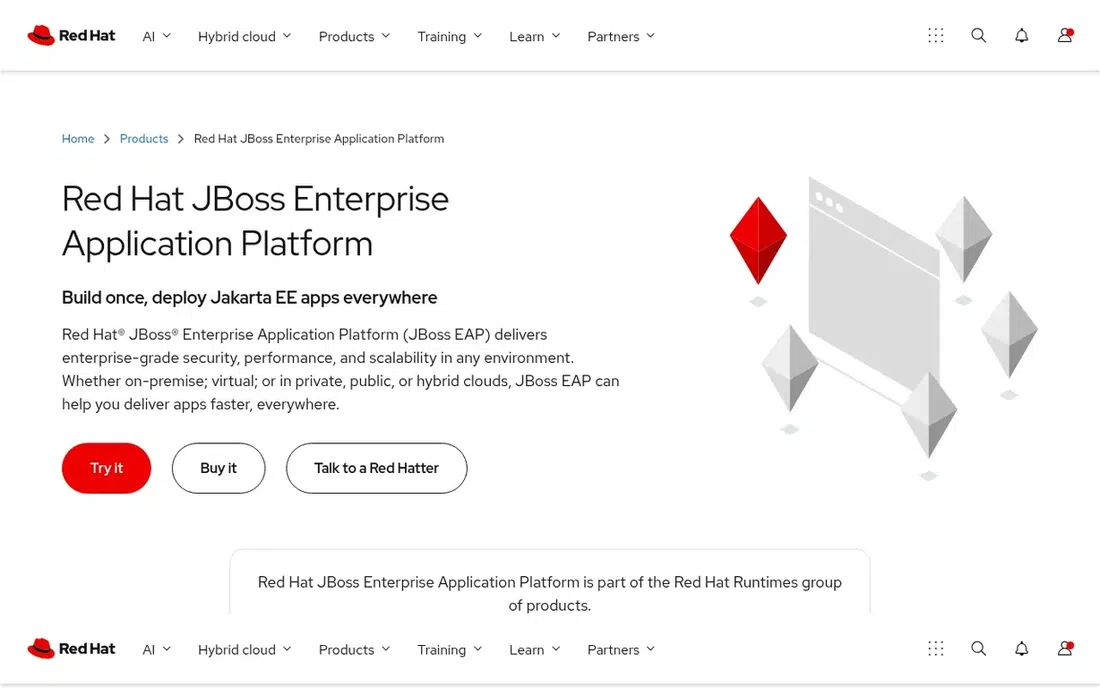
Red Hat JBoss Enterprise Application Platform makes the most sense for open source Java EE standardization. Groups needing a straightforward servlet container may prefer Apache Tomcat, whereas those wanting a unified commercial product could evaluate Oracle WebLogic Server.
Organizations migrating existing Java EE workloads commonly consider it a practical target. Its Java EE 8 compliance focus means teams wanting the newest Jakarta EE specifications may have to plan carefully. Red Hat JBoss Enterprise Application Platform does not show a starting price in this comparison, so check the vendor site for current pricing. On free options: Not stated.
Where it falls short: Java EE compliance focus may lag newer Jakarta EE features.
- Backed by Red Hat enterprise support
- Open source Java EE 8-compliant application server
- Needs Red Hat middleware expertise for advanced tuning
Oracle WebLogic Server
Best for: Unified Java EE enterprise system
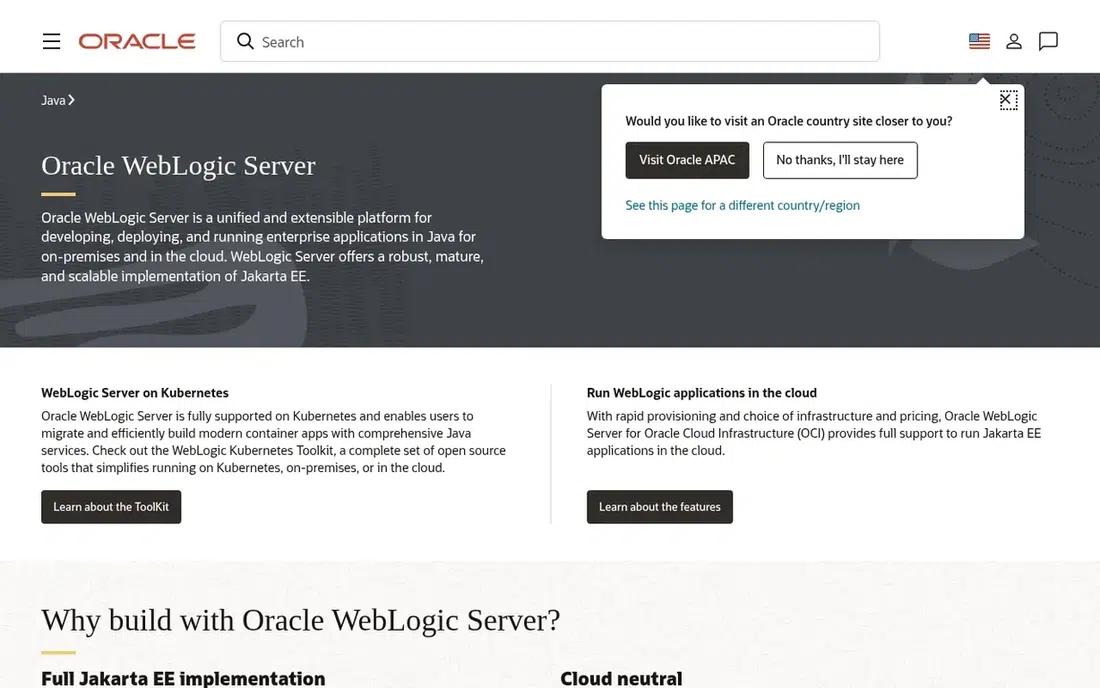
Pick Oracle WebLogic Server if this describes you: unified Java EE enterprise system. Oracle WebLogic Server is a unified, extensible platform for developing and deploying enterprise Java applications, available on-premises or in the cloud.
Watch-outs: Licensing and support tied to Oracle ecosystem.
What users get: Supports on-premises and cloud deployment.
On top of that, adoption can be closely tied to Oracle support and ecosystem decisions, which may not suit every budget or skills profile. Enterprises with existing Oracle middleware investments frequently treat it as a core runtime. Check the vendor site for Oracle WebLogic Server pricing; none is listed in this comparison. As for free access: Not stated.
- Extensible system for enterprise Java
- Capable fit for Oracle-centric application estates
- Administration can be involved for new adopters
For light open source servlet container, Apache Tomcat is a natural candidate. Numerous enterprises use it for microservices, internal tools, and edge web tiers.
Where it falls short: Restricted built-in enterprise management features.
Tomcat is not a complete Java EE application server, so it lacks built-in support for full enterprise APIs for example EJB and JMS. This comparison lists no price for Apache Tomcat; ask the vendor. Trial and free access: Not stated.
- Widely used open source servlet container
- Light footprint for Java web applications
- Not a full Java EE application server
IBM WebSphere Application Server
Best for: Secure hybrid cloud Java runtime
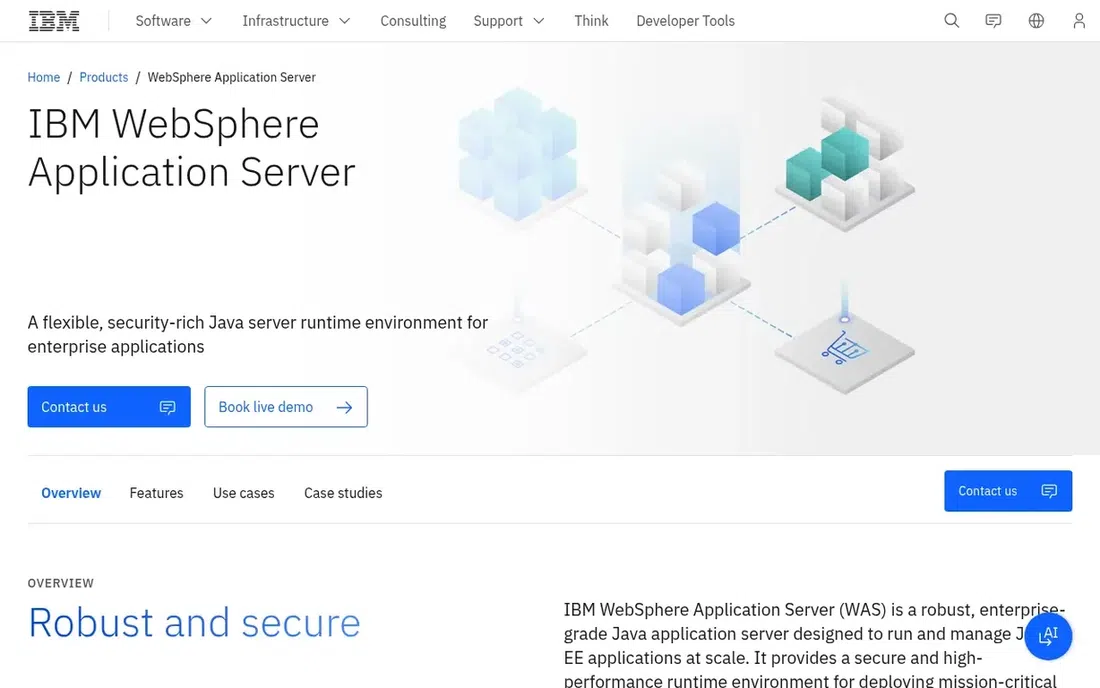
Where IBM WebSphere Application Server fits: secure hybrid cloud Java runtime. It targets organizations that require consistent management across cloud, on-premises, and hybrid deployments.
Where it falls short: Needs IBM-specific operational knowledge.
Worth adding: teams already standardized on IBM middleware commonly find it a natural fit for large-scale Java workloads. IBM WebSphere Application Server shows no starting price here, so confirm the cost on the vendor site. Free access: Not stated.
- Runs enterprise Java applications with secure high-performance runtimes
- Eases management across cloud, on-premises
- Can be complicated to configure for smaller teams
Microsoft Internet Information Services
Best for: Windows-native web and application hosting
In short, Microsoft Internet Information Services is for Windows-native web and application hosting. Microsoft Internet Information Services is the web server role built into Windows Server, often used to host ASP.NET applications and static sites.
Limits to weigh: Primarily Windows-centric deployment.
It suits enterprises standardized on Microsoft infrastructure that require a native Windows web and application hosting product. This comparison lists no price for Microsoft Internet Information Services; ask the vendor. Free access: Not stated.
- Familiar management tools for Windows administrators
- Integrated with the Windows Server ecosystem
- Less typical for Java enterprise workloads
Payara Server is built with supported open source Java EE middleware in mind. It suits enterprises that want open source Java EE lineage with commercial support choices.
Enterprises wanting a unified commercial Java system may evaluate Oracle WebLogic Server, whereas light needs may suit Apache Tomcat. This comparison lists no price for Payara Server; ask the vendor. On free options: Not stated.
Where it is weaker: Support model may need vendor engagement.
- Fully supported middleware
- Focus on enterprise support and stability
- Smaller ecosystem than major commercial vendors
How the list was put together
We compared the tools on published pricing, free plan or trial availability, feature coverage for application server software for enterprise, and the limits each vendor documents. Plan names, prices and limits change often. Treat the figures here as a starting point and verify them with the vendor. The ranking is editorial: typical fit first, then clear pricing, then free access. If your needs are unusual, read the profiles rather than relying on position.
Before you commit
- Request quotes from Red Hat JBoss Enterprise Application Platform, Payara Server and the others; the list shows no fixed prices.
- Read the limits listed for Red Hat JBoss Enterprise Application Platform first: Java EE compliance focus may lag newer Jakarta EE features.
- Get the contract term, renewal terms and any onboarding fees from IBM WebSphere Application Server in writing.
- Find out what support Red Hat JBoss Enterprise Application Platform includes on your plan, and whether onboarding help costs extra.
- Look at which plan of Microsoft Internet Information Services unlocks the features you need; entry tiers are often cut down.
FAQ
How are the tools for application server software for enterprise ordered?
Red Hat JBoss Enterprise Application Platform sits first and Payara Server last because the order follows typical fit for application server software for enterprise, then price clarity and free access. It is a judgement call, so read each profile for fit and limits.
Does any tool for application server software for enterprise here have a free plan?
No tool in this list, Red Hat JBoss Enterprise Application Platform and Payara Server included, has a permanent free plan. Trials and quotes are the usual route, so plan a short evaluation period.
Can these application servers run in cloud and hybrid environments?
Multiple choices, including IBM WebSphere Application Server and Oracle WebLogic Server, explicitly support cloud and hybrid deployments. Others may be deployed in cloud infrastructure, but you should confirm vendor documentation for supported topologies.
Can I try these tools before paying?
Not by default. None of the tools, from Red Hat JBoss Enterprise Application Platform to Payara Server, lists a free plan or a free trial here, so ask each vendor for a demo before committing.
Do these tools publish their prices?
No. None of the tools, from Red Hat JBoss Enterprise Application Platform to Payara Server, shows a fixed starting price here, so budget time for quotes.
Sources
- https://www.redhat.com/en/technologies/jboss-middleware/application-platform
- https://www.oracle.com/java/weblogic
- https://tomcat.apache.org
- https://www.ibm.com/products/websphere-application-server
- https://www.iis.net
- https://www.payara.fish