Choosing 3D Lighting Software in 2026: 6 Options Compared
Best 3D lighting software in 2026: 6 tools with starting prices, free plans and limits. Cost notes and weak points included. Reviewed in November 2026.
- Editor's choiceRedshift
GPU-accelerated production rendering
Starts atSee websiteVisit maxon.netFull review - Great alternative3ds Max
Large-scale modeling and rendering scenes
Starts atSee websiteVisit autodesk.comFull review - Also consider
 KeyShot
Live product visualization and collaboration
Starts at$7.92 a monthVisit keyshot.comFull review
Direct answer
Redshift is the first pick on this list for GPU-accelerated production rendering. Listed starting prices: KeyShot from $7.92 a month. Alternatives: 3ds Max for large-scale modeling and rendering scenes, and KeyShot for live product visualization and collaboration. The remaining 3 options are covered below with prices and limits.
TL;DR:
- Top of the list is Redshift, which targets GPU-accelerated production rendering.
- For predictable Monte Carlo ray tracing, Arnold is worth a look.
- Neither Redshift nor Arnold, nor any of the other 4 tools, has a permanent free plan; trials and quotes are the norm.
- The lowest published monthly entry price here is $7.92 per month, from KeyShot.
Last checked November 2026. Prices and plan details were read from the vendors' own pages in November 2026; vendors change plans often, so confirm the current price on the vendor site before you buy.
Quick comparison
| Tool | Best for | Starts at | Free plan? | |
|---|---|---|---|---|
| Redshift | GPU-accelerated production rendering | See website | Not stated | Visit |
| 3ds Max | Large-scale modeling and rendering scenes | See website | Not stated | Visit |
| KeyShot | Live product visualization and collaboration | $7.92 a month | Free trial | Visit |
 Cinema 4D | Integrated modeling, animation and lighting | See website | Not stated | Visit |
| Octane Render | GPU-accelerated unbiased rendering | See website | Not stated | Visit |
| Arnold | Predictable Monte Carlo ray tracing | See website | Not stated | Visit |
Tool-by-tool breakdown
This LinkVetted guide covers 6 options for 3D lighting software. Each profile lists a starting price, free plan details, strengths and drawbacks, so you can drop poor fits quickly.
Redshift
Best for: GPU-accelerated production rendering
In short, Redshift is for GPU-accelerated production rendering. Artists who prefer CPU-based ray tracing or a completely integrated host renderer may find another choice more straightforward. Also, teams already using Maxon tools or other major hosts commonly add Redshift for demanding visualization and animation work.
For everyday use, performance relies on having capable GPU hardware, which can affect hardware planning, and its render settings take time to learn. Beyond that, Redshift from Maxon is a GPU-accelerated renderer widely used in production pipelines for lighting and final-frame rendering. This comparison lists no price for Redshift; ask the vendor. Free options: Not stated.
Downsides: GPU hardware matters for performance.
- Suits Maxon and typical 3D pipelines
- GPU-focused rendering approach
- Ramp-up time for render settings
3ds Max
Best for: Large-scale modeling and rendering scenes
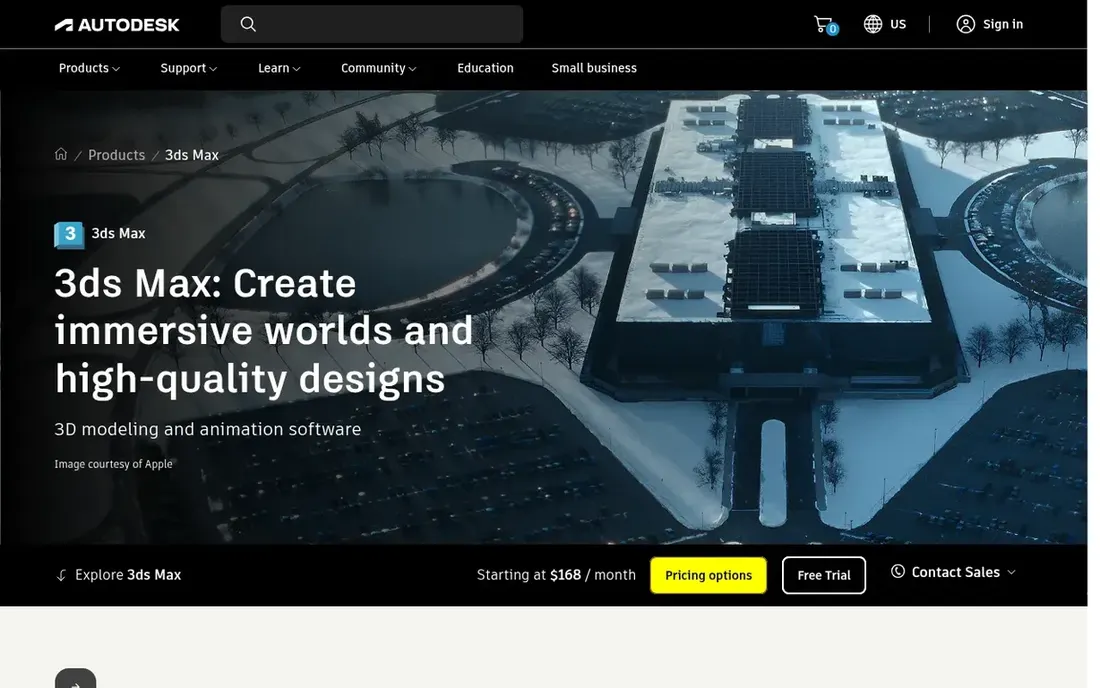
Pick 3ds Max if this describes you: large-scale modeling and rendering scenes. Autodesk 3ds Max is a professional 3D modeling, animation and rendering application targeted at creating expansive worlds and high-quality designs. It offers lighting and rendering tools within a mature production environment, making it a typical choice for visualization, design and entertainment studios that build complicated scenes.
Watch-outs: Windows-focused product.
On top of that, the application is deep and takes significant time to master. It is primarily a Windows product, which can limit mixed-OS teams. Pricing for 3ds Max is not stated here, so ask the vendor for current figures. Free plan details: Not stated.
Strengths: animation and rendering toolset.
- Manages expansive world building
- Widely used in design and visualization studios
- Deep toolset takes time to learn
KeyShot is designed for real-time product visualization and collaboration. KeyShot from KeyShot provides live 3D rendering technology pitched at product design companies, supporting collaboration from concept to product launch. Its focus on product visualization makes it approachable for users who are not full-time 3D artists.
What users get: Supports collaboration from concept to launch.
Studios needing deep, platform-wide photorealistic rendering across numerous hosts may prefer a plugin renderer. Worth adding: KeyShot is narrower in scope than complete 3D suites, so complicated character animation or large world building may call for a different application. Starting cost for KeyShot: $7.92 per month. Free options: Free trial. The main drawbacks: Less centred on general animation pipelines.
- Built around product design workflows
- Real-time rendering technology
- Narrower scope than full 3D suites

In short, Cinema 4D is for integrated modeling, animation and lighting. Cinema 4D from Maxon is a professional 3D modeling, animation and rendering application that plenty of motion graphics and visualization artists use for lighting and look development.
Drawbacks to consider: Plugin ecosystems add complexity.
As a general 3D application, it may offer less specialized lighting control than dedicated renderers and often depends on external engines for advanced photorealistic output. More specifically, studios with an established pipeline built around another host application may find a standalone renderer a better fit. This comparison lists no price for Cinema 4D; ask the vendor. Free access: Not stated.
- All-in-one modeling and rendering environment
- Well suited to motion graphics workflows
- General renderer rather than a dedicated lighting engine
Octane Render
Best for: GPU-accelerated unbiased rendering
Octane Render is aimed squarely at GPU-accelerated unbiased rendering. OTOY OctaneRender is described as a GPU-accelerated, unbiased, physically correct renderer.
In daily use, since it depends on GPU acceleration, scene size and complexity are constrained by available graphics memory, and capable hardware is important. No starting price is listed for Octane Render here; confirm pricing on the vendor site. As for free access: Not stated.
Reasons to shortlist it: Physically correct lighting model. Downsides: Needs capable graphics hardware.
- Unbiased renderer
- GPU-accelerated
- GPU memory limits large scenes
Arnold
Best for: Predictable Monte Carlo ray tracing
Where Arnold fits: predictable Monte Carlo ray tracing. Studios already using Autodesk tools commonly find it a natural addition to their lighting and rendering pipeline.
Honest limits: Needs familiarity with rendering concepts.
Ray tracing workloads can be render-intensive, so output speed depends heavily on hardware and scene complexity, and new users need time to learn its rendering concepts. Those wanting GPU-focused or live workflows may prefer a different renderer. Pricing for Arnold is not stated here, so ask the vendor for current figures. Free options: Not stated.
- Advanced Monte Carlo ray tracing renderer
- Available through Autodesk channels
- Ray tracing can be render-intensive
How we built this list
We compared the tools on published pricing, free plan or trial availability, feature coverage for 3D lighting software, and the limits each vendor documents. Figures are shown as the vendors publish them. Billing terms, seat minimums and add-ons can change the real cost. Tools are placed by general fit for 3D lighting software, with price clarity and free access as tie-breakers. A different team can reasonably rank them differently.
Things to verify first
- Ask Redshift, 3ds Max, Cinema 4D and others for a written quote, since no starting price is shown.
- Run a trial of KeyShot with real work before paying for a year; your own workflow is the best test.
- Read the limits listed for Redshift first: GPU hardware matters for performance.
- List the apps you already depend on and check that Arnold supports each one on the plan you would buy.
- Get the contract term, renewal terms and any onboarding fees from Redshift in writing.
FAQ
Is Redshift the right pick for everyone comparing 3D lighting software?
No single tool suits every team. Redshift comes first because it fits GPU-accelerated production rendering, while 3ds Max suits large-scale modeling and rendering scenes and KeyShot suits real-time product visualization and collaboration. Match the tool to your own size, budget and workflow before deciding.
Can I try these options before paying?
Often, yes. KeyShot offers a free trial. Use your own data and a real task during the test, and check what the free tier or trial limits before you rely on it. Prices, free plan details and limits for all 6 tools in this 3D Lighting software roundup sit on the individual cards above.
Does any tool for 3D lighting software here have a free plan?
A permanent free plan is not offered by Redshift, Arnold or the other tools here. KeyShot offer a trial. Plan a short evaluation period instead.
What is the cheapest option for 3D lighting software in this list?
On published monthly entry prices, KeyShot is the lowest here at $7.92 per month. Entry price is only part of the cost, because seats, add-ons and billing terms can change the total. Each of the 6 options in this 3D Lighting software guide has its own card above with the price, free plan and limits.
Sources
- https://www.maxon.net/en/redshift
- https://www.autodesk.com/products/3ds-max
- https://www.keyshot.com
- https://www.maxon.net/en/cinema-4d
- https://home.otoy.com/render/octane-render
- https://www.autodesk.com/products/arnold