Adobe Target Alternatives in 2026: 9 Tools Compared
Looking for adobe target alternatives? We compare 9 A/B testing and personalization tools, with current prices, free plans, features and honest trade-offs.
- Editor's choice
 Optimizely
Enterprise web experimentation
Starts atSee websiteVisit optimizely.comFull review - Great alternative
 VWO
All-in-one CRO platform
Starts at$199 per monthVisit vwo.comFull review - Also consider
 AB Tasty
Personalization-led testing
Starts atSee websiteVisit abtasty.comFull review
TL;DR:
- Optimizely is the closest enterprise replacement for Adobe Target, but both use custom pricing and suit teams with serious traffic.
- VWO is the most complete all-in-one option here, pairing testing with heatmaps, recordings, and personalization in one platform.
- Zoho PageSense and Crazy Egg are the affordable entries for small teams that want real A/B tests without an enterprise contract.
- GrowthBook and Statsig suit product and engineering teams that want warehouse-friendly experimentation with developer control.
Quick comparison
| Tool | Best for | Starts at | Free plan? | |
|---|---|---|---|---|
| Optimizely | Enterprise web experimentation | See website | Free trial | Visit |
| VWO | All-in-one CRO platform | $199 per month | Yes | Visit |
| AB Tasty | Personalization-led testing | See website | Free trial | Visit |
 Kameleoon | AI-driven experimentation | $495 per month | Free trial | Visit |
 Convert | Privacy-first testing | $299 per month | Free trial | Visit |
 Zoho PageSense | Affordable Zoho testing | $17 per month | Yes | Visit |
 Crazy Egg | Simple tests plus heatmaps | $29 per month | Free trial | Visit |
 GrowthBook | Open source experimentation | Free | Yes | Visit |
 Statsig | Product experimentation at scale | See website | Yes | Visit |
The best Adobe Target alternatives
Adobe Target is powerful for enterprise testing and AI personalization inside Adobe Experience Cloud, but it assumes a large budget, Adobe licences, and specialist skill. The tools below cover the same jobs, from simple page tests to server-side product experiments, at a range of prices and technical levels.
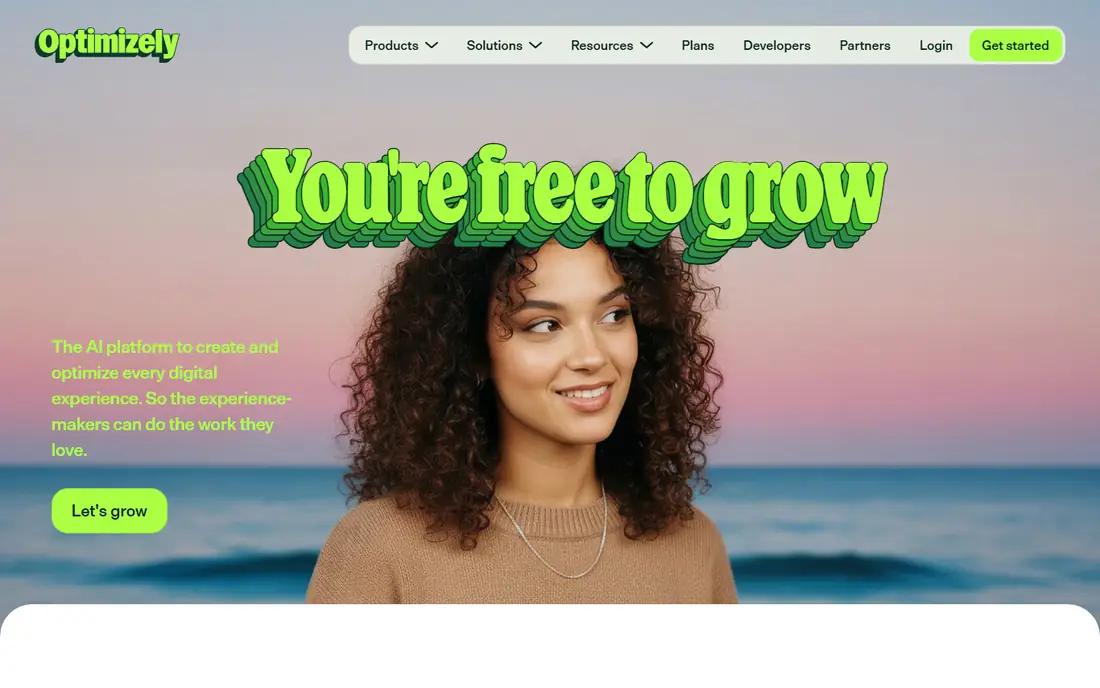
Optimizely is the tool most large teams consider first when leaving Adobe Target. It supports web A/B tests, multivariate tests, and feature experiments through SDKs, with experiment analytics, health checks, and audience rules built in. Teams with mature testing programmes value its stats engine and its ability to run many experiments safely at once.
The cost and complexity are the trade-offs. Pricing is quoted, and a full programme needs people who understand experiment design, sample sizes, and rollout governance. For a large organisation replacing Target one-to-one, Optimizely is the natural choice. For a small team, a cheaper tool below will deliver faster value.
- Mature web and feature experimentation
- Strong stats and audience targeting
- Broad enterprise integrations
- Custom pricing that can reach enterprise levels
- Setup and governance need experienced staff
- Smaller teams may find it heavy
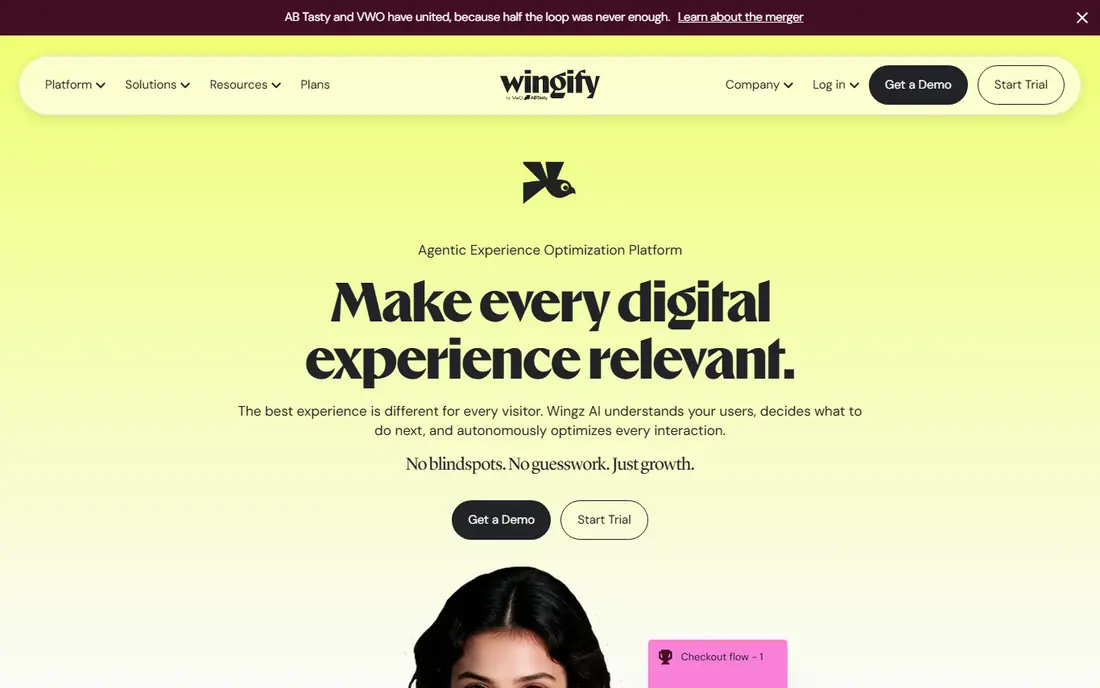
VWO pairs A/B testing with the behaviour data teams need to form good hypotheses. Heatmaps and session recordings show where visitors struggle, funnels show where they drop off, and the visual editor lets marketers build tests without developer help for many page changes. Personalization and recommendations add to the suite for teams that want more than testing alone.
Pricing scales with monthly tested users, so a high-traffic site should model its traffic before choosing a tier. The free starter tier is useful for small sites, but serious programmes will need a paid plan. For a mid-market team that wants one CRO platform instead of several tools, VWO is our pick for most people here.
- Testing plus heatmaps, recordings, and funnels
- Visual editor for marketers
- Free starter tier for small sites
- Paid testing plans scale with traffic
- Advanced features need higher tiers
- Interface has a learning curve at first
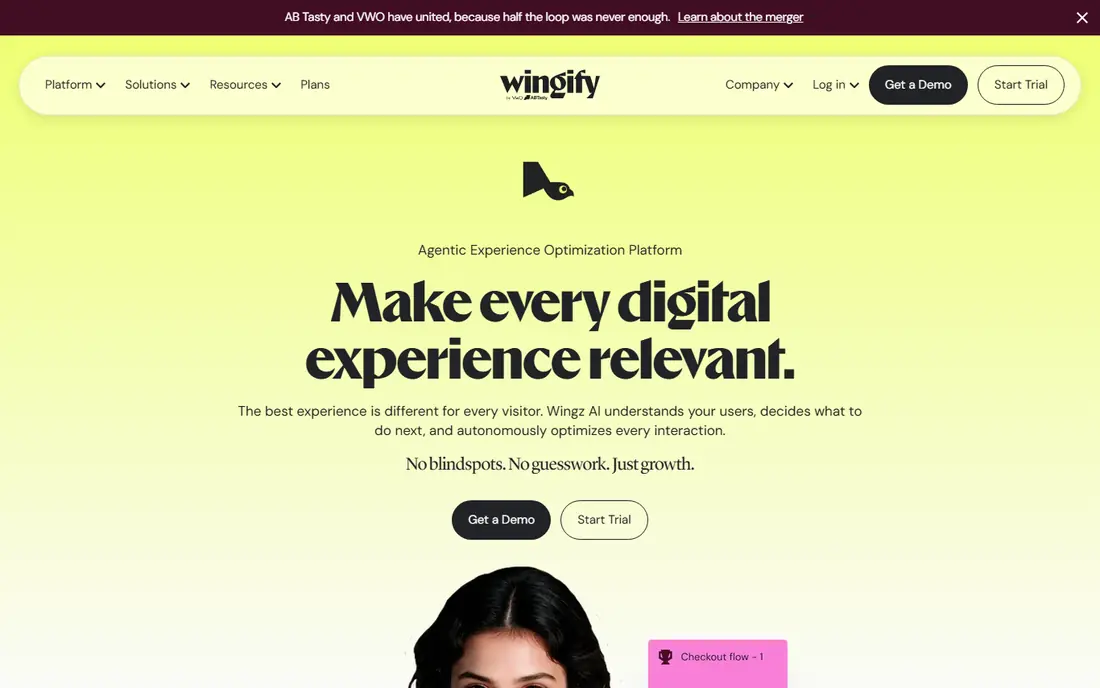
AB Tasty combines experimentation with personalization, so a team can test page changes and then serve winning variants to specific audiences automatically. Its visual editor, widget library, and AI-assisted personalization suit ecommerce and media teams that want to move from one-off tests to always-on optimisation.
Pricing is quoted, which makes quick budget comparisons harder, and buyers should confirm which modules are included in a quote. For a team that wants testing and personalization from one vendor, AB Tasty is a strong Target alternative. For simple A/B tests only, a lower cost tool will do the same job for less.
- Testing plus personalization and recommendations
- Visual editor and audience targeting
- Good for mid-market and enterprise teams
- Custom pricing
- Feature depth needs a demo to scope
- Smaller teams may find it pricier than simpler tools
Kameleoon is built for teams that want AI-driven testing and personalization with strong privacy controls. It supports web tests, server-side tests, and feature experiments, and its AI engine can predict which variant suits each visitor. Regulated teams value its consent and data handling options, which are designed for European privacy rules as well as US practice.
The $495 per month entry price puts it firmly in mid-market territory, and server-side work needs developer time. For a team with real traffic, a personalization goal, and privacy requirements, Kameleoon justifies its price. For a small site running occasional tests, Zoho PageSense or Crazy Egg will be cheaper.
- Hybrid client and server-side testing
- AI personalization engine
- Strong privacy and consent handling
- Entry price is high for small teams
- Setup needs technical input for server-side work
- Reporting depth needs a trial to judge
Convert positions itself as the privacy-first testing platform, with no data sampling and clear data handling that appeals to agencies and regulated brands. It offers A/B, multivariate, and split URL tests, plus multi-page funnels, with stats that agencies trust for client reporting. Multi-account tools make it practical for agencies running tests for several clients.
The lack of a free plan and the $299 per month entry price mean small sites should compare it with cheaper options first. Convert also focuses on testing rather than behaviour analytics, so teams that want heatmaps will pair it with another tool. For privacy-sensitive testing at scale, it is a solid choice.
- Privacy-first design with no data sampling
- Strong stats and agency tools
- Good support for regulated sites
- No free plan
- Entry price is mid-market
- Heatmaps and recordings need separate tools
Zoho PageSense is the budget surprise in this list. For $17 per month on annual billing, a small team gets A/B testing plus heatmaps, session recordings, funnels, and form analytics, which many rivals split across separate products. The free plan lets a new site test the basics before paying.
It does not match Optimizely or VWO for advanced personalization, server-side experiments, or large-scale governance. Teams outside Zoho can still use it, but Zoho users get the smoothest setup. For a small business starting a testing habit, PageSense offers the most features per dollar here.
- Low entry price for A/B testing
- Heatmaps, funnels, and form analytics included
- Fits Zoho ecosystem users
- Less depth than enterprise platforms
- Personalization is more limited
- Best value mainly inside Zoho
Crazy Egg is best known for heatmaps, and its A/B testing fits the same audience: small teams that want to see what visitors do and test simple changes. Setup is quick, reports are visual, and the price is accessible for a small site. A team can run a headline or button test, watch recordings, and decide with evidence rather than opinion.
Advanced users will miss multivariate depth, feature flags, and server-side tests. Traffic limits also mean a growing site should check plan tiers early. For a small team that wants testing plus behaviour insight in one simple tool, Crazy Egg is a friendly starting point.
- Simple A/B testing with heatmaps and recordings
- Easy setup for small teams
- Clear visual reports
- Testing depth is lighter than VWO
- No server-side experimentation
- Higher traffic needs higher plans
GrowthBook suits product and engineering teams that want control over their experiment data. You can self-host it free, connect it to your warehouse, and run feature flags and A/B tests with stats that use your own data. That control appeals to teams that distrust black-box stats or need strict data handling.
The trade-off is ease for marketers. GrowthBook is developer-first, so a marketing-only team may find its editor and workflow thinner than VWO or AB Tasty. The hosted cloud version charges per seat, which is still affordable for small product teams. For an engineering-led team, GrowthBook is excellent value.
- Open source and free to self-host
- Feature flags plus A/B tests
- Warehouse-friendly stats and data control
- Self-hosting needs engineering time
- Cloud pricing is per seat
- Marketer-friendly editing is thinner than VWO
Statsig, now part of Amplitude, is built for product teams that experiment on features, not just web pages. It combines product analytics, feature gates, and experimentation, with auto-tuning and variance reduction features that help large product teams reach decisions faster. A free tier lets small teams start without a contract.
Usage-based pricing means a team should model events and experiment volume before committing, and marketing-only teams may prefer a web-focused tool. For a product-led company that wants experiments tied directly to product metrics, Statsig is a strong Adobe Target alternative.
- Product analytics plus experimentation in one platform
- Feature gates and dynamic config
- Free tier for getting started
- Pricing is usage-based and needs modelling
- Web marketing tests are less central
- Setup needs product and data input
How we picked these
We compared official pricing pages, feature documentation, and public reviews for tools that cover Adobe Target core jobs: A/B and multivariate testing, personalization, feature experimentation, and experiment stats. We included enterprise platforms, all-in-one CRO suites, budget tools, and developer-led options. Prices reflect vendor pages checked in October 2026, and quote-only tools are marked as See website.
How to run tests that actually teach you something
Start with a hypothesis, not a tool setting
Write down what you think is wrong, who it affects, and what change should fix it, before you build a variant. A test without a hypothesis produces a winner without a lesson, and the next test starts from scratch. Keep a simple log of hypotheses, results, and follow-up actions so learning compounds over time.
Check traffic and sample size before launch
Small sites often run tests that can never reach a reliable result, then ship a false winner. Use a sample size calculator, check your monthly visitors on the tested page, and run the test long enough to cover weekly cycles. If traffic is too low for a page test, test a higher traffic page or use qualitative research first.
Guard against flicker and broken variants
Test every variant on mobile and desktop, check analytics tagging, and watch for flicker where the original page flashes before the variant loads. Server-side tests avoid flicker but need developer time, while client-side tools are faster for marketing pages. A short QA checklist before launch prevents most embarrassing test failures.
FAQ
What is the best Adobe Target alternative for enterprises?
Optimizely is the closest enterprise replacement, with web and feature experimentation, strong stats, and enterprise governance. AB Tasty and Kameleoon are also enterprise-ready, with Kameleoon standing out for AI personalization and privacy handling. All three need a quoted price, so request a scoped quote for your traffic.
Is there a free Adobe Target alternative?
GrowthBook is free to self-host, and VWO, Zoho PageSense, and Statsig offer free tiers or starter plans. Free options cover basic testing well, but advanced personalization, high traffic, and enterprise governance usually need a paid plan. Start free to learn the workflow, then upgrade when volume grows.
Which Adobe Target alternative is cheapest?
Zoho PageSense, at $17 per month, is the cheapest paid entry here, followed by Crazy Egg at $29 per month. Both suit small sites with modest traffic. For a free self-hosted option, GrowthBook costs nothing for software, though hosting and engineering time still have a cost.
Can VWO replace Adobe Target?
For most mid-market teams, yes. VWO covers A/B and multivariate testing, personalization, heatmaps, and recordings in one platform, which matches much of Target use. Very large enterprises with deep Adobe stack integration or server-side scale may still prefer Optimizely or Kameleoon.
Do I need a developer to run A/B tests?
Not for simple page tests on VWO, AB Tasty, Zoho PageSense, or Crazy Egg, which offer visual editors for marketers. Server-side tests, feature experiments, and GrowthBook or Statsig setups do need developer help. Choose a tool that matches who will actually build tests on your team.
How is personalization different from A/B testing?
A/B testing compares variants to find a winner for most visitors, while personalization serves different variants to different audiences based on behaviour, location, or traits. Adobe Target, Optimizely, VWO, AB Tasty, and Kameleoon all support personalization, but the depth and AI features vary by plan.
Sources
- https://www.optimizely.com/pricing/
- https://vwo.com/pricing/
- https://www.abtasty.com/pricing/
- https://www.kameleoon.com/pricing/
- https://convert.com/pricing/
- https://www.zoho.com/pagesense/pricing.html
- https://www.crazyegg.com/pricing
- https://www.growthbook.io/pricing
- https://www.statsig.com/pricing