EMR Integration Software in 2026: The 5 Best Options Side by Side
Compare 5 picks for the top EMR integration software, with prices, free plans and who each fits. Concise write-ups of every option. Full profiles inside.
- Editor's choiceOracle Health (Cerner)
Organizations wanting secure, dependable health options
Starts atPricing on requestVisit oracle.comFull review - Great alternative
 athenahealth
Ambulatory practices wanting connected workflows
Starts atPricing on requestVisit athenahealth.comFull review - Also considerEpic Systems
Large health systems needing deep integration
Starts atPricing on requestVisit epic.comFull review
Direct answer
This list puts Oracle Health (Cerner) first for organizations wanting secure, steady health options. For a different need, athenahealth covers ambulatory practices wanting connected workflows and Epic Systems covers large health systems needing deep integration. Details and limits for the rest of the 5 tools are below. None of these vendors publish plan prices, so pricing is on request for every option.
TL;DR:
- The list opens with Oracle Health (Cerner), aimed at organizations wanting secure, dependable health options.
- Athenahealth comes with a trade-off: primarily oriented toward ambulatory settings.
- Oracle Health (Cerner), Allscripts and the 3 others all need a premium plan or a trial, since no free plan is listed.
- Allscripts fits data-driven healthcare option portfolios.
Last checked November 2026. Pricing on request: vendors did not publish plan prices when this guide was last checked (November 2026), so ask each vendor for a written quote.
Quick comparison
| Tool | Best for | Starts at | Free plan? | |
|---|---|---|---|---|
| Oracle Health (Cerner) | Organizations wanting secure, dependable health options | Pricing on request | Not stated | Visit |
| athenahealth | Ambulatory practices wanting connected workflows | Pricing on request | Not stated | Visit |
| Epic Systems | Large health systems needing deep integration | Pricing on request | Not stated | Visit |
 eClinicalWorks | Practices seeking all-in-one EMR and PM | Pricing on request | Not stated | Visit |
| Allscripts | Data-driven healthcare option portfolios | Pricing on request | Not stated | Visit |
EMR Integration Software compared in detail
LinkVetted put together this guide to EMR integration software for readers who want a clear shortlist without reading every vendor page. It compares 5 tools on starting price, free plans, who each one suits and where each one falls short.
Oracle Health (Cerner)
Best for: Organizations wanting secure, dependable health options
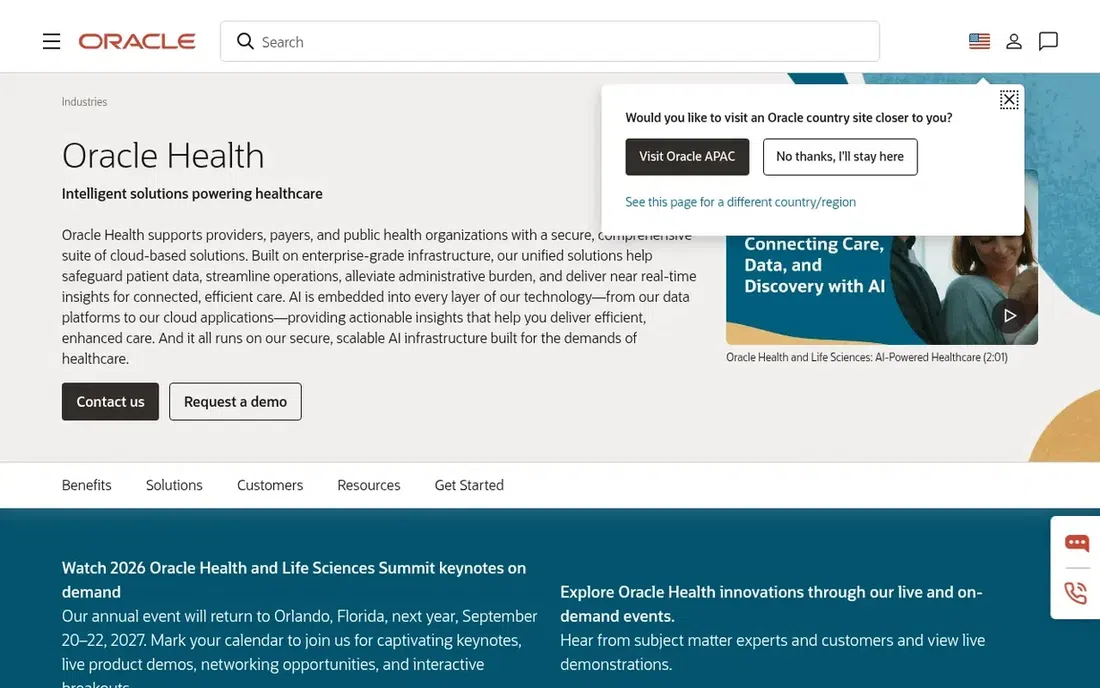
Oracle Health (Cerner) makes the most sense for organizations wanting secure, steady health solutions. It fits healthcare organizations that want a major vendor with a wide portfolio and a capable emphasis on data-driven insight alongside clinical software, especially where reliability and security are central buying criteria.
From a buyer's view, the breadth of the portfolio means teams should define integration goals plainly before committing, since scope can expand. Oracle Health (Cerner) does not show a starting price in this comparison, so check the vendor site for current pricing. As for free access: Not stated.
Watch-outs: Integration work relies on existing systems.
- Emphasis on people-centric experiences
- Focus on secure and steady options
- Wide product may need careful scoping
athenahealth targets ambulatory practices wanting connected workflows. Confirm that the specific integrations your practice depends on are supported before you commit.
In daily use, athenahealth supplies healthcare products and services for ambulatory care, describing a mission to cure complexity and link the healthcare ecosystem. This comparison lists no price for athenahealth; ask the vendor. Trial and free access: Not stated.
Points against: Primarily oriented toward ambulatory settings.
- Mission centered on reducing complexity
- Emphasis on connecting the healthcare ecosystem
- Large hospital needs may exceed its focus
Epic Systems
Best for: Large health systems needing deep integration
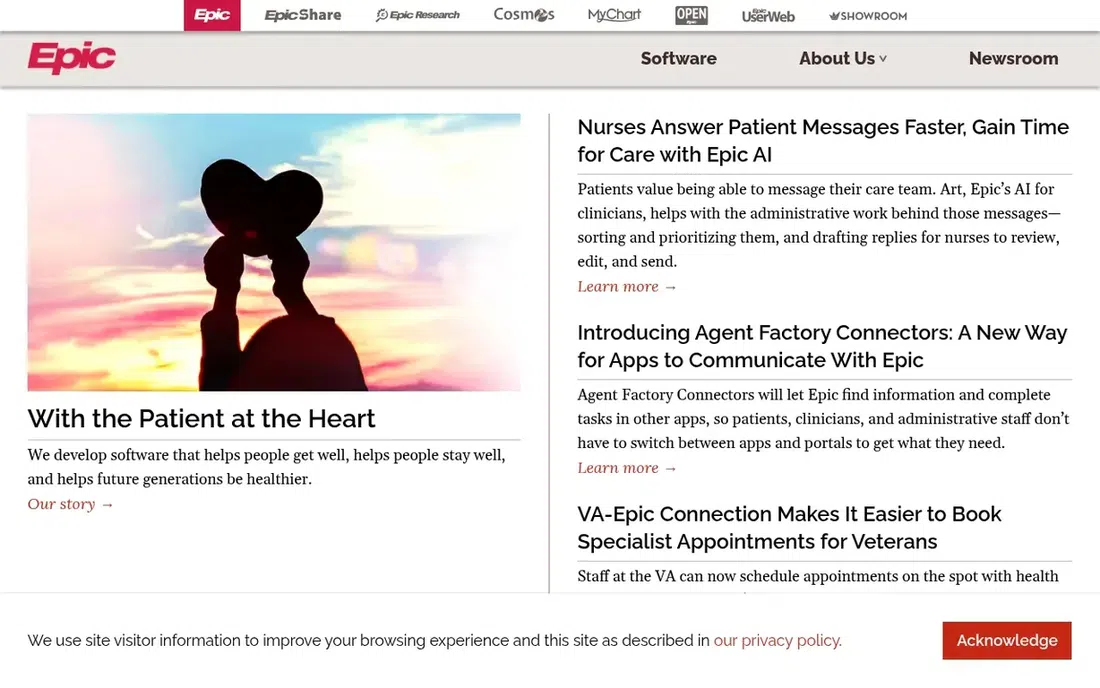
Pick Epic Systems if this describes you: large health systems needing deep integration. Epic Systems develops software with the stated goal of helping people get well, stay well and support healthier future generations, with the patient at the heart of its approach.
It suits large hospitals and health systems that want a tightly integrated EMR environment spanning numerous departments and care settings, where coordinated workflows across a big organization matter more than fast standalone deployment. No starting price is listed for Epic Systems here; confirm pricing on the vendor site. Free plan details: Not stated.
Watch-outs: Usually aimed at bigger organizations.
- Long-standing healthcare software focus
- Wide integrated clinical software suite
- Implementation scope can be substantial
eClinicalWorks works best for practices seeking all-in-one EMR and PM. eClinicalWorks is a well-known ambulatory EMR and practice management vendor that merges clinical documentation with front-office and billing functions in one suite.
Where it falls short: Fit relies on specialty needs.
It suits physician practices and clinics that want an integrated record and practice management foundation from a single vendor, and that are prepared to configure the system around their own workflows and specialty requirements. eClinicalWorks does not show a starting price in this comparison, so check the vendor site for current pricing. Free plan details: Not stated.
- Merges clinical and front-office functions
- Widely known ambulatory EMR and practice management suite
- Configuration effort can be significant
Allscripts
Best for: Data-driven healthcare option portfolios
Where Allscripts fits: data-driven healthcare option portfolios. It suits organizations looking for a broad portfolio of healthcare solutions that address critical needs across different levels of the care ecosystem, especially where data-driven insight and interoperability across products are priorities.
The broad portfolio means buyers should map products to their actual integration needs to avoid unnecessary complexity. No starting price is listed for Allscripts here; confirm pricing on the vendor site. Free access: Not stated.
The main drawbacks: Portfolio breadth can complicate selection.
- Wide spectrum of healthcare options
- Aims to meet critical needs at every level
- Integration planning needs diligence
How these tools were picked
Pricing pages, product documentation and feature lists were the main sources, and every entry carries at least one honest drawback. Where a vendor does not publish a price, the entry says quote. Where a price depends on seats or billing term, the entry says so. Tools are placed by general fit for EMR integration software, with price clarity and free access as tie-breakers. A different team can reasonably rank them differently.
What to confirm before you sign up
- Confirm the entry price with every vendor: no tool from Oracle Health (Cerner) to Allscripts shows a fixed starting price.
- Read the limits listed for Oracle Health (Cerner) first: wide system may need careful scoping.
- Look at the renewal terms for Allscripts: auto-renewal, notice periods and price changes can matter more than the first-year price.
- Add up seats, add-ons and usage charges for Epic Systems before comparing it with cheaper entries.
- Run a one or two week pilot of Oracle Health (Cerner) with the people who will use it every day.
FAQ
Do these tools publish their prices?
No. None of the tools, from Oracle Health (Cerner) to Allscripts, shows a fixed starting price here, so budget time for quotes.
Is Oracle Health (Cerner) the right pick for everyone comparing EMR integration software?
No single tool suits every team. Oracle Health (Cerner) comes first because it fits organizations wanting secure, reliable health solutions, while athenahealth suits ambulatory practices wanting connected workflows and Epic Systems suits large health systems needing deep integration. Match the tool to your own size, budget and workflow before deciding.
How are the tools for EMR integration software ordered?
The order follows typical fit for EMR integration software, with Oracle Health (Cerner) first and Allscripts last, then price clarity and free access. It is editorial judgement, not a score, so another team could rank the tools differently.
Does any tool for EMR integration software here have a free plan?
No tool in this list, Oracle Health (Cerner) and Allscripts included, has a permanent free plan. Trials and quotes are the usual route, so plan a short evaluation period.
Sources
- https://www.oracle.com/health
- https://www.athenahealth.com
- https://www.epic.com
- https://www.eclinicalworks.com
- https://www.allscripts.com