The 6 Best Healthcare Integration Engines Software in 2026, Ranked
6 products for the best healthcare integration engines software, ranked by fit, with starting costs and free tiers. Weak spots flagged for every entry.
- Editor's choiceOracle Health Integration
Oracle Health clinical environments
Starts atSee websiteVisit oracle.comFull review - Great alternativeInterSystems IRIS for Health
Building healthtech data products
Starts atSee websiteVisit intersystems.comFull review - Also considerQvera Interface Engine
Adaptable deployment across healthcare standards
Starts at$9,980 a yearVisit qvera.comFull review
Direct answer
Start with Oracle Health Integration if you need Oracle Health clinical environments. Listed starting prices: Qvera Interface Engine from $9,980 a year. For a different need, InterSystems IRIS for Health covers building healthtech data products and Qvera Interface Engine covers adaptable deployment across healthcare standards. The remaining 3 options are covered below with prices and limits.
TL;DR:
- Oracle Health Integration sits first on this list: Oracle Health clinical environments.
- For Oracle Health Integration, InterSystems IRIS for Health, Rhapsody Integration Engine and others, you have to request a quote because no starting price is shown.
- None of the 6 tools, from Oracle Health Integration to Epic Bridges, has a free plan, so budget for a subscription or use a trial.
- What to know about InterSystems IRIS for Health first: system breadth layers on complexity.
- Epic Bridges suits organizations within the Epic ecosystem.
Last checked November 2026. Prices and plan details were read from the vendors' own pages in November 2026; vendors change plans often, so confirm the current price on the vendor site before you buy.
Quick comparison
| Tool | Best for | Starts at | Free plan? | |
|---|---|---|---|---|
| Oracle Health Integration | Oracle Health clinical environments | See website | Not stated | Visit |
| InterSystems IRIS for Health | Building healthtech data products | See website | Not stated | Visit |
| Qvera Interface Engine | Adaptable deployment across healthcare standards | $9,980 a year | Free trial | Visit |
| Rhapsody Integration Engine | Wide HL7, FHIR and API interoperability | See website | Not stated | Visit |
| Redox | Connect-once data exchange model | See website | No | Visit |
| Epic Bridges | Organizations within the Epic ecosystem | See website | Not stated | Visit |
Healthcare Integration Engines Software compared in detail
If you are comparing healthcare integration engines software, this page covers 6 tools in one place: what each is best for, what it costs to start, whether it has a free plan, and the main limit to know about.
Oracle Health Integration
Best for: Oracle Health clinical environments
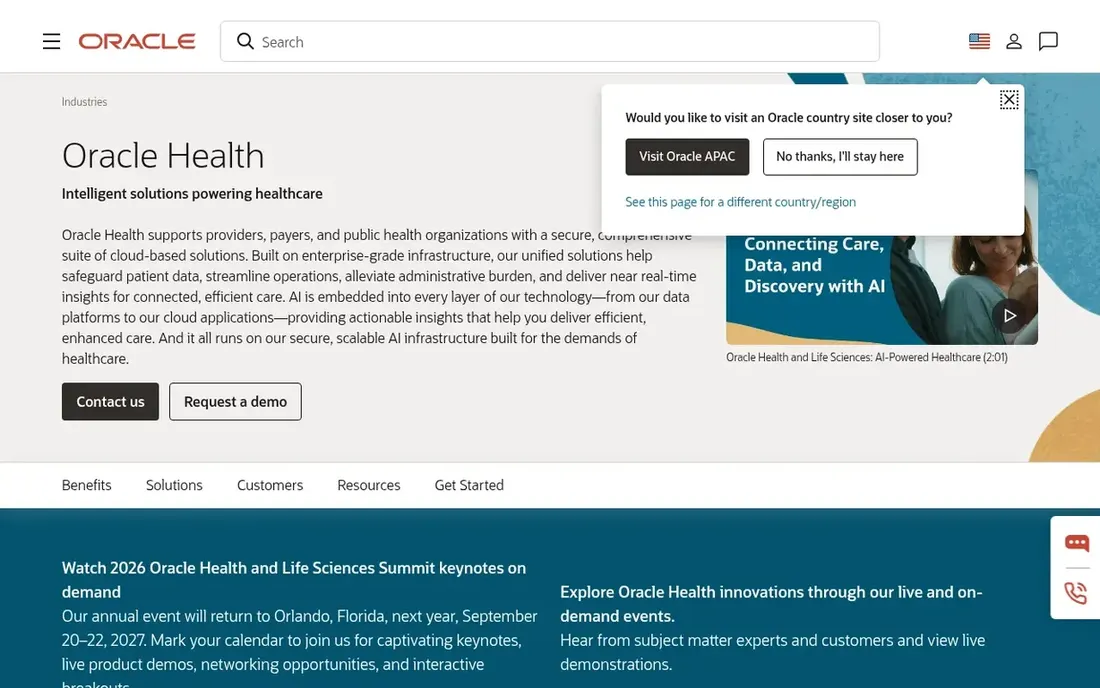
Pick Oracle Health Integration if this describes you: Oracle Health clinical environments. It suits organizations using Oracle Health systems that want integration handled within that product and aligned with its broader data and cloud direction.
Confirm the specific interface capabilities and supported standards for your deployment before committing, since offerings can differ by product and region. Oracle Health Integration shows no starting price here, so confirm the cost on the vendor site. Free access: Not stated.
Where it falls short: A good match for Oracle Health users.
- Focus on secure data exchange
- Supports insights and experiences
- Details vary by deployment
InterSystems IRIS for Health
Best for: Building healthtech data products
InterSystems IRIS for Health is a good fit for building healthtech data systems. Organizations that only have to route HL7 messages may prefer a lighter, purpose-built engine, whereas platform-level needs favor this choice.
Check the vendor site for InterSystems IRIS for Health pricing; none is listed in this comparison. Free access: Not stated.
Where it falls short: Product breadth layers on complexity.
- Supports high-performance options
- Targeted at healthtech builders
- May exceed small-project needs
Qvera Interface Engine
Best for: Adaptable deployment across healthcare standards
Pick Qvera Interface Engine if this describes you: adaptable deployment across healthcare standards. Qvera is a healthcare integration engine handling HL7, FHIR, DICOM and X12, with deployment on-premises, in containers or in your own cloud.
Running your own deployment means your team carries more operational responsibility, so staffing and monitoring matter. Organizations that prefer a completely managed connection service may weigh a hosted model instead, based on internal capacity. Price to start with Qvera Interface Engine: $9,980 per year. Free access: Free trial.
What works well: Spans HL7, FHIR.
Where it is weaker: Less known than bigger vendors.
- Container or cloud choices
- DICOM and X12
- Needs configuration expertise
Rhapsody Integration Engine
Best for: Wide HL7, FHIR and API interoperability
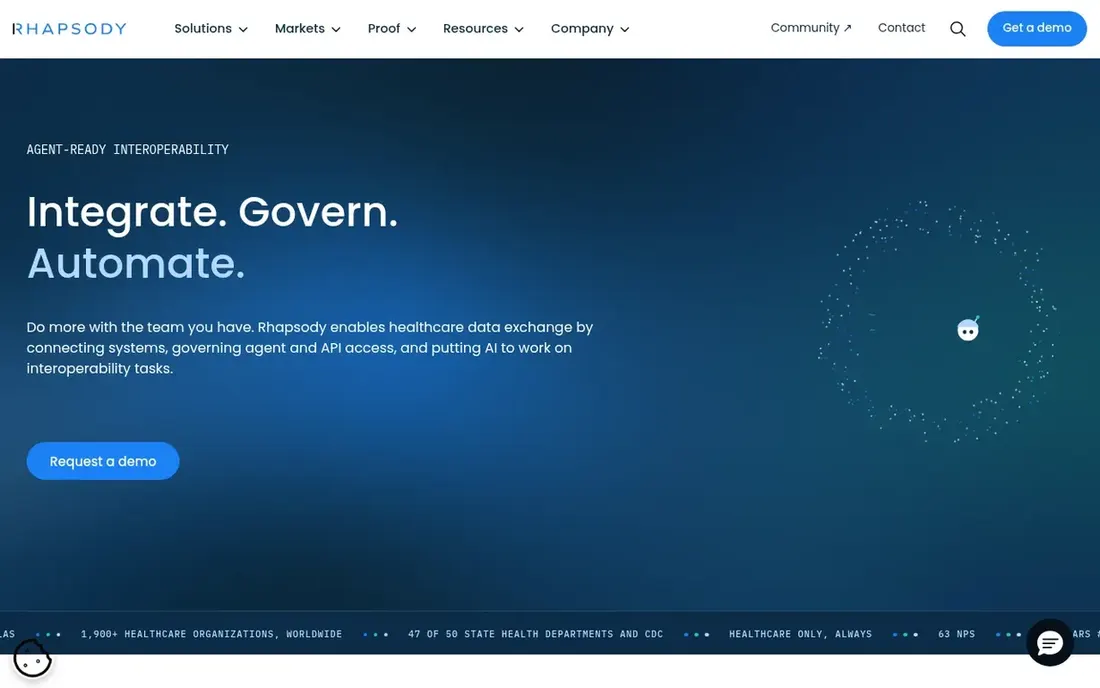
Rhapsody Integration Engine is built with wide HL7, FHIR and API interoperability in mind. Since it is positioned as a wide enterprise engine, smaller clinics may find its scope bigger than required and should weigh more straightforward choices.
Downsides: Setup may need specialist skills.
Beyond that, Rhapsody is a healthcare integration engine built to link systems across HL7, FHIR and APIs so teams, analytics systems and AI tools can access the data they need. Teams already standardized on one clinical vendor may prefer that vendor's native integration layer instead of a separate engine. This comparison lists no price for Rhapsody Integration Engine; ask the vendor. Free options: Not stated.
- Supports HL7
- Built for healthcare teams
- Enterprise-focused scope
Redox
Best for: Connect-once data exchange model
For connect-once data exchange model, Redox is a natural candidate. Evaluate whether its supported data types and partner network match your specific exchange needs.
Pricing for Redox is not stated here, so ask the vendor for current figures. There is no free plan with Redox.
What to check first: Depends on a managed model.
- Exchange anywhere
- Geared toward healthcare organizations
- Less control over internals
Epic Bridges
Best for: Organizations within the Epic ecosystem
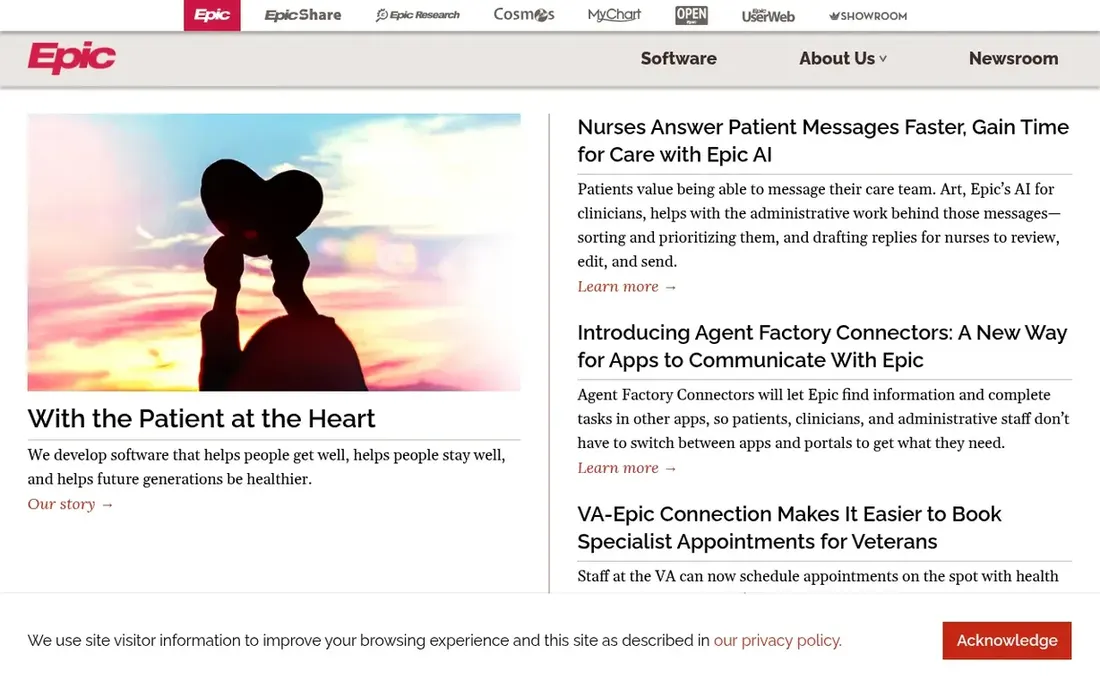
Epic Bridges works best for organizations within the Epic ecosystem. Epic Bridges is the interface layer associated with Epic's clinical software, used to exchange HL7 messages and link Epic with other systems.
Its usefulness is naturally bounded by Epic adoption, so organizations not running Epic will look elsewhere. Even Epic customers frequently need a separate engine for connections outside the Epic environment, so consider Bridges as part of a wider interoperability strategy. Epic Bridges does not show a starting price in this comparison, so check the vendor site for current pricing. On free options: Not stated.
Downsides: Restricted use outside Epic.
- Manages HL7 interfaces
- Fits Epic-centric workflows
- Tied to Epic customers
Our selection method
LinkVetted looked at what each vendor publishes: pricing, plan limits, feature coverage for healthcare integration engines software and stated drawbacks. No hands-on testing is claimed. Figures are shown as the vendors publish them. Billing terms, seat minimums and add-ons can change the real cost. The ranking is editorial: typical fit first, then clear pricing, then free access. If your needs are unusual, read the profiles rather than relying on position.
Things to verify first
- Ask Oracle Health Integration, InterSystems IRIS for Health, Rhapsody Integration Engine and others for a written quote, since no starting price is shown.
- Run a trial of Qvera Interface Engine with real work before paying for a year; your own workflow is the best test.
- Before choosing Oracle Health Integration, weigh its main limit: most useful for Oracle Health users.
- Read the plan comparison for Epic Bridges carefully; key features often start on a higher tier.
- Check how data leaves InterSystems IRIS for Health: formats, limits and whether exports are available on every plan.
FAQ
Do these tools publish their prices?
Not all of them. Oracle Health Integration, InterSystems IRIS for Health, Rhapsody Integration Engine and others publish no starting price, so expect a quote request for those. The rest, Qvera Interface Engine included, show a starting price, though seats and billing terms still change the final cost.
Can I try these options before paying?
Often, yes. Qvera Interface Engine offers a free trial. Use your own data and a real task during the test, and check what the free tier or trial limits before you rely on it.
What should I check before buying an integration engine?
Also verify how the engine suits your existing clinical systems and whether your team has the skills to configure and maintain it.
Is Oracle Health Integration the right pick for everyone comparing healthcare integration engines software?
No single tool suits every team. Oracle Health Integration comes first because it fits Oracle Health clinical environments, while InterSystems IRIS for Health suits building healthtech data platforms and Qvera Interface Engine suits flexible deployment across healthcare standards. Match the tool to your own size, budget and workflow before deciding.
Does any tool for healthcare integration engines software here have a free plan?
A permanent free plan is not offered by Oracle Health Integration, Epic Bridges or the other tools here. Qvera Interface Engine offer a trial. Plan a short evaluation period instead.
What does a healthcare integration engine do?
It routes and transforms data between clinical and administrative systems, generally using standards for example HL7, FHIR and APIs. Engines deal with message translation, mapping and monitoring so records move dependably between applications.
Sources
- https://www.oracle.com/health
- https://www.intersystems.com/products/iris-for-health
- https://www.qvera.com
- https://rhapsody.health
- https://redoxengine.com
- https://www.epic.com