Best All-in-One HR Platforms for Healthcare in 2026: 8 Platforms Compared
Compare the best all-in-one hr platform for healthcare options for 2026, covering scheduling, payroll, compliance, credentials and training for care teams.
- Editor's choice
 Paylocity
Shift teams and employee engagement
Starts atSee websiteVisit paylocity.comFull review - Great alternative
 UKG Ready
Scheduling and workforce management
Starts atSee websiteVisit ukg.comFull review - Also consider
 ADP Workforce Now
Large health systems and multi-site providers
Starts atSee websiteVisit adp.comFull review
TL;DR:
- Paylocity and UKG Ready are strong picks for healthcare because scheduling, time tracking and payroll are built for shift-based teams.
- ADP Workforce Now and Paycom suit larger health systems that need deep compliance, benefits and workforce planning in one suite.
- BambooHR and Rippling work well for smaller clinics and care startups that want a clear HR record without enterprise complexity.
- Paycor and isolved add healthcare-friendly scheduling, credential tracking and payroll options for mid-sized providers.
- For healthcare, check credential expiry tracking, shift differentials and overtime rules before you compare prices.
Quick comparison
| Tool | Best for | Starts at | Free plan? | |
|---|---|---|---|---|
| Paylocity | Shift teams and employee engagement | See website | No | Visit |
| UKG Ready | Scheduling and workforce management | See website | No | Visit |
| ADP Workforce Now | Large health systems and multi-site providers | See website | No | Visit |
 Paycom | Single-database HR and payroll | See website | No | Visit |
 BambooHR | Smaller clinics and care practices | $10 per month | Free trial | Visit |
 Rippling | Growing care startups and multi-site clinics | $8 per month | Free trial | Visit |
 Paycor | Mid-sized providers that want HR plus analytics | See website | No | Visit |
 isolved | Payroll plus HR for care employers | See website | No | Visit |
The best all-in-one hr platforms for healthcare
Healthcare HR is different from office HR. Staff work nights, weekends and rotating shifts, credentials expire, and overtime and leave rules are strict. We compared platforms on scheduling, time tracking, payroll, compliance support and training tools for care organisations.
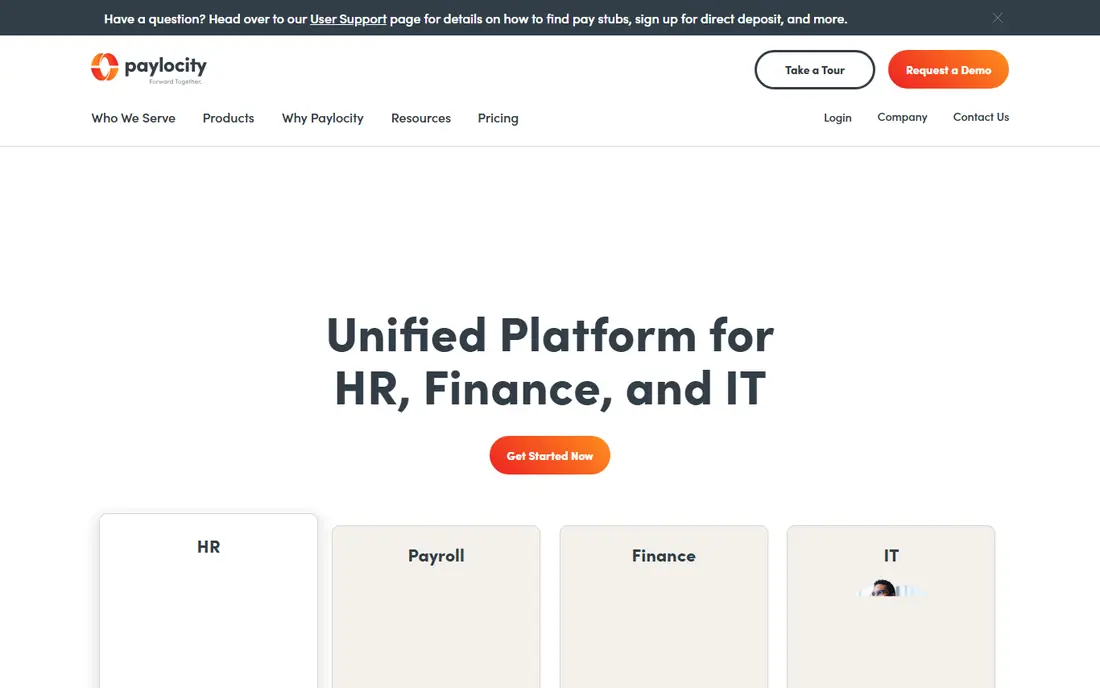
Paylocity covers payroll, human resources, time and labour, talent, benefits and employee experience in one platform, and it now includes finance and IT modules through its acquisition of Airbase. For a clinic or home-care provider, the scheduling and time tools matter most: managers can build shift patterns, track hours and overtime, and feed approved time straight into payroll without retyping data.
Paylocity also puts weight on communication, with tools for announcements, surveys and peer recognition that help dispersed care staff stay connected. The main drawback is price transparency. Quotes are custom, implementation fees are nonrefundable, and some items such as W-2 preparation are billed separately. Ask for a full quote that includes every module you need for credential tracking and scheduling.
- Payroll, time, scheduling and HR in one suite
- Engagement and communication tools
- Many integrations
- Pricing is quote-only
- Implementation fees apply
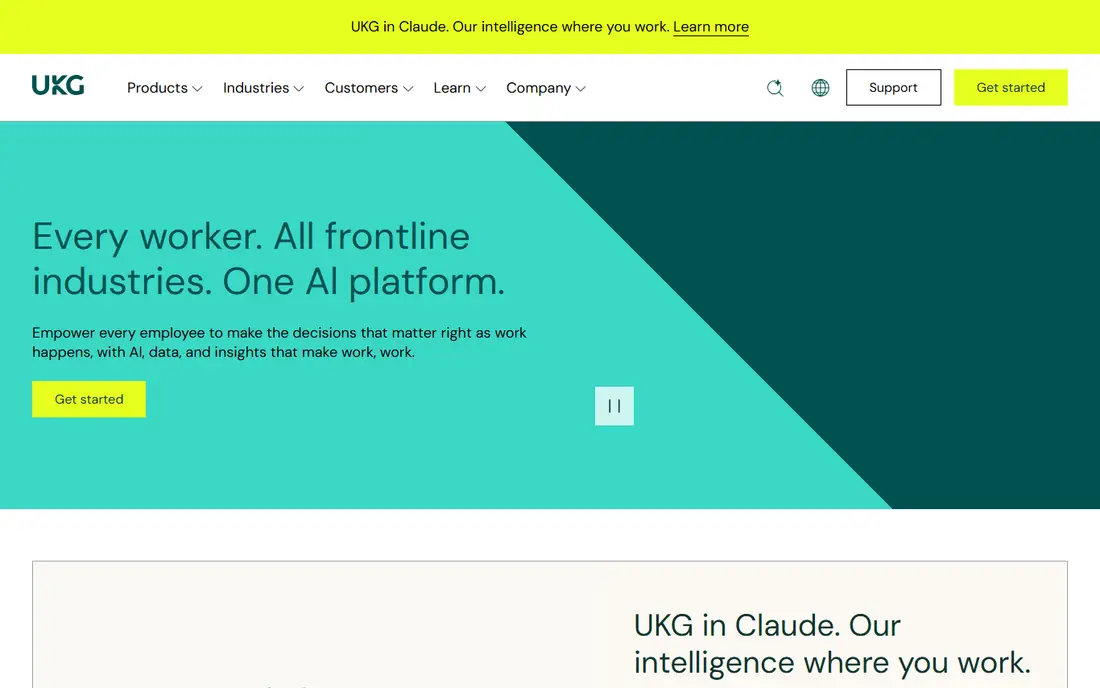
UKG Ready is designed for organisations with complex workforce needs, which describes most hospitals, care homes and clinics. Scheduling tools handle rotating rosters, shift swaps and coverage gaps, while time and attendance tracks hours, breaks and overtime against policy. HR records, payroll and benefits sit in the same system, so a change to a role or pay rate flows through correctly.
UKG also offers the larger UKG Pro suite for enterprise health systems, so a growing provider can move up without changing vendors. The trade-off is that pricing is quoted and implementation can be a real project, especially where multiple sites and union rules are involved. It is best shortlisted when scheduling complexity is the main pain point.
- Strong scheduling, time and attendance tools
- HR and payroll in one system
- Built for complex shift patterns
- Pricing is quote-only
- Setup can take time for large organisations
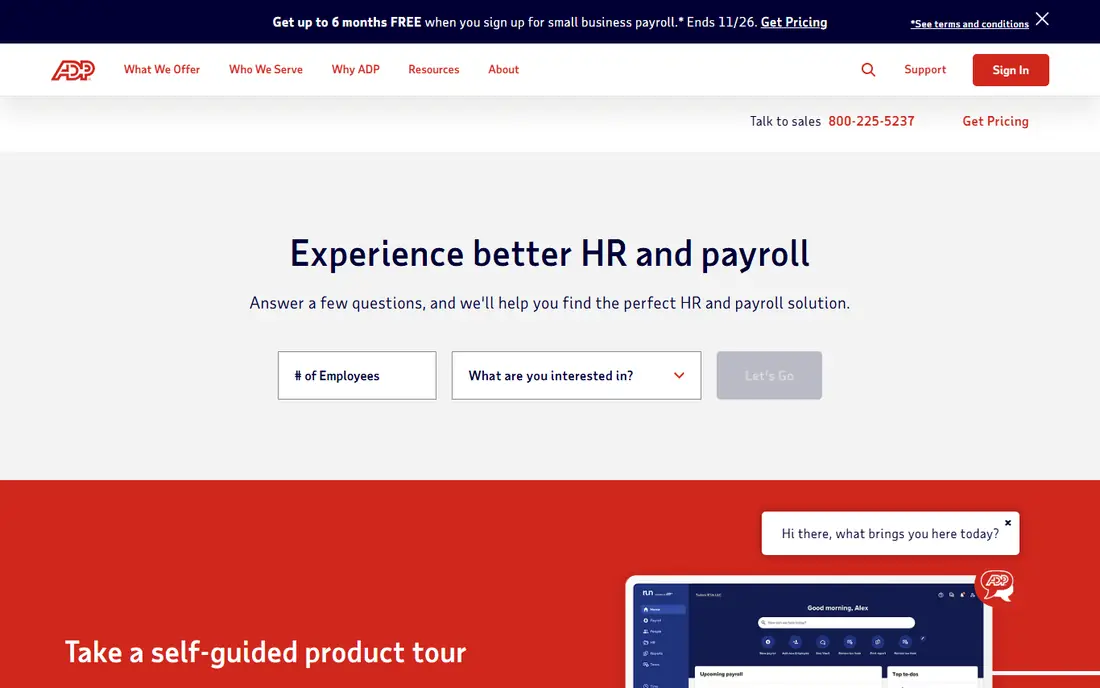
ADP Workforce Now is one of the broadest all-in-one suites available, covering HR, payroll, time, talent, benefits and compliance for employers of many sizes. For a health system with sites in several states, ADP compliance support, tax filing and benefits administration carry real weight. The platform handles multi-state payroll, varied pay rules and large-scale reporting that smaller tools struggle with.
Small clinics may find ADP more than they need, and pricing requires a sales conversation. Support quality can also vary by account size, so ask who your contact will be and what response times apply. For a provider planning to grow from one site to many, ADP is a safe long-term choice.
- Very broad HR, payroll and compliance coverage
- Strong benefits administration
- Scales to enterprise size
- Pricing is quote-only
- Interface can feel heavy for small clinics
Paycom runs HR, payroll, talent and time tools from a single database, which reduces the duplicate entry that causes payroll errors in shift-based teams. Employees can enter time, request leave, check pay and manage benefits from one self-service app, while managers approve changes that flow straight to payroll. That structure helps healthcare managers who supervise large, rotating teams.
Paycom positions itself for mid-market and enterprise employers, and it does not publish prices, so budgeting needs a quote. Its integration approach is also more closed than some competitors, which matters if you rely on specialist clinical scheduling or credential systems. Confirm those connections before signing.
- One database for HR, payroll and talent
- Employee self-service for time and benefits
- Strong compliance tools
- Pricing is quote-only
- Limited third-party integration depth compared with some rivals
BambooHR Core starts at $10 per employee per month above 25 employees, with a flat rate from $250 per month for smaller teams. For a small clinic, that clarity is welcome: employee records, onboarding packets, e-signatures, time-off tracking and applicant tracking are included in the core plan. Staff can see schedules of leave and managers can approve requests from a mobile app.
BambooHR is not a specialist scheduling system, so a clinic with complex rotating rosters may still need a separate scheduling tool. Payroll, benefits administration and time tracking are add-ons with quoted prices. It suits practices that want a tidy HR record and are happy to pair it with their existing payroll or scheduling setup.
- Published core pricing
- Clear records, onboarding and time-off tools
- 7-day free trial
- Payroll and benefits are quoted add-ons
- Scheduling depth is limited compared with UKG
Rippling core starts at $8 per employee per month plus a $40 monthly base fee, with payroll and other modules on top. For a care startup opening new sites, the automation is the draw: one onboarding flow can set up payroll, benefits, app access and device policies together. That saves a small operations team from repeating the same steps for every hire.
Rippling is a general HR platform rather than a healthcare specialist, so rota planning and credential tracking need checking against your exact needs. It also prices by module, so a full HR, payroll, benefits and time setup costs more than the headline rate. Get a quote for the full scope, including any scheduling integration you plan to use.
- One record for HR, payroll, benefits and IT
- Strong automation
- Fast implementation for small teams
- Modular pricing adds up
- Healthcare-specific scheduling is not its core strength
Paycor covers HR and payroll, talent acquisition and management, workforce management including time and scheduling, benefits administration and analytics. It lists healthcare among the industries it serves, and its scheduling and time tools suit shift-based teams. Managers get reporting on labour cost, overtime and staffing patterns, which helps a clinic control one of its largest costs.
Paycor quotes by plan and company size, with five plans from Basic to Complete plus an administrative services organisation option. That range is flexible but makes like-for-like comparison harder, so ask for the same scope from every vendor. For a mid-sized provider that wants HR, payroll and scheduling without enterprise weight, Paycor is a strong shortlist option.
- HR, payroll, talent, time and scheduling in one suite
- Analytics and reporting
- Healthcare industry experience
- Pricing is quote-only
- Plans range from Basic to Complete plus ASO, which needs careful comparison
isolved combines human capital management, payroll, time tracking, benefits and talent tools in a single platform with employee self-service. For a care employer, the appeal is a configurable system that can handle varied pay rules, shift differentials and leave policies without bolting on several tools. Workflows can route approvals for time, leave and pay changes to the right manager automatically.
Pricing is quoted, and isolved is less well known than the largest HCM vendors, so references from similar healthcare employers are worth asking for. Implementation support and the quality of payroll tax handling should be checked closely. For a mid-sized provider that wants a full suite at a competitive quote, isolved deserves a demo.
- HR, payroll, time and benefits in one platform
- Employee self-service
- Configurable workflows
- Pricing is quote-only
- Brand recognition is lower than ADP or UKG
How we picked these
We compared official product pages, scheduling and time tools, payroll coverage, compliance features and healthcare industry positioning. We kept platforms that combine HR records with payroll and at least one of scheduling, time tracking or talent tools, since a record-only tool does not meet the all-in-one brief for care teams. We left out scheduling-only tools and payroll-only tools.
What to check before you choose an HR platform for healthcare
Start with the shift problem. List your roster patterns, shift differentials, overtime rules and holiday cover needs, then test each platform against real rotas rather than a demo with office hours. A system that handles standard 9 to 5 schedules well may struggle with nights, weekends and on-call rotations.
Credentials, compliance and training
Ask how the platform tracks licences, certifications and mandatory training, and what alerts fire before expiry. Check support for background checks, health screening records and policy acknowledgements, and confirm where sensitive data is stored and who can access it. Compliance features should reduce manual tracking, not just store documents.
Payroll accuracy and integrations
Confirm that approved time, differentials and overtime flow into payroll without manual re-entry, and that tax filing covers every state where you employ staff. Check integrations with your scheduling system, electronic health record vendor where relevant, and benefits carriers. A clean payroll run each cycle is worth more than a long feature list.
Implementation and support for shift staff
Ask for a written implementation timeline, training for managers and frontline staff, and support hours that cover evenings and weekends if your teams work those hours. Mobile access matters in healthcare, since many staff do not sit at a desk. Test the mobile app for time entry, leave requests and pay slips before you commit.
FAQ
What is the best all-in-one HR platform for healthcare?
For most providers, Paylocity or UKG Ready are our top picks because scheduling, time and payroll are built for shift teams. Larger health systems may prefer ADP Workforce Now or Paycom, while smaller clinics often do well with BambooHR or Rippling paired with a scheduling tool.
Do these platforms track credentials and training?
Most offer document storage, expiry alerts and training records, but depth varies. UKG, ADP and Paylocity have broader compliance and learning tools than smaller HR systems. Ask each vendor to show credential expiry alerts and mandatory training tracking using your own roles as examples.
Can healthcare HR platforms handle shift differentials and overtime?
Yes, the stronger platforms on this list handle shift differentials, overtime rules and varied pay rates as part of time and payroll. Confirm your exact rules during a demo, including night, weekend and holiday rates, and check that approved time flows into payroll without manual adjustment.
How much does an all-in-one HR platform for healthcare cost?
Most enterprise and mid-market platforms on this list are quote-only, so prices depend on headcount and modules. BambooHR core starts at $10 per employee per month above 25 employees, and Rippling core starts at $8 per employee per month plus a base fee, with payroll and other modules on top. Always compare quotes for the same scope.
Is a specialist healthcare HR system better than a general platform?
A specialist system may offer deeper credential and scheduling tools, but general platforms often have stronger payroll, benefits and integrations. Many providers use a general all-in-one platform plus a specialist scheduling tool. Choose based on which pain point is larger: payroll and compliance, or rota planning.
How long does implementation take for a healthcare provider?
Small clinics can go live in a few weeks on simpler platforms, while multi-site providers often need two to four months for payroll, scheduling and benefits configuration. Data migration, credential records and manager training add time. Ask for a timeline tied to your next payroll date and your busiest hiring period.