ERP Software for Healthcare Practices in 2026: The 5 Best Options Side by Side
Weighing the best ERP software for healthcare practices? We lined up 5 products by cost, free access and fit. Read the caveats before you buy. Prices included.
- Editor's choice
 Workday
HR, finance and IT on one system
Starts atPricing on requestVisit workday.comFull review - Great alternativeEpic Systems
Patient-centered clinical records and coordination
Starts atPricing on requestVisit epic.comFull review - Also consider
 Microsoft Dynamics 365
Connecting teams, processes and data
Starts atPricing on requestVisit microsoft.comFull review
Direct answer
Workday is the first pick on this list for HR, finance and IT on one system. For a different need, Epic Systems covers patient-centered clinical records and coordination and Microsoft Dynamics 365 covers connecting teams, processes and data. All 5 tools are compared below on fit, free plan and limits. None of these vendors publish plan prices, so pricing is on request for every option.
TL;DR:
- Workday takes the first slot, best suited to HR, finance and IT on one product.
- Neither Workday nor SAP S/4HANA, nor any of the other 3 tools, has a permanent free plan; trials and quotes are the norm.
- What to know about Microsoft Dynamics 365 first: Healthcare depth relies on configuration.
- Every tool from Workday to SAP S/4HANA works by quote, with no list price shown.
- SAP S/4HANA fits modular cloud ERP with built-in AI.
Last checked November 2026. Pricing on request: vendors did not publish plan prices when this guide was last checked (November 2026), so ask each vendor for a written quote.
Quick comparison
| Tool | Best for | Starts at | Free plan? | |
|---|---|---|---|---|
| Workday | HR, finance and IT on one system | Pricing on request | Not stated | Visit |
| Epic Systems | Patient-centered clinical records and coordination | Pricing on request | Not stated | Visit |
| Microsoft Dynamics 365 | Connecting teams, processes and data | Pricing on request | Not stated | Visit |
| Oracle Health (Cerner Millennium) | Integrated clinical and operational health systems | Pricing on request | Not stated | Visit |
 SAP S/4HANA | Modular cloud ERP with built-in AI | Pricing on request | Not stated | Visit |
The full ERP software for healthcare practices list
LinkVetted put together this guide to ERP software for healthcare practices for readers who want a clear shortlist without reading every vendor page. It compares 5 tools on starting price, free plans, who each one suits and where each one falls short.
Workday serves HR, finance and IT on one system. Consider it when people and finance management are the priority instead of patient-facing workflows.
Workday is not a clinical records system, so practices still need separate clinical tooling. This comparison lists no price for Workday; ask the vendor. On free options: Not stated.
The main drawbacks: Pitched at bigger organizations.
- Finance and IT system
- Capable people-management focus
- Clinical functionality not its core
Epic Systems
Best for: Patient-centered clinical records and coordination
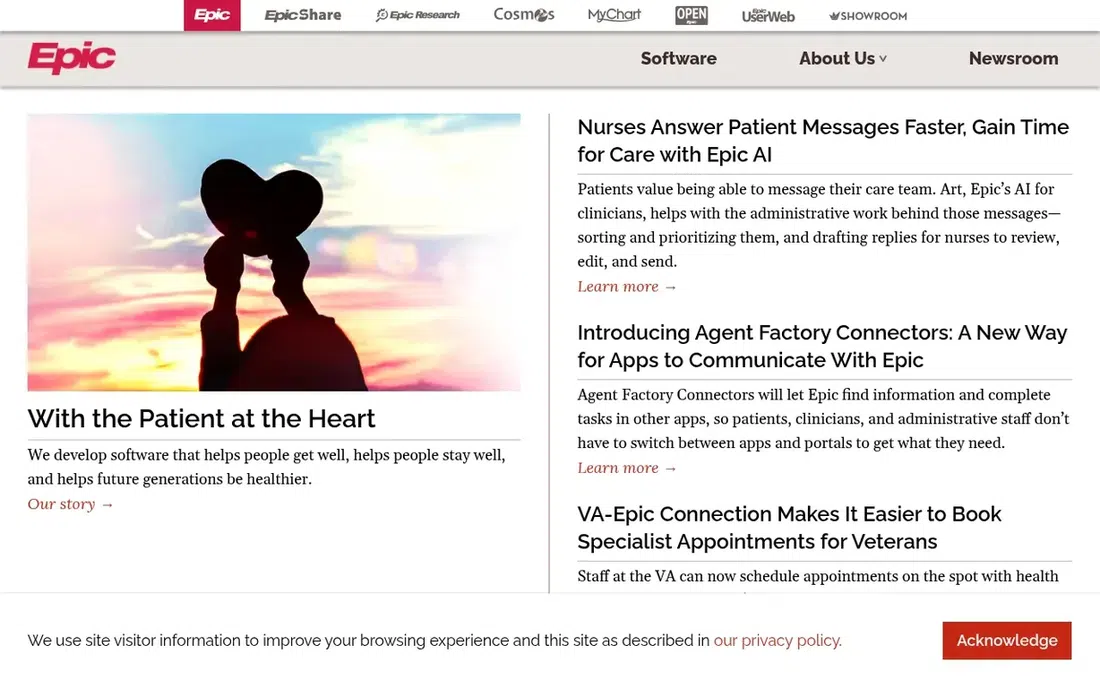
For patient-centered clinical records and coordination, Epic Systems is a natural candidate. Epic is built around clinical care instead of general-purpose business management, so practices seeking a finance-first ERP may prefer a different product.
What users get: Supports care across generations.
Bigger practices and care networks are the usual fit. In practice, Epic Systems describes its software as helping people get well, stay well and support future generations, with the patient at the heart of its homepage message. Epic Systems shows no starting price here, so confirm the cost on the vendor site. As for free access: Not stated. Downsides: Clinical emphasis over general business ERP.
- Patient record at the center of the design
- Long-standing focus on health outcomes
- Suited to organized care settings
Microsoft Dynamics 365 makes the most sense for connecting teams, processes and data. Microsoft Dynamics 365 provides CRM and ERP business applications that link teams, processes and data, positioned around agentic business capabilities.
Organizations with varied departments commonly value the shared data layer. In daily use, the breadth of applications can complicate deployment planning. Check the vendor site for Microsoft Dynamics 365 pricing; none is listed in this comparison. Free options: Not stated.
Trade-offs to know: Several modules need coordination.
- Agentic business positioning
- Combines CRM and ERP applications
- Healthcare depth relies on configuration
Oracle Health (Cerner Millennium)
Best for: Integrated clinical and operational health systems
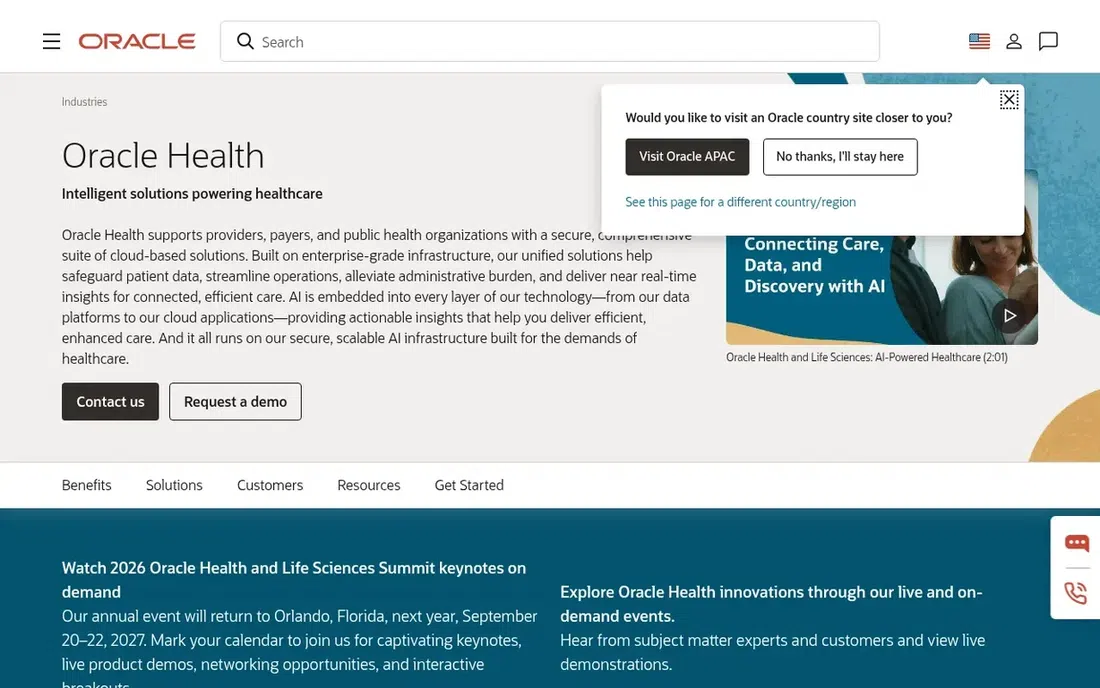
Oracle Health (Cerner Millennium) was built for integrated clinical and operational health systems. The breadth of the system means smaller or single-site practices may find it heavier than needed.
If your priority is purely financial management with light clinical needs, a narrower ERP may be more straightforward to run. Oracle Health (Cerner Millennium) does not show a starting price in this comparison, so check the vendor site for current pricing. On free options: Not stated.
What Oracle Health (Cerner Millennium) does well: dependable health options.
Honest limits: Implementation demands significant planning.
- Focus on secure
- Emphasis on data insights and patient experience
- Wide scope may overwhelm small practices
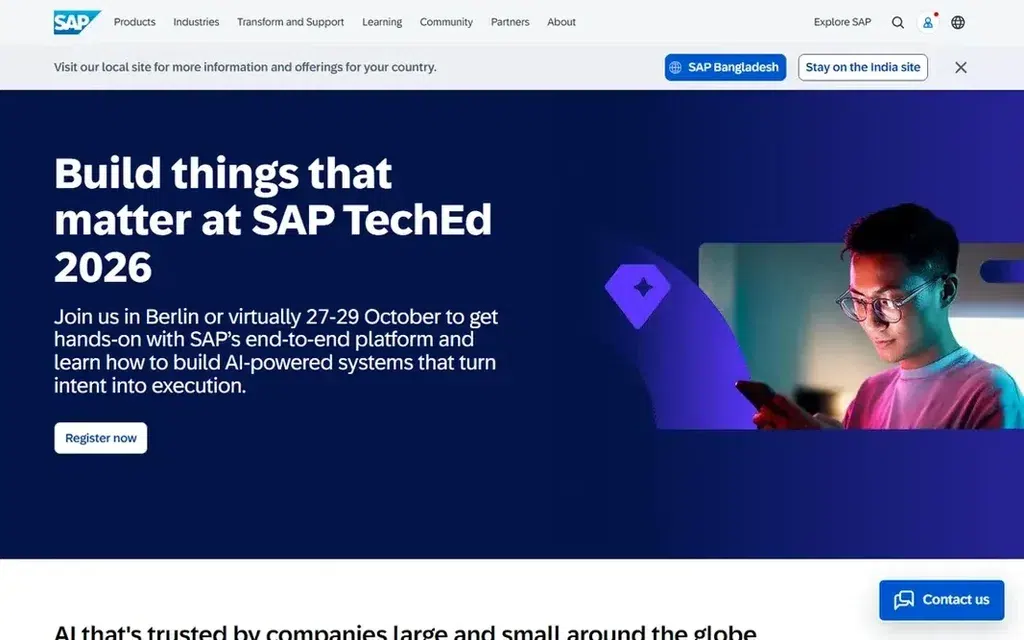
SAP S/4HANA is aimed squarely at modular cloud ERP with built-in AI. The product is general-purpose, so healthcare-specific workflows for example scheduling and interoperability need extras or configuration.
Honest limits: Not healthcare-specific by default.
In practice, SAP S/4HANA Cloud Public Edition is presented as a modular ERP option that brings built-in AI to core business processes so organizations can scale. Practices that want industry templates from day one may prefer a healthcare-focused suite. SAP S/4HANA does not show a starting price in this comparison, so check the vendor site for current pricing. Trial and free access: Not stated.
- Built-in AI in core processes
- Cloud delivery model
- Needs configuration for clinical context
What went into this list
For each of the 5 tools we noted price, free plan or trial, fit for ERP software for healthcare practices and the main limit, using vendor pages and documentation. Where a vendor does not publish a price, the entry says quote. Where a price depends on seats or billing term, the entry says so. The ranking is editorial: typical fit first, then clear pricing, then free access. If your needs are unusual, read the profiles rather than relying on position.
What to confirm before you sign up
- Request quotes from Workday, SAP S/4HANA and the others; the list shows no fixed prices.
- Before choosing Workday, weigh its main limit: clinical functionality not its core.
- Look at the renewal terms for Oracle Health (Cerner Millennium): auto-renewal, notice periods and price changes can matter more than the first-year price.
- Ask the daily users to test Workday on a live task before you roll it out to everyone.
- Before rolling out SAP S/4HANA, verify the integrations your workflow depends on.
FAQ
Do these tools publish their prices?
No. None of the tools, from Workday to SAP S/4HANA, shows a fixed starting price here, so budget time for quotes.
How are the tools for ERP software for healthcare practices ordered?
Workday sits first and SAP S/4HANA last because the order follows typical fit for ERP software for healthcare practices, then price clarity and free access. It is a judgement call, so read each profile for fit and limits.
Does any tool for ERP software for healthcare practices here have a free plan?
No tool in this list, Workday and SAP S/4HANA included, has a permanent free plan. Trials and quotes are the usual route, so plan a short evaluation period.
Can I try these tools before paying?
Not by default. None of the tools, from Workday to SAP S/4HANA, lists a free plan or a free trial here, so ask each vendor for a demo before committing.
Sources
- https://www.workday.com
- https://www.epic.com
- https://www.microsoft.com/en-us/dynamics-365
- https://www.oracle.com/health
- https://www.sap.com/products/erp/s4hana.html