Analytics Software for Healthcare Practices in 2026: The 5 Best Options Side by Side
Searching for the best analytics software for healthcare practices? Here are 5 options with prices and free plans. Real limits included. Pick by budget.
- Editor's choice
 Domo
Governed data for AI and business insights
Starts atSee websiteVisit domo.comFull review - Great alternative
 Qlik Sense
End-to-end data integration and analytics
Starts atSee websiteVisit qlik.comFull review - Also consider
 Tableau
Adaptable visual analytics and dashboards
Starts at$15 per user per monthVisit tableau.comFull review
Direct answer
This list puts Domo first for governed data for AI and business insights. Listed starting prices: Tableau from $15 per user per month. Alternatives: Qlik Sense for end-to-end data integration and analytics, and Tableau for adaptable visual analytics and dashboards. Details, prices and limits for the rest of the 5 tools are below.
TL;DR:
- Domo takes the first slot, best suited to governed data for AI and business insights.
- For integrated clinical and analytics workflows, Epic Systems is worth a look.
- For the cheapest start, look at Tableau: $15 per user per month.
- What to know about Domo first: may be overwhelming for small practices.
Last checked November 2026. Prices and plan details were read from the vendors' own pages in November 2026; vendors change plans often, so confirm the current price on the vendor site before you buy.
Quick comparison
| Tool | Best for | Starts at | Free plan? | |
|---|---|---|---|---|
| Domo | Governed data for AI and business insights | See website | Free trial | Visit |
| Qlik Sense | End-to-end data integration and analytics | See website | Not stated | Visit |
| Tableau | Adaptable visual analytics and dashboards | $15 per user per month | Yes | Visit |
 Sisense | Embedded analytics with AI capabilities | See website | Free trial | Visit |
| Epic Systems | Integrated clinical and analytics workflows | See website | Not stated | Visit |
Our 5 analytics software for healthcare practices
LinkVetted compared 5 analytics software for healthcare practices. The goal is a practical shortlist: published prices, free plan facts, best-fit use cases and honest limits for every entry.
For governed data for AI and business insights, Domo is a natural candidate. Domo strengthens the whole data journey with its AI and data products. Beyond that, Domo is best for organizations ready to invest in a full data management and analytics ecosystem.
Users can connect and move data from any source, prepare and expand data access for exploration, and accelerate business-critical insights. From a buyer's view, practices seeking a more straightforward visualization tool might prefer Tableau. Domo shows no starting price here, so confirm the cost on the vendor site. Free plan details: Free trial.
Points against: May be overwhelming for small practices.
- AI and data products
- Connect and move data from any source
- Needs data governance setup
Qlik Sense is designed for end-to-end data integration and analytics. The system may have a steep ramp-up time for users new to advanced analytics, and its pricing can be complicated. In daily use, Qlik Sense is a capable choice for those prioritizing data integration and quality alongside analytics.
The main drawbacks: May have a steep ramp-up time.
From a buyer's view, practices seeking a more straightforward, more focused visualization tool might prefer Tableau. Healthcare practices with diverse data systems may benefit from its thorough approach. Check the vendor site for Qlik Sense pricing; none is listed in this comparison. Trial and free access: Not stated.
- Integration with Talend
- Data fabric approach
- Complicated pricing structure
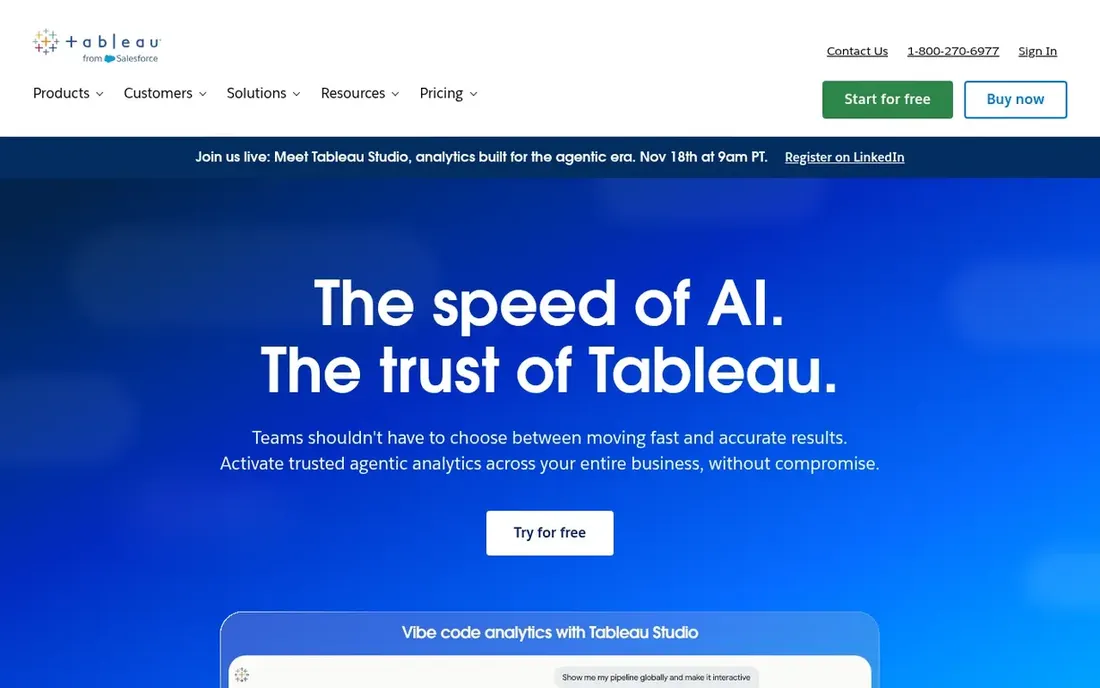
Tableau is built with adaptable visual analytics and dashboards in mind. It is well-suited for healthcare practices that require adaptable, interactive dashboards to explore clinical and operational data without deep technical skills.
In practice, Whereas Tableau is capable, it may need training to completely use advanced features. The cost can be a barrier for smaller practices. Tableau starts at: $15 per user per month. Tableau offers a free plan.
Downsides: May need training for advanced use.
- Simple sharing
- Drag-and-drop visualization
- Can be expensive for small practices
Sisense works best for embedded analytics with AI capabilities. Sisense gives AI-powered embedded analytics to unlock insights and convert data into revenue with pro-code, low-code, and no-code adaptability. It is well suited to healthcare practices that want to embed analytics into their own applications or patient portals, offering a mix of development choices to suit different technical skill levels.
On top of that, practices primarily needing clinical analytics might find a healthcare-specific tool more aligned. More specifically, Sisense shines for custom, embedded data products. Sisense shows no starting price here, so confirm the cost on the vendor site. As for free access: Free trial.
Points against: May need technical resources for embedding.
- Embedded analytics focus
- AI-powered insights
- Less centred on clinical workflows
Epic Systems
Best for: Integrated clinical and analytics workflows
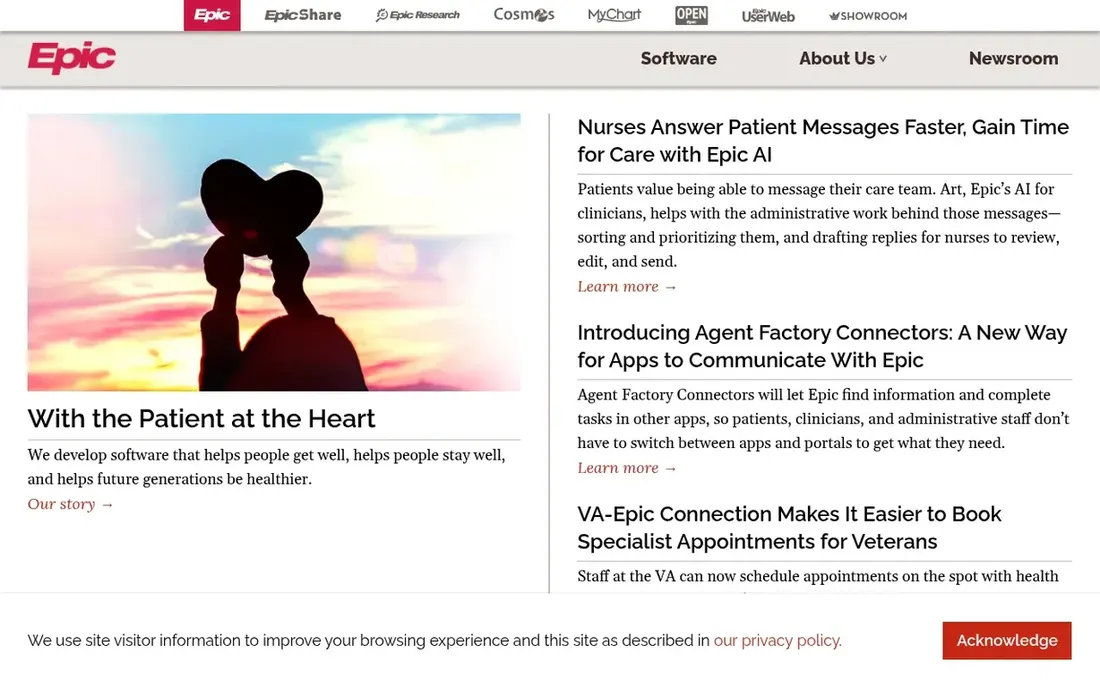
Epic Systems is a good fit for integrated clinical and analytics workflows. Organizations seeking a unified approach to patient data and reporting may find it appealing. Even so, Epic's analytics may be less adaptable for practices needing standalone business intelligence or custom visualization outside the Epic environment.
Where it is weaker: Restricted adaptability outside Epic ecosystem.
Consider Epic if deep clinical integration is a priority. From a buyer's view, Epic Systems develops software with the patient at the heart, aiming to help people get well and stay well. Its analytics capabilities are typically embedded within its broader healthcare system, making it a fit for practices already using or planning to adopt Epic's clinical tools. No starting price is listed for Epic Systems here; confirm pricing on the vendor site. Free plan details: Not stated.
- Established vendor presence
- Deep integration with clinical systems
- May need significant implementation effort
Our selection method
Selection started from tools commonly considered for analytics software for healthcare practices, then narrowed to 5 that have clear pricing information or a clear quote process. Where a price is missing, the vendor does not list one publicly or ties it to a quote. Always confirm before budgeting. The sequence is a judgement call: typical use case first, then pricing transparency, then free access. Use the profiles to check fit.
What to check before you buy
- Get a written quote from Domo, Qlik Sense, Sisense and Epic Systems; the list shows no starting price for them.
- Test the free plan from Tableau against your real workload before relying on it.
- Run a trial of Domo and Sisense with real work before paying for a year; your own workflow is the best test.
- Read the limits listed for Domo first: may be overwhelming for small practices.
- Ask the daily users to test Domo on a live task before you roll it out to everyone.
- Read the plan comparison for Epic Systems carefully; key features often start on a higher tier.
FAQ
What is the cheapest option for analytics software for healthcare practices in this list?
On published monthly entry prices, Tableau is the lowest here at $15 per user per month. Entry price is only part of the cost, because seats, add-ons and billing terms can change the total. Prices, free plan details and limits for all 5 tools in this analytics software for healthcare practices roundup sit on the individual cards above.
Can I try these tools before paying?
Often, yes. Tableau has a free plan and Domo and Sisense offer a free trial. Use your own data and a real task during the test, and check what the free tier or trial limits before you rely on it. Each of the 5 options in this analytics software for healthcare practices guide has its own card above with the price, free plan and limits.
How are the tools for analytics software for healthcare practices ordered?
The order follows typical fit for analytics software for healthcare practices, with Domo first and Epic Systems last, then price clarity and free access. It is editorial judgement, not a score, so another team could rank the tools differently.
What should a small healthcare practice look for in analytics software?
A small practice should prioritize simplicity, affordability, and integration with existing systems. Consider your technical resources and data governance needs before choosing.
Is Domo the right pick for everyone comparing analytics software for healthcare practices?
No single tool suits every team. Domo comes first because it fits governed data for AI and business insights, while Qlik Sense suits end-to-end data integration and analytics and Tableau suits flexible visual analytics and dashboards. Match the tool to your own size, budget and workflow before deciding.
Sources
- https://www.domo.com
- https://www.qlik.com
- https://www.tableau.com
- https://www.sisense.com
- https://www.epic.com