Best Healthcare Analytics Companies in 2026: 8 Firms Compared
Compare the best healthcare analytics companies for hospitals, payers and clinics on data coverage, security, implementation and value-based care in 2026.
- Editor's choice
 Optum
Broad payer and provider analytics
Starts atSee websiteVisit optum.comFull review - Great alternative
 Health Catalyst
Health system improvement analytics
Starts atSee websiteVisit healthcatalyst.comFull review - Also consider
 IQVIA
Life sciences and real-world data
Starts atSee websiteVisit iqvia.comFull review
TL;DR:
- Optum and IQVIA offer the broadest data and analytics coverage for payers, providers and life sciences.
- Health Catalyst and Arcadia suit health systems that want analytics built around clinical and operational improvement.
- Innovaccer and Veradigm focus on unifying patient data across systems for value-based care.
- Healthcare analytics involves protected health information, so security, HIPAA compliance and data governance matter as much as features.
- Pricing is almost always quoted, so compare scope, data sources and implementation support, not headline claims.
Quick comparison
| Tool | Best for | Starts at | Free plan? | |
|---|---|---|---|---|
| Optum | Broad payer and provider analytics | See website | No | Visit |
| Health Catalyst | Health system improvement analytics | See website | No | Visit |
| IQVIA | Life sciences and real-world data | See website | No | Visit |
 Merative | Health data and clinical analytics | See website | No | Visit |
 Arcadia | Value-based care analytics | See website | No | Visit |
 Innovaccer | Unified patient data platform | See website | No | Visit |
 Veradigm | Ambulatory and EHR analytics | See website | No | Visit |
 Cotiviti | Payment accuracy and risk analytics | See website | No | Visit |
The best healthcare analytics companies
These firms help hospitals, clinics, payers and life sciences companies turn clinical, claims and operational data into decisions. This is not medical advice, and analytics tools do not replace clinical judgment.
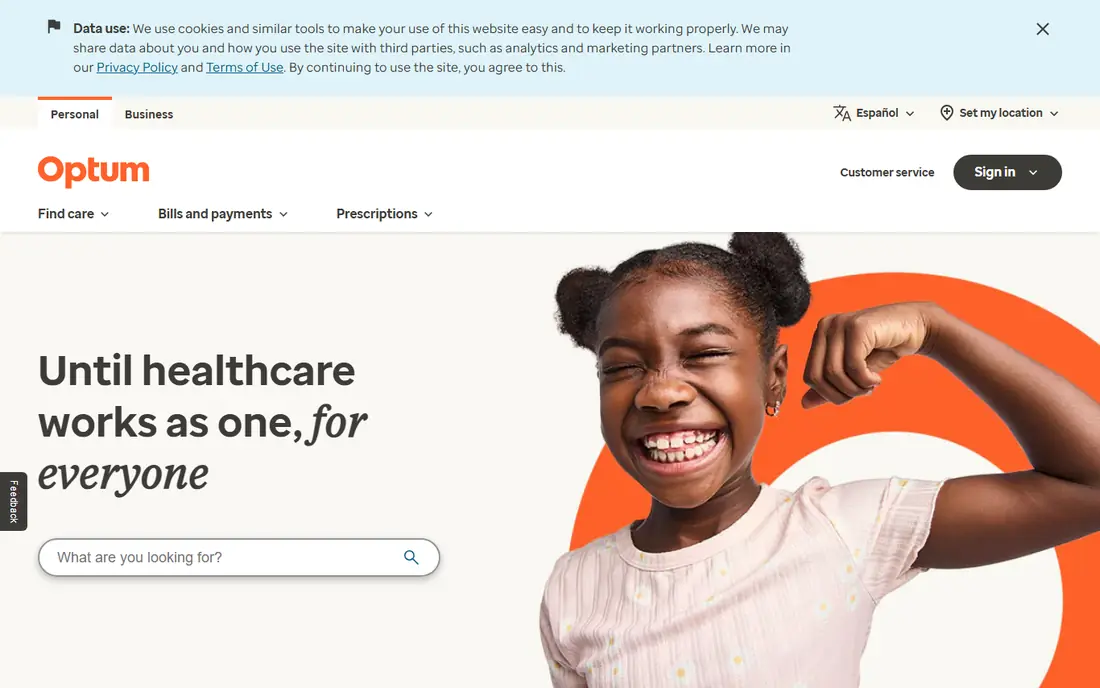
Optum, part of UnitedHealth Group, is our pick for organizations that need breadth. Its analytics cover claims, clinical, pharmacy and operational data for health plans, hospitals and physician groups, and its scale gives it data assets few rivals can match. For a payer or large health system that wants one vendor across many use cases, Optum's range is a real advantage.
That scale also brings complexity. Contracting, implementation and product selection can take time, and smaller clinics may find the engagement model heavy. If your organization is large and your needs span payer and provider analytics, Optum deserves the first conversation.
- Very broad data and product range
- Serves payers and providers
- Large US presence
- Scale can mean complex contracting
- Pricing is quote-based
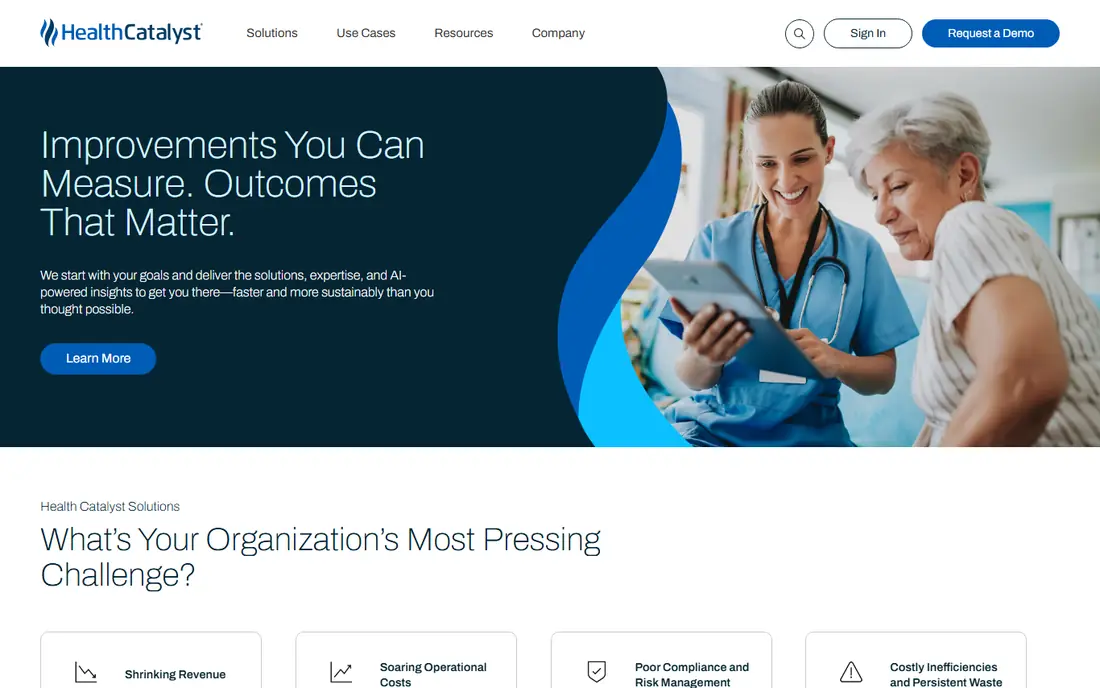
Health Catalyst builds analytics around a simple idea: data should drive measurable improvement in care quality, cost and operations. Its data platform combines clinical, financial and operational sources, and its services team helps hospitals act on what the data shows. Health systems working on quality measures, length of stay or population health often find this improvement focus practical.
Small clinics may find the platform and services model larger than they need, and all pricing is quoted. If you run a hospital or health system and want analytics tied to improvement work, Health Catalyst is a strong, focused choice.
- Built for clinical and operational improvement
- Data platform plus services
- Strong hospital focus
- Best suited to health systems, less to small clinics
- Quote-based pricing
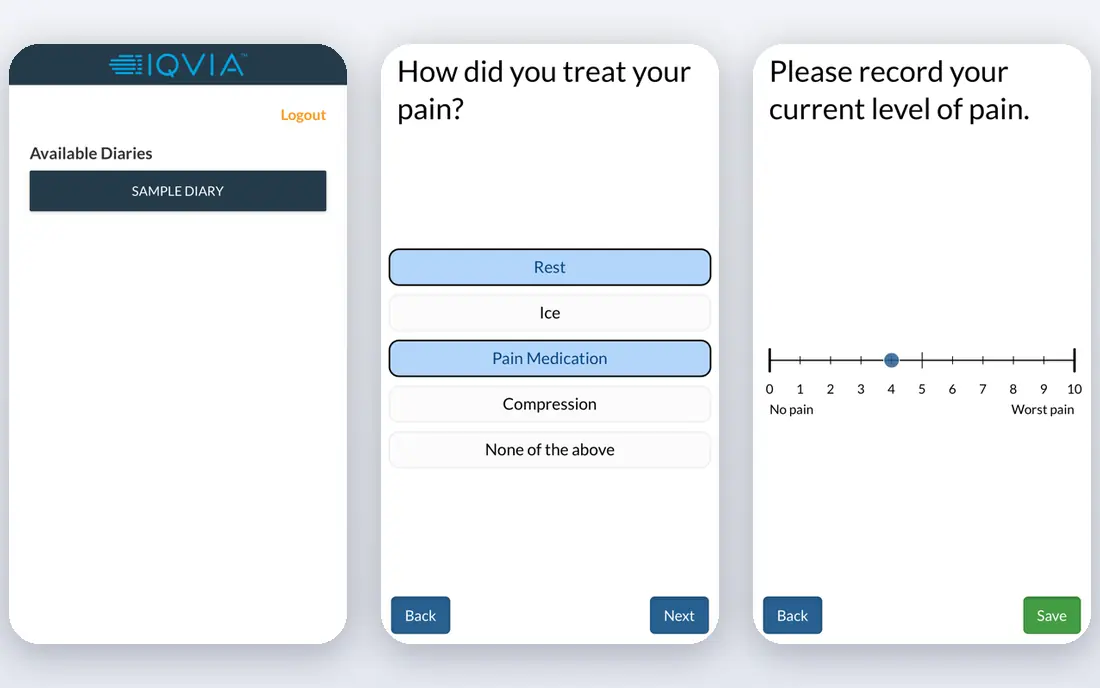
IQVIA serves pharmaceutical, biotech and medical device companies with healthcare data, analytics and real-world evidence. Its data assets cover prescribing, claims and clinical activity at a scale that supports research, commercial planning and outcomes studies. For life sciences teams, that data depth is the main reason to choose IQVIA.
Provider organizations and small clinics will find its enterprise model less relevant, and pricing is quoted for large engagements. If your work is life sciences research or commercial analytics, IQVIA is the benchmark. If you run a clinic, look at provider-focused firms first.
- Deep life sciences data
- Real-world evidence expertise
- Global coverage
- Enterprise focus and pricing
- Less suited to small provider analytics
Merative, formerly IBM Watson Health's data and analytics business, offers health data, clinical analytics and imaging tools for payers, providers and life sciences. Its established data assets and clinical content suit organizations that need trusted reference data alongside analytics. Hospitals and plans that already use its products often value continuity and depth.
Its range is broad, so matching the right product to your exact use case takes care during evaluation. Pricing is quoted. If you need proven health data assets with analytics on top, Merative is a solid, established option.
- Established health data assets
- Clinical and imaging analytics
- Payer and provider tools
- Product range can feel broad
- Quote-based pricing
Arcadia focuses on value-based care, bringing together claims, clinical and social data to help accountable care organizations, health plans and provider groups manage populations. Its platform supports risk stratification, quality measure tracking and care gap closure, which are the daily tasks of value-based contracts. Organizations already in or moving into those contracts will find its focus practical.
Fee-for-service clinics with no value-based contracts may get less value from its specialized tooling. Pricing is quoted. If value-based care is central to your strategy, Arcadia's focus gives it an edge over general analytics vendors.
- Strong value-based care focus
- Payer and provider data integration
- Population health tools
- Best for organizations in value-based contracts
- Quote-based pricing
Innovaccer builds a unified patient data platform that pulls records from electronic health record systems, claims and other sources into one view. That unified record powers population health, care management and patient engagement tools, which helps organizations that struggle with fragmented data. Its cloud platform approach suits health systems modernizing their data layer.
Unifying data across many systems is a large project, so implementation time and internal effort should be planned carefully. Pricing is quoted. If fragmented patient data is your core problem, Innovaccer addresses it directly rather than papering over it with reports.
- Unifies data across EHR and claims systems
- Population health and CRM tools
- Cloud platform
- Implementation scope can be large
- Quote-based pricing
Veradigm, formerly Allscripts' data and analytics business, focuses on ambulatory care, with analytics linked to electronic health records and payer connectivity. Physician practices and ambulatory groups benefit from tools built around outpatient workflows, quality reporting and revenue cycle data. Its EHR heritage gives it practical insight into how practices actually record care.
Large inpatient hospitals may need a more hospital-focused platform. Pricing is quoted. If you run ambulatory practices and want analytics close to your EHR data, Veradigm is a natural fit.
- Strong ambulatory practice roots
- EHR-linked analytics
- Payer connectivity
- Less focused on large hospital inpatient analytics
- Quote-based pricing
Cotiviti specializes in payment accuracy, risk adjustment and quality analytics for health plans and providers. Its tools help payers check claims accuracy, manage risk adjustment data and track quality measures, which directly affect revenue and compliance. For plans and provider groups where payment accuracy is a major cost driver, that specialization is valuable.
Clinical improvement analytics are not its main focus, so hospitals seeking broad clinical tools should pair it with a provider platform or choose a broader vendor. Pricing is quoted. If payment accuracy and risk analytics are your priority, Cotiviti's depth stands out.
- Payment accuracy expertise
- Risk adjustment analytics
- Large payer client base
- Narrower clinical analytics focus
- Quote-based pricing
How we picked these
We compared official product pages, client focus, data assets and public case information for established healthcare analytics firms. We favored firms with verifiable health system, payer or life sciences clients, HIPAA-aware data handling and current products in 2026. We did not claim hands-on clinical use of each platform; this ranking reflects public information available in October 2026.
What to check before you buy healthcare analytics
Start with data governance. Confirm how protected health information is handled, what HIPAA business associate agreements cover, and how data is de-identified for analytics where appropriate. Ask which data sources the platform already connects to, since building custom EHR and claims feeds can dominate implementation time.
Implementation, accuracy and support
Ask for implementation timelines, required internal staff time and examples of similar organizations using the product. Check how quality measures are calculated and updated, since measure definitions change yearly. A vendor that updates measures promptly and explains its logic will save your team disputes with payers later. Also ask how the platform handles data from new clinics or practices you acquire, since growth often breaks neat data models. A vendor should explain its onboarding process for new data sources, its approach to duplicate patient records, and how it supports your analysts with training and documentation after go-live. Strong post-sale support often matters more than a polished sales demo, because analytics value grows only when your own team can build and trust new reports.
FAQ
What does a healthcare analytics company do?
It combines clinical, claims, financial and operational data into reports, dashboards and predictions that help hospitals, clinics and health plans improve care, control costs and meet quality measures. Some firms also provide the underlying data platform and implementation services. Analytics supports decisions; it does not replace clinical judgment.
How much does healthcare analytics software cost?
Pricing is almost always quoted based on organization size, data volume, modules and implementation scope. Large health systems pay far more than small clinics, and services often add to software costs. Request a written quote that separates software, implementation and ongoing support.
Is healthcare analytics HIPAA compliant?
Reputable vendors design for HIPAA compliance and sign business associate agreements, but compliance also depends on how your organization configures and uses the tool. Confirm the vendor's security certifications, access controls and audit logging, and involve your privacy team before sharing patient data.
Which analytics company is best for a small clinic?
Small clinics usually do better with EHR-linked analytics or ambulatory-focused tools such as Veradigm than with enterprise platforms built for large health systems. Start with what your EHR already offers, then add a specialist tool only for gaps that matter, such as quality reporting or population health.
Can analytics help with value-based care?
Yes, value-based care is one of the strongest use cases, since it needs population risk data, quality tracking and care gap closure. Arcadia and Innovaccer are built for this work, while Health Catalyst suits health systems improving quality and cost together. Match the tool to your contract types, not just to its feature list.