Best Analytics Tools for Healthcare Revenue for 2026: Our 5 Vetted Picks
Comparing the best analytics tools for healthcare revenue? 5 contenders, each with entry cost, free tier and best-fit buyer. Limits and pricing notes included.
- Editor's choice
 Qlik Sense
Data integration plus analytics
Starts atSee websiteVisit qlik.comFull review - Great alternative
 Google Looker
Governed metrics and embedded analytics
Starts atSee websiteVisit cloud.google.comFull review - Also consider
 Tableau
Adaptable visual revenue reporting
Starts at$15 per user a monthVisit tableau.comFull review
Direct answer
If you need data integration plus analytics, Qlik Sense is the first tool to look at here. Listed starting prices: Tableau from $15 per user a month. Google Looker is better for governed metrics and embedded analytics, and Tableau is better for adaptable visual revenue reporting. The other 2 tools in the list cover narrower or pricier cases.
TL;DR:
- This list starts with Qlik Sense, which is built for data integration plus analytics.
- One limit worth knowing about Google Looker: semantic modeling needs upfront work.
- Just one of the 5 tools, Tableau, has a free plan.
- Domo suits governed data for business users.
- Tableau has the lowest monthly starting price in this list: $15 per user per month.
Last checked November 2026. Prices and plan details were read from the vendors' own pages in November 2026; vendors change plans often, so confirm the current price on the vendor site before you buy.
Quick comparison
| Tool | Best for | Starts at | Free plan? | |
|---|---|---|---|---|
| Qlik Sense | Data integration plus analytics | See website | Not stated | Visit |
| Google Looker | Governed metrics and embedded analytics | See website | Not stated | Visit |
| Tableau | Adaptable visual revenue reporting | $15 per user a month | Yes | Visit |
| Epic Systems | Health systems already on Epic | See website | Not stated | Visit |
 Domo | Governed data for business users | See website | Free trial | Visit |
The best analytics tools for healthcare revenue
If you are comparing analytics tools for healthcare revenue, this page covers 5 tools in one place: what each is best for, what it costs to start, whether it has a free plan, and the main limit to know about.
Pick Qlik Sense if this describes you: data integration plus analytics. Qlik, now with Talend, gives a data fabric and next-level insights through end-to-end data integration, data quality and analytics options. That combination matters for healthcare revenue work, where source systems are numerous and data quality problems distort reporting.
If your data is already clean and centralized, a lighter visualization tool may handle revenue reporting with less overhead. From a buyer's view, evaluate how much of the data pipeline you actually have to own. Qlik Sense shows no starting price here, so confirm the cost on the vendor site. Free plan details: Not stated.
Honest limits: Ramp-up time for new users.
- Analytics tied to prepared data
- End-to-end data integration
- Wide suite needs skilled administration
Google Looker makes the most sense for governed metrics and embedded analytics. Looker is Google Cloud agentic business intelligence and embedded analytics, unifying metrics with a trusted semantic layer and Gemini agents. Organizations outside Google Cloud may prefer a tool aligned with their existing stack.
Honest limits: Semantic modeling needs upfront work.
Worth adding: for healthcare revenue reporting, the semantic layer is the draw: consistent definitions for measures like net revenue help different teams see the same numbers. For everyday use, choose Looker when metric consistency and embedded delivery matter more than fast ad hoc exploration, and plan modeling resources accordingly. Google Looker does not show a starting price in this comparison, so check the vendor site for current pricing. Free access: Not stated.
- Agentic business intelligence features
- Embedded analytics support
- Best value with Google Cloud alignment
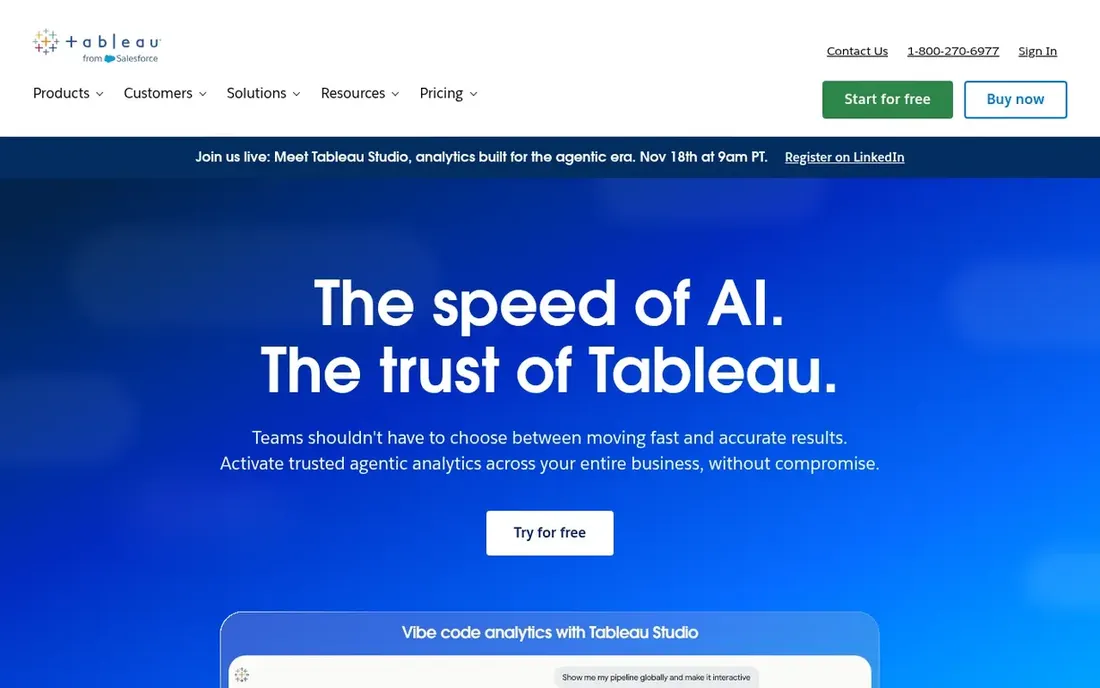
Tableau is a good fit for adaptable visual revenue reporting. Tableau is business intelligence and analytics software built around seeing and understanding data. Tableau visualizes data well but does not supply the underlying healthcare revenue model, so data preparation and metric definitions must come from elsewhere.
Points against: Governance relies on setup.
Worth adding: choose a product with a built-in semantic layer or clinical data model if standardized revenue metrics matter more than visual freedom. Consistency across teams relies on how governance is set up. What you pay to start with Tableau: $15 per user per month. Tableau has a free plan.
- Drag-and-drop visualization building
- Links to almost any database
- Needs data preparation upstream
Epic Systems
Best for: Health systems already on Epic
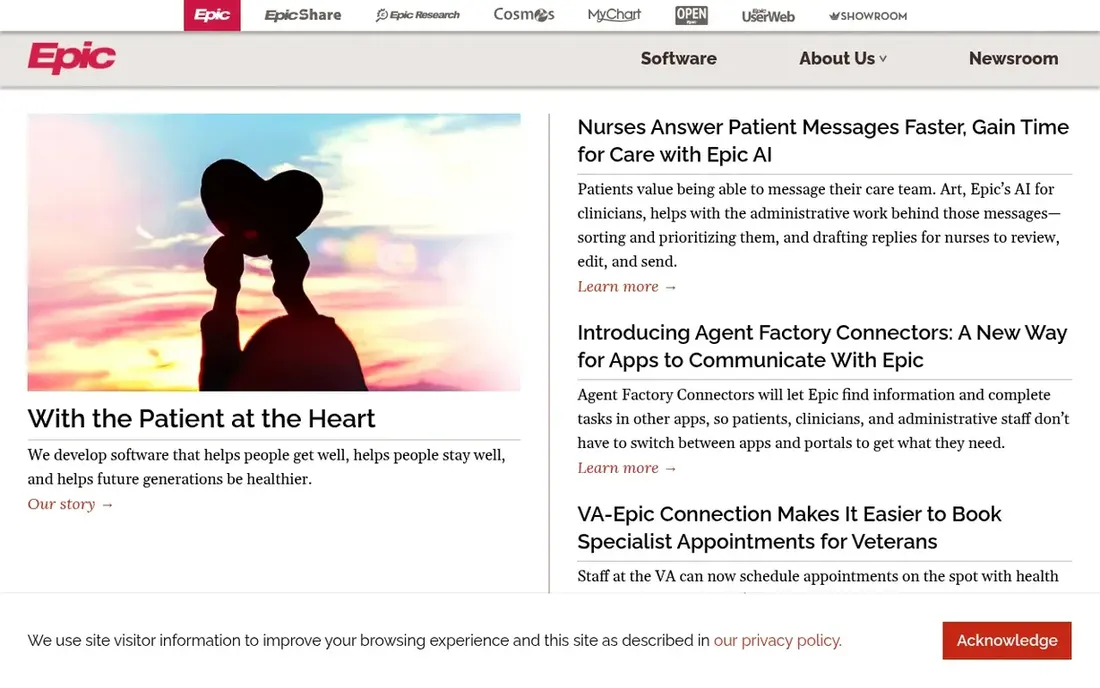
In short, Epic Systems is for Health systems already on Epic. Epic Systems develops software centered on patient care, and its analytics capabilities are used by health systems that already run its clinical system. As for the details, organizations not running Epic software will find little reason to adopt it for revenue analytics alone.
Teams wanting a light visualization layer may prefer a dedicated BI product. Worth adding: the main limit is ecosystem fit. Check the vendor site for Epic Systems pricing; none is listed in this comparison. Free plan details: Not stated.
Downsides: Less suited to non-Epic organizations.
- Wide coverage of health system workflows
- Analytics sits close to the clinical record
- Tied to the Epic ecosystem
Pick Domo if this describes you: governed data for business users. Domo positions itself around governed data for AI agents, strengthening the data journey with AI and data products. On top of that, organizations with mature warehouse infrastructure may find parts of the product redundant.
On top of that, users link and move data from any source, prepare and expand access for exploration, and accelerate business-critical insights. With numerous capabilities under one roof, teams can struggle to know where to start, and governance only works when someone owns it. For healthcare revenue teams, that means a product that deals with ingestion and presentation together, which fits organizations wanting business users to explore revenue data without building separate pipelines. Check the vendor site for Domo pricing; none is listed in this comparison. Free access: Free trial.
What to check first: Needs clear ownership to govern well.
- AI and data products in one place
- Supports exploration and insight acceleration
- Feature breadth can overwhelm newcomers
How the list was put together
LinkVetted looked at what each vendor publishes: pricing, plan limits, feature coverage for analytics tools for healthcare revenue and stated drawbacks. No hands-on testing is claimed. Treat prices as a snapshot: vendors change plans often, so check the vendor site for the figure that applies today. The ranking is editorial: typical fit first, then clear pricing, then free access. If your needs are unusual, read the profiles rather than relying on position.
Things to verify first
- Ask Qlik Sense, Google Looker, Epic Systems and Domo for a written quote, since no starting price is shown.
- Test the free plan from Tableau against your real workload before relying on it.
- Run a trial of Domo with real work before paying for a year; your own workflow is the best test.
- Read the limits listed for Qlik Sense first: broad suite needs skilled administration.
- Ask Epic Systems about contract length, onboarding fees and user minimums before you sign.
- Check the integration list for Domo against the tools you run today, and note which ones need a higher plan.
FAQ
Which options for analytics tools for healthcare revenue have a free plan?
Tableau is the only tool in this list with a free plan. Free plans usually cap users, projects or features, so check the limits on the vendor page. One other tool offers a trial instead. Prices, free plan details and limits for all 5 tools in this analytics tools for healthcare revenue roundup sit on the individual cards above.
Can these tools embed analytics into existing applications?
Multiple can. Google Looker explicitly supports embedded analytics, and Tableau emphasizes sharing dashboards with a click. Embedding is handy when revenue insights have to appear inside internal portals or operational workflows. Confirm embedding choices and access controls with each vendor.
How are the tools for analytics tools for healthcare revenue ordered?
The order follows typical fit for analytics tools for healthcare revenue, with Qlik Sense first and Domo last, then price clarity and free access. It is editorial judgement, not a score, so another team could rank the tools differently.
Can I try these tools before paying?
Often, yes. Tableau has a free plan and Domo offers a free trial. Use your own data and a real task during the test, and check what the free tier or trial limits before you rely on it. Each of the 5 options in this analytics tools for healthcare revenue guide has its own card above with the price, free plan and limits.
Do these tools publish their prices?
Not all of them. Qlik Sense, Google Looker, Epic Systems and Domo publish no starting price, so expect a quote request for those. The rest, Tableau included, show a starting price, though seats and billing terms still change the final cost.
Sources
- https://www.qlik.com
- https://cloud.google.com/looker
- https://www.tableau.com
- https://www.epic.com
- https://www.domo.com