Best EMR EHR Software in 2026: 8 Systems Compared
Compare the best EMR EHR software for practices, from Epic and athenahealth to Practice Fusion, eClinicalWorks, DrChrono, and AdvancedMD systems in 2026.
- Editor's choice
 Epic
Large hospitals and systems
Starts atSee websiteVisit epic.comFull review - Great alternative
 Oracle Health
Large hospitals and systems
Starts atSee websiteVisit oracle.comFull review - Also consider
 athenahealth
Revenue cycle support
Starts atSee websiteVisit athenahealth.comFull review
TL;DR:
- Epic and Oracle Health lead for large hospitals and health systems, while athenahealth suits practices that want strong revenue cycle support.
- Practice Fusion and eClinicalWorks offer published per-provider pricing that small practices can budget for.
- DrChrono suits mobile-first clinicians, especially on iPad, while AdvancedMD suits small to mid-size practices that want a scalable suite.
- NextGen and Tebra suit specialty and small practices that need flexible templates and integrated billing.
- EHR pricing is often quote-based, so get implementation, migration, training, and add-on costs in writing.
This is general information about software, not medical advice. Practices should confirm HIPAA compliance, data security, and clinical suitability with their own compliance and clinical leadership before choosing a system.
Quick comparison
| Tool | Best for | Starts at | Free plan? | |
|---|---|---|---|---|
| Epic | Large hospitals and systems | See website | No | Visit |
| Oracle Health | Large hospitals and systems | See website | No | Visit |
| athenahealth | Revenue cycle support | See website | No | Visit |
 Practice Fusion | Small practices | $199 per provider per month | No | Visit |
 eClinicalWorks | Integrated small to mid-size practices | $449 per provider per month | No | Visit |
 DrChrono | Mobile-first clinicians | See website | No | Visit |
 AdvancedMD | Scalable small to mid-size practices | See website | No | Visit |
 NextGen Healthcare | Specialty practices | See website | No | Visit |
The best EMR EHR software
Electronic medical record and electronic health record software holds patient charts, notes, prescriptions, labs, scheduling, and billing in one system. The right choice depends on practice size, specialty, and whether you need hospital-grade tools or a simple cloud system for a small clinic. These eight systems cover that range.
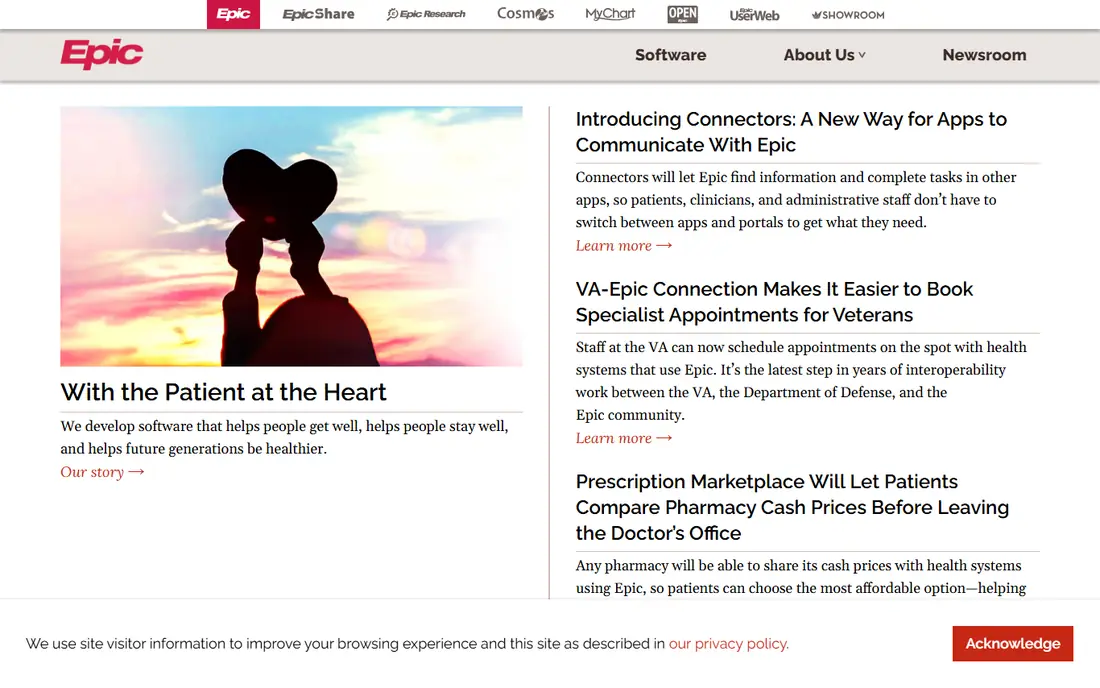
Epic is the standard EHR for many large hospitals and health systems in the United States, with deep tools for inpatient, outpatient, and specialty care, plus the widely used MyChart patient portal. Its interoperability tools help large systems share records across sites, and its scale means many clinicians already know the system from prior jobs.
Epic is not a small practice product. Pricing is quote-based, implementation takes months and needs dedicated staff, and ongoing support costs are high. For a hospital or large multi-site group, Epic depth justifies that investment. For a solo clinic, a cloud system such as Practice Fusion is a better fit.
- Widest hospital and health system adoption in the United States
- Deep clinical and interoperability tools
- MyChart patient portal
- Pricing is quote-based and high
- Implementation is long and resource heavy

Oracle Health, formerly Cerner, serves large hospitals and health systems with a broad clinical, revenue, and population health platform. Oracle ownership adds cloud infrastructure and analytics strengths, and the system supports complex inpatient workflows, labs, and pharmacy needs that small practice tools do not cover.
Like Epic, it is built for scale, with quote-based pricing and long implementation timelines. Practices considering a switch should budget for migration, training, and interface work with labs and payers. For a large system already on Cerner or Oracle, staying in that family often reduces disruption.
- Former Cerner hospital platform with broad clinical coverage
- Oracle cloud and analytics strengths
- Large system deployments
- Pricing is quote-based
- Migration and change management can be lengthy

athenahealth offers athenaOne, combining EHR, practice management, and revenue cycle services on a network-based platform. Its revenue cycle strength is the main draw, since athenahealth manages claims, denials, and payer rules across its network, which helps practices improve collections without hiring a large billing team. Mobile access and patient engagement tools are included.
Pricing is often based on a percentage of collections, reported around 4 to 8 percent in recent comparisons, or quote-based by practice size, so total cost rises with revenue. Customization can feel limited compared with highly configurable systems. For practices that want billing handled as a service, athenahealth is a leading pick.
- Network-based platform
- Strong revenue cycle management
- Patient engagement and population health tools
- Pricing is often a percentage of collections or quote-based
- Customization can feel limited
Practice Fusion is a cloud-based EHR aimed at small practices, with published pricing of $199 per provider a month, billed monthly with a required annual commitment in recent vendor checks. It covers charting, scheduling, patient portal, e-prescribing, and lab integration in a straightforward interface that small teams can learn quickly.
It lacks the depth of Epic or Oracle Health for hospitals and complex specialties, and some advanced features sit on higher tiers or add-ons. For an independent practice that wants predictable pricing and a simple cloud EHR, Practice Fusion is one of the clearest choices in this list.
- Published per-provider pricing
- Cloud-based with patient portal and e-prescribing
- Simple setup for small practices
- Fewer hospital-grade features than Epic
- Annual commitment reported with monthly billing
eClinicalWorks serves small to mid-size practices with an integrated EHR, practice management, revenue cycle, patient portal, and telehealth platform. Marketplace listings put its EHR around $449 per provider a month, with a higher tier around $599 a month including practice management in some comparisons, though final quotes vary by practice and modules. That breadth suits practices that want one vendor for clinical and billing work.
The higher price and add-on structure need careful budgeting, since e-prescribing, AI notes, and extra users can add costs. Training also matters, since the system is broad. For a growing practice that wants an integrated suite rather than separate tools, eClinicalWorks is a strong option.
- Integrated EHR, practice management, and telehealth
- Broad specialty support
- Patient portal and engagement tools
- Higher per-provider price than Practice Fusion
- Complex pricing with add-ons
- Training needs vary
DrChrono, now part of EverHealth, is built around mobile-first charting, with a strong iPad app that lets clinicians chart, prescribe, and manage schedules away from a desk. It integrates practice management, medical billing, revenue cycle tools, and telehealth, which suits small to mid-size practices that work across rooms or sites.
Pricing is quote-based, with no public price list, so practices need a written quote covering licenses, implementation, and add-ons. Some users report limits in customization and support responsiveness. For clinicians who chart mainly on iPad and want billing in the same system, DrChrono is worth a demo.
- Mobile-first design with strong iPad support
- Integrated billing and telehealth
- Customizable templates
- Pricing is not published
- Some users report support and customization limits
AdvancedMD offers EHR, practice management, patient engagement, and billing in a cloud suite aimed at small to mid-size practices. Templates are customizable by specialty, and the platform scales as practices add providers and locations, which helps growing groups avoid a second migration. Reporting and analytics support practice management decisions.
Pricing is quote-based, with third-party estimates varying, so get a written quote for your provider count and modules. Some users report a learning curve during setup. For a practice that expects growth and wants a scalable suite, AdvancedMD belongs on the shortlist alongside eClinicalWorks and athenahealth.
- Comprehensive EHR and practice management
- Customizable templates
- Scalable for growing practices
- Pricing is quote-based with estimates varying widely
- Learning curve reported by some users
NextGen Healthcare serves ambulatory practices with specialty-focused templates, integrated practice management, and billing, plus population health tools for value-based care programs. Specialty workflows help practices in areas such as orthopedics, behavioral health, and primary care chart efficiently without building every template from scratch.
Pricing is quote-based, and implementation needs training time for staff and clinicians. For a specialty practice that wants tailored workflows rather than a generic chart, NextGen is a credible alternative to eClinicalWorks and AdvancedMD, especially for groups planning growth.
- Specialty templates and workflows
- Integrated practice management and billing
- Population health tools
- Pricing is quote-based
- Implementation and training need planning
How we picked these
We compared vendor product pages, published pricing where available, and recent 2026 pricing comparisons for established EHR systems. We favored systems with a clear clinical and billing workflow, e-prescribing, patient portal, and HIPAA-compliant cloud hosting, and we included hospital, mid-size, and small practice options. We noted where pricing is quote-based rather than published, since that affects budgeting.
How to choose EMR EHR software
Start with practice size and specialty. A hospital needs Epic or Oracle Health depth, while a solo practice needs a simple cloud system with predictable pricing. Specialty templates matter more than feature counts, since a template that matches your visit flow saves minutes on every patient and reduces charting burden.
Next, test the full workflow, not just charting. Book a patient, chart a visit, send a prescription, order a lab, and submit a claim in the demo, and check how each step feels for clinicians and front-desk staff. Ask about data migration from your current system, including how notes, documents, and patient history transfer, and who pays for that work.
Finally, get total cost in writing. Include licenses per provider, implementation, training, data migration, e-prescribing, telehealth, AI notes, clearinghouse fees, and support tiers. Ask about contract length, renewal caps, and data export on exit, since switching EHRs is costly and time-consuming. Confirm HIPAA compliance and security practices with your compliance lead before signing.
FAQ
What is the best electronic medical record software for small practices?
Practice Fusion is a strong small practice pick, thanks to published pricing of $199 per provider a month and a simple cloud setup. DrChrono suits mobile-first clinicians, and AdvancedMD suits practices that expect growth. Test charting and billing together, since a cheap EHR with weak billing can cost more in lost collections.
What is the difference between EMR and EHR software?
EMR usually means a digital chart used within one practice, while EHR means a record designed to be shared across practices, hospitals, and other providers. In practice, vendors use the terms interchangeably, and most modern systems offer sharing, portals, and interoperability. Focus on workflow, sharing, and billing fit rather than the label.
How much does EHR software cost?
Small practice EHR pricing ranges from $199 per provider a month for Practice Fusion to around $449 per provider a month for eClinicalWorks, with athenahealth often priced as a percentage of collections. Hospital systems such as Epic and Oracle Health are quote-based and far higher, with implementation and support adding to license costs.
Is Practice Fusion still a good EHR in 2026?
Yes, for small practices that want a simple cloud EHR with published pricing and core charting, scheduling, portal, and e-prescribing features. It lacks hospital-grade depth, but that is not a drawback for an independent clinic. Confirm current plan details and contract terms before signing, since pricing and add-ons change.
Which EHR is best for specialty practices?
NextGen Healthcare and AdvancedMD are strong for specialty practices, thanks to specialty templates and integrated billing. DrChrono also suits specialties that chart on iPad. Ask vendors to show templates for your specialty in a live demo, rather than relying on a feature list.
Can I switch EHR systems without losing patient data?
You can migrate core patient data, but the ease and completeness vary by vendor and data type. Ask both vendors about migration scope, including notes, documents, labs, and scanned files, plus cost and timeline. Get data export terms in your contract, and keep a read-only copy of old records during transition.