Best Distribution Software for Ecommerce (2026): 6 Picks Checked on Vendor Pages
Shortlisting the top distribution software for ecommerce? 6 products compared on cost, free access and ideal buyer. Read the caveats before you buy. No hype.
- Editor's choice
 WooCommerce
Open-source builds with developer control
Starts at$29 a monthVisit woocommerce.comFull review - Great alternative
 Adobe Commerce
Composable B2B and B2C enterprise commerce
Starts atSee websiteVisit business.adobe.comFull review - Also consider
 Salesforce Commerce Cloud
Commerce tied to a CRM ecosystem
Starts atSee websiteVisit salesforce.comFull review
Direct answer
Start with WooCommerce if you need open-source builds with developer control. Listed starting prices: WooCommerce from $29 a month and Shopify from $19 a month. For a different need, Adobe Commerce covers Composable B2B and B2C enterprise commerce and Salesforce Commerce Cloud covers Commerce tied to a CRM ecosystem. The full list of 6 tools follows, with prices and free plan facts.
TL;DR:
- WooCommerce is the opening pick, best for open-source builds with developer control.
- None of the 6 tools, from WooCommerce to Oracle NetSuite, has a free plan, so budget for a subscription or use a trial.
- Oracle NetSuite fits ERP-centered inventory and order operations.
- Shopify is the lowest-priced starter here at $19 per month.
- Before buying Adobe Commerce, weigh this: heavy for small operations.
Last checked November 2026. Prices and plan details were read from the vendors' own pages in November 2026; vendors change plans often, so confirm the current price on the vendor site before you buy.
Quick comparison
| Tool | Best for | Starts at | Free plan? | |
|---|---|---|---|---|
| WooCommerce | Open-source builds with developer control | $29 a month | Not stated | Visit |
| Adobe Commerce | Composable B2B and B2C enterprise commerce | See website | Not stated | Visit |
| Salesforce Commerce Cloud | Commerce tied to a CRM ecosystem | See website | Not stated | Visit |
 Shopify | All-in-one commerce and business management | $19 a month | Free trial | Visit |
 BigCommerce | Scaling across brands, regions and channels | See website | Not stated | Visit |
 Oracle NetSuite | ERP-centered inventory and order operations | See website | Not stated | Visit |
Tool-by-tool breakdown
If you are comparing distribution software for ecommerce, this page covers 6 tools in one place: what each is best for, what it costs to start, whether it has a free plan, and the main limit to know about.
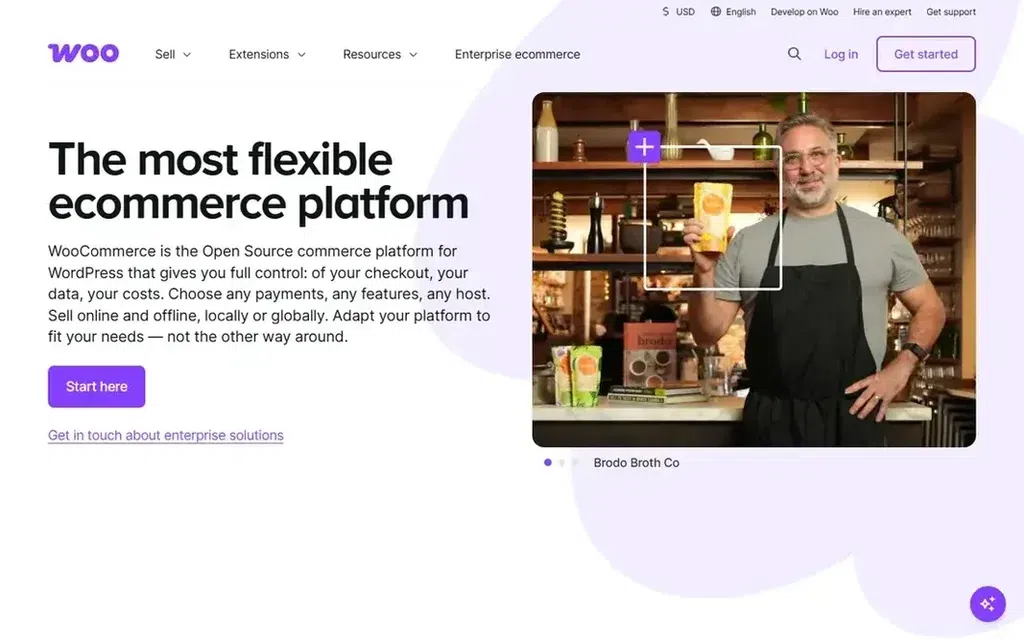
WooCommerce makes the most sense for open-source builds with developer control. Since it is open source, teams keep control over their stack and can shape the storefront and operational workflows to fit how their distribution and fulfillment processes actually run.
That adaptability includes responsibility: hosting, updates and extensions are yours to run, which can strain teams without developer support. What you pay to start with WooCommerce: $29 per month. Free access: Not stated.
Points against: Depends on extensions for added functions.
- Open-source system
- Targeted at merchants and developers
- Needs technical upkeep
Adobe Commerce serves Composable B2B and B2C enterprise commerce. Adobe Commerce, formerly Magento, is described as an AI-powered composable ecommerce system for B2B and B2C that provides personalized experiences at global scale.
Pricing for Adobe Commerce is not stated here, so ask the vendor for current figures. On free options: Not stated.
Trade-offs to know: Needs implementation resources.
- Personalization at global scale
- Aimed at B2B and B2C
- Heavy for small operations
Salesforce Commerce Cloud is designed for Commerce tied to a CRM ecosystem. The product makes most sense inside a Salesforce-centered stack; standalone merchants may find the surrounding ecosystem unnecessary.
Worth adding: if your priority is a straightforward, self-contained distribution setup, a dedicated commerce product is the more direct route. Also, Salesforce Commerce Cloud is the commerce offering within the Salesforce product, targeted at connecting buying experiences with customer data and service operations. Pricing for Salesforce Commerce Cloud is not stated here, so ask the vendor for current figures. Free access: Not stated.
Downsides: Best value within Salesforce stack.
- Supports unified commerce experiences
- Part of the Salesforce product
- Implementation needs expertise

Shopify is designed for all-in-one commerce and business management. Its homepage emphasizes speed of setup and growth, which suits merchants who want distribution, selling and daily management handled through a single system instead of stitched-together parts.
Drawbacks to consider: Less depth for complicated enterprise workflows.
Entry price for Shopify: $19 per month. On free options: Free trial.
- Aimed at building or expanding rapidly
- Storefront and management tools in one place
- Customization can need add-on tools

In short, BigCommerce is for scaling across brands, regions and channels. BigCommerce describes commerce aimed at momentum, powering buying experiences across brands, regions and channels from one scalable foundation.
On top of that, consider a composable enterprise product instead when distribution rules, fulfillment networks or financial workflows must live in one tightly integrated suite. Merchants with heavy B2B contract pricing or deep ERP dependencies may find they need companion systems. No starting price is listed for BigCommerce here; confirm pricing on the vendor site. On free options: Not stated.
Watch-outs: Setup needs planning for catalogs.
- Single scalable foundation
- Suited to regional expansion
- Enterprise depth may need integrations
Choose Oracle NetSuite for ERP-centered inventory and order operations. NetSuite is an ERP first, so storefront and commerce experiences may depend on companion products or integrations.
Watch-outs: Commerce may need companion tools.
From a buyer's view, choose a dedicated commerce system when customer-facing merchandising and selling are the priority over consolidated back-office operations. Oracle NetSuite does not show a starting price in this comparison, so check the vendor site for current pricing. Free access: Not stated.
- Merges financials
- Built-in AI assistance
- Wide suite needs configuration
How we compared the tools
For each of the 6 tools we noted price, free plan or trial, fit for distribution software for ecommerce and the main limit, using vendor pages and documentation. Treat prices as a snapshot: vendors change plans often, so check the vendor site for the figure that applies today. Tools are placed by general fit for distribution software for ecommerce, with price clarity and free access as tie-breakers. A different team can reasonably rank them differently.
Questions to settle before buying
- Ask Adobe Commerce, Salesforce Commerce Cloud, BigCommerce and Oracle NetSuite for a written quote, since no starting price is shown.
- Take the trial from Shopify and push a live task through it before you pay.
- Before choosing WooCommerce, weigh its main limit: needs technical upkeep.
- Compare total cost, not headline price: for Salesforce Commerce Cloud, add extra seats, add-ons and any usage-based charges.
- Ask Shopify which support channels and response times come with the plan you would buy.
FAQ
Can I try these tools before paying?
Often, yes. Shopify offers a free trial. Use your own data and a real task during the test, and check what the free tier or trial limits before you rely on it. Each of the 6 options in this distribution software for ecommerce guide has its own card above with the price, free plan and limits.
What should ecommerce distribution software handle first?
Start with order routing, inventory visibility and channel connections, since these drive daily fulfillment. Match depth to your order volume instead of buying maximum capability upfront.
Do these tools publish their prices?
Not all of them. Adobe Commerce, Salesforce Commerce Cloud, BigCommerce and Oracle NetSuite publish no starting price, so expect a quote request for those. The rest, WooCommerce included, show a starting price, though seats and billing terms still change the final cost.
How are the tools for distribution software for ecommerce ordered?
WooCommerce sits first and Oracle NetSuite last because the order follows typical fit for distribution software for ecommerce, then price clarity and free access. It is a judgement call, so read each profile for fit and limits.
Is WooCommerce the right pick for everyone comparing distribution software for ecommerce?
No single tool suits every team. WooCommerce comes first because it fits open-source builds with developer control, while Adobe Commerce suits Composable B2B and B2C enterprise commerce and Salesforce Commerce Cloud suits Commerce tied to a CRM ecosystem. Match the tool to your own size, budget and workflow before deciding.
Sources
- https://woocommerce.com
- https://business.adobe.com/products/magento/magento-commerce.html
- https://www.salesforce.com/commerce
- https://www.shopify.com
- https://www.bigcommerce.com
- https://www.netsuite.com