SciNote Alternatives in 2026: 5 Options Vetted
5 options for SciNote alternatives, with entry costs, free tiers and the buyer each one serves. Clear notes on pricing gaps and limits. Narrow your shortlist.
- Editor's choiceDotmatics
Unifying R&D applications and data
Starts atSee websiteVisit dotmatics.comFull review - Great alternative
 LabVantage
End-to-end laboratory informatics
Starts atSee websiteVisit labvantage.comFull review - Also consider
 Benchling
Biology-first R&D data and collaboration
Starts atSee websiteVisit benchling.comFull review
Direct answer
Start with Dotmatics if you need unifying R&D applications and data. Listed starting prices: LabArchives from $25 per student per term. LabVantage is better for end-to-end laboratory informatics, and Benchling is better for biology-first R&D data and collaboration. The other 2 tools in the list cover narrower or pricier cases.
TL;DR:
- Dotmatics is the opening pick, best for unifying R&D applications and data.
- Check the limits for Benchling before you commit: biology-first focus may not suit every lab type.
- Dotmatics, Labguru and the 3 others all need a premium plan or a trial, since no free plan is listed.
- Dotmatics, LabVantage, Benchling and Labguru: pricing is by quote only, so plan time for a sales conversation.
Last checked November 2026. Prices and plan details were read from the vendors' own pages in November 2026; vendors change plans often, so confirm the current price on the vendor site before you buy.
Quick comparison
| Tool | Best for | Starts at | Free plan? | |
|---|---|---|---|---|
| Dotmatics | Unifying R&D applications and data | See website | Not stated | Visit |
| LabVantage | End-to-end laboratory informatics | See website | Not stated | Visit |
| Benchling | Biology-first R&D data and collaboration | See website | Not stated | Visit |
 LabArchives | Straightforward electronic lab notebook use | $25 per student per term | Free trial | Visit |
 Labguru | Unified lab management and experiment tracking | See website | Not stated | Visit |
Our 5 picks for SciNote
If you are comparing SciNote, this page covers 5 tools in one place: what each is best for, what it costs to start, whether it has a free plan, and the main limit to know about.
Dotmatics
Best for: Unifying R&D applications and data
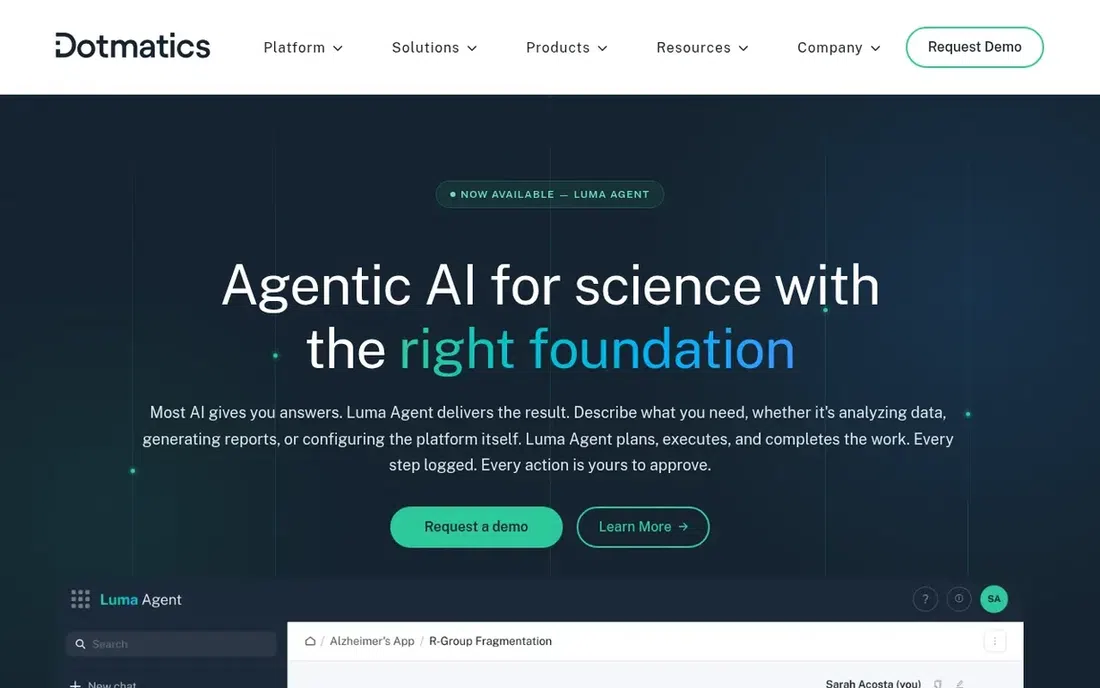
Dotmatics targets unifying R&D applications and data. Dotmatics offers R&D software options that bring together best-of-breed applications to unify science and data insights.
Downsides: Multi-application suite can be complicated to adopt.
Beyond that, if your goal is just to replace a notebook with a cleaner record-keeping tool, a focused ELN may be the more practical route. More specifically, smaller labs may not need that breadth. Dotmatics does not show a starting price in this comparison, so check the vendor site for current pricing. Free plan details: Not stated.
- Aims to unify science and data insights
- Best-of-breed application approach
- May be more than a small lab needs
LabVantage is aimed squarely at end-to-end laboratory informatics. LabVantage offers an end-to-end laboratory informatics system intended to work for everyone from operators to the QC lab to the C-suite.
Points against: Needs clear process definition upfront.
As for the details, if you need fast adoption for experiment records instead of a wide informatics backbone, weigh more straightforward alternatives before choosing a full product. On top of that, the enterprise orientation means more setup and process definition than a light notebook. This comparison lists no price for LabVantage; ask the vendor. As for free access: Not stated.
- Handles QC lab workflows
- End-to-end informatics product
- Enterprise scope can be heavy for small teams
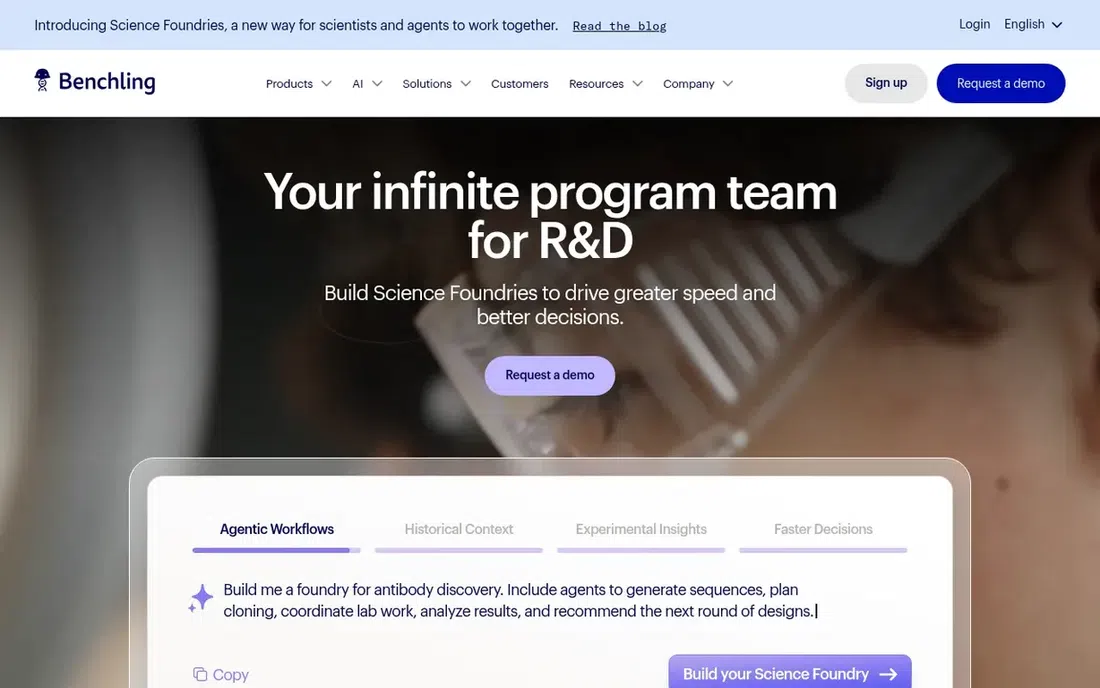
For biology-first R&D data and collaboration, Benchling is a natural candidate. Benchling is a cloud-based product for biotechnology research and development, described by the vendor as a biology-first system for scientific data, collaboration and insights.
Where it is weaker: Biology-first focus may not suit every lab type.
Organizations with a capable biology focus are the natural audience. Since the product is positioned around biology-first R&D, labs with primarily chemical, clinical or quality-control workflows may find other choices closer to their needs. Pricing for Benchling is not stated here, so ask the vendor for current figures. Free access: Not stated.
- Targeted at program teams in biotech
- Collaboration and insights
- Wide product can take time to configure
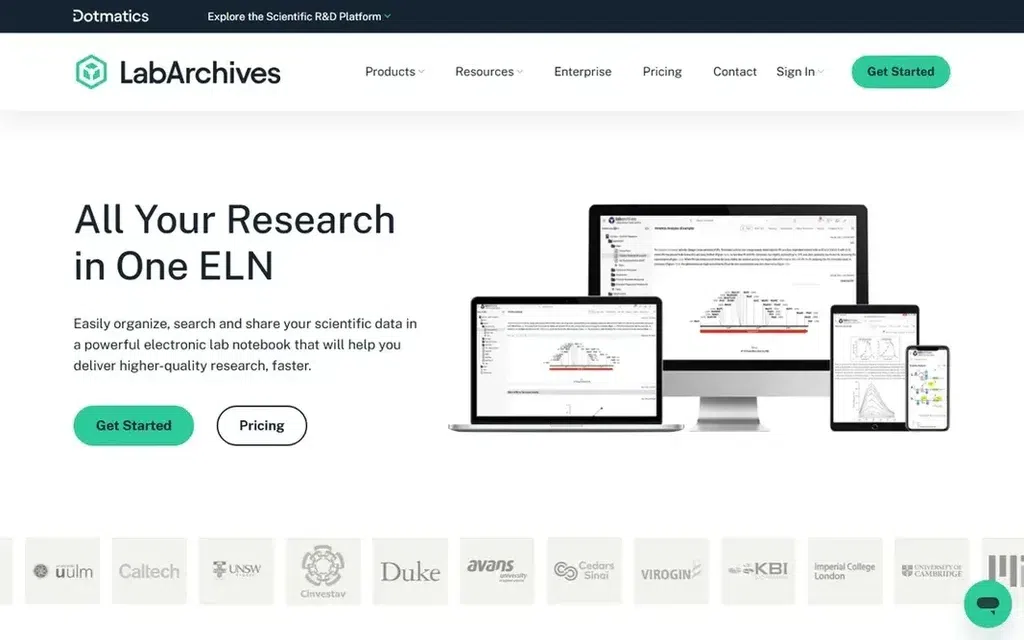
LabArchives is designed for straightforward electronic lab notebook use. LabArchives presents itself as a modern electronic lab notebook for organizing, searching and sharing scientific data. Also, the vendor positions the product around the ELN, so labs needing integrated sample management, instrument connectivity or quality workflows may pair it with other systems.
In daily use, if your priority is a unified R&D application suite, look at platform-style alternatives instead. Worth adding: teams that primarily need structured notebook entries instead of a wide informatics suite are a decent match. More specifically, decide whether an ELN alone spans your processes before committing. Price to start with LabArchives: $25 per student per term. As for free access: Free trial.
What to check first: Advanced informatics may need other tools.
- Positioned for research organizations
- Organize
- Narrower scope than full R&D products
Think of Labguru for unified lab management and experiment tracking. It suits R&D groups that want notebook-style records alongside daily lab management in a single place, reducing the number of separate tools a team maintains.
Watch-outs: May overlap with existing tools.
Expanding labs looking for one shared system are a decent match. Labguru shows no starting price here, so confirm the cost on the vendor site. As for free access: Not stated.
- Pitched at R&D lab teams
- Merges lab management with experiment tracking
- Wide lab management scope needs configuration
What went into this list
The comparison looks at four things: starting price, free access, how well the feature set matches SciNote, and the main limit of each tool. Seat minimums, billing terms and add-ons can move the real cost, so the starting prices here are a guide and not a quote. The sequence is a judgement call: typical use case first, then pricing transparency, then free access. Use the profiles to check fit.
What to check before you buy
- Ask Dotmatics, LabVantage, Benchling and Labguru for a written quote, since no starting price is shown.
- Use real work to test the free trial from LabArchives, rather than a demo project.
- Read the limits listed for Dotmatics first: multi-application suite can be complicated to adopt.
- Confirm that LabArchives connects to the apps your team already uses, on the plan you would actually buy.
- Pick one real project and run it in LabVantage first; a small pilot shows fit faster than a checklist.
FAQ
What is the primary difference between these SciNote alternatives?
Benchling, LabArchives and Labguru lean toward notebook and research collaboration, whereas SampleManager LIMS and LabVantage center on laboratory informatics and sample workflows. Dotmatics sits between them with a suite of R&D applications.
Can I try these tools before paying?
Often, yes. LabArchives offers a free trial. Use your own data and a real task during the test, and check what the free tier or trial limits before you rely on it. Each of the 5 options in this SciNote alternatives guide has its own card above with the price, free plan and limits.
Is Dotmatics the right pick for everyone comparing SciNote?
No single tool suits every team. Dotmatics comes first because it fits unifying R&D applications and data, while LabVantage suits end-to-end laboratory informatics and Benchling suits biology-first R&D data and collaboration. Match the tool to your own size, budget and workflow before deciding.
Do these tools publish their prices?
Not all of them. Dotmatics, LabVantage, Benchling and Labguru publish no starting price, so expect a quote request for those. The rest, LabArchives included, show a starting price, though seats and billing terms still change the final cost.
Does any tool for SciNote here have a free plan?
No tool in this list, Dotmatics and Labguru included, has a permanent free plan. LabArchives offer a trial. Trials and quotes are the usual route, so plan a short evaluation period.
Sources
- https://www.dotmatics.com
- https://www.labvantage.com
- https://www.benchling.com
- https://www.labarchives.com
- https://www.labguru.com