REST Alternatives in 2026: 8 Options Compared
We compared REST alternatives for 2026, from GraphQL and gRPC to tRPC and message queues, so you can pick the right API style for each job, with examples.
- Editor's choice
 GraphQL
Flexible front-end data
Starts atFreeVisit graphql.orgFull review - Great alternative
 gRPC
Fast internal services
Starts atFreeVisit grpc.ioFull review - Also consider
 tRPC
TypeScript full-stack apps
Starts atFreeVisit trpc.ioFull review
TL;DR:
- REST remains the best default for public APIs, because every language speaks HTTP and caching works by URL.
- GraphQL wins when a front end needs flexible, nested data from many sources in one request.
- gRPC wins for fast service-to-service calls inside a backend, where binary payloads and streaming matter.
- tRPC wins for TypeScript teams that want end-to-end type safety without writing a schema by hand.
- Our pick for most people is to keep REST for public APIs, add GraphQL for complex front ends, and use gRPC or a queue for internal services.
Quick comparison
| Tool | Best for | Starts at | Free plan? | |
|---|---|---|---|---|
| GraphQL | Flexible front-end data | Free | Yes | Visit |
| gRPC | Fast internal services | Free | Yes | Visit |
| tRPC | TypeScript full-stack apps | Free | Yes | Visit |
 SOAP | Regulated enterprise systems | Free | Yes | Visit |
 OData | Queryable data APIs | Free | Yes | Visit |
 JSON-RPC | Simple remote calls | Free | Yes | Visit |
 Falcor | Efficient data fetching | Free | Yes | Visit |
 Apache Kafka | Async event streaming | Free | Yes | Visit |
The best REST alternatives
REST, short for Representational State Transfer, treats everything as a resource with its own URL and uses HTTP methods to act on it. It is simple, widely understood, and easy to cache, which is why it remains the default for public APIs. Teams look for REST alternatives when they hit its limits: over-fetching, many round trips for one screen, poor real-time support, or weak typing. We compared official documentation and public comparisons for each option below, and we focused on approaches that are still in active use in October 2026.
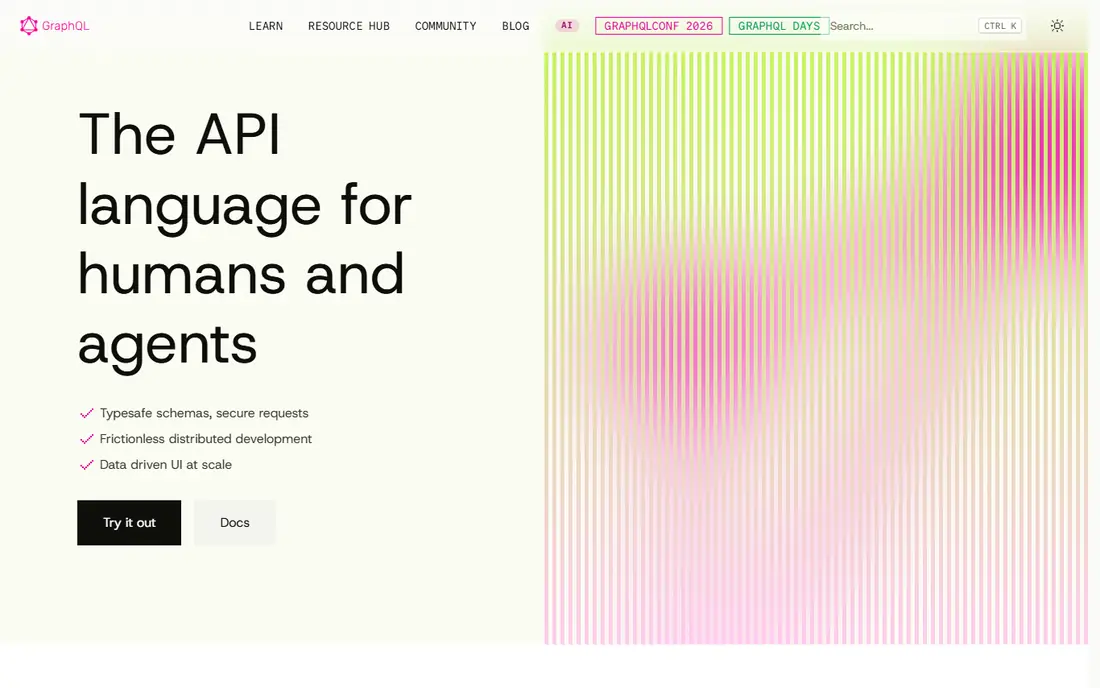
GraphQL, created at Facebook and open-sourced in 2015, uses one endpoint and a typed schema, and the client sends a query describing exactly the data it wants. That solves REST's over-fetching and under-fetching problems: one request can fetch a user and their orders together, with only the fields the screen needs. For a front end that pulls data from many sources and changes screens often, that flexibility is a real advantage, and the schema gives clients a self-documenting contract.
The trade-offs are caching and safety. GraphQL usually sends queries as POST requests to one URL, so HTTP caching by URL does not work the way it does for REST, and a deeply nested query can trigger many database calls unless the server batches them. GraphQL is best for client-facing aggregation, and it is not a reason to rewrite a simple public CRUD API that REST already serves well.
- Client requests exactly the fields it needs
- One endpoint
- Typed schema clients can inspect
- Caching is harder than REST
- Deeply nested queries can strain a server
- Tooling adds complexity
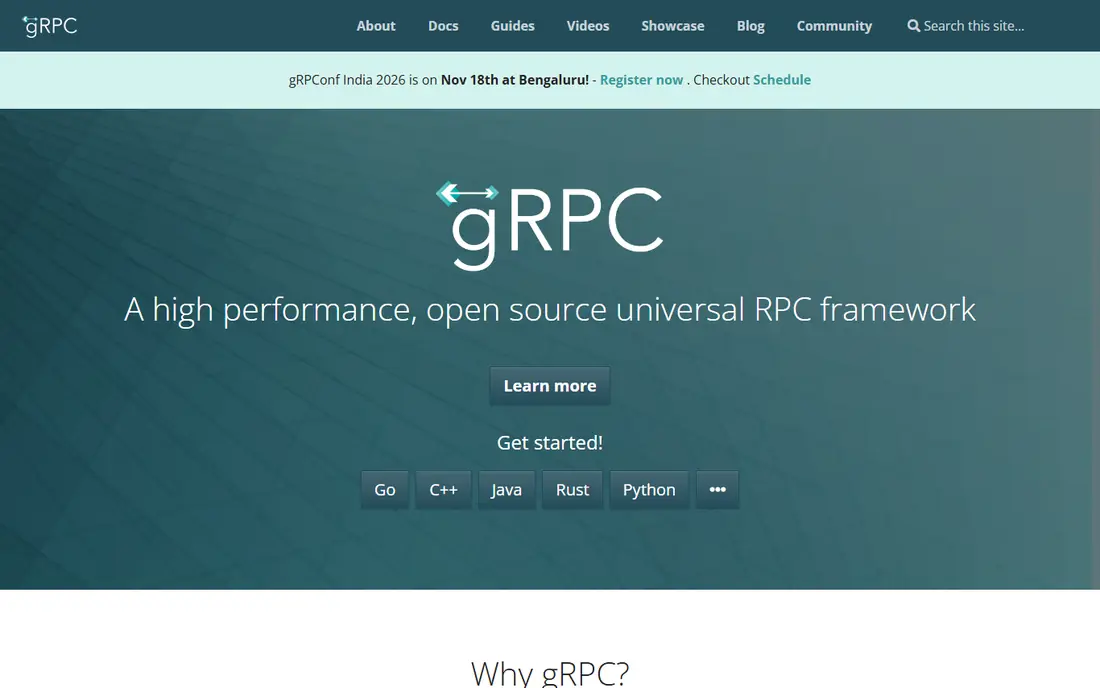
gRPC is a remote procedure call framework that uses Protocol Buffers, a binary format, over HTTP/2, with support for unary calls and several kinds of streaming. That makes it fast and efficient for service-to-service calls inside a backend, where payload size and latency matter and both sides are under your control. Generated clients in many languages also reduce hand-written boilerplate, and streaming suits live data feeds between services.
The limits are browser support and debugging. Browsers cannot speak gRPC directly, so a web client needs a proxy, and binary payloads are harder to inspect than JSON in a browser tool. gRPC is a poor fit for a public API aimed at third parties, and an excellent fit for internal microservices where performance matters.
- Binary Protocol Buffers payloads
- HTTP/2 streaming
- Generated clients in many languages
- Needs a proxy for browsers
- Schema changes need care
- Harder to debug than JSON
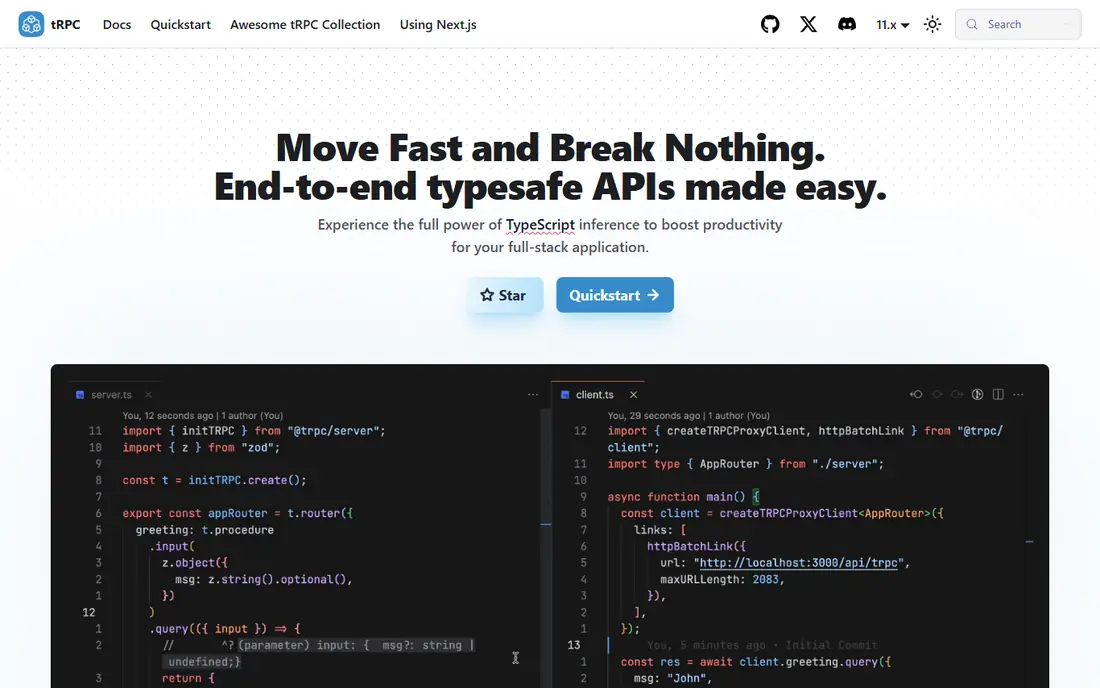
tRPC gives TypeScript teams end-to-end type safety without writing a schema or generating code: the server defines procedures, and the client infers their types directly. That removes a whole class of bugs where the front end expects a field the back end no longer sends, and it keeps the setup light for a full-stack TypeScript app. It also works well with React Query for caching and subscriptions, which covers many real-time needs.
The catch is scope. tRPC is TypeScript only, so a team with services in other languages cannot use it everywhere, and it is not suited to a public API for third parties who do not use TypeScript. For a TypeScript monorepo with a single front end, though, it is often simpler than GraphQL and more type-safe than plain REST.
- End-to-end type safety with no code generation
- Simple setup
- Works with React Query
- TypeScript only
- Not suited to public third-party APIs
- Smaller ecosystem than GraphQL
SOAP is a protocol that uses XML messages, often over HTTP, with strict contracts defined in WSDL files and standards for security, transactions, and reliable messaging. Banks, hospitals, and government systems still use it, because those standards matter more than payload size in regulated work. If a partner hands you a WSDL file, SOAP is not a choice you debate: it is the interface you are given, and it works.
The downsides are verbosity and weight. XML payloads are larger than JSON, tooling is heavier, and building a new SOAP API from scratch is slower than building a REST one. SOAP belongs on this list as a practical REST alternative for enterprise integration, not as a first choice for a new consumer app.
- Strict contracts with WSDL
- Built-in standards for security and transactions
- Widely used in regulated industries
- Verbose XML payloads
- Heavier tooling
- Slower to build than REST
OData is a standard built on top of REST that adds a uniform query language: clients can filter, sort, page, and select fields using a standard URL syntax, rather than learning a custom query format for each API. That makes it strong for data-heavy APIs, such as product catalogs or reporting endpoints, where clients need different slices of the same data. Because it builds on REST, it keeps HTTP caching and tooling that pure GraphQL gives up.
The risk is query cost. A client can craft a complex query that is expensive to run, so servers need limits on depth, page size, and expansion. OData is also less familiar to many developers than plain REST or GraphQL, so documentation matters more. It suits a team that wants REST plus standard querying, without adopting a whole new query language.
- Standard query syntax for filtering and paging
- Built on REST
- Good for data-heavy APIs
- Query complexity can strain a server
- Less familiar to many developers
- Tooling varies by stack
JSON-RPC is a simple remote procedure call protocol that sends a method name and parameters as JSON over HTTP, and returns a JSON result or error. It is easy to implement in any language, easy to debug, and it suits simple internal APIs where a full REST resource model feels like overkill. Many tools and services use JSON-RPC under the hood, including blockchain clients and language servers, which shows how durable a simple design can be.
The limits are standardization and tooling. JSON-RPC has no built-in schema, so clients and servers must agree on method names and shapes outside the protocol, and error handling is basic. It is best for a small, well-understood API between two systems you control, not for a public API that needs self-documenting contracts.
- Very simple protocol
- JSON payloads
- Easy to implement in any language
- No standard schema
- Batching and error handling are basic
- Less tooling than GraphQL
Falcor, developed at Netflix, treats all of a back end's data as one virtual JSON graph, and the client requests paths through that graph, fetching only the values it needs. Like GraphQL, it reduces round trips and over-fetching, but it uses a path-based model rather than a query language. For a front end that needs many small pieces of data from different sources, that model can be efficient and simple to reason about.
The weakness is community size. Falcor has a smaller ecosystem than GraphQL, fewer ready-made tools, and less hiring familiarity, so a team adopting it should expect to build more itself. It is a solid REST alternative for a team that likes its graph model, and a riskier pick than GraphQL for a team that wants the largest community.
- One model for all data
- Fetches only needed values
- Reduces round trips
- Smaller community than GraphQL
- Netflix-focused history
- Fewer ready tools
Apache Kafka is not a request-response API at all: it is a distributed event streaming platform where producers publish events to topics and consumers read them at their own pace. That makes it a REST alternative for a different job: async, event-driven systems where services should not wait on each other. An order service can publish an order event, and inventory, billing, and notification services can each react without a direct call, which absorbs spikes and keeps services loosely coupled.
The trade-off is operations. Running Kafka takes infrastructure and care, schema changes need management, and debugging an async flow is harder than tracing a single HTTP request. Kafka suits a team building an event-driven back end, and it should sit alongside REST or gRPC, not replace them for simple request-response work.
- Decouples producers and consumers
- Absorbs traffic spikes
- Durable event log
- Operationally heavy
- Not a request-response API
- Needs careful schema management
How we picked these
We compared official documentation and public comparisons for API styles still in active use in October 2026, and we favored options that solve a specific REST weakness: flexible fetching, performance, typing, enterprise standards, querying, simplicity, or async events. We included both protocols and platforms, because a team choosing a REST alternative may need a protocol, a framework, or an event backbone depending on the job. All eight options here are open and free to use, so price did not separate them.
How to choose a REST alternative
Start with the job, not the trend. If the job is a public API for third parties, stay with REST: it is the lowest common denominator everyone understands, and HTTP caching works in your favor. If the job is a front end that needs flexible, nested data, GraphQL earns its complexity. If the job is service-to-service calls where performance matters, gRPC is the natural pick. If the job is a TypeScript full-stack app, tRPC is simpler than either.
Next, consider real-time and async needs separately. A chat feed, live dashboard, or multiplayer game needs WebSockets or server-sent events, not a better request-response style. An order pipeline or notification system needs a queue or event stream such as Kafka, not a faster API call. Mixing these jobs is how teams end up with a GraphQL API doing a queue's job, or a REST API polling for live updates.
Finally, remember that most real systems use more than one style. A common 2026 pattern is REST for public APIs, GraphQL or tRPC for internal front ends, gRPC for microservices, and a queue for async work. That hybrid is not a failure to choose: it is choosing the right tool for each boundary in the system.
FAQ
What are the best REST API alternatives?
GraphQL is the best REST alternative for flexible front-end data, gRPC for fast internal services, and tRPC for TypeScript full-stack apps. SOAP suits regulated enterprise systems, OData suits queryable data APIs, and Kafka suits async event streaming. The best pick depends on the job, not on a single ranking.
Is GraphQL better than REST?
Not always. GraphQL is better when a front end needs flexible, nested data in one request and wants a typed schema. REST is better for public APIs, simple CRUD, and anything that benefits from HTTP caching. Many teams use both: REST for public endpoints and GraphQL for complex front ends.
What is the difference between REST and gRPC?
REST uses JSON over HTTP with resource URLs, while gRPC uses binary Protocol Buffers over HTTP/2 with generated clients and streaming. gRPC is faster and more efficient for internal services, while REST is simpler, easier to debug, and better for public APIs and browsers.
When should I use tRPC instead of REST?
Use tRPC when your whole stack is TypeScript and you want end-to-end type safety without writing a schema or generating code. It suits a full-stack app with one front end. It does not suit a public API for third parties, or a team with services in many languages.
Are REST alternatives free?
Yes, the options in this list are open standards or open-source projects and free to use. Costs come from hosting, operations, and staff time, not licenses. Kafka and Kubernetes-based setups cost the most to operate, while GraphQL, gRPC, and tRPC add mainly development time.
Can I mix REST with other API styles?
Yes, and most real systems do. A common pattern is REST for public APIs, GraphQL or tRPC for front ends, gRPC between internal services, and a queue for async events. Each style serves a different boundary, and mixing them is a sign of a mature design, not indecision.
Sources
- https://graphql.org
- https://grpc.io
- https://trpc.io
- https://www.w3.org/TR/soap/
- https://www.odata.org
- https://www.jsonrpc.org
- https://netflix.github.io/falcor/
- https://kafka.apache.org
- https://apiscout.dev/guides/rest-vs-graphql-vs-grpc-vs-trpc-2026
- https://apyhub.com/blog/rest-vs-graphql-vs-grpc-vs-soap