Top Reveal Alternatives in 2026: 5 Picks Ranked
Need Reveal alternatives? We compare 5 tools on cost, free access and who each suits. Weak spots flagged for every entry. Last reviewed November 2026.
- Editor's choice
 Qlik Sense
Analytics paired with data integration
Starts atSee websiteVisit qlik.comFull review - Great alternative
 Tableau
Visual exploration across plenty of data sources
Starts at$15 per user per monthVisit tableau.comFull review - Also consider
 GoodData
Dashboards and agents on one foundation
Starts atSee websiteVisit gooddata.comFull review
Direct answer
Qlik Sense is the first pick on this list for analytics paired with data integration. Listed starting prices: Tableau from $15 per user per month. For a different need, Tableau covers visual exploration across plenty of data sources and GoodData covers dashboards and agents on one foundation. All 5 tools are compared below on price, free plan and limits.
TL;DR:
- Top of the list is Qlik Sense, which targets analytics paired with data integration.
- Just one of the 5 tools, Tableau, has a free plan.
- Check the limits for GoodData before you commit: agentic focus assumes mature data.
- Starting prices begin at $15 per user per month with Tableau.
- Looker is the one to check for governed semantic layer with embedded BI.
Last checked November 2026. Prices and plan details were read from the vendors' own pages in November 2026; vendors change plans often, so confirm the current price on the vendor site before you buy.
Quick comparison
| Tool | Best for | Starts at | Free plan? | |
|---|---|---|---|---|
| Qlik Sense | Analytics paired with data integration | See website | Not stated | Visit |
| Tableau | Visual exploration across plenty of data sources | $15 per user per month | Yes | Visit |
| GoodData | Dashboards and agents on one foundation | See website | Free trial | Visit |
 Domo | Governed data pipelines for AI agents | See website | Free trial | Visit |
 Looker | Governed semantic layer with embedded BI | See website | Not stated | Visit |
The best Reveal
LinkVetted put together this guide to Reveal for readers who want a clear shortlist without reading every vendor page. It compares 5 tools on starting price, free plans, who each one suits and where each one falls short.
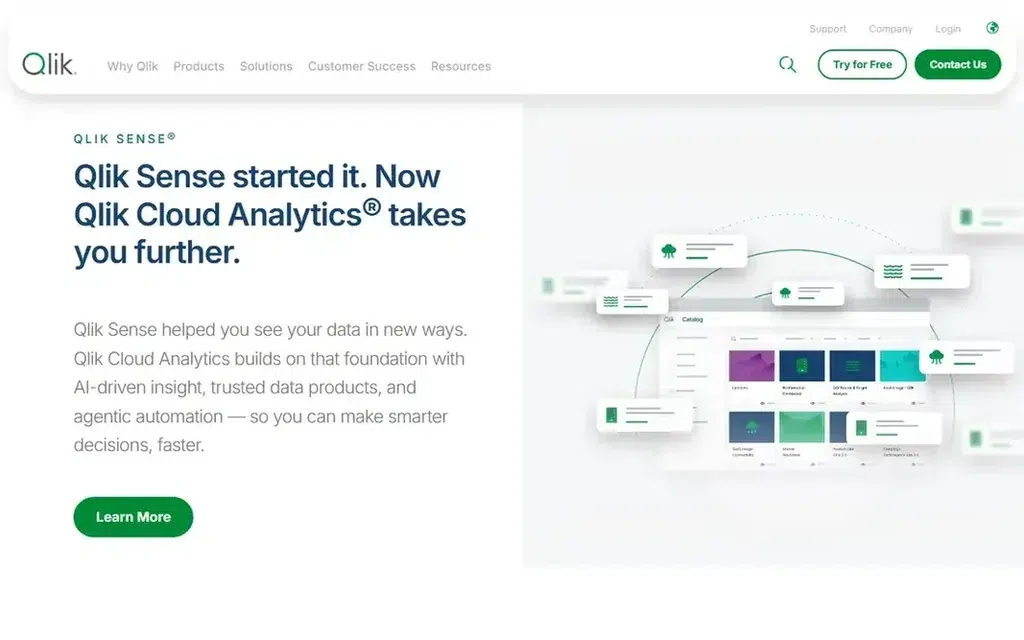
Qlik Sense is built with analytics paired with data integration in mind. Consider Qlik Sense when data integration and analytics should come from a single vendor, and look elsewhere if you want a narrow visualization tool.
Qlik Sense shows no starting price here, so confirm the cost on the vendor site. As for free access: Not stated.
Where it is weaker: Ramp-up time across tools.
- Data fabric positioning for insights
- Analytics within the same vendor lineup
- Wide product set can be complicated
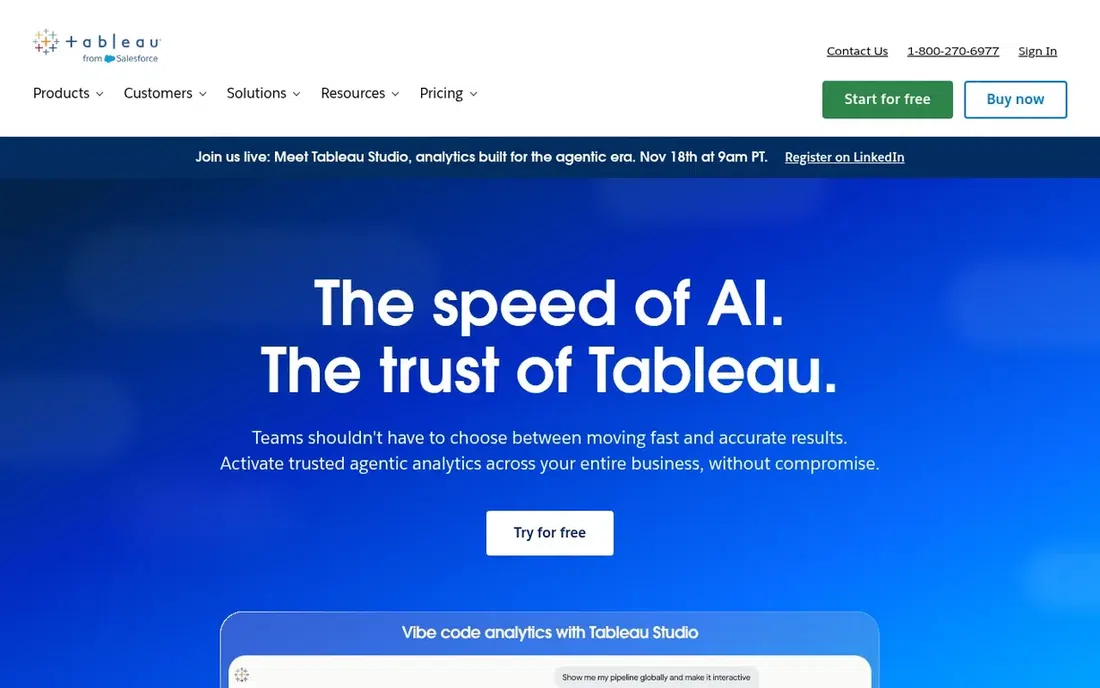
Tableau was built for visual exploration across plenty of data sources. Pick Tableau when visual discovery and broad connectivity are the priority, and consider a semantic-layer product when metric consistency is the primary requirement. Very large or highly governed deployments may need extra planning.
Tableau is a business intelligence and analytics system built around visual exploration. It links to almost any database, lets users drag-and-drop to produce visualizations, and shares results with a click. Tableau cost at the entry level: $15 per user per month. A free plan is available with Tableau.
Downsides: Advanced modeling is less central.
- Links to almost any database
- Drag-and-drop visualization building
- Governance needs separate planning
Pick GoodData if this describes you: dashboards and agents on one foundation. GoodData presents analytics, AI and agents on one data serving plane, letting teams run dashboards, data applications and agents on a single governed foundation. It is described as made for continuous, high-concurrency agentic demand that traditional data systems were not meant to serve, which fits organizations pushing heavy automatic and AI-driven workloads alongside conventional reporting.
Where GoodData stands out: Dashboards; data apps and agents together.
Drawbacks to consider: Agentic focus assumes mature data. The agentic positioning assumes a certain maturity in data governance and infrastructure. Teams with simple reporting needs may not use much of the system. Beyond that, choose GoodData when dashboards, apps and agents must share one governed serving layer, and look at more straightforward choices for entry-level BI. In daily use, evaluate whether your workloads genuinely need that concurrency. No starting price is listed for GoodData here; confirm pricing on the vendor site. Trial and free access: Free trial.
- Designed for high-concurrency demand
- One governed foundation
- Narrower fit for straightforward reporting
Domo works best for governed data pipelines for AI agents. Domo positions itself around governed data for AI agents, with products that connect and move data from any source, prepare and expand access for exploration, and accelerate business-critical insights.
Where it falls short: System scope is wide.
In practice, choose Domo when the full data journey and AI-ready governance are central, and prefer a more straightforward tool when only charts and reports are required. Teams seeking a light visualization tool may find it more than they need. Domo does not show a starting price in this comparison, so check the vendor site for current pricing. On free options: Free trial.
- Prepare and expand data access
- Link and move data from any source
- Needs data governance planning
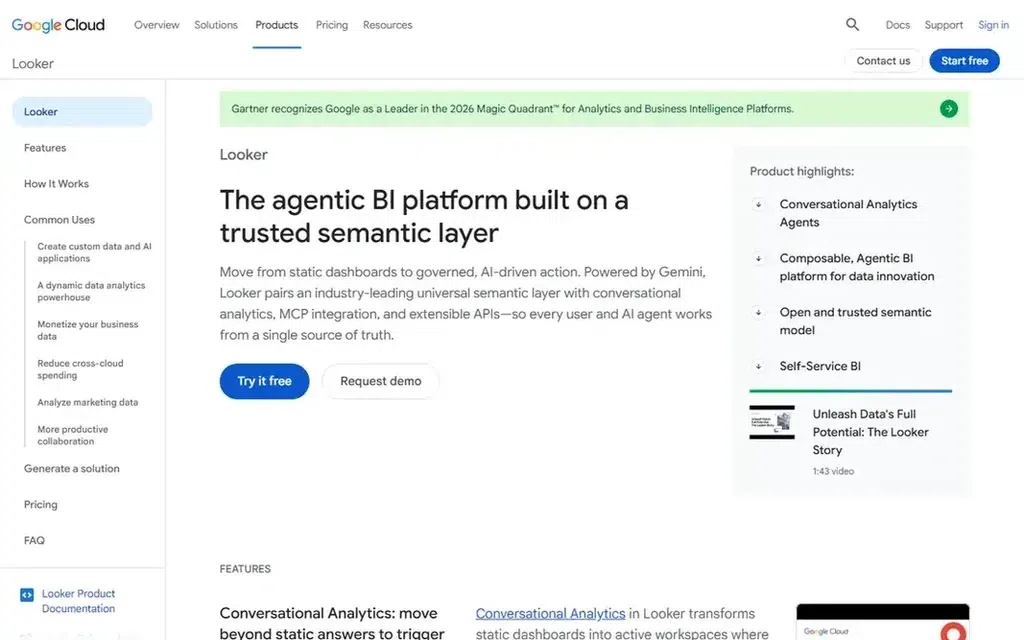
Looker was built for governed semantic layer with embedded BI. Looker is Google Cloud's agentic business intelligence and embedded analytics product.
Watch-outs: Setup of the semantic model takes effort.
It centers on a trusted semantic layer that brings together metrics across teams, with Gemini agents layered on top for AI-assisted exploration. For everyday use, choose Looker when governance and embedded delivery matter more than speed of first setup. Check the vendor site for Looker pricing; none is listed in this comparison. On free options: Not stated.
- Gemini agents for AI-assisted analysis
- Embedded analytics for products
- Tied to the Google Cloud ecosystem
How the list was put together
We compared the tools on published pricing, free plan or trial availability, feature coverage for Reveal, and the limits each vendor documents. Prices and plan limits come from vendor pages and can change, so confirm them on the vendor site before you buy. Position on the page reflects fit for a typical buyer first, with price clarity and free access breaking ties. Treat it as a guide, not a ruling.
Pre-purchase checklist
- Get a written quote from Qlik Sense, GoodData, Domo and Looker; the list shows no starting price for them.
- Look at the free plan from Tableau closely: its caps decide whether it is usable for real work.
- Run a trial of GoodData and Domo with real work before paying for a year; your own workflow is the best test.
- Before choosing Qlik Sense, weigh its main limit: wide product set can be complicated.
- Ask whether Looker integrates with your current software, and whether that comes standard or as an add-on.
- Ask Qlik Sense about contract length, onboarding fees and user minimums before you sign.
FAQ
Can I try these tools before paying?
Often, yes. Tableau has a free plan and GoodData and Domo offer a free trial. Use your own data and a real task during the test, and check what the free tier or trial limits before you rely on it. For the full picture, the cards above cover all 5 entries of this Reveal alternatives list, including price, free plan and limits.
How are the tools for Reveal ordered?
The order follows typical fit for Reveal, with Qlik Sense first and Looker last, then price clarity and free access. It is editorial judgement, not a score, so another team could rank the tools differently.
Can I move from Reveal without disrupting reporting?
Plan the migration around your most-used dashboards and metric definitions first, and confirm how each system takes care of governance so numbers stay consistent. Check data source connectivity and any embedded components early.
What should I look for in a Reveal alternative?
Start with how you will use analytics: internal dashboards, embedded product analytics or AI-driven workloads. Matching the platform to those needs matters more than feature counts.
What is the cheapest option for Reveal in this list?
On published monthly entry prices, Tableau is the lowest here at $15 per user per month. Entry price is only part of the cost, because seats, add-ons and billing terms can change the total. Prices, free plan details and limits for all 5 tools in this Reveal alternatives roundup sit on the individual cards above.
Which choice is a good match for embedded analytics?
The first pick on this list is Qlik Sense, because it suits analytics paired with data integration. Tableau is better for visual exploration across plenty of data sources, and GoodData for dashboards and agents on one foundation. Check price and limits against your own needs before choosing.
Sources
- https://www.qlik.com
- https://www.tableau.com
- https://www.gooddata.com
- https://www.domo.com
- https://cloud.google.com/looker