Top PRUnderground Alternatives in 2026: 6 Picks Ranked
Looking for PRUnderground alternatives? I compare six press release and media outreach tools by features, limits and fit, based on vendor docs and public sources.
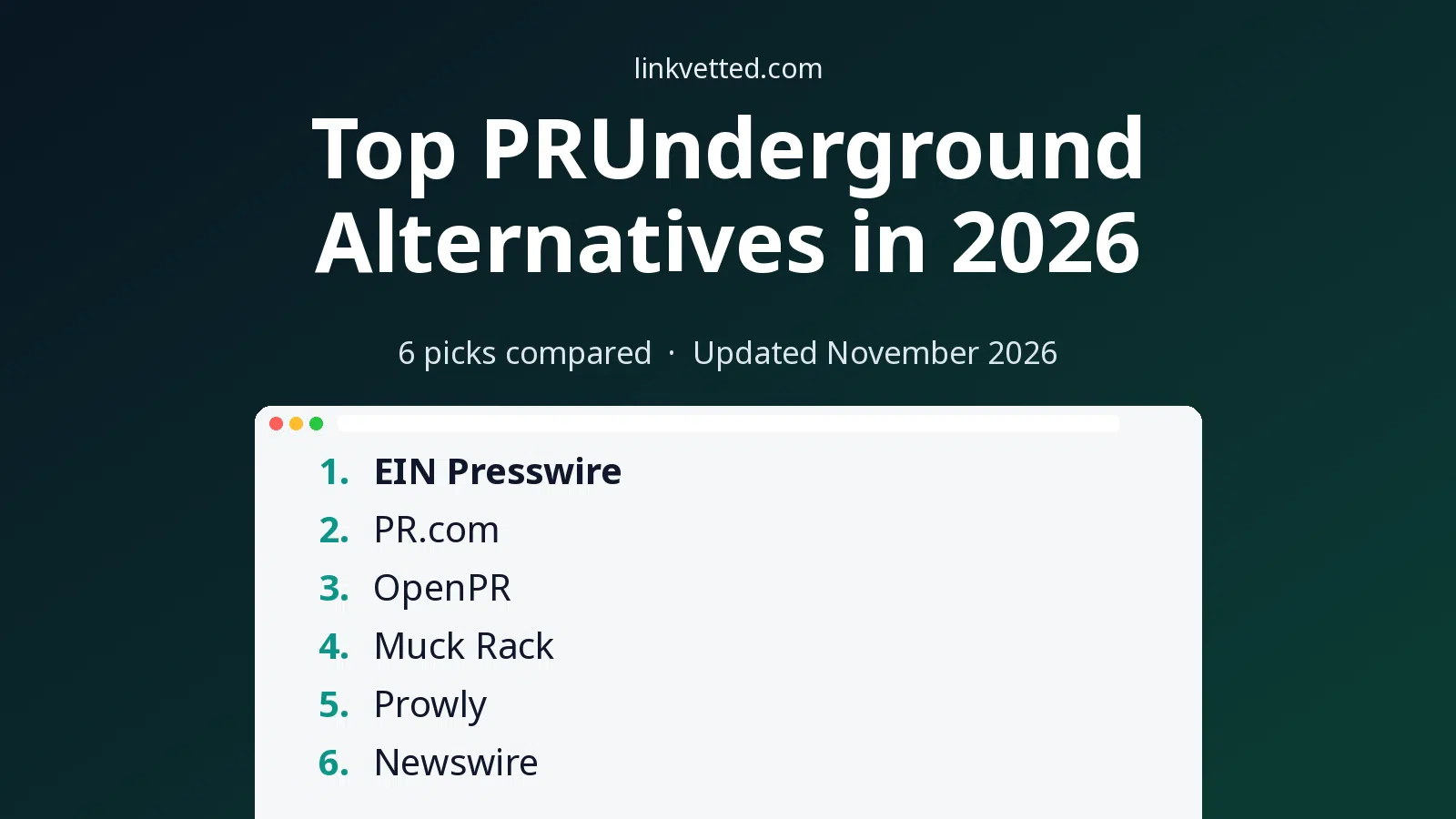
- Editor's choice
 EIN Presswire
Broad paid news distribution
Starts atSee websiteVisit einpresswire.comFull review - Great alternativePR.com
Small-budget announcements
Starts atSee websiteVisit pr.comFull review - Also considerOpenPR
Simple, low-cost releases
Starts atSee websiteVisit openpr.comFull review
Direct answer
My first pick is EIN Presswire, because it is built for wide, paid news distribution and gives you a clear view of where a release can land. For tighter budgets, PR.com and OpenPR are the two I would look at next. PR.com adds company profiles and media tools, while OpenPR is a simple, low-friction option for basic announcements. The right choice depends on whether you need reach, a low entry point, or journalist-focused outreach.
TL;DR:
- People look for PRUnderground alternatives when they want more control over distribution, different pricing structures, or extra features like media databases and analytics.
- EIN Presswire suits teams that want broad paid distribution and a searchable newsroom presence.
- PR.com and OpenPR are worth checking when the budget is small and the goal is a straightforward announcement.
- Muck Rack and Prowly fit teams that care more about journalist relationships and media lists than about raw syndication.
- Always confirm current features, pricing and free options on each vendor's own site before you commit.
Last checked November 2026. Plan prices are not quoted in this guide because they change often; see each vendor's own pricing page for current figures before you buy.
Quick comparison
| Tool | Best for | Starts at | Free plan? | |
|---|---|---|---|---|
| EIN Presswire | Broad paid news distribution | See website | Not stated | Visit |
| PR.com | Small-budget announcements | See website | Not stated | Visit |
| OpenPR | Simple, low-cost releases | See website | Not stated | Visit |
 Muck Rack | Journalist research and monitoring | See website | Not stated | Visit |
 Prowly | Media lists and newsroom pages | See website | Free trial | Visit |
 Newswire | Managed press release distribution | See website | Not stated | Visit |
The best PRUnderground alternatives compared
I put this list together from vendor documentation and public sources, not from hands-on tests. I looked at what each tool says it does, how distribution and outreach work, and where the limits sit. Where a detail was unclear, I left it out rather than guess. Treat this as a starting point for your own checks.
EIN Presswire is a press release distribution service operated by the EIN News group. It is aimed at companies that want a release to appear across a wide set of news and media outlets rather than only on their own site. If your main reason for leaving PRUnderground is reach, this is the tool I would check first.
In practice, you write the release, choose categories and target markets, and the service handles syndication. It also keeps releases in a public newsroom that people can search. For link building and digital PR, that gives you a citable page and a record of the announcement, which you can reference in outreach.
The limit is that this is distribution, not relationship building. It will not find journalists for you or manage replies. Skip it if your priority is a media database and personalised pitching rather than broad syndication.
- Large distribution network
- Searchable newsroom listings
- Industry category targeting
- Paid distribution focus
- Less emphasis on journalist pitching
PR.com
Best for: Small-budget announcements
PR.com combines a press release distribution service with company profile pages. Businesses can publish releases and keep a public profile that lists their news. It suits small firms and agencies that want a steady, low-cost way to get announcements online and indexed.
For PRUnderground alternatives, the appeal is the combination of distribution and a persistent company page. You can point outreach emails at the profile and the release URL, which helps when you are building citations and brand mentions. It is a practical option when the budget is tight.
The trade-off is presentation and depth. The interface is not as polished as newer tools, and reporting is basic. If you need detailed analytics or a modern media database, look at the journalist-focused tools below instead.
- Company profile pages
- Press release archive
- Media and journalist tools
- Dated interface
- Fewer advanced analytics
OpenPR
Best for: Simple, low-cost releases
OpenPR is a press release portal where companies publish announcements into a public archive organised by category and country. It is one of the simpler options on this list. You submit a release, it goes into the archive, and readers can browse by topic.
As a PRUnderground alternative, it fits the "just get it published" use case. For digital PR, an archived release gives you a stable URL you can cite and a page that may surface in brand searches. It is useful for routine announcements where you do not need a big distribution push.
The limits are targeting and reporting. You get a listing, not a campaign dashboard. Skip it if you need guaranteed placements, detailed metrics or journalist contact data.
- Straightforward submission
- Public archive of releases
- Category browsing
- Limited targeting
- Basic reporting
Muck Rack is a media database and PR management platform. It centres on journalist profiles, pitching workflows and coverage monitoring. It is aimed at PR teams that spend their time building relationships with reporters rather than only distributing releases.
If you are moving away from PRUnderground because you want real outreach, this is the direction to look. You can research journalists by beat, build lists, track coverage and monitor mentions. For link building, that helps you find writers who cover your topic and follow up on placements.
The main limit is scale and cost. It is built for teams with a real PR workflow, and solo operators may find it more than they need. Skip it if you only want to publish a release now and then.
- Large journalist profiles
- Media monitoring
- Coverage tracking
- Priced for larger teams
- Overkill for simple releases
Prowly is a PR software platform with a media database, pitching tools, a newsroom builder and monitoring. It sits between a distribution service and a full PR CRM. Small and mid-sized teams often pick it because it bundles several jobs into one place.
For this comparison, Prowly helps because it covers the parts PRUnderground does not: finding contacts, sending pitches and hosting a newsroom. A newsroom page gives your releases a permanent home, which is handy for digital PR and for linking from outreach emails.
The limitation is that the value depends on using the whole suite. If you only want distribution, you are paying for features you will not touch. It also takes time to set up properly.
- Media database and pitching
- Brand newsroom builder
- Coverage monitoring
- Best value inside its suite
- Learning curve for new users
Newswire is a press release distribution company that offers several packages, from basic syndication to broader media outreach. It also provides writing help and other add-on services. It suits businesses that want a managed process rather than doing everything themselves.
As a PRUnderground alternative, it is the option to check when you want more hand-holding. You can pick a package that matches your reach goals and let the service handle the mechanics. For agencies, that can save time on routine client announcements.
The drawback is that the experience varies by package, and the entry-level option is narrower than the top tier. Read the details of each package before you buy, and skip it if you want a single simple flat service.
- Range of distribution packages
- Media outreach add-ons
- Press release writing support
- Pricing varies by package
- Quality depends on the package chosen
How I chose
I built this list from vendor documentation and public sources. I read each company's own pages to understand what the product does, how distribution or outreach works, and what limits the vendor itself mentions. I did not run hands-on tests, and I did not buy packages to compare results. Where a vendor did not state something clearly, such as a free plan, I marked it as not stated rather than assume.
The other filter was fit. A tool that suits a large PR team is not the same as one for a solo link builder or a small agency. I weighed whether each option covers distribution, media relationships, or both, and I noted the obvious drawbacks. The goal is to help you shortlist quickly, then verify the current details on each site yourself before spending money.
What to check before you buy
- Confirm the current distribution network and which outlets a release can reach, since this changes over time.
- Check whether a free plan or trial exists on the vendor's site, and what it actually includes.
- Read how targeting works: by industry, country, or journalist beat, and whether you can narrow it.
- Ask whether you get a permanent, indexable URL for each release, which matters for digital PR.
- Look at reporting: what metrics you receive and whether they are included or an add-on.
- Check the terms on duplicate content and syndication so your release does not clash with your own pages.
FAQ
Why do people look for PRUnderground alternatives?
Most people want something different from what they have: broader distribution, a lower entry point, a media database, or better reporting. Some want journalist outreach rather than only syndication. Others are agencies that need a tool that fits multiple clients. The reasons vary, so the right alternative depends on which gap matters most to you.
Is there a free option among these tools?
Prowly lists a free trial, which lets you look at the platform before paying. For the others, I did not find a clearly stated free plan on their public pages, so I marked them as not stated. Check each vendor's site directly, because free options and trials change and may depend on the plan you choose.
Can these tools help with link building?
They can help indirectly. A distributed release gives you a public URL and brand mention that you can cite in outreach. Media databases help you find journalists and writers to pitch. Neither guarantees links or rankings. Treat them as part of a wider digital PR and outreach process, not a shortcut.
What is the difference between distribution services and media databases?
Distribution services publish your release across a network of outlets. Media databases help you find and contact journalists directly. Some platforms, like Prowly and Muck Rack, lean toward the database and outreach side. EIN Presswire, PR.com, OpenPR and Newswire lean toward distribution. Pick based on whether you want reach or relationships.
How do I choose between these alternatives?
Start with your goal. If you want wide reach for a single announcement, look at the distribution services. If you want ongoing media relationships, look at the database tools. Then check current features, limits and terms on each vendor's site. Shortlist two or three, and confirm the details that matter to your workflow before you commit.
Sources
- https://www.einpresswire.com
- https://www.pr.com
- https://www.openpr.com
- https://muckrack.com
- https://prowly.com
- https://www.newswire.com