CRI-O Alternatives in 2026: 5 Options Vetted
Shortlisting CRI-O alternatives? 5 products compared on cost, free access and ideal buyer. Trade-offs are spelled out for each entry. Read the profiles.
- Editor's choice
 Kubernetes
Orchestrating containers at scale
Starts atSee websiteVisit kubernetes.ioFull review - Great alternativeMirantis Container Runtime
Enterprise Kubernetes container runtime needs
Starts atSee websiteVisit mirantis.comFull review - Also consider
 containerd
Lean, standards-focused runtime layer
Starts atSee websiteVisit containerd.ioFull review
Direct answer
If you need orchestrating containers at scale, Kubernetes is the first tool to look at here. Listed starting prices: Docker Engine from $9 per user a month. Mirantis Container Runtime is better for enterprise Kubernetes container runtime needs, and containerd is better for lean, standards-focused runtime layer. Details, prices and limits for the rest of the 5 tools are below.
TL;DR:
- Kubernetes takes the first slot, best suited to orchestrating containers at scale.
- Before buying Kubernetes, weigh this: not a standalone runtime.
- Just one of the 5 tools, Docker Engine, has a free plan.
- Docker Engine has the lowest monthly starting price in this list: $9 per user per month.
Last checked November 2026. Prices and plan details were read from the vendors' own pages in November 2026; vendors change plans often, so confirm the current price on the vendor site before you buy.
Quick comparison
| Tool | Best for | Starts at | Free plan? | |
|---|---|---|---|---|
| Kubernetes | Orchestrating containers at scale | See website | Not stated | Visit |
| Mirantis Container Runtime | Enterprise Kubernetes container runtime needs | See website | Not stated | Visit |
| containerd | Lean, standards-focused runtime layer | See website | Not stated | Visit |
| Docker Engine | Wide tooling and consistent app delivery | $9 per user a month | Yes | Visit |
 Red Hat OpenShift | Managed application system experience | See website | Not stated | Visit |
CRI-O profiles
Short on time? The summary and table above give the quick view of 5 tools for CRI-O, and the profiles that follow give the detail behind each entry.
Kubernetes serves orchestrating containers at scale. Kubernetes is a system, not a drop-in runtime swap, so adopting it means taking on cluster operations and configuration work.
It fits teams that require scheduling, scaling and management beyond a single host. Kubernetes does not show a starting price in this comparison, so check the vendor site for current pricing. Free plan details: Not stated.
Points against: Not a standalone runtime.
- Open source system
- Automates deployment and scaling
- Operational complexity
Mirantis Container Runtime
Best for: Enterprise Kubernetes container runtime needs
In short, Mirantis Container Runtime is for enterprise Kubernetes container runtime needs. Organizations that prefer community-run projects or want to avoid vendor engagement should compare containerd or Docker Engine first.
Pricing for Mirantis Container Runtime is not stated here, so ask the vendor for current figures. On free options: Not stated.
Honest limits: Commercial engagement required.
- Enterprise-oriented support path
- Pitched at Kubernetes use
- Less community-oriented
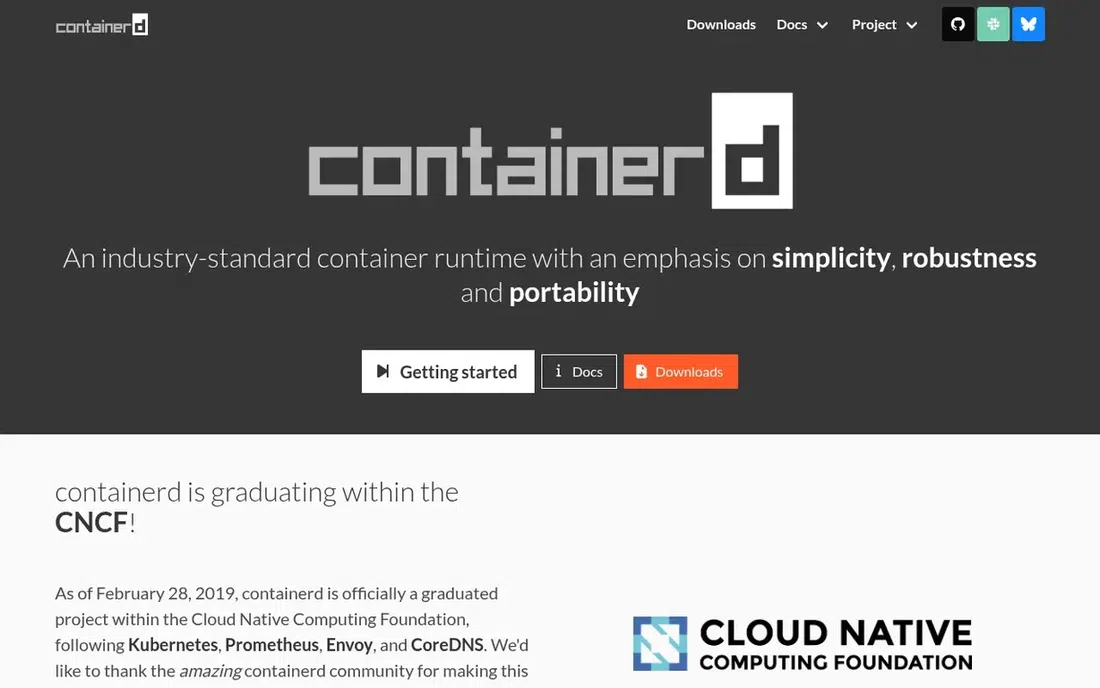
Choose containerd for lean, standards-focused runtime layer. containerd describes itself as an industry-standard container runtime with an emphasis on simplicity, strength and portability.
From a buyer's view, containerd is not a full developer experience on its own, so teams expecting an all-in-one command line workflow may need extra tools. No starting price is listed for containerd here; confirm pricing on the vendor site. Free options: Not stated.
Points against: Needs companion tooling.
- Emphasis on simplicity
- Solid and portable design
- Fewer user-facing conveniences
Docker Engine
Best for: Wide tooling and consistent app delivery
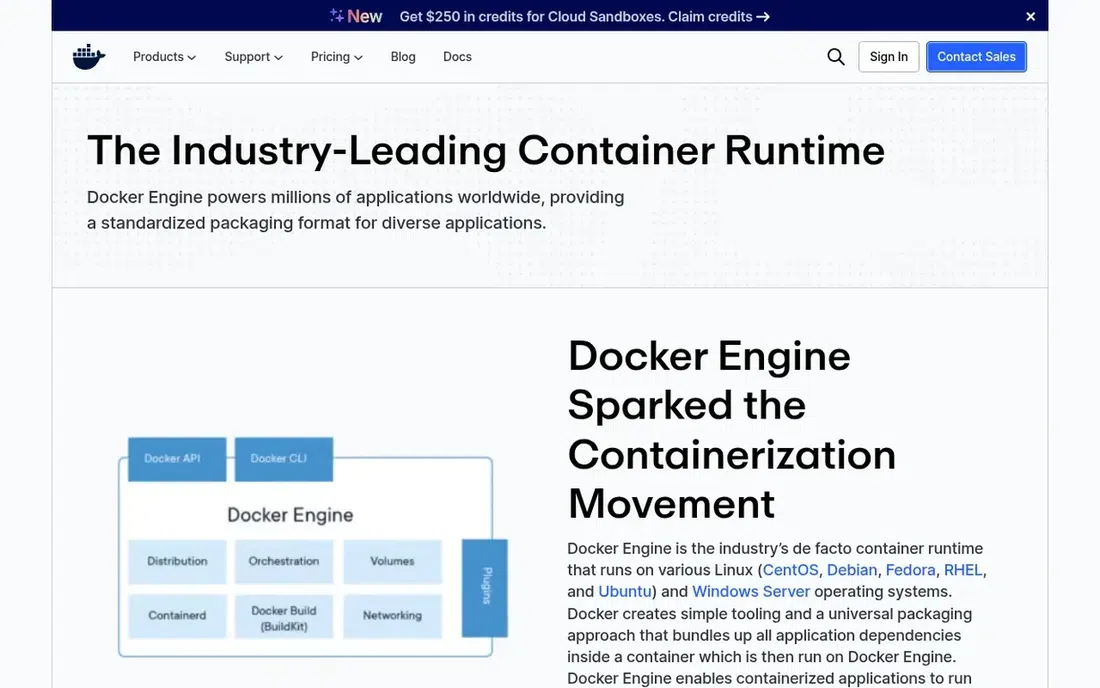
Docker Engine is a good fit for broad tooling and consistent app delivery. Docker Engine is a container runtime that lets containerized apps run consistently on any infrastructure, from local machines to servers.
Downsides: Daemon-based architecture.
What you pay to start with Docker Engine: $9 per user per month. You can start on Docker Engine without paying.
- Large ecosystem of tooling
- Widely documented runtime
- Heavier than minimal runtimes
Think of Red Hat OpenShift for managed application system experience. Red Hat OpenShift is described as an application innovation system with tools to help organizations modernize, build new applications and support AI adoption.
It packages container orchestration with developer and operations tooling, making it relevant for teams that want a fuller system instead of an individual runtime. No starting price is listed for Red Hat OpenShift here; confirm pricing on the vendor site. Trial and free access: Not stated.
The main drawbacks: Platform-level commitment.
- Focus on modernization
- Thorough product tooling
- Broader scope than a runtime
How the list was put together
LinkVetted looked at what each vendor publishes: pricing, plan limits, feature coverage for CRI-O and stated drawbacks. No hands-on testing is claimed. Figures are shown as the vendors publish them. Billing terms, seat minimums and add-ons can change the real cost. Order on the page follows fit for the typical buyer first, then price transparency and free access. Your own requirements should decide the final pick.
What to check before you buy
- Confirm the entry price on the vendor page. For Kubernetes, Mirantis Container Runtime, containerd and Red Hat OpenShift that means a quote rather than a fixed price.
- Test the free plan from Docker Engine against your real workload before relying on it.
- Read the limits listed for Kubernetes first: not a standalone runtime.
- Work out what Red Hat OpenShift costs with your real seat count, add-ons and usage, not just the entry price.
- Check the support hours and onboarding help Docker Engine offers; smaller vendors vary a lot here.
FAQ
Can I try these tools before paying?
Often, yes. Docker Engine has a free plan. Use your own data and a real task during the test, and check what the free tier or trial limits before you rely on it. Each of the 5 options in this CRI-O alternatives guide has its own card above with the price, free plan and limits.
Which alternative is closest to a minimal runtime?
containerd emphasizes simplicity, strength and portability and sits close to the container layer, making it a typical building block beneath other tools.
Is Kubernetes the right pick for everyone comparing CRI-O?
No single tool suits every team. Kubernetes comes first because it fits orchestrating containers at scale, while Mirantis Container Runtime suits enterprise Kubernetes container runtime needs and containerd suits lean, standards-focused runtime layer. Match the tool to your own size, budget and workflow before deciding.
How are the tools for CRI-O ordered?
The order follows typical fit for CRI-O, with Kubernetes first and Red Hat OpenShift last, then price clarity and free access. It is editorial judgement, not a score, so another team could rank the tools differently.
What is the cheapest option for CRI-O in this list?
On published monthly entry prices, Docker Engine is the lowest here at $9 per user per month. Entry price is only part of the cost, because seats, add-ons and billing terms can change the total. All 5 picks in this CRI-O alternatives comparison list a starting price, free plan details and the main limits on their cards above.
Sources
- https://kubernetes.io
- https://www.mirantis.com/software/mirantis-container-runtime
- https://containerd.io
- https://www.docker.com/products/container-runtime
- https://www.redhat.com/en/technologies/cloud-computing/openshift