Top Containerd Alternatives in 2026: 5 Picks Ranked
Containerd alternatives in 2026: 5 contenders with entry costs and free tiers. Rancher opens the ranking for enterprise Kubernetes management. Updated for 2026.
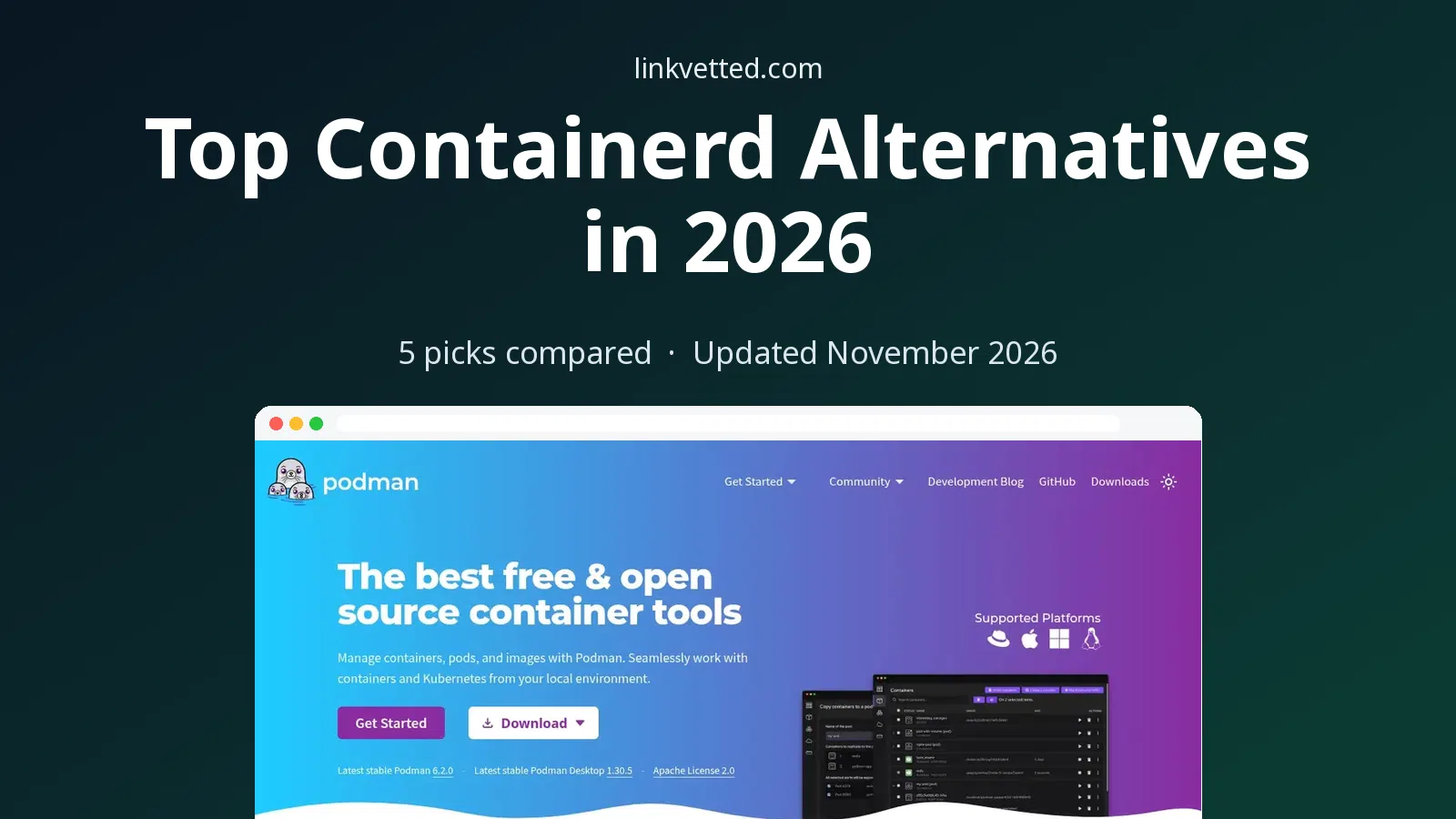
- Editor's choice
 Rancher
Enterprise Kubernetes management
Starts atSee websiteVisit rancher.comFull review - Great alternative
 Podman
Daemonless, rootless container management
Starts atSee websiteVisit podman.ioFull review - Also considerDocker Engine
General-purpose container runtime with wide tooling
Starts at$9 per user a monthVisit docker.comFull review
Direct answer
Rancher is the first pick on this list for enterprise Kubernetes management. Listed starting prices: Docker Engine from $9 per user a month. Look at Podman for Daemonless, rootless container management, and at Docker Engine for general-purpose container runtime with wide tooling. The full list of 5 tools follows, with prices and free plan facts.
TL;DR:
- This list starts with Rancher, which is built for enterprise Kubernetes management.
- Kubernetes is the one to check for Container orchestration at scale.
- The lowest published monthly entry price here is $9 per user per month, from Docker Engine.
- One limit worth knowing about Rancher: brings complexity for single-cluster use.
- Docker Engine stands alone as the one tool in this list with a free plan.
Last checked November 2026. Prices and plan details were read from the vendors' own pages in November 2026; vendors change plans often, so confirm the current price on the vendor site before you buy.
Quick comparison
| Tool | Best for | Starts at | Free plan? | |
|---|---|---|---|---|
| Rancher | Enterprise Kubernetes management | See website | Not stated | Visit |
| Podman | Daemonless, rootless container management | See website | Not stated | Visit |
| Docker Engine | General-purpose container runtime with wide tooling | $9 per user a month | Yes | Visit |
| CRI-O | Light Kubernetes container runtime | See website | Not stated | Visit |
 Kubernetes | Container orchestration at scale | See website | Not stated | Visit |
Every option for containerd explained
Short on time? The summary and table above give the quick view of 5 tools for containerd, and the profiles that follow give the detail behind each entry.
Rancher is designed for enterprise Kubernetes management. Rancher is an open-source multi-cluster orchestration product that lets operations teams deploy, handle, and secure enterprise Kubernetes. It supplies a unified interface for managing clusters across environments, making it simpler to operate Kubernetes at scale.
Points against: Brings complexity for single-cluster use.
Rancher is built on top of Kubernetes and is not a container runtime, so it complements runtimes like Docker Engine or CRI-O instead of replacing them. Worth adding: Rancher is well-suited for organizations that require centralized control over several Kubernetes clusters. Rancher shows no starting price here, so confirm the cost on the vendor site. Free options: Not stated.
- Multi-cluster management
- Open-source product
- Needs Kubernetes knowledge
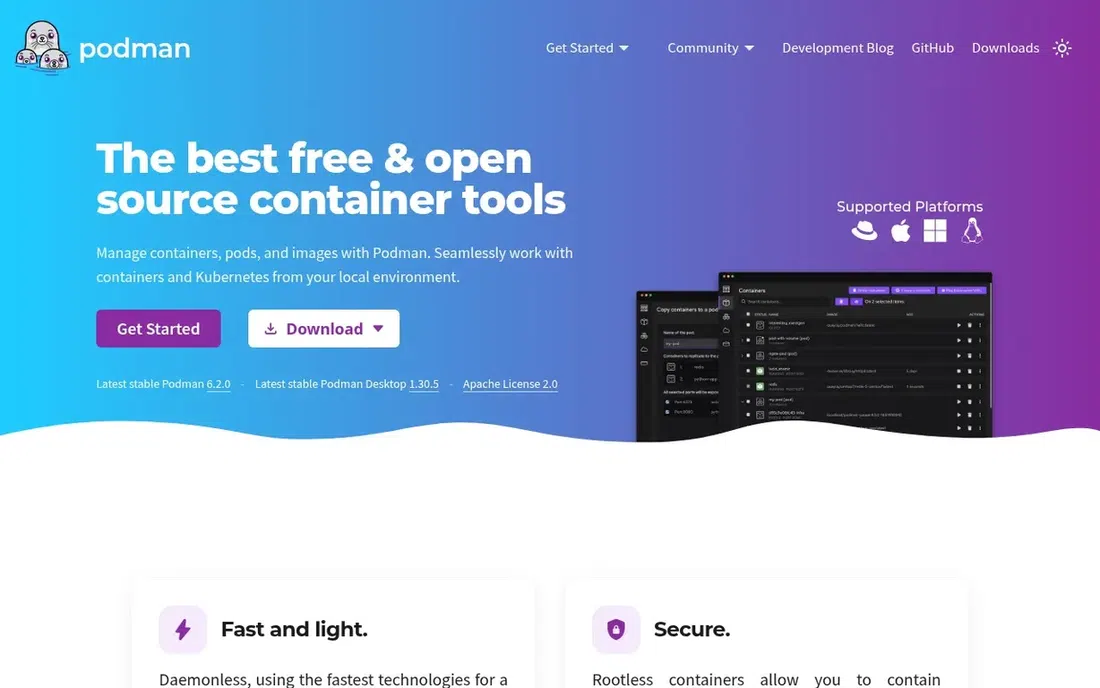
Podman makes the most sense for Daemonless, rootless container management. Podman is a daemonless container engine for developing, managing, and running OCI containers on Linux. It supplies a command-line interface similar to Docker, making it simple for users to transition, and supports rootless containers for improved security.
Consider Podman when security and daemonless operation are important, but verify compatibility with your existing workflows. Whereas Podman gives you a Docker-compatible experience, some advanced Docker features and external tooling may not be completely compatible. It is primarily aimed at Linux, so users on other systems may face limitations. Check the vendor site for Podman pricing; none is listed in this comparison. Trial and free access: Not stated.
Honest limits: Less mature ecosystem than Docker.
- Daemonless architecture
- Rootless containers
- Some Docker features may not be completely supported
Docker Engine
Best for: General-purpose container runtime with wide tooling
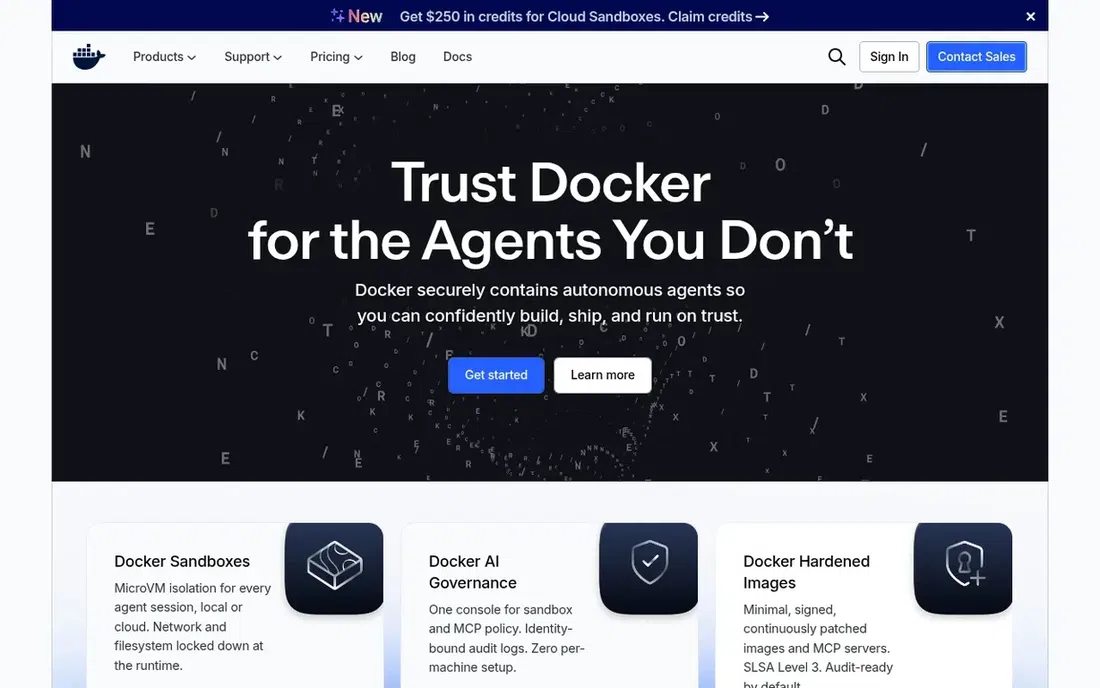
Think of Docker Engine for general-purpose container runtime with wide tooling. Docker Engine is a widely used container runtime that offers a complete environment for building, running, and sharing containers. It performs well for development and production scenarios where wide compatibility and tooling matter.
Also, since Docker Engine uses a daemon-based architecture, it may not be the lightest choice for Kubernetes-only environments where a minimal runtime is preferred. If you need a runtime tightly integrated with Kubernetes and minimal overhead, CRI-O or containerd might be more appropriate. Price to start with Docker Engine: $9 per user per month. Free access exists with Docker Engine.
Trade-offs to know: May need more resources than minimal runtimes.
- Secure supply chain features
- Mature ecosystem and tooling
- Daemon-based architecture
CRI-O
Best for: Light Kubernetes container runtime
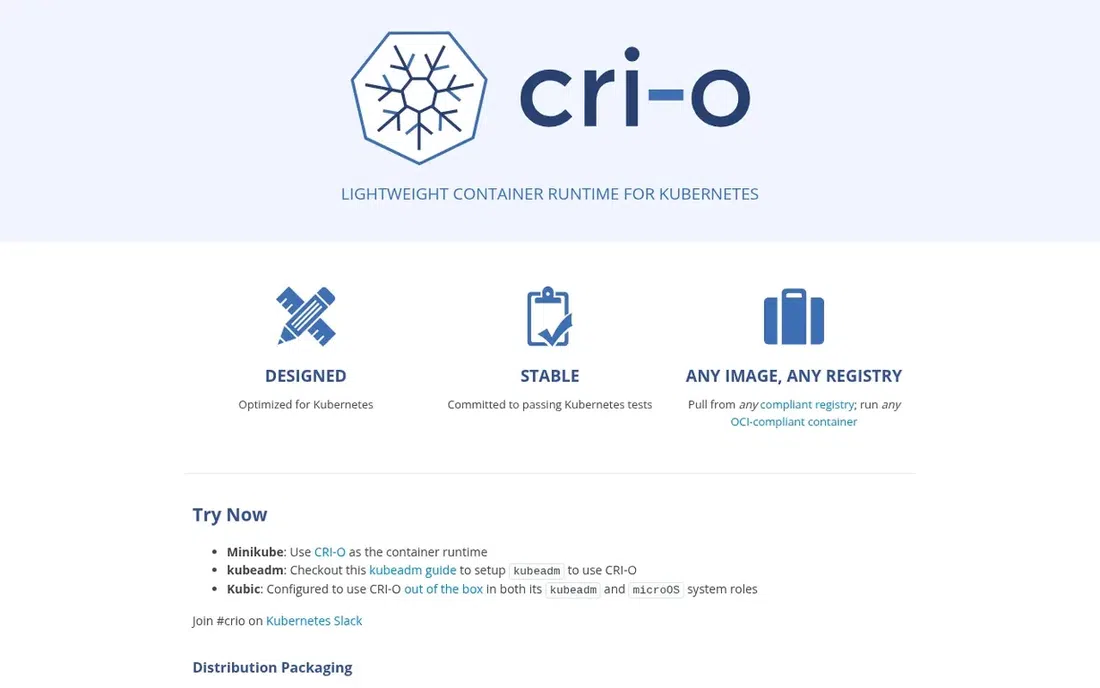
CRI-O serves light Kubernetes container runtime. CRI-O is a light container runtime designed specifically for Kubernetes. It implements the Kubernetes Container Runtime Interface (CRI) and centres on offering just the features needed to run containers in a Kubernetes cluster.
Downsides: Limited to Kubernetes use cases.
This makes it a very good choice for teams that want a straightforward, dependable runtime without additional components, particularly in production Kubernetes environments. For everyday use, CRI-O is not intended for general-purpose container use outside Kubernetes, so it lacks the broader tooling and developer workflows found in Docker Engine or Podman. Also, choose CRI-O when Kubernetes integration and minimalism are key. Check the vendor site for CRI-O pricing; none is listed in this comparison. Free options: Not stated.
- Minimal overhead
- Designed for Kubernetes
- Fewer general-purpose tools
Kubernetes targets Container orchestration at scale. It groups containers into logical units for easy management and discovery, making it the de facto standard for container orchestration. Kubernetes is a strong match for organizations that require to run containers at scale across clusters, with high availability and resilience.
What to check first: Complicated to set up and handle.
Also, Kubernetes is not a container runtime itself; it depends on runtimes like containerd, CRI-O, or Docker Engine. It also has a significant operational overhead and needs expertise to handle effectively. Pricing for Kubernetes is not stated here, so ask the vendor for current figures. Trial and free access: Not stated.
- Large ecosystem
- Capable orchestration
- Steep learning curve
How we chose
Pricing pages, product documentation and feature lists were the main sources, and every entry carries at least one honest drawback. Prices and plan limits come from vendor pages and can change, so confirm them on the vendor site before you buy. Tools are placed by general fit for containerd, with price clarity and free access as tie-breakers. A different team can reasonably rank them differently.
Before you commit
- Get a written quote from Rancher, Podman, CRI-O and Kubernetes; the list shows no starting price for them.
- Look at the free plan from Docker Engine closely: its caps decide whether it is usable for real work.
- Read the limits listed for Rancher first: layers on complexity for single-cluster use.
- Check the support hours and onboarding help Docker Engine offers; smaller vendors vary a lot here.
- A short pilot of CRI-O with your real workflow tells you more than a feature table.
FAQ
What is the cheapest option for containerd in this list?
On published monthly entry prices, Docker Engine is the lowest here at $9 per user per month. Entry price is only part of the cost, because seats, add-ons and billing terms can change the total.
Do these tools publish their prices?
Not all of them. Rancher, Podman, CRI-O and Kubernetes publish no starting price, so expect a quote request for those. The rest, Docker Engine included, show a starting price, though seats and billing terms still change the final cost.
Is Rancher the right pick for everyone comparing containerd?
No single tool suits every team. Rancher comes first because it fits enterprise Kubernetes management, while Podman suits Daemonless, rootless container management and Docker Engine suits general-purpose container runtime with broad tooling. Match the tool to your own size, budget and workflow before deciding.
Can I try these tools before paying?
Often, yes. Docker Engine has a free plan. Use your own data and a real task during the test, and check what the free tier or trial limits before you rely on it.
Do I need Kubernetes if I use Rancher?
It needs Kubernetes to function and is not a runtime itself, so you would still need a container runtime like Docker Engine or CRI-O underneath.
Can I use CRI-O outside of Kubernetes?
CRI-O is designed specifically for Kubernetes and implements the Container Runtime Interface. It is not intended for general-purpose container use, so for standalone containers, consider Docker Engine or Podman.
Sources
- https://www.rancher.com
- https://podman.io
- https://www.docker.com
- https://cri-o.io
- https://kubernetes.io