Choosing Transportation Modeling Software for Cities in 2026: 5 Options Compared
Need the best transportation modeling software for cities? We compare 5 tools on cost, free access and who each suits. Real limits included. Details below.
- Editor's choiceHCS
Highway capacity and corridor analysis
Starts at$850 per yearVisit mctrans.ce.ufl.eduFull review - Great alternativeMATSim
Agent-based transport simulation
Starts atSee websiteVisit matsim.orgFull review - Also considerTransCAD
GIS-integrated transportation planning
Starts at$6,000 a yearVisit caliper.comFull review
Direct answer
For highway capacity and corridor analysis, HCS is where this list starts. Listed starting prices: HCS from $850 per year and TransCAD from $6,000 a year. MATSim fits agent-based transport simulation; TransCAD fits GIS-integrated transportation planning. All 5 tools are compared below on price, free plan and limits.
TL;DR:
- This list starts with HCS, which is built for highway capacity and corridor analysis.
- SUMO fits open-source microscopic traffic simulation.
- Expect to ask for a quote from MATSim, SATURN and SUMO; the other tools show a starting price.
- A permanent free plan is missing from all 5 tools, HCS and SUMO included; plan for a trial or a premium start.
Last checked November 2026. Prices and plan details were read from the vendors' own pages in November 2026; vendors change plans often, so confirm the current price on the vendor site before you buy.
Quick comparison
| Tool | Best for | Starts at | Free plan? | |
|---|---|---|---|---|
| HCS | Highway capacity and corridor analysis | $850 per year | No | Visit |
| MATSim | Agent-based transport simulation | See website | Not stated | Visit |
| TransCAD | GIS-integrated transportation planning | $6,000 a year | No | Visit |
| SATURN | Network assignment and simulation | See website | Not stated | Visit |
| SUMO | Open-source microscopic traffic simulation | See website | Not stated | Visit |
Transportation Modeling Software for Cities, one by one
Short on time? The summary and table above give the quick view of 5 transportation modeling software for cities, and the profiles that follow give the detail behind each entry.
HCS
Best for: Highway capacity and corridor analysis
HCS makes the most sense for highway capacity and corridor analysis. HCS from the McTrans Center implements Highway Capacity Manual procedures for evaluating roadway operations. Its Network Analysis module lets users assess corridors made up of freeways and arterials, which helps cities check performance across connected facilities.
Points against: Analytical instead of simulation-based.
It is familiar to traffic engineers and suited to design and operational reviews. Cities needing in-depth vehicle interactions or multi-modal microsimulation may pair it with other tools. HCS pricing: $850 per year. HCS has no permanent free option.
- Implements Highway Capacity Manual methods
- Familiar to traffic engineers
- Restricted to methods it implements
MATSim
Best for: Agent-based transport simulation
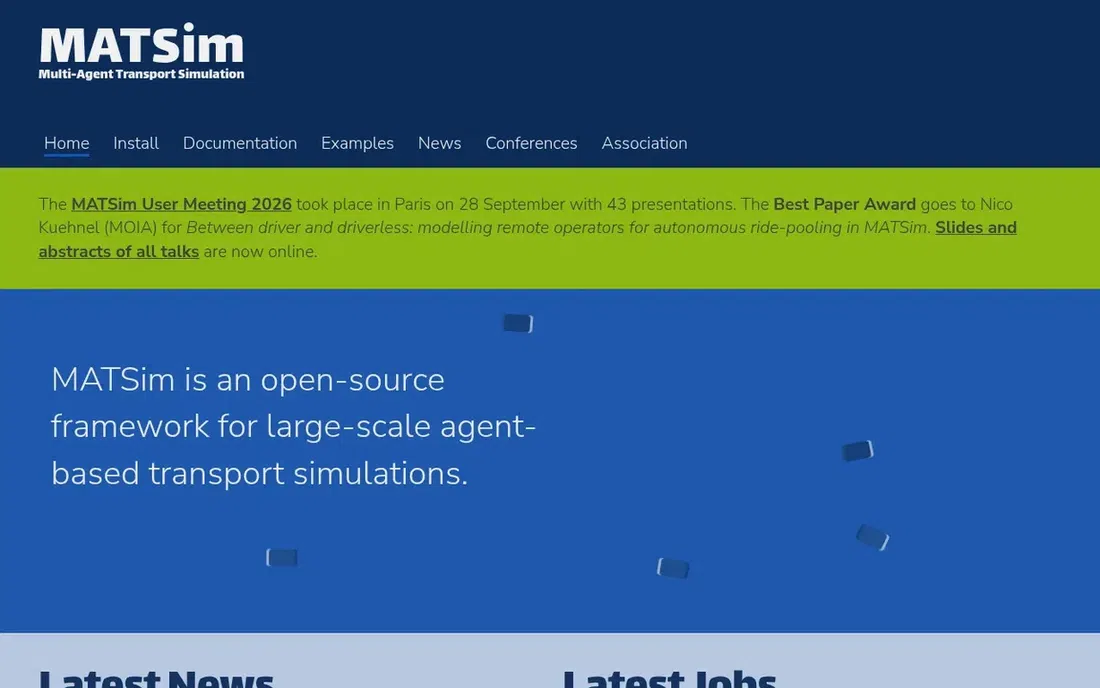
MATSim is a good fit for agent-based transport simulation. It represents travelers as individual agents and simulates their daily activity and travel choices, which helps cities explore how demand responds to policies and network changes.
Where it falls short: Not a turnkey planning product.
Also, cities without in-house modeling expertise may find it hard to sustain. Choose MATSim when the questions are strategic and behavior-oriented and the team can invest in building and maintaining its own models. No starting price is listed for MATSim here; confirm pricing on the vendor site. Free access: Not stated.
- Agent-based demand modeling
- Scales to large scenarios
- Needs programming and data skills
TransCAD
Best for: GIS-integrated transportation planning
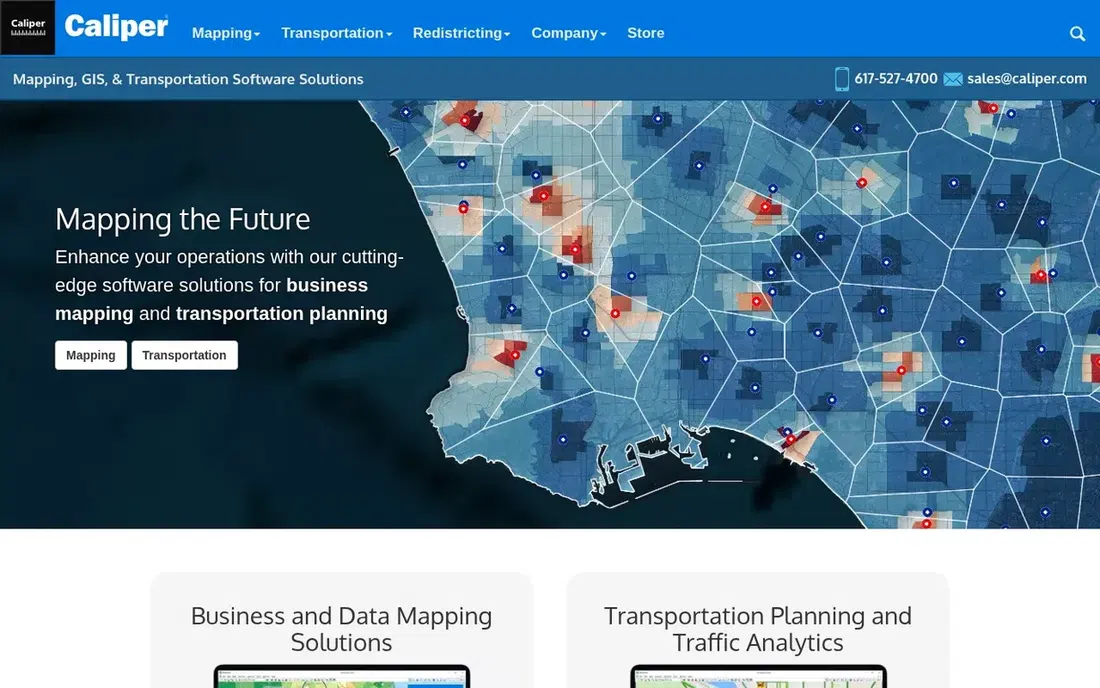
Pick TransCAD if this describes you: GIS-integrated transportation planning. TransCAD from Caliper is transportation planning software built on a GIS system. It is aimed at agencies and consultants that require to handle networks, analyze travel demand, and visualize leads to one environment.
As for the details, the GIS foundation layers on capability but also complexity. The software is commercial, so budget and training are real considerations. In practice, choose TransCAD when transportation planning and spatial analysis have to live in the same workflow instead of in separate systems. As for the details, smaller cities with restricted modeling staff may find lighter tools simpler to adopt. Entry price for TransCAD: $6,000 per year. TransCAD has no free tier.
What to check first: Steeper ramp-up time for GIS newcomers.
- Supports travel demand modeling
- Merges mapping with transportation planning
- Commercial license required
SATURN
Best for: Network assignment and simulation
For network assignment and simulation, SATURN is a natural candidate. Cities seeking fast visualization or intersection-level analysis may find other tools more direct. On top of that, SATURN is transportation modeling software from Saturn Software, used for network assignment and simulation in scheme appraisal and traffic forecasting.
Limits to weigh: Commercial license required.
It helps cities and consultants test how network changes affect travel patterns and congestion. In daily use, the tool is geared toward transport planners and modelers who require a proven assignment engine. This comparison lists no price for SATURN; ask the vendor. As for free access: Not stated.
- Established network modeling approach
- Used for scheme appraisal
- Needs modeling expertise
SUMO
Best for: Open-source microscopic traffic simulation
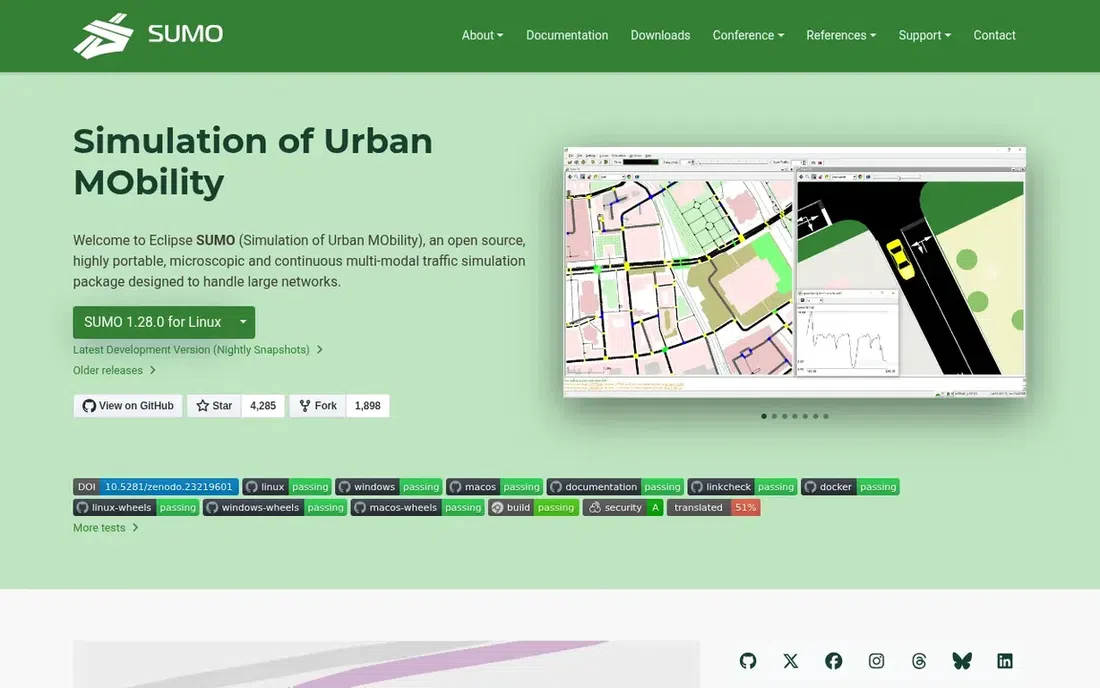
Choose SUMO for open-source microscopic traffic simulation. Eclipse SUMO is an open-source, microscopic and continuous multi-modal traffic simulation package. Since it is open source, cities and research teams can extend it and integrate it with other systems.
Also, SUMO is feature-rich but technical: building networks and scenarios commonly involves data preparation and scripting. The interface is less oriented to planners than to modelers. No starting price is listed for SUMO here; confirm pricing on the vendor site. On free options: Not stated.
Where it is weaker: Limited built-in graphical planning tools.
- Multi-modal traffic support
- Microscopic and continuous simulation
- Needs technical setup
How we compared the tools
Pre-purchase checklist
- Ask MATSim, SATURN and SUMO for a written quote, since no starting price is shown.
- Before choosing HCS, weigh its main limit: analytical instead of simulation-based.
- The entry price of SATURN is only the starting point; model the full cost with seats and extras.
- Verify that exporting from TransCAD is possible on your plan and covers all your records.
- Get the contract term, renewal terms and any onboarding fees from MATSim in writing.
FAQ
Do cities need open-source transportation modeling software?
They usually need more technical staff time to set up and maintain. Cities with in-house modeling capacity may find them attractive, whereas others may prefer commercial support.
How are the tools for transportation modeling software for cities ordered?
HCS sits first and SUMO last because the order follows typical fit for transportation modeling software for cities, then price clarity and free access. It is a judgement call, so read each profile for fit and limits.
Can I try these tools before paying?
Not by default. None of the tools, from HCS to SUMO, lists a free plan or a free trial here, so ask each vendor for a demo before committing.
Do these tools publish their prices?
Not all of them. MATSim, SATURN and SUMO publish no starting price, so expect a quote request for those. The rest, HCS included, show a starting price, though seats and billing terms still change the final cost.
Does any tool for transportation modeling software for cities here have a free plan?
No tool in this list, HCS and SUMO included, has a permanent free plan. Trials and quotes are the usual route, so plan a short evaluation period.
Sources
- https://mctrans.ce.ufl.edu/mct/index.php/hcs
- https://matsim.org
- https://www.caliper.com
- https://www.saturnsoftware.co.uk
- https://www.eclipse.org/sumo