The 5 Best Tools to Automate SOC Workflows in 2026, Ranked
Compare 5 best tools to automate SOC workflows, with prices, free plans and who each fits. Price notes and drawbacks come with each one. See the full list.
- Editor's choiceTines
Low-code automation and AI agents
Starts atPricing on requestVisit tines.comFull review - Great alternativeSwimlane Turbine
Agentic AI across security functions
Starts atPricing on requestVisit swimlane.comFull review - Also considerPalo Alto Networks Cortex XSOAR
Unified incident response and orchestration
Starts atPricing on requestVisit paloaltonetworks.comFull review
Direct answer
This list puts Tines first for low-code automation and AI agents. Swimlane Turbine is the stronger choice for agentic AI across security functions, while Palo Alto Networks Cortex XSOAR suits unified incident response and orchestration. The other 2 tools in the list cover narrower or pricier cases. None of these vendors publish plan prices, so pricing is on request for every option.
TL;DR:
- Tines sits first on this list: low-code automation and AI agents.
- None of the 5 tools, from Tines to Splunk SOAR, has a free plan, so budget for a subscription or use a trial.
- One limit worth knowing about Microsoft Sentinel: deepest value within Microsoft security stack.
- Splunk SOAR suits automating repetitive tasks in Splunk environments.
- No starting price is shown for any of the 5 tools, Tines and Splunk SOAR included, so plan time for sales calls.
Last checked November 2026. Pricing on request: vendors did not publish plan prices when this guide was last checked (November 2026), so ask each vendor for a written quote.
Quick comparison
| Tool | Best for | Starts at | Free plan? | |
|---|---|---|---|---|
| Tines | Low-code automation and AI agents | Pricing on request | Not stated | Visit |
| Swimlane Turbine | Agentic AI across security functions | Pricing on request | Not stated | Visit |
| Palo Alto Networks Cortex XSOAR | Unified incident response and orchestration | Pricing on request | Not stated | Visit |
 Microsoft Sentinel | Cloud-native SIEM with automatic response | Pricing on request | Not stated | Visit |
 Splunk SOAR | Automating repetitive tasks in Splunk environments | Pricing on request | Not stated | Visit |
Tools to Automate SOC Workflows, one by one
Choosing tools to automate SOC workflows usually comes down to price, fit and limits. This LinkVetted guide sets 5 tools side by side on those three points, with the facts kept short and checkable.
Tines
Best for: Low-code automation and AI agents
Tines works best for low-code automation and AI agents. Tines presents itself as a secure environment for AI agents, apps and automation, positioned as a complete environment for enterprise AI.
It appeals to SOC teams that want to build automations from reusable building blocks instead of code, connecting security tools and simplifying repetitive workflows. Tines shows no starting price here, so confirm the cost on the vendor site. Trial and free access: Not stated.
Watch-outs: Needs clear workflow design discipline.
- Automation building without heavy coding
- Secure environment for apps and agents
- Very wide use cases need scoping
Swimlane Turbine
Best for: Agentic AI across security functions
Swimlane Turbine was built for agentic AI across security functions. Swimlane Turbine is described as an agentic AI security automation and AI SOC system that pairs agentic AI with automation for every security function, from custom detections for AI threats to agentic investigation and response.
Where it is weaker: Wide scope may overwhelm new teams.
In practice, organizations that prefer deterministic, hand-built automations may find a more straightforward orchestration tool sufficient. No starting price is listed for Swimlane Turbine here; confirm pricing on the vendor site. Free options: Not stated.
- Handles detection
- Pairs agentic AI with automation
- AI-driven features need governance
Palo Alto Networks Cortex XSOAR
Best for: Unified incident response and orchestration
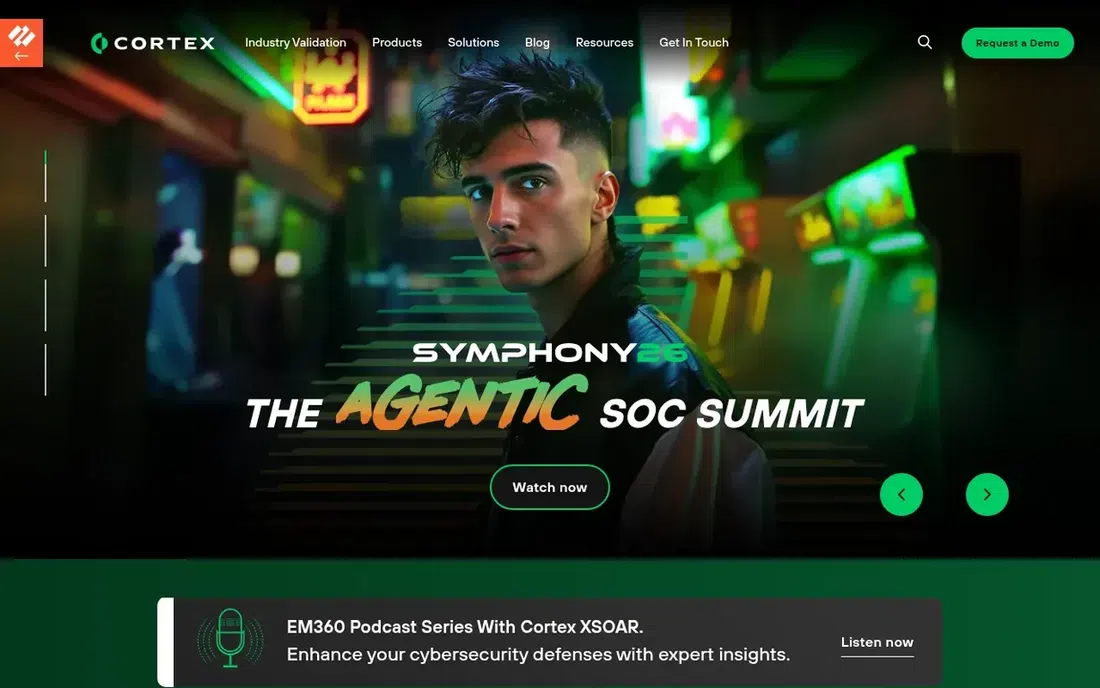
Palo Alto Networks Cortex XSOAR works best for unified incident response and orchestration. Cortex XSOAR from Palo Alto Networks is a security orchestration, automation and response system that brings incident response, threat intelligence management and workflow automation together. It is pitched at SOC teams that want one environment to coordinate playbooks, enrich alerts and speed remediation across plenty of security tools.
Also, the system includes a broad surface area, so teams should expect setup effort before automations deliver value. Also, smaller teams without dedicated automation staff may find lighter, low-code choices simpler to start with. No starting price is listed for Palo Alto Networks Cortex XSOAR here; confirm pricing on the vendor site. Trial and free access: Not stated.
Downsides: Wide system can need planning to adopt.
- Aims to cut remediation time
- Threat intel and automation
- Best value for teams with established processes
Microsoft Sentinel is built with cloud-native SIEM with automatic response in mind. Microsoft Sentinel is a cloud-native SIEM for security operations centers that spots threats, automates response and uses a data lake to help lower SIEM costs.
Beyond that, choose Sentinel when you want SIEM and response automation unified in a cloud-native Microsoft environment. In practice, data ingestion planning also deserves attention before committing. Pricing for Microsoft Sentinel is not stated here, so ask the vendor for current figures. Free options: Not stated.
Trade-offs to know: Deepest value within Microsoft security stack.
- Cloud-native SIEM with built-in automation
- Data lake approach for cost control
- Needs cloud and data planning
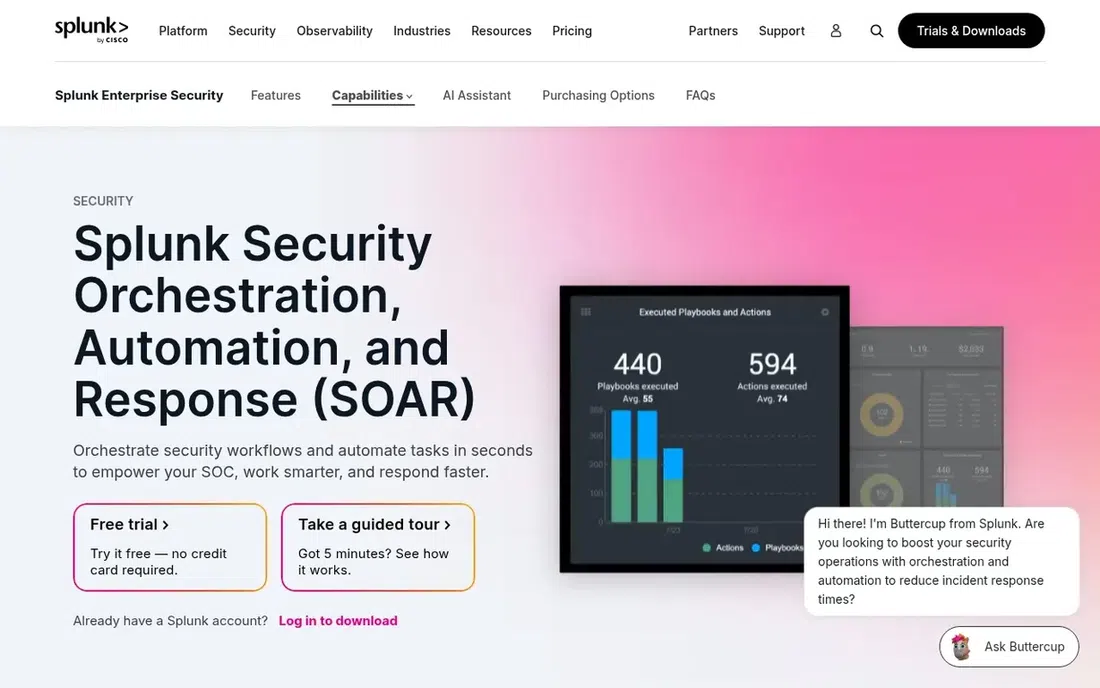
Where Splunk SOAR fits: automating repetitive tasks in Splunk environments. Splunk SOAR is a security orchestration, automation and response product built to automate repetitive tasks and help analysts investigate and respond to incidents rapidly.
Downsides: Playbook building takes onboarding time.
No starting price is listed for Splunk SOAR here; confirm pricing on the vendor site. Free plan details: Not stated.
- Automates repetitive security tasks
- Supports quick investigation and response
- Most natural fit for Splunk-centric stacks
How we compared the tools
LinkVetted looked at what each vendor publishes: pricing, plan limits, feature coverage for tools to automate SOC workflows and stated drawbacks. No hands-on testing is claimed. Where a price is missing, the vendor does not list one publicly or ties it to a quote. Always confirm before budgeting. Tools are placed by general fit for tools to automate SOC workflows, with price clarity and free access as tie-breakers. A different team can reasonably rank them differently.
A buyer's checklist
- Request quotes from Tines, Splunk SOAR and the others; the list shows no fixed prices.
- Before choosing Tines, weigh its main limit: needs clear workflow design discipline.
- Confirm you can export your data from Splunk SOAR, so leaving later does not mean losing records.
- List the apps you already depend on and check that Microsoft Sentinel supports each one on the plan you would buy.
- Look at which plan of Palo Alto Networks Cortex XSOAR unlocks the features you need; entry tiers are often cut down.
FAQ
Do these tools publish their prices?
No. None of the tools, from Tines to Splunk SOAR, shows a fixed starting price here, so budget time for quotes.
Does any tool for tools to automate SOC workflows here have a free plan?
No tool in this list, Tines and Splunk SOAR included, has a permanent free plan. Trials and quotes are the usual route, so plan a short evaluation period.
Is low-code automation a solid fit for smaller security teams?
Low-code products can help smaller teams build automations without dedicated engineering staff. The tradeoff is that adaptable builders need clear workflow design and documentation to avoid sprawl as automations multiply.
What should a SOC look for in an automation platform?
Focus on native integrations with your existing security tools, how easily playbooks can be built and maintained, and how automatic actions are logged and reviewed.
Can I try these tools before paying?
Not by default. None of the tools, from Tines to Splunk SOAR, lists a free plan or a free trial here, so ask each vendor for a demo before committing.
How do SOAR systems differ from SIEM tools?
SIEM tools collect and correlate security data to detect threats, whereas SOAR systems coordinate response by running playbooks across connected tools. Some products, for example Microsoft Sentinel, combine cloud-native SIEM detection with automatic response.
Sources
- https://www.tines.com
- https://swimlane.com
- https://www.paloaltonetworks.com/cortex/cortex-xsoar
- https://www.microsoft.com/en-us/security/business/siem-and-xdr/microsoft-sentinel
- https://www.splunk.com/en_us/products/splunk-security-orchestration-and-automation.html