6 Third-Party Risk Scoring for Procurement Teams Worth Shortlisting in 2026
Weighing the best third-party risk scoring for procurement teams? We lined up 6 products by cost, free access and fit. Every tool lists pros and cons.
- Editor's choiceProcessUnity
Vendor risk management workflows
Starts atSee websiteVisit processunity.comFull review - Great alternative
 UpGuard
Unified cyber risk posture management
Starts at$1,750 a month, billed yearlyVisit upguard.comFull review - Also considerPrevalent
Automatic TPRM workflows
Starts atSee websiteVisit prevalent.netFull review
Direct answer
ProcessUnity comes first here, mainly for vendor risk management workflows. Listed starting prices: UpGuard from $1,750 a month, billed yearly. UpGuard fits unified cyber risk posture management; Prevalent fits automatic TPRM workflows. All 6 tools are compared below on price, free plan and limits.
TL;DR:
- ProcessUnity sits first on this list: vendor risk management workflows.
- SecurityScorecard fits continuous cyber risk scoring.
- Starting prices begin at $1,750 per month, billed annually with UpGuard.
- Neither ProcessUnity nor SecurityScorecard, nor any of the other 4 tools, has a permanent free plan; trials and quotes are the norm.
Last checked November 2026. Prices and plan details were read from the vendors' own pages in November 2026; vendors change plans often, so confirm the current price on the vendor site before you buy.
Quick comparison
| Tool | Best for | Starts at | Free plan? | |
|---|---|---|---|---|
| ProcessUnity | Vendor risk management workflows | See website | Not stated | Visit |
| UpGuard | Unified cyber risk posture management | $1,750 a month, billed yearly | Free trial | Visit |
| Prevalent | Automatic TPRM workflows | See website | Not stated | Visit |
 RiskRecon | Cyber risk insights with threat intelligence | See website | Not stated | Visit |
 Vanta | Compliance automation for vendor trust | See website | Not stated | Visit |
| SecurityScorecard | Continuous cyber risk scoring | See website | Free trial | Visit |
Third-Party Risk Scoring for Procurement Teams compared in detail
Choosing third-party risk scoring for procurement teams usually comes down to price, fit and limits. This LinkVetted guide sets 6 tools side by side on those three points, with the facts kept short and checkable.
ProcessUnity
Best for: Vendor risk management workflows
ProcessUnity is built with vendor risk management workflows in mind. ProcessUnity gives you an external vendor risk management system pitched at safeguarding organizations through structured assessments and workflows.
Pricing for ProcessUnity is not stated here, so ask the vendor for current figures. Trial and free access: Not stated.
Drawbacks to consider: Restricted to vendor risk scope.
- External vendor risk focus
- Procurement-friendly
- May need customization
UpGuard targets unified cyber risk posture management. UpGuard's breadth may be more than some procurement teams need if they only need vendor risk scoring. It is best when procurement collaborates closely with security teams and when a unified cyber risk view is valuable.
Where it falls short: May be wide for pure procurement needs.
For procurement teams, it provides a way to score vendor risk in the context of broader cyber exposure. UpGuard is a cyber risk posture management system that brings together cyber risk management across the vendor supply chain, attack surface, and human workforce. Starting cost for UpGuard: $1,750 per month, billed annually. Free options: Free trial.
- Cyber risk posture focus
- Brings together vendor and attack surface risk
- Needs setup for vendor scoring
Prevalent
Best for: Automatic TPRM workflows
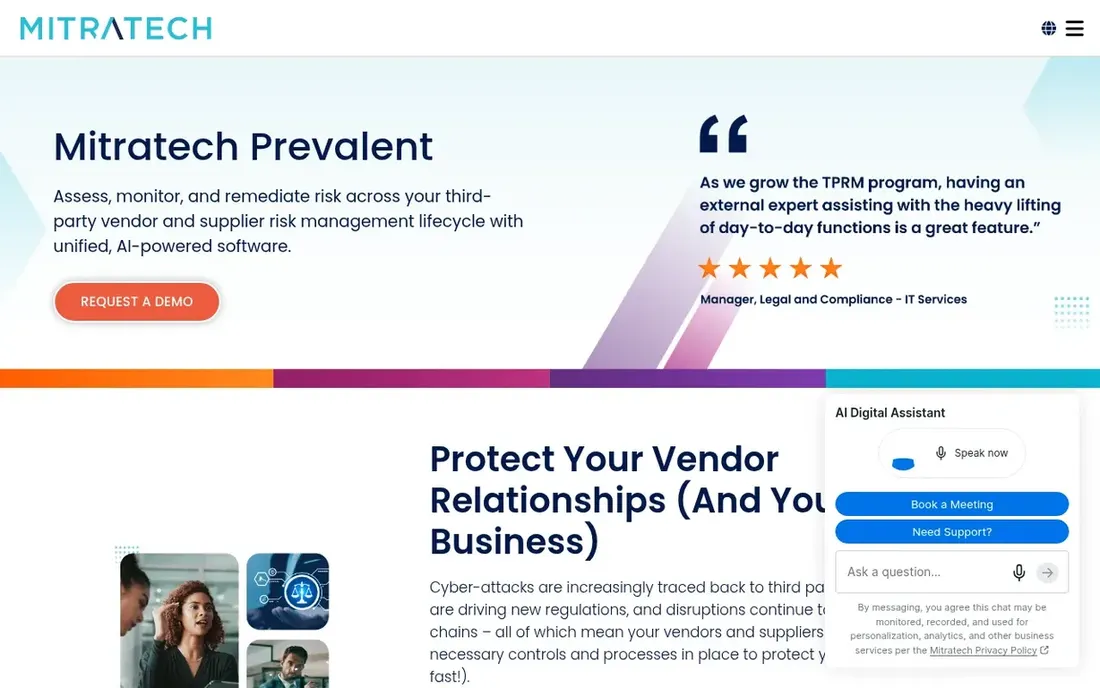
Prevalent is designed for automatic TPRM workflows. Prevalent supplies AI-powered external risk management software meant to automate workflows and ease compliance.
From a buyer's view, Prevalent may be more than a small procurement team needs if vendor volume is low. The system is part of Mitratech Prevalent, indicating a broader risk and compliance ecosystem. Prevalent does not show a starting price in this comparison, so check the vendor site for current pricing. Trial and free access: Not stated.
Where it falls short: May be complicated for small teams.
- Workflow simplification
- Compliance focus
- Needs setup for custom workflows
RiskRecon is designed for cyber risk insights with threat intelligence. RiskRecon concentrates on cyber risk, so teams needing broader operational or financial risk scoring may need extra tools.
Where it falls short: Primarily cyber risk focused.
It is best when cyber risk is the key concern and when threat intelligence layers on value to vendor assessments. RiskRecon shows no starting price here, so confirm the cost on the vendor site. As for free access: Not stated.
- Threat intelligence integration
- External risk management
- May need integration for procurement workflows
Vanta is aimed squarely at compliance automation for vendor trust. Vanta automates the complicated and time-consuming process of compliance certification for frameworks like SOC 2, HIPAA, ISO, PCI, and GDPR. Vanta is not a dedicated external risk management system, so it may not offer comprehensive vendor risk scoring on its own.
It is best when compliance certification and automatic monitoring are key components of your vendor risk assessment and when used alongside a TPRM tool. Also, for procurement teams, it can help vendors demonstrate compliance and cut risk through automatic security monitoring. No starting price is listed for Vanta here; confirm pricing on the vendor site. Free access: Not stated.
Downsides: May lack deep vendor risk scoring.
- Trust-building focus
- Security monitoring automation
- Not a dedicated TPRM product
SecurityScorecard
Best for: Continuous cyber risk scoring
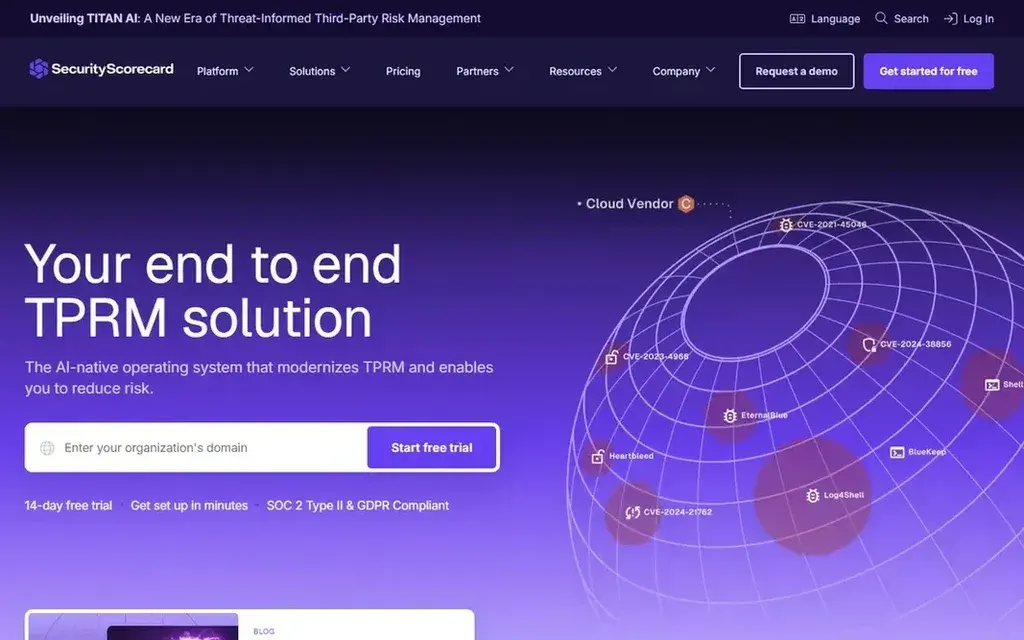
SecurityScorecard is built with continuous cyber risk scoring in mind. SecurityScorecard is a supply chain and external risk product built around continuous vendor monitoring and cyber risk scoring.
This comparison lists no price for SecurityScorecard; ask the vendor. Free access: Free trial.
Watch-outs: May need integration for full procurement workflows.
- Continuous vendor monitoring
- External risk management focus
- Primarily cyber risk focused
How these tools were picked
Pricing pages, product documentation and feature lists were the main sources, and every entry carries at least one honest drawback. Treat prices as a snapshot: vendors change plans often, so check the vendor site for the figure that applies today. The order reflects how well each tool fits the most common buying scenario for third-party risk scoring for procurement teams, then price clarity, then free plan access. It is a starting point, not a verdict.
Before you commit
- Get a written quote from ProcessUnity, Prevalent, RiskRecon and others; the list shows no starting price for them.
- Run a trial of UpGuard and SecurityScorecard with real work before paying for a year; your own workflow is the best test.
- Before choosing ProcessUnity, weigh its main limit: may need customization.
- Test how quickly RiskRecon answers a pre-sales question; it hints at how support will feel later.
- Confirm you can export your data from Vanta, so leaving later does not mean losing records.
FAQ
Do these tools publish their prices?
Not all of them. ProcessUnity, Prevalent, RiskRecon and others publish no starting price, so expect a quote request for those. The rest, UpGuard included, show a starting price, though seats and billing terms still change the final cost.
Is ProcessUnity the right pick for everyone comparing third-party risk scoring for procurement teams?
No single tool suits every team. ProcessUnity comes first because it fits vendor risk management workflows, while UpGuard suits unified cyber risk posture management and Prevalent suits automated TPRM workflows. Match the tool to your own size, budget and workflow before deciding.
How are the third-party risk scoring for procurement teams ordered?
The order follows typical fit for third-party risk scoring for procurement teams, with ProcessUnity first and SecurityScorecard last, then price clarity and free access. It is editorial judgement, not a score, so another team could rank the tools differently.
What is the cheapest option for third-party risk scoring for procurement teams in this list?
On published monthly entry prices, UpGuard is the lowest here at $1,750 per month, billed annually. Entry price is only part of the cost, because seats, add-ons and billing terms can change the total.
What is external risk scoring for procurement teams?
External risk scoring assigns a risk level to vendors based on factors like cyber posture, compliance status, and financial health. Procurement teams use these scores to prioritize due diligence, set contract terms, and monitor vendors over time.
How do I choose between SecurityScorecard and Prevalent?
SecurityScorecard is concentrated on continuous cyber risk scoring and supply chain monitoring, whereas Prevalent emphasizes workflow automation and compliance for external risk management. Choose SecurityScorecard if cyber posture is your central concern; choose Prevalent if you have to automate assessment workflows.
Sources
- https://www.processunity.com
- https://www.upguard.com
- https://www.prevalent.net
- https://www.riskrecon.com
- https://www.vanta.com
- https://securityscorecard.com