Best Government Procurement Software: 8 Platforms Compared
Best government procurement software compared: OpenGov, Bonfire, PlanetBids and more for solicitations, evaluations and audit-ready records for agencies.
- Editor's choice
 OpenGov Procurement
Local agencies, full lifecycle
Starts atSee websiteVisit opengov.comFull review - Great alternative
 Bonfire
Structured evaluations
Starts atSee websiteVisit bonfirehub.comFull review - Also consider
 PlanetBids
Sealed bids, vendor portals
Starts atSee websiteVisit planetbids.comFull review
TL;DR:
- OpenGov, Bonfire and PlanetBids lead government procurement for local agencies that need solicitations, evaluations and audit trails.
- Most agency-side platforms are quote-based, while vendor registration and bidding are usually free for suppliers.
- Audit-ready records matter more than flashy features: approvals, evaluator scoring and time-stamped actions should be exportable.
- Euna Procurement, which includes Bonfire, suits agencies that want a large supplier network alongside full-cycle sourcing.
- Match the platform to your procurement volume and thresholds, since small agencies and large states need different depth.
Quick comparison
| Tool | Best for | Starts at | Free plan? | |
|---|---|---|---|---|
| OpenGov Procurement | Local agencies, full lifecycle | See website | No | Visit |
| Bonfire | Structured evaluations | See website | No | Visit |
| PlanetBids | Sealed bids, vendor portals | See website | No | Visit |
 Euna Procurement | Full-cycle, large network | See website | No | Visit |
 VendorRegistry | Small agencies, vendor management | See website | No | Visit |
 Periscope | State and higher education | See website | No | Visit |
 Jaggaer | Large public entities | See website | No | Visit |
 Ion Wave | Audit-ready sourcing | See website | No | Visit |
The best government procurement software
We compared official product pages and current independent comparisons for eight government procurement platforms. All serve public agencies, but they differ on network size, evaluation depth and the size of agency they fit best.
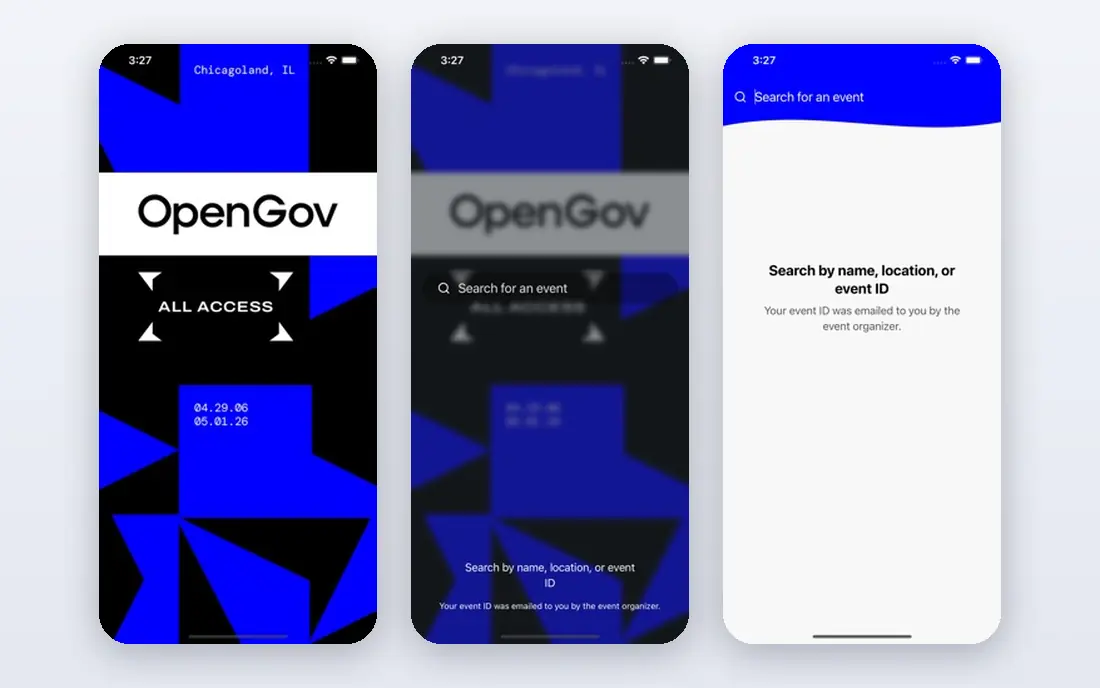
OpenGov Procurement covers the full sourcing lifecycle for local government, from intake and solicitation authoring through electronic bidding, structured evaluations and post-award contract management. Templates and clause libraries help agencies produce consistent, compliant solicitations, while audit trails, role-based security and public transparency controls fit public procurement rules. Vendors can view and respond to solicitations at no charge, which helps smaller and local suppliers take part.
Pricing is quote-based for agencies, and implementation takes planning for larger organizations. For a city, county or school district that wants one system for the whole procurement lifecycle, OpenGov is the strongest starting point in this list.
- Full lifecycle from intake to contract
- Structured evaluations
- Public transparency tools
- Quote-based pricing
- Implementation effort for larger agencies
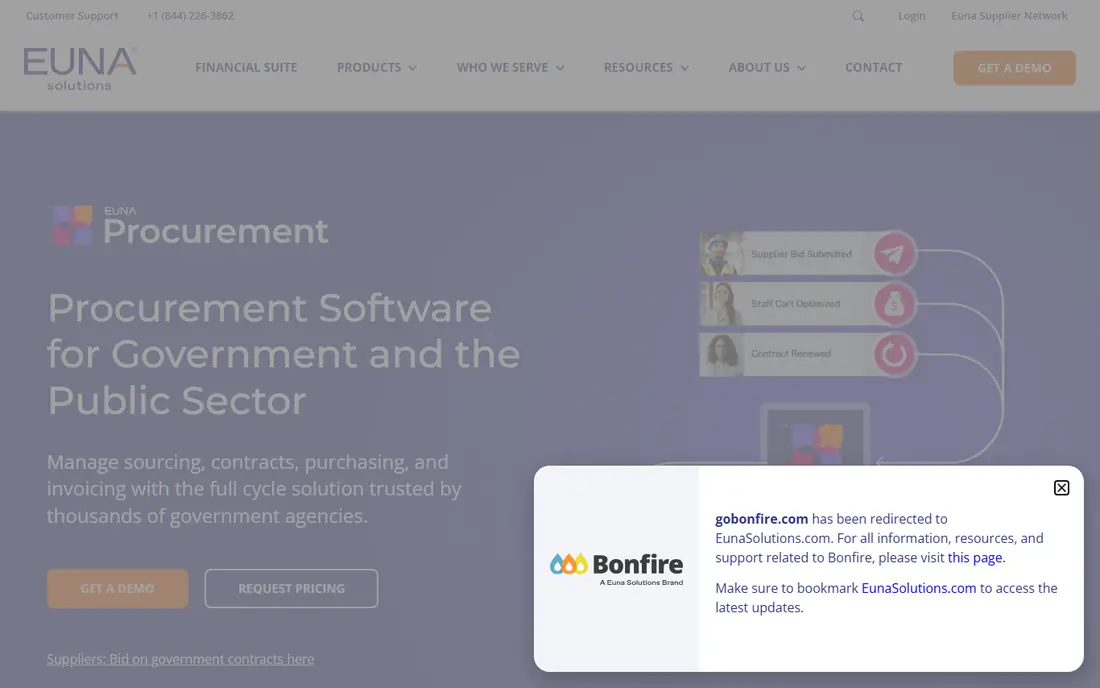
Bonfire, now part of Euna Procurement, is known for structured solicitation and evaluation workflows that keep scoring fair and documented. Evaluators score in the system, comments and evidence stay attached to each solicitation, and the audit trail shows who did what and when. The vendor portal makes submission straightforward for suppliers, which can raise competition on RFPs.
Buyers should confirm the current Euna product packaging, since Bonfire branding has shifted under Euna. Pricing is quote-based. For an agency whose main pain is messy, spreadsheet-based evaluation, Bonfire remains a strong specialist.
- Clear evaluation workflows
- Vendor portal
- Good for RFP scoring
- Quote-based pricing
- Now part of Euna, so check the current product name
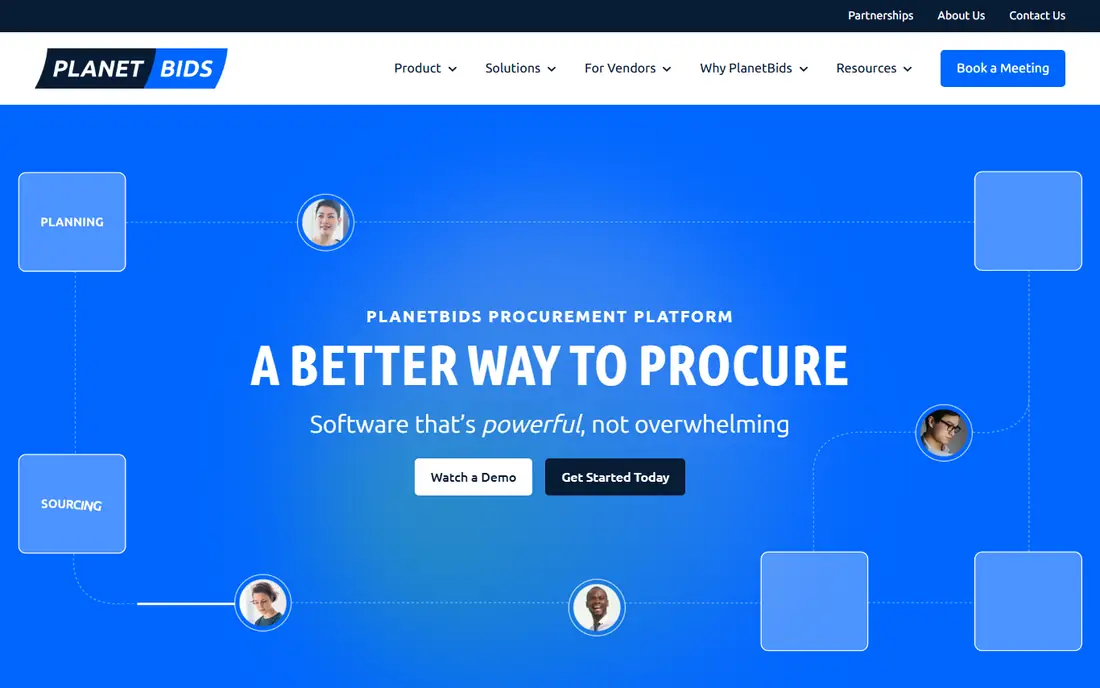
PlanetBids serves many agencies across all US states with centralized solicitation, sealed bidding, addenda distribution and bidder Q and A. A persistent clarification log ties bidder questions and addenda to the solicitation timeline, which reduces confusion and disputes. Vendors can search and bid through individual agency portals at no charge, with an optional paid cross-agency service for broader access.
Agency pricing is quote-based. For a procurement team that runs frequent sealed bids and needs repeatable workflows with clear addenda tracking, PlanetBids is a proven choice.
- Repeatable sealed bid workflows
- Addenda and clarification tracking
- Large agency network
- Quote-based pricing for agencies
- Interface feels dated to some users
Euna Procurement brings together Bonfire, DemandStar, EqualLevel and Ion Wave into a full-cycle, network-powered platform, with a large community of agencies and suppliers. Agencies get solicitation, evaluation, contract and supplier tools in one system, plus access to a broad supplier network that can raise competition. The network effect is the main reason to choose Euna over a standalone tool.
Breadth and quote-based pricing may be more than a very small agency needs. For a mid-size or large agency that wants full-cycle sourcing with network reach, Euna is a strong contender.
- Large buyer and supplier network
- Full-cycle sourcing
- Combines Bonfire, DemandStar and related tools
- Quote-based pricing
- Breadth can be more than a small agency needs
VendorRegistry offers vendor management, bid posting and solicitation tools aimed at smaller public agencies that need a straightforward system without enterprise complexity. Registration, notifications and bid submission work cleanly, and the learning curve is gentler than full lifecycle suites. That simplicity suits agencies with small procurement teams and modest solicitation volume.
Depth trails OpenGov and Euna on evaluations, contracts and analytics. For a small agency or special district that mainly needs clean vendor management and bid posting, VendorRegistry is a practical, lower-friction option.
- Simple vendor registration and bid posting
- Good for smaller agencies
- Straightforward workflow
- Less depth than full lifecycle suites
- Smaller network than Euna or PlanetBids
Periscope Holdings serves state government and higher education buyers with sourcing, contract management and supplier tools built for public sector rules. Its compliance controls, approval workflows and reporting suit large public entities with complex procurement policies and many departments. Integration with state financial systems is a common strength.
Small local agencies may find Periscope heavier than needed. For a state agency, university system or large public entity, Periscope is a credible, sector-focused choice.
- Strong state and higher education footprint
- Sourcing and contract tools
- Good compliance controls
- Quote-based pricing
- Less focus on small local agencies
Jaggaer offers broad source-to-pay coverage, including sourcing, supplier management, contracts and procurement analytics, used by large public and private entities. Public buyers get structured solicitation, evaluation and contract workflows with the depth to handle complex, high-value procurements across many categories. The platform scales to large, multi-department organizations.
Enterprise pricing and implementation effort are significant, so smaller agencies should look elsewhere. For a large public entity that wants source-to-pay depth rather than a single sourcing tool, Jaggaer is worth evaluating.
- Broad source-to-pay coverage
- Strong sourcing and contract tools
- Global scale
- Quote-based enterprise pricing
- Implementation effort is significant
Ion Wave, now part of Euna, is known for audit-ready sourcing with detailed audit history and logs that show every action on a solicitation. That transparency helps agencies answer public records requests and defend award decisions, which is a core need in public procurement. Solicitation, bid and evaluation workflows are clear and compliance-focused.
Buyers should confirm how Ion Wave is packaged under Euna today. Pricing is quote-based. For a compliance-focused agency that puts audit artifacts first, Ion Wave remains a strong name to check.
- Strong audit history and logs
- Clear solicitation workflows
- Good for compliance-focused teams
- Quote-based pricing
- Now part of Euna, so confirm current packaging
How we picked these
We compared official product pages and current independent comparisons of government procurement and bid solicitation tools, and kept only products with a working homepage and a real public-sector offering in 2026. We favored platforms that cover solicitations, electronic bidding, evaluations and audit trails, and we mixed full lifecycle suites with focused tools so agencies of different sizes can find a fit. We did not claim hands-on testing, and we marked quote-based products as See website where no public price exists.
What to check before you buy government procurement software
Public procurement has legal stakes that private buying does not, so test compliance features as carefully as usability.
Test the audit trail end to end
Run a sample solicitation from posting through evaluation to award, then ask for the complete audit export. It should show approvals, evaluator scores, comments, addenda, bidder questions and time stamps without gaps. If any step lives outside the system, such as scoring in spreadsheets, your audit trail has a hole that will matter during a protest or records request.
Check vendor experience and competition
Ask how vendors register, find solicitations, ask questions and submit bids, and whether any step charges vendors a fee. OpenGov and PlanetBids let vendors view and respond at no charge on agency portals, which helps participation. A system that suppresses vendor participation will raise prices and reduce competition, whatever its internal features look like.
Match thresholds and volume to the tool
Map your informal thresholds, formal solicitations and contract volume, and ask each vendor to show workflows for each level. Small agencies need quick quotes and simple approvals, while large entities need complex evaluations and contract management. A tool built for one scale will frustrate the other, so choose for the volume you actually run.
FAQ
What is the best government procurement software for a small city?
OpenGov Procurement and VendorRegistry are the best government procurement software options for many small cities, with OpenGov stronger on full lifecycle coverage and VendorRegistry simpler for smaller teams. PlanetBids also suits small agencies that run frequent sealed bids. Shortlist based on whether you need contracts and evaluations or mainly bid posting.
Is government procurement software free for vendors?
Usually, yes, on agency portals. Vendors can typically register, view solicitations and submit bids at no charge on OpenGov and PlanetBids agency portals, while agencies pay the subscription. Optional cross-agency search services, such as PlanetBids VendorLine, may charge vendors for broader access. Always confirm the vendor fee policy before you publish solicitations.
How much does government procurement software cost for an agency?
Agency pricing is almost always quote-based, varying with agency size, solicitation volume, modules and implementation. Small agencies pay far less than large states or university systems. Ask for a quote that includes implementation, training and support, and compare total cost over the contract term, not just the first year.
What features matter most in government procurement software?
Solicitation authoring, electronic bidding, structured evaluations, audit trails, public transparency controls and contract management matter most. Approval workflows, vendor management and reporting support the rest. Prioritize audit-ready records and vendor participation, since those two factors decide whether a system survives a protest or a records request.
Can government procurement software handle cooperative contracts?
Some platforms support cooperative purchasing and contract sharing, and Euna highlights collaborative procurement with vetted cooperative contracts. If cooperative buying matters to your agency, ask each vendor to show how cooperative contracts are published, searched and used. Confirm whether your state or cooperative rules allow the workflow the vendor demonstrates.