Best Cloud Based Procurement Software in 2026: 8 Tools Compared
We compared the best cloud-based procurement software on requisitions, approvals, supplier management and spend control to help teams buy smarter today.
- Editor's choice
 Precoro
Mid sized teams and fast setup
Starts atSee websiteVisit precoro.comFull review - Great alternative
 Procurify
Smaller teams and spend control
Starts atSee websiteVisit procurify.comFull review - Also consider
 Coupa
Enterprise spend management
Starts atSee websiteVisit coupa.comFull review
TL;DR:
- Cloud procurement tools should cover requisitions, approvals, purchase orders, supplier management and spend reporting in one workflow.
- Coupa and SAP Ariba suit large enterprises, while Precoro and Procurify suit small and mid sized teams that want faster setup.
- Approval controls and spend visibility matter more than a long supplier catalogue, since they stop maverick spending.
- Our pick for most mid sized teams is Precoro, with Coupa as the enterprise standard and Procurify for smaller teams.
Quick comparison
| Tool | Best for | Starts at | Free plan? | |
|---|---|---|---|---|
| Precoro | Mid sized teams and fast setup | See website | Free trial | Visit |
| Procurify | Smaller teams and spend control | See website | Free trial | Visit |
| Coupa | Enterprise spend management | See website | Free trial | Visit |
 SAP Ariba | Large enterprise procurement | See website | Free trial | Visit |
 Oracle Procurement Cloud | Oracle ERP users | See website | Free trial | Visit |
 Jaggaer | Complex sourcing and supplier management | See website | Free trial | Visit |
 Tipalti | Payables and supplier payments | See website | Free trial | Visit |
 Spendwise | Simple purchase approvals | See website | Free trial | Visit |
The best cloud based procurement software
Procurement software should make it easy to request, approve, order, receive and pay for goods and services, while giving finance a clear view of spend. We compared official feature pages, pricing pages and public reviews for cloud tools used in 2026, with attention to requisitions, approvals, purchase orders, supplier management, invoicing and reporting.
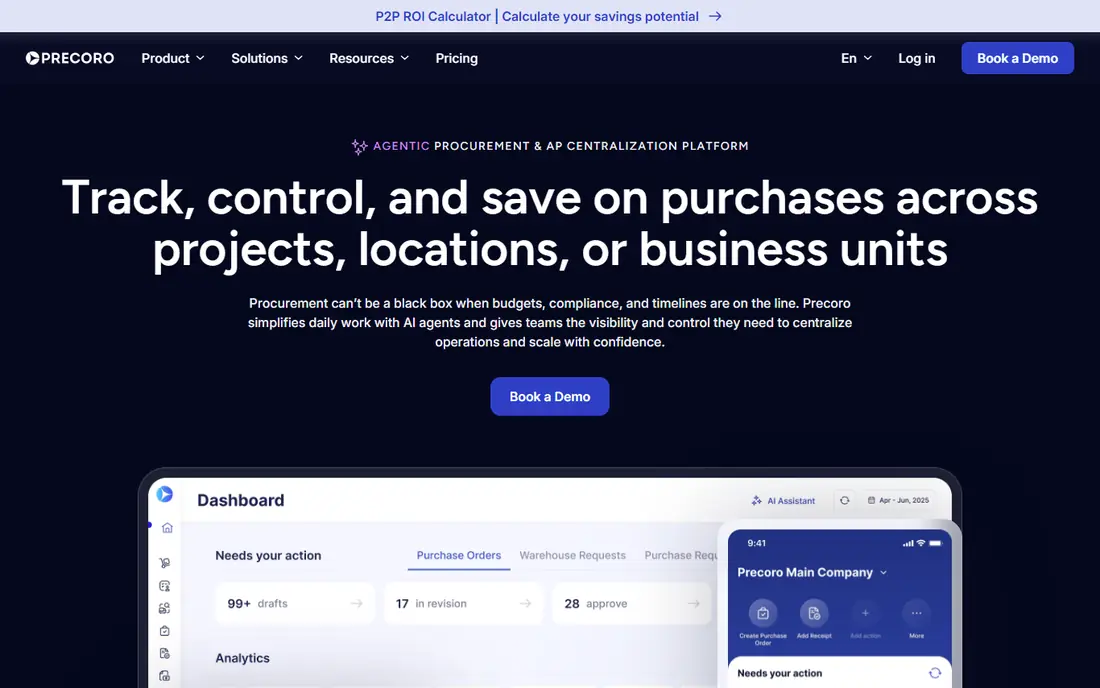
Precoro is our pick for mid sized teams because it focuses on the core procurement loop and gets it live quickly. Staff create requisitions, managers approve them, purchase orders go to suppliers, and finance sees spend by department, supplier and category. That clarity helps a growing company move from email approvals and spreadsheets to a controlled process without a long implementation.
Very large enterprises with complex sourcing events, auctions and global supplier networks may need a deeper platform such as Coupa or SAP Ariba. Pricing is also quote based for many Precoro plans, so ask for a written quote that covers users, approvers and integrations. For a team that wants control without enterprise complexity, Precoro is a strong starting point.
- Fast setup for mid sized teams
- Requisitions, approvals and purchase orders in one flow
- Clear spend reporting
- Less suited to very large enterprise sourcing
- Pricing is quote based for many plans
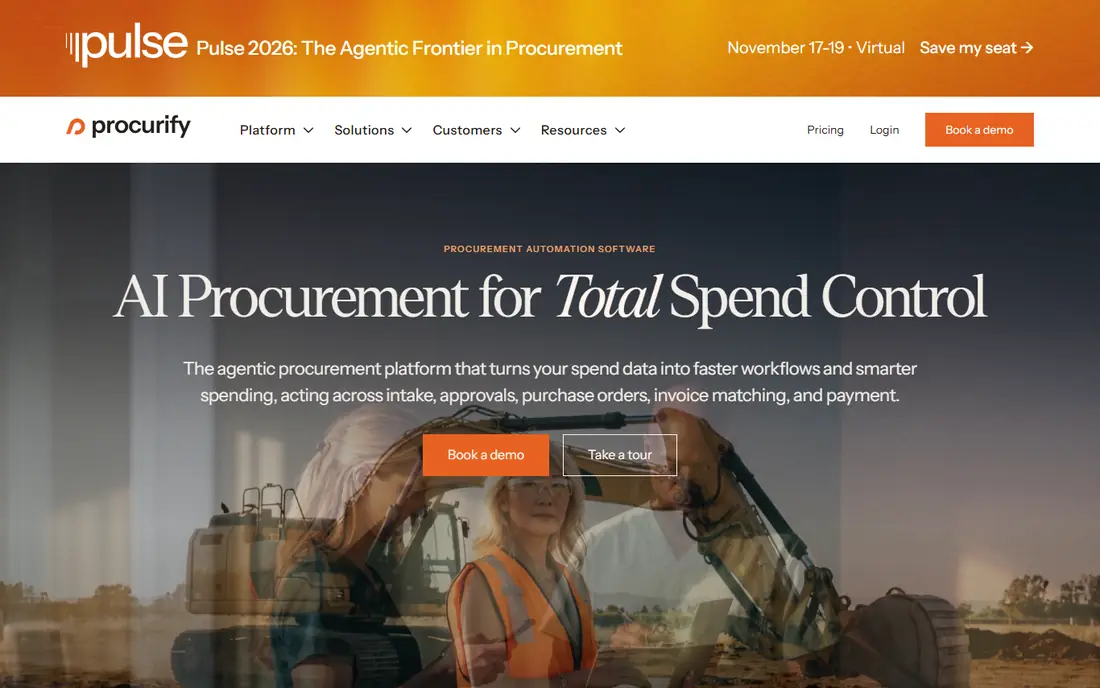
Procurify suits smaller teams that need spend control before they need complex sourcing. Requisitions, approvals, purchase orders and receiving sit in a clear workflow, and managers can see spend as it happens rather than at month end. That real time view helps finance catch over budget requests early, instead of discovering them after payment.
The limit is sourcing depth. Large sourcing events, complex contracts and global supplier management sit better in enterprise tools. If your main pain is staff buying without approval or finance lacking visibility, Procurify addresses it directly. Test the approval workflow with your real departments and budgets during the trial.
- Simple requisition and approval workflow
- Real time spend visibility
- Good for distributed teams
- Sourcing depth is limited compared with enterprise tools
- Pricing is quote based
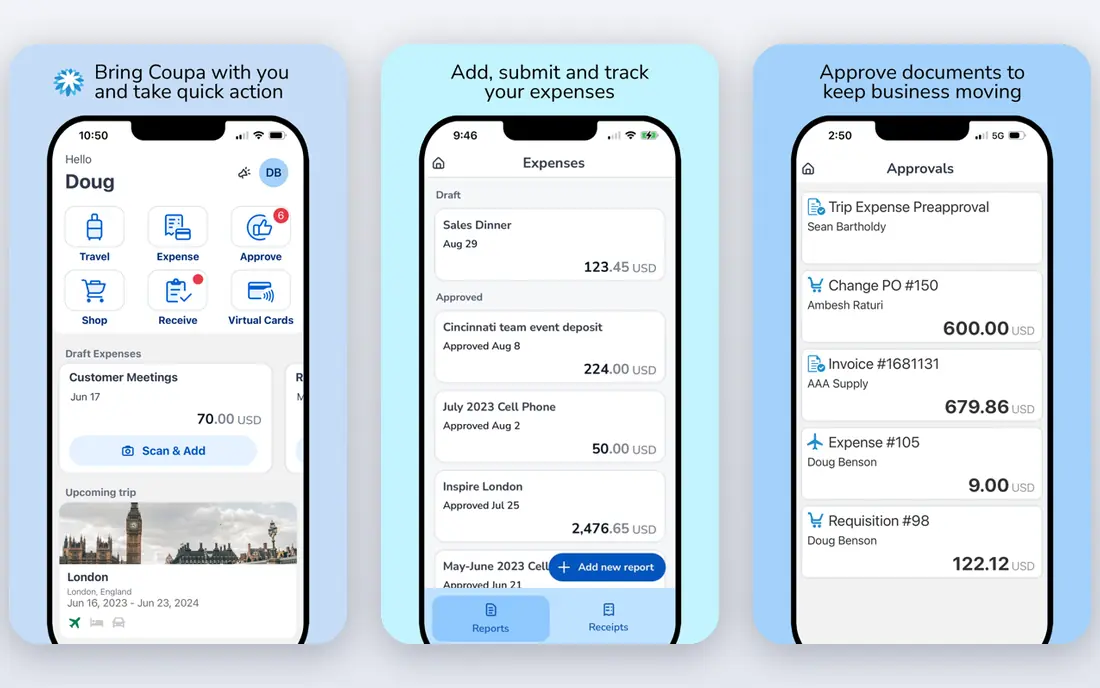
Coupa is the enterprise standard for spend management. It covers procurement, invoicing, expenses, sourcing and supplier management in one cloud platform, with a large supplier network and deep reporting for finance leaders. Large organisations that need control across many entities, currencies and approval chains often standardise on Coupa for that breadth.
Implementation is the trade off. Coupa needs planning, data preparation and change management, and pricing reflects enterprise scale. A small team will find it more system than it needs, and may wait months for full value. For a large organisation that wants one spend platform, Coupa is a credible and widely used choice.
- Broad spend management across procurement, invoicing and expenses
- Strong supplier network
- Deep reporting
- Implementation takes time and planning
- Pricing is enterprise level and quote based
SAP Ariba suits large enterprises, especially those already running SAP ERP. Sourcing, contracts, supplier lifecycle management and procurement integrate with SAP finance and logistics, which reduces duplicate data entry and reconciliation work. Its supplier network also helps buyers find and onboard suppliers at scale.
Complexity is the catch. Ariba setup, configuration and training take time, and non SAP organisations may get less integration value. Pricing is quote based and enterprise level. If your organisation already uses SAP and needs deep sourcing and contract control, Ariba is a natural fit. If not, a simpler cloud tool will go live faster.
- Deep sourcing and contract management
- Large supplier network
- Strong SAP ERP integration
- Complex setup
- Best value for SAP users
- Pricing is quote based
Oracle Procurement Cloud is the procurement arm of Oracle Fusion Cloud ERP. It covers self service requisitions, approvals, sourcing, supplier qualification and purchase orders, with controls that flow into Oracle finance. For an organisation already on Oracle ERP, that integration avoids the reconciliation work that comes from a separate procurement system.
Non Oracle organisations gain less from that integration and face a heavier implementation. Oracle expertise is needed for setup, and pricing is part of a wider ERP agreement. If Oracle already runs your finance, Procurement Cloud is the logical choice. If it does not, compare Precoro, Procurify or Coupa first.
- Tight Oracle ERP and finance integration
- Requisitions, sourcing and supplier qualification
- Strong controls
- Best for Oracle users
- Implementation needs Oracle expertise
Jaggaer suits organisations with complex sourcing needs. Auctions, requests for proposal, contract management and supplier risk tools go beyond simple requisitions, which helps procurement teams that negotiate large contracts across many categories. Industry specific features also suit manufacturing, higher education, healthcare and public sector buyers.
That depth brings implementation complexity. A small team that only needs requisitions and approvals will find Jaggaer more than it needs, and setup takes planning. For a procurement team that runs regular sourcing events and needs supplier risk visibility, Jaggaer is a strong enterprise option.
- Strong sourcing, auctions and contract tools
- Supplier management and risk features
- Serves many industries
- Implementation can be complex
- Pricing is quote based
Tipalti focuses on the payment side of procurement. Supplier onboarding, tax form collection, invoice processing and global payments in many currencies and methods sit in one system, with controls to reduce payment errors and fraud. Finance teams that struggle with supplier payments, tax compliance and manual invoice entry often value Tipalti most.
It is not a full requisition and sourcing platform on its own, so teams that need end to end procurement may pair Tipalti with a requisition tool. Check whether your main pain is buying or paying, since that decides whether Tipalti alone is enough. For global supplier payments, it is a specialised and effective tool.
- Supplier onboarding, tax forms and global payments
- Invoice automation
- Strong payables controls
- Not a full requisition and sourcing platform on its own
- Pricing is quote based
Spendwise is a simple option for teams that want purchase approvals without enterprise complexity. Staff submit purchase requests, managers approve them against budgets, and finance tracks spend in a clear dashboard. That simplicity helps small businesses and nonprofits that are moving from email approvals for the first time.
The feature set is smaller than Coupa or SAP Ariba, with limited sourcing, contract and supplier network depth. That limit is fine if approvals and budget tracking are the main need, and a problem if sourcing is central to your work. For a first procurement system, Spendwise is an easy and low friction starting point.
- Simple purchase request and approval workflow
- Budget tracking
- Easy for small teams to learn
- Smaller feature set than enterprise tools
- Limited sourcing and contract depth
How we picked these
We compared official feature pages, pricing pages and public reviews for cloud procurement tools used in 2026. We weighted requisitions, approvals, purchase orders, supplier management, invoicing, spend reporting, integrations and ease of setup. We excluded on premise only procurement systems and tools that only handle expenses, since this list is about cloud based buying.
How to choose procurement software for your team
Start with your buying volume and approval needs. A team that buys office supplies and software subscriptions needs different controls than a manufacturer that sources raw materials through auctions. List your departments, budgets, approvers and suppliers, then test the requisition to payment loop with a real purchase in each shortlisted tool.
Controls that prevent maverick spending
Set approval rules by amount, department and category, and require a purchase order before payment where possible. Give finance real time spend visibility by budget, not only month end reports. Also check supplier onboarding, since a tool that makes it easy to add a supplier without checks can create fraud risk. Good controls should feel like guidance, not a barrier that staff bypass.
FAQ
What is the best cloud based procurement software?
Precoro is our pick for most mid sized teams, Procurify for smaller teams, and Coupa for large enterprises. SAP Ariba suits SAP users, while Oracle Procurement Cloud suits Oracle ERP users. The best choice depends on team size, ERP system, sourcing complexity and how quickly you need to go live.
How much does cloud procurement software cost?
Most tools in this list use quote based pricing, which varies by users, modules and integrations. Smaller tools such as Precoro, Procurify and Spendwise are usually cheaper and faster to implement than enterprise platforms such as Coupa, SAP Ariba or Jaggaer. Ask for a written quote that lists every user type and module before budgeting.
What is the difference between procurement and accounts payable software?
Procurement covers requesting, approving, ordering and receiving goods and services, while accounts payable covers invoices and payments. Some tools cover both, while Tipalti focuses mainly on payables and supplier payments. For full control, you need requisitions and approvals before payment, not only invoice processing after the fact.
Can procurement software integrate with accounting software?
Yes, most cloud tools in this list integrate with accounting and ERP systems such as QuickBooks, Xero, NetSuite, SAP and Oracle. Check the exact integration for your system, since some integrations sync purchase orders and invoices automatically while others need manual export. Test the integration with a real purchase before rollout.
How long does it take to implement procurement software?
Smaller tools such as Precoro, Procurify and Spendwise can often go live in weeks, while enterprise platforms such as Coupa, SAP Ariba and Oracle Procurement Cloud can take months. Implementation time depends on data preparation, approval design, supplier onboarding and training. Start with one department as a pilot to reduce risk.
What is maverick spending and how does software stop it?
Maverick spending is buying outside approved suppliers, budgets or approval processes, often by email or personal card. Procurement software stops it by requiring requisitions, approvals and purchase orders, and by showing spend against budgets in real time. Clear rules plus an easy request process work better than strict rules that staff avoid.