Best Financial Risk Management Software for Small Business for 2026: Our 5 Vetted Picks
Best financial risk management software for small business in 2026: 5 contenders with entry costs and free tiers. With pricing notes and limits. Numbers first.

- Editor's choice
 Acumatica
Live cloud view of finances
Starts atSee websiteVisit acumatica.comFull review - Great alternative
 Xero
Bank connections and advisor collaboration
Starts at$7 a monthVisit xero.comFull review - Also consider
 QuickBooks Online
Everyday bookkeeping and reporting
Starts at$11.40 a monthVisit quickbooks.intuit.comFull review
Direct answer
This list puts Acumatica first for live cloud view of finances. Listed starting prices: Xero from $7 a month, QuickBooks Online from $11.40 a month and FreshBooks from $23.00 a month. Xero fits bank connections and advisor collaboration; QuickBooks Online fits everyday bookkeeping and reporting. All 5 tools are compared below on price, free plan and limits.
TL;DR:
- This list starts with Acumatica, which is built for live cloud view of finances.
- Acumatica, NetSuite and the 3 others all need a premium plan or a trial, since no free plan is listed.
- Xero has the lowest monthly starting price in this list: $7 per month.
- Before buying Acumatica, weigh this: wide scope needs planning.
Last checked November 2026. Prices and plan details were read from the vendors' own pages in November 2026; vendors change plans often, so confirm the current price on the vendor site before you buy.
Quick comparison
| Tool | Best for | Starts at | Free plan? | |
|---|---|---|---|---|
| Acumatica | Live cloud view of finances | See website | Not stated | Visit |
| Xero | Bank connections and advisor collaboration | $7 a month | Free trial | Visit |
| QuickBooks Online | Everyday bookkeeping and reporting | $11.40 a month | Free trial | Visit |
 FreshBooks | Invoicing, time and expense tracking | $23.00 a month | Free trial | Visit |
 NetSuite | Wide financial control in one ERP | See website | Not stated | Visit |
5 options for financial risk management software for small business in detail
LinkVetted compared 5 tools for financial risk management software for small business. The goal is a practical shortlist: published prices, free plan facts, best-fit use cases and honest limits for every entry.
Acumatica works best for live cloud view of finances. Acumatica is a cloud ERP business management system offering cloud and mobile technology with a customer-centric licensing model. It supplies a complete, live view of the business anytime, anywhere.
Also, the system is wide, so scoping and rollout take time, and straightforward bookkeeping needs may be served by lighter tools. More specifically, choose Acumatica when you want a connected view of sales, inventory and finance. Check the vendor site for Acumatica pricing; none is listed in this comparison. On free options: Not stated.
Limits to weigh: May exceed entry-level bookkeeping.
- Live business view
- Customer-centric licensing model
- Wide scope needs planning

Xero was built for bank connections and advisor collaboration. Xero is accounting software for small firms that links you to your bank, accountant, bookkeeper and other business apps.
Worth adding: choose a broader ERP if you need integrated purchasing, stock and financial reporting in one place. As for the details, the connected model helps keep records current so financial decisions rest on fresher data. On cost, Xero starts like this: $7 per month. Free options: Free trial.
Where it falls short: Depends on app ecosystem.
- Cloud-based small business focus
- Connects to banks and apps
- Advanced risk tools are restricted

For everyday bookkeeping and reporting, QuickBooks Online is a natural candidate. Consider it when straightforward bookkeeping is the priority.
On top of that, move to an ERP when you need integrated operations and advanced controls. QuickBooks Online is an all-in-one business finance tool built around accounting. QuickBooks Online cost at the entry level: $11.40 per month. Free options: Free trial.
Where it falls short: Risk analysis is entry-level.
- Widely used accounting workflow
- Familiar to numerous accountants
- Extras may be needed for depth
FreshBooks makes the most sense for invoicing, time and expense tracking. FreshBooks is cloud-based small business accounting software for sending invoices, tracking time, managing receipts and expenses, and accepting credit cards.
Clean invoicing and expense records support steadier cash flow. Its focus is billing and expenses, so advanced financial risk analysis and complicated inventory are outside its scope. FreshBooks cost at the entry level: $23.00 per month. On free options: Free trial.
Limits to weigh: Restricted advanced risk analysis.
- Receipt and expense management
- Credit card acceptance
- Suited to service companies
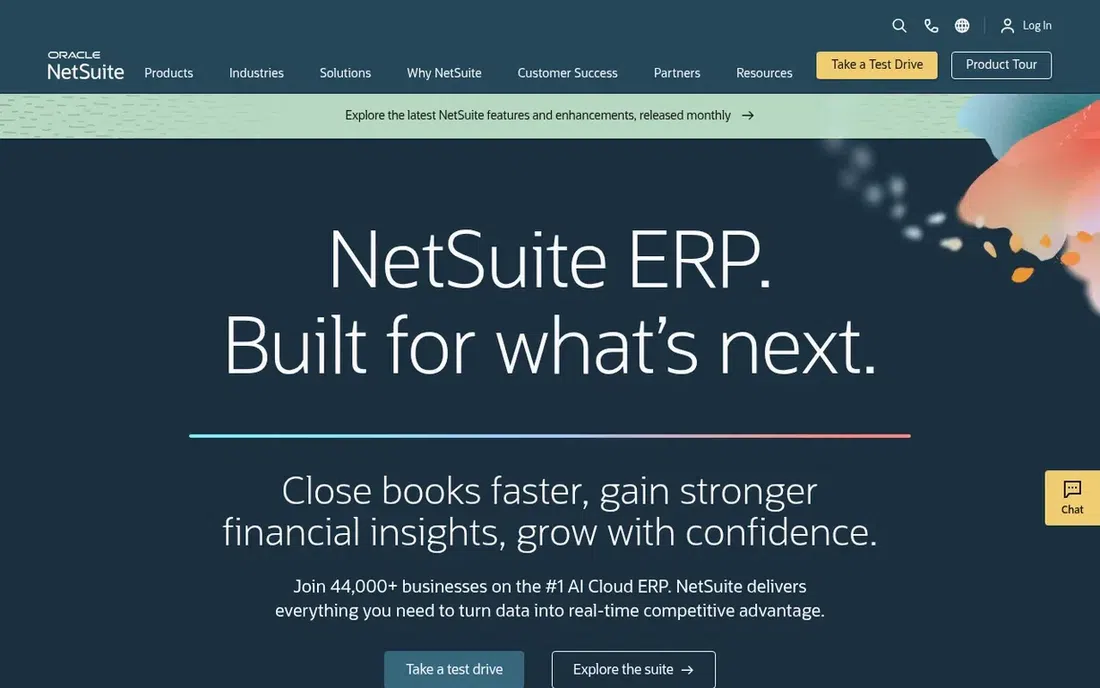
Pick NetSuite if this describes you: wide financial control in one ERP. Since it is a full ERP, implementation takes planning and internal time, and very small teams may find it more than they need. In practice, choose a more straightforward accounting system if you primarily want invoicing and bank reconciliation.
What to check first: May exceed straightforward bookkeeping needs.
Reasons to shortlist it: CRM and inventory. The combined view can help owners spot cash and margin issues earlier and act on them with better context. Beyond that, NetSuite is a cloud ERP that brings financials, CRM, accounting and inventory management together with built-in AI. NetSuite does not show a starting price in this comparison, so check the vendor site for current pricing. As for free access: Not stated.
- Scales across departments
- Brings together financials
- Setup can be involved
How we chose
Before you commit
- Get a written quote from Acumatica and NetSuite; the list shows no starting price for them.
- Run a trial of Xero, QuickBooks Online and FreshBooks with real work before paying for a year; your own workflow is the best test.
- Before choosing Acumatica, weigh its main limit: wide scope needs planning.
- Ask NetSuite about contract length, onboarding fees and user minimums before you sign.
- Look at the help docs and support options for FreshBooks before you commit.
FAQ
Do these tools publish their prices?
Not all of them. Acumatica and NetSuite publish no starting price, so expect a quote request for those. The rest, Xero included, show a starting price, though seats and billing terms still change the final cost.
Is an ERP necessary for small business financial risk management?
Numerous small firms handle risk well with accounting software that produces steady reports. Beyond that, an ERP becomes handy when inventory, sales and purchasing must stay in step with finance, since that combined view can reveal risks earlier.
Does any tool for financial risk management software for small business here have a free plan?
No tool in this list, Acumatica and NetSuite included, has a permanent free plan. Xero, QuickBooks Online, FreshBooks offer a trial. Trials and quotes are the usual route, so plan a short evaluation period.
How are the tools for financial risk management software for small business ordered?
The order follows typical fit for financial risk management software for small business, with Acumatica first and NetSuite last, then price clarity and free access. It is editorial judgement, not a score, so another team could rank the tools differently.
Is Acumatica the right pick for everyone comparing financial risk management software for small business?
No single tool suits every team. Acumatica comes first because it fits real-time cloud view of finances, while Xero suits bank connections and advisor collaboration and QuickBooks Online suits everyday bookkeeping and reporting. Match the tool to your own size, budget and workflow before deciding.
Sources
- https://www.acumatica.com
- https://www.xero.com
- https://quickbooks.intuit.com/online
- https://www.freshbooks.com
- https://www.netsuite.com/portal/home.shtml