5 Best Support for Database Software for 2026, Vetted and Compared
Best support for database software in 2026: 5 contenders with entry costs and free tiers. Short, factual notes on every option. Quick comparison inside.
- Editor's choice
 MongoDB
Adaptable live application data
Starts atPricing on requestVisit mongodb.comFull review - Great alternative
 Microsoft SQL Server
Analytics and AI on existing data
Starts atPricing on requestVisit microsoft.comFull review - Also considerSAP HANA
SAP-centric analytics and applications
Starts atPricing on requestVisit sap.comFull review
Direct answer
This list puts MongoDB first for adaptable live application data. Alternatives: Microsoft SQL Server for analytics and AI on existing data, and SAP HANA for SAP-centric analytics and applications. The remaining 2 options are covered below with pricing notes and limits. None of these vendors publish plan prices, so pricing is on request for every option.
TL;DR:
- The list opens with MongoDB, aimed at adaptable real-time application data.
- Every tool from MongoDB to MySQL (Oracle) works by quote, with no list price shown.
- MySQL (Oracle) suits straightforward relational deployments.
- Just one of the 5 tools, MongoDB, has a free plan.
- A fair warning about SAP HANA: most valuable within SAP landscape.
Last checked November 2026. Pricing on request: vendors did not publish plan prices when this guide was last checked (November 2026), so ask each vendor for a written quote.
Quick comparison
| Tool | Best for | Starts at | Free plan? | |
|---|---|---|---|---|
| MongoDB | Adaptable live application data | Pricing on request | Yes | Visit |
| Microsoft SQL Server | Analytics and AI on existing data | Pricing on request | Not stated | Visit |
| SAP HANA | SAP-centric analytics and applications | Pricing on request | Not stated | Visit |
 Oracle Database | Critical workloads with deep vendor tooling | Pricing on request | Not stated | Visit |
| MySQL (Oracle) | Straightforward relational deployments | Pricing on request | Not stated | Visit |
5 options for support for database software Options in detail
This LinkVetted guide covers 5 options for support for database software. Each profile lists a starting price, free plan details, strengths and drawbacks, so you can drop poor fits quickly.
MongoDB is designed for adaptable live application data. If your workloads are strongly relational, Oracle Database or SQL Server are more natural suits.
From a buyer's view, schema design also rewards discipline. Pricing for MongoDB is not stated here, so ask the vendor for current figures. MongoDB offers a free plan.
What to check first: Not a drop-in for relational SQL.
- Scales across clouds
- Live data handling
- Schema design needs discipline
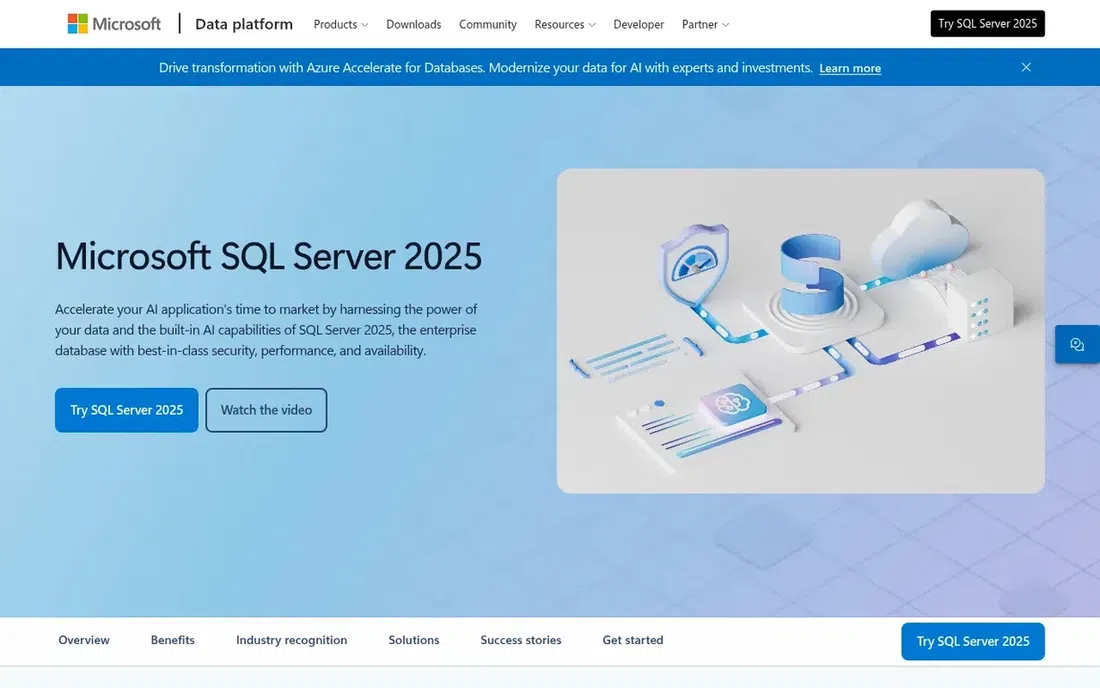
Pick Microsoft SQL Server if this describes you: analytics and AI on existing data. It fits organizations already working in the Microsoft ecosystem that want to accelerate AI initiatives using data they already hold, with tooling that plenty of developers recognize.
Its strengths are most apparent inside Microsoft environments, and licensing structures can be intricate to plan. Microsoft SQL Server shows no starting price here, so confirm the cost on the vendor site. As for free access: Not stated.
What to check first: Best value inside Microsoft stack.
- Integrated analytics and AI
- Developer-first features
- Licensing can be intricate
SAP HANA
Best for: SAP-centric analytics and applications
SAP HANA makes the most sense for SAP-centric analytics and applications. SAP HANA Cloud is described as a single database-as-a-service foundation for modern applications and analytics across all enterprise data.
Points against: Specialized skill requirements.
Its value is most solid inside a SAP landscape, and administration calls for specialized skills. SAP HANA shows no starting price here, so confirm the cost on the vendor site. Free access: Not stated.
- Analytics across enterprise data
- Tight SAP integration
- Most valuable within SAP landscape
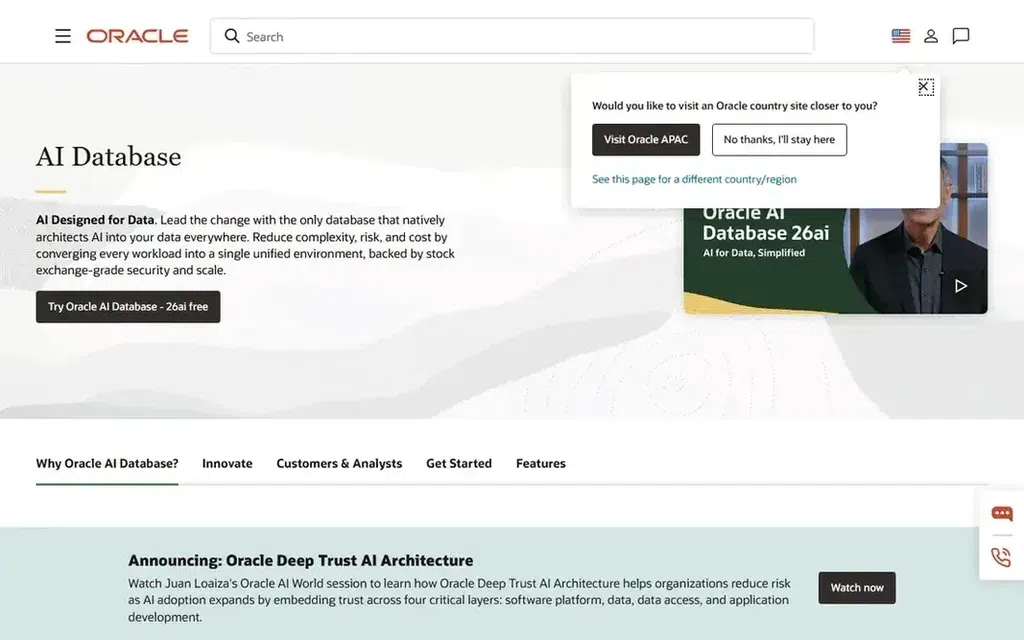
Choose Oracle Database for critical workloads with deep vendor tooling. The trade-off is complexity: administration and tuning demand experienced staff, and the product can be resource-heavy.
Check the vendor site for Oracle Database pricing; none is listed in this comparison. On free options: Not stated.
Trade-offs to know: Heavy resource footprint.
- AI-focused capabilities
- Broad enterprise feature set
- Complicated to administer
MySQL (Oracle)
Best for: Straightforward relational deployments
MySQL (Oracle) is designed for straightforward relational deployments. MySQL is a widely used open-source relational database maintained by Oracle, known for a straightforward relational model and wide familiarity among developers.
Downsides: Fewer advanced analytics features.
It suits teams that want a dependable, well-understood database for web applications and general transactional work without a steep ramp-up time. MySQL (Oracle) does not show a starting price in this comparison, so check the vendor site for current pricing. As for free access: Not stated.
- Widely known relational model
- Straightforward to start
- Complicated scaling at large size
Selection criteria
Pre-purchase checklist
- Ask each vendor, from MongoDB to MySQL (Oracle), for a written quote; none of them publishes a starting price.
- Look at the free plan from MongoDB closely: its caps decide whether it is usable for real work.
- Before choosing MongoDB, weigh its main limit: schema design needs discipline.
- Ask the daily users to test MongoDB on a live task before you roll it out to everyone.
- Map your must-have features to a specific SAP HANA plan before you compare prices.
FAQ
How are the tools for support for database software ordered?
MongoDB sits first and MySQL (Oracle) last because the order follows typical fit for support for database software, then price clarity and free access. It is a judgement call, so read each profile for fit and limits.
Which options for support for database software have a free plan?
MongoDB is the only tool in this list with a free plan. Free plans usually cap users, projects or features, so check the limits on the vendor page. All 5 picks in this support for database software comparison list a starting price, free plan details and the main limits on their cards above.
Do these tools publish their prices?
No. None of the tools, from MongoDB to MySQL (Oracle), shows a fixed starting price here, so budget time for quotes.
How do I evaluate support before committing?
Review the vendor's documentation, support channels and the administration burden each system places on your team. Confirm deployment choices and skill requirements straight on vendor sites, since details can change.
Is open-source Postgres a fit for enterprise support needs?
EnterpriseDB offers EDB Postgres AI on the open-source PostgreSQL foundation, targeted at organizations wanting sovereignty and infrastructure control. It can fit enterprise needs, though running Postgres at scale still needs operational expertise.
Can I try these options before paying?
Often, yes. MongoDB has a free plan. Use your own data and a real task during the test, and check what the free tier or trial limits before you rely on it. For the full picture, the cards above cover all 5 entries of this support for database software list, including price, free plan and limits.
Sources
- https://www.mongodb.com
- https://www.microsoft.com/en-us/sql-server
- https://www.sap.com/products/technology-platform/hana.html
- https://www.oracle.com/database
- https://www.mysql.com