Best Database Software Support Services in 2026: 8 Services Compared
Compare the best database software support services for Oracle, SQL Server, MongoDB and PostgreSQL, with support levels, tools and pricing for business teams.
- Editor's choice
 Oracle Database Support
Oracle database estates
Starts atSee websiteVisit oracle.comFull review - Great alternative
 Microsoft Unified Support
SQL Server and Azure estates
Starts atSee websiteVisit microsoft.comFull review - Also consider
 MongoDB Support
MongoDB Atlas and self-managed
Starts atSee websiteVisit mongodb.comFull review
TL;DR:
- Vendor support from Oracle, Microsoft and MongoDB suits teams that run that vendor database as a core system.
- Independent support from EnterpriseDB and Percona suits teams that want help across open-source databases without vendor lock-in.
- Monitoring tools such as Redgate Monitor, SolarWinds and Quest Foglight help teams spot problems early, but they are not a substitute for a support contract.
- Always check response times, coverage hours and whether support includes performance tuning, patching and incident help, not just break-fix calls.
- Price support by database count, size and criticality, not by a single headline rate, because most enterprise support is quoted.
Quick comparison
| Tool | Best for | Starts at | Free plan? | |
|---|---|---|---|---|
| Oracle Database Support | Oracle database estates | See website | No | Visit |
| Microsoft Unified Support | SQL Server and Azure estates | See website | No | Visit |
| MongoDB Support | MongoDB Atlas and self-managed | See website | No | Visit |
 EnterpriseDB Support | PostgreSQL estates | See website | No | Visit |
 Percona Support | Open-source databases | See website | No | Visit |
 Redgate Monitor | Monitoring SQL Server and more | $1,233 per server per year | Free trial | Visit |
 SolarWinds Database Performance Analyzer | Performance monitoring | See website | Free trial | Visit |
 Quest Foglight | Database monitoring and tuning | See website | Free trial | Visit |
The best database software support services
Database support covers two needs: help when something breaks, and tools that warn you before it breaks. This list includes vendor support, independent support and monitoring tools, so you can cover both.
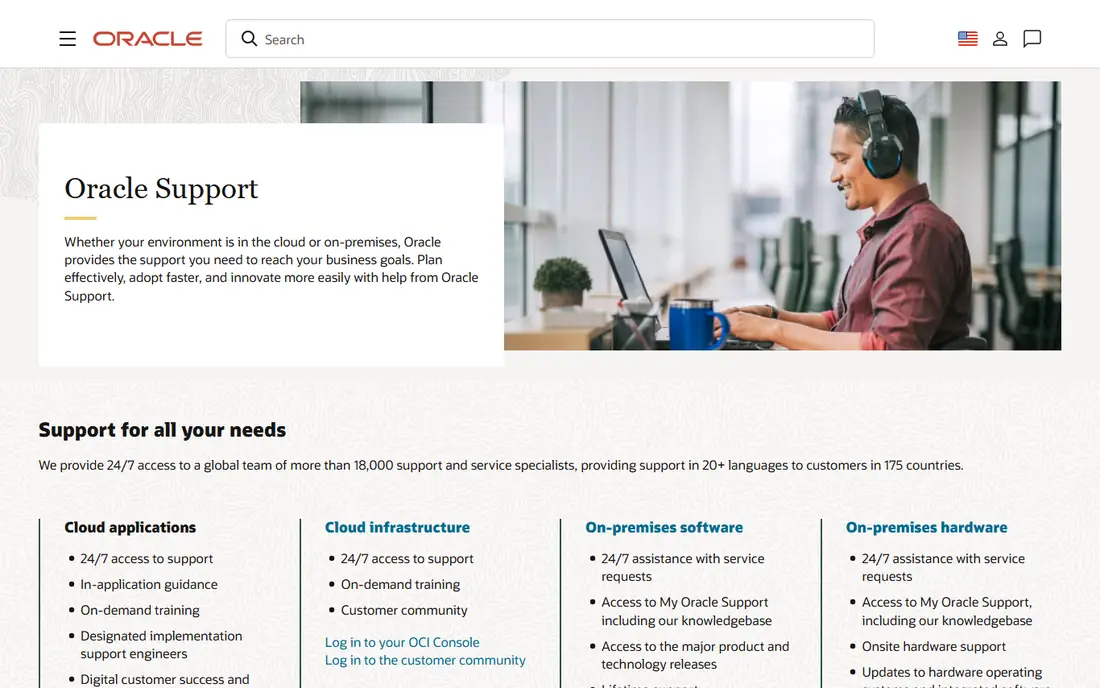
Oracle Database Support is the direct vendor route for teams that run Oracle Database as a core system. It covers patching, security updates, technical help and access to Oracle knowledge resources. For regulated industries and large estates, direct vendor support also simplifies compliance and audit questions.
The downside is cost and complexity. Oracle support pricing is quote-based, tied to licences and support level, and tiers differ on response times and coverage. Small teams with a single Oracle database may find independent support cheaper. Large Oracle estates, though, usually need the vendor route for patches and escalations.
- Direct vendor support for Oracle Database
- Patching and security updates
- Global support organisation
- Pricing is quote-based and can be costly
- Support tiers need careful comparison
Microsoft Unified Support covers SQL Server alongside Azure, Windows and other Microsoft products, which suits companies that already run a Microsoft estate. Support includes reactive help for incidents and proactive services such as assessments and health checks. A single vendor relationship also simplifies procurement.
The trade-off is focus. Unified Support covers many products, so database-specific expertise depends on the support team assigned to your case. Pricing is quote-based, based on your Microsoft spend and support level. If SQL Server is your core database, confirm response times and escalation paths for database incidents specifically.
- Covers SQL Server, Azure and wider Microsoft stack
- Proactive services available
- Single vendor relationship
- Quote-based pricing
- Scope across many products can make database-specific help harder to isolate
MongoDB Support suits teams that run MongoDB, whether on Atlas or self-managed. Vendor support helps with scaling, sharding, replication, performance tuning and upgrades, which are the areas where MongoDB estates most often need expert help. Atlas customers also get support tiers tied to their Atlas plan.
Lower tiers may offer limited response times, while higher tiers with faster response and dedicated help cost more. Check the support level for your Atlas or Enterprise Advanced plan, and confirm coverage hours. For a MongoDB estate that supports a live product, a higher support tier is usually worth the cost.
- Direct vendor support for MongoDB
- Atlas support tiers
- Help with scaling, sharding and performance
- Quote-based for higher tiers
- Self-managed support needs a clear support level
EnterpriseDB, known as EDB, is the leading commercial support provider for PostgreSQL. It supports both EDB Postgres and community PostgreSQL, and it helps companies migrate from Oracle to PostgreSQL, which is a common path for cost saving. Support covers incidents, performance, patching and upgrades.
Pricing is quote-based, based on database count and support level. EDB is PostgreSQL-focused, so teams running many different databases may need a second vendor. For a PostgreSQL estate, though, EDB offers depth that a general support vendor cannot match.
- Deep PostgreSQL expertise
- Support for EDB Postgres and community PostgreSQL
- Migration help from Oracle
- Quote-based pricing
- Best for PostgreSQL, not for multi-database estates
Percona supports open-source databases including MySQL, PostgreSQL and MongoDB, which suits teams that run several open-source systems and want one support vendor. Its team helps with incidents, performance tuning, upgrades and architecture, and it also offers consulting for complex cases.
The limit is that Percona is independent, not the database vendor, so some vendor-specific patches and escalations still need the vendor. Pricing is quote-based, based on environment size and support level. For open-source estates, Percona offers a practical alternative to buying separate vendor support for each database.
- Support across MySQL, PostgreSQL and MongoDB
- Open-source focus
- Performance and consulting help
- Quote-based pricing
- No single vendor database to anchor support
Redgate Monitor, formerly SQL Monitor, gives database teams a single view across SQL Server, PostgreSQL, Oracle, MySQL and MongoDB. It alerts on problems, helps diagnose slow queries, and tracks deployments and query impact. The Standard edition starts at 1,233 dollars per server per year, with a 14-day trial.
The key limit is that monitoring is not support. Redgate Monitor tells you something is wrong and helps you find it, but it does not provide a support engineer to fix it. Pair it with a vendor or independent support contract for critical databases. For teams that need visibility across several database types, it is a strong tool.
- Multi-platform monitoring for SQL Server, PostgreSQL, Oracle, MySQL and MongoDB
- Alerting and diagnosis
- 14-day trial
- Monitoring only, not a support contract
- Enterprise tier is quote-based
SolarWinds Database Performance Analyzer, known as DPA, focuses on performance: which queries wait, why they wait, and what to fix first. It supports SQL Server, Oracle, MySQL, PostgreSQL and other databases, and it helps teams move from guessing about slow queries to evidence-based tuning. A free trial lets you test it on your own estate.
Pricing is quote-based, and DPA needs tuning to avoid alert noise. It is a monitoring and analysis tool, not a support contract, so pair it with vendor or independent support for incident help. For teams whose main pain is slow queries, DPA offers a focused and practical tool.
- Performance analysis across many databases
- Wait-time analysis
- Trial available
- Pricing is quote-based
- Setup and tuning need time to get value
Quest Foglight for Databases monitors and tunes performance across SQL Server, Oracle, MySQL, PostgreSQL and other systems, with dashboards that show health, waits and trends. It suits teams that manage several database types and want one view for performance and capacity. A free trial lets you test it before buying.
As with other monitoring tools, Foglight does not replace a support contract. Pricing is quote-based, and setup takes longer for a team with only one database type. For multi-database teams that need a single performance view, Foglight is a credible choice alongside Redgate Monitor and SolarWinds DPA.
- Monitoring and tuning across many databases
- Performance dashboards
- Trial available
- Pricing is quote-based
- Breadth can mean a longer setup for a single-database team
How we picked these
We compared database support services that are available today, using vendor support pages, pricing pages and product documentation. We included vendor support for Oracle, Microsoft and MongoDB, independent support for PostgreSQL and open-source databases, and monitoring tools that database teams commonly pair with a support contract. Where pricing is quote-based, we wrote See website rather than repeating a third-party estimate as a vendor price.
What to check before you buy
Confirm response times and hours
Support contracts differ on first response time, coverage hours and escalation paths. A contract that responds in four business hours is very different from one that responds in 30 minutes around the clock. Match the contract to how critical each database is to your business.
Check what is included beyond break-fix
Some contracts cover only incidents, while others include performance tuning, patching help, upgrade planning and health checks. Ask for a written list of included services, and check whether consulting hours are separate. The cheapest contract is not cheap if tuning and upgrades cost extra.
Pair monitoring with support
Monitoring tools warn you early, while support contracts help you fix problems fast. Budget for both on critical databases: a monitoring tool such as Redgate Monitor plus a vendor or independent support contract gives you visibility and help together.
FAQ
What is the best database support service overall?
It depends on your database. Oracle Database Support suits Oracle estates, Microsoft Unified Support suits SQL Server and Azure estates, MongoDB Support suits MongoDB, and EnterpriseDB suits PostgreSQL. Percona suits teams running several open-source databases.
How much does database support cost?
Most enterprise database support is quote-based, based on database count, size, support level and response times. Redgate Monitor is an exception with a published price, starting at 1,233 dollars per server per year for Standard. Always request a quote for your estate.
Is monitoring software the same as database support?
No. Monitoring tools such as Redgate Monitor, SolarWinds DPA and Quest Foglight help you spot and diagnose problems, but they do not provide a support engineer to fix them. For critical databases, pair a monitoring tool with a support contract.
Do I need vendor support or independent support?
Vendor support suits teams that need direct patch access and vendor escalation, especially for Oracle, SQL Server and MongoDB. Independent support suits open-source estates and teams that want one vendor across MySQL, PostgreSQL and MongoDB without vendor lock-in.
What should a database support contract include?
At minimum, it should include incident help, clear response times, coverage hours, patching guidance and escalation paths. Stronger contracts add performance tuning, health checks, upgrade planning and a named contact for critical incidents.
Sources
- https://www.oracle.com/support/
- https://www.microsoft.com/en-us/unified-support
- https://www.mongodb.com/support
- https://www.enterprisedb.com
- https://www.percona.com
- https://www.red-gate.com/products/sql-monitor/
- https://www.solarwinds.com/database-performance-analyzer
- https://www.quest.com/products/foglight-for-databases/