Software-Defined Storage Sds in 2026: The 6 Best Options Side by Side
Comparing the best software-defined storage sds? 6 contenders, each with entry cost, free tier and best-fit buyer. Prices and drawbacks included. Plain facts.
- Editor's choiceDataCore SANsymphony
High-performance block storage
Starts atPricing on requestVisit datacore.comFull review - Great alternativeCloudian HyperStore
Economical object storage
Starts atPricing on requestVisit cloudian.comFull review - Also considerScality RING
Scalable object storage
Starts atPricing on requestVisit scality.comFull review
Direct answer
For high-performance block storage, DataCore SANsymphony is where this list starts. Alternatives: Cloudian HyperStore for economical object storage, and Scality RING for scalable object storage. The other 3 tools in the list cover narrower or pricier cases. None of these vendors publish plan prices, so pricing is on request for every option.
TL;DR:
- DataCore SANsymphony sits first on this list: high-performance block storage.
- Neither DataCore SANsymphony nor IBM Storage Ceph, nor any of the other 4 tools, has a permanent free plan; trials and quotes are the norm.
- One limit worth knowing about Cloudian HyperStore: restricted to object storage.
- IBM Storage Ceph suits open-source unified storage.
Last checked November 2026. Pricing on request: vendors did not publish plan prices when this guide was last checked (November 2026), so ask each vendor for a written quote.
Quick comparison
| Tool | Best for | Starts at | Free plan? | |
|---|---|---|---|---|
| DataCore SANsymphony | High-performance block storage | Pricing on request | Not stated | Visit |
| Cloudian HyperStore | Economical object storage | Pricing on request | Free trial | Visit |
| Scality RING | Scalable object storage | Pricing on request | Not stated | Visit |
| Red Hat OpenShift Data Foundation | Container-native persistent storage | Pricing on request | Free trial | Visit |
| HPE Alletra | Cloud-native data infrastructure | Pricing on request | Not stated | Visit |
| IBM Storage Ceph | Open-source unified storage | Pricing on request | Not stated | Visit |
The best software-defined storage sds
This LinkVetted guide covers 6 options for software-defined storage sds. Each profile lists a starting price, free plan details, strengths and drawbacks, so you can drop poor fits quickly.
DataCore SANsymphony
Best for: High-performance block storage
DataCore SANsymphony makes the most sense for high-performance block storage. DataCore SANsymphony is a software-defined block storage option for SAN and HCI environments, offering high-performance storage.
What to check first: Concentrated on block storage.
Also, if you need unified storage, consider IBM Storage Ceph or Scality RING. This comparison lists no price for DataCore SANsymphony; ask the vendor. Free plan details: Not stated.
- High performance
- Supports SAN and HCI
- May lack object storage
Cloudian HyperStore
Best for: Economical object storage
Think of Cloudian HyperStore for economical object storage. Like other object storage options, HyperStore may not support block or file storage natively. On top of that, it may not be right for high-performance block workloads.
Limits to weigh: May lack block/file support.
HyperStore is built to be straightforward to deploy and run. Beyond that, Cloudian HyperStore provides scalable object storage for cost-effective active archive, data protection, and long-term disk-based backup for unstructured data. Pricing for Cloudian HyperStore is not stated here, so ask the vendor for current figures. Free plan details: Free trial.
- Scalable object storage
- Data protection and backup
- Restricted to object storage
Scality RING
Best for: Scalable object storage
Scality RING was built for scalable object storage. Scality RING is scalable, cyber-resilient object storage for AI, cloud, and enterprise workloads with multidimensional scale and high durability. It is built for organizations that need to store and run large amounts of unstructured data.
Honest limits: Object storage only.
In daily use, RING is especially well-suited for cloud-native applications and AI workloads. That said, Scality RING is centred on object storage and may not be the best fit if you need block or file storage. It also may need specialized expertise to deploy and manage. Scality RING does not show a starting price in this comparison, so check the vendor site for current pricing. On free options: Not stated.
Reasons to shortlist it: High durability.
- Cyber-resilient
- Scalable for AI and cloud
- May need expertise
Red Hat OpenShift Data Foundation
Best for: Container-native persistent storage
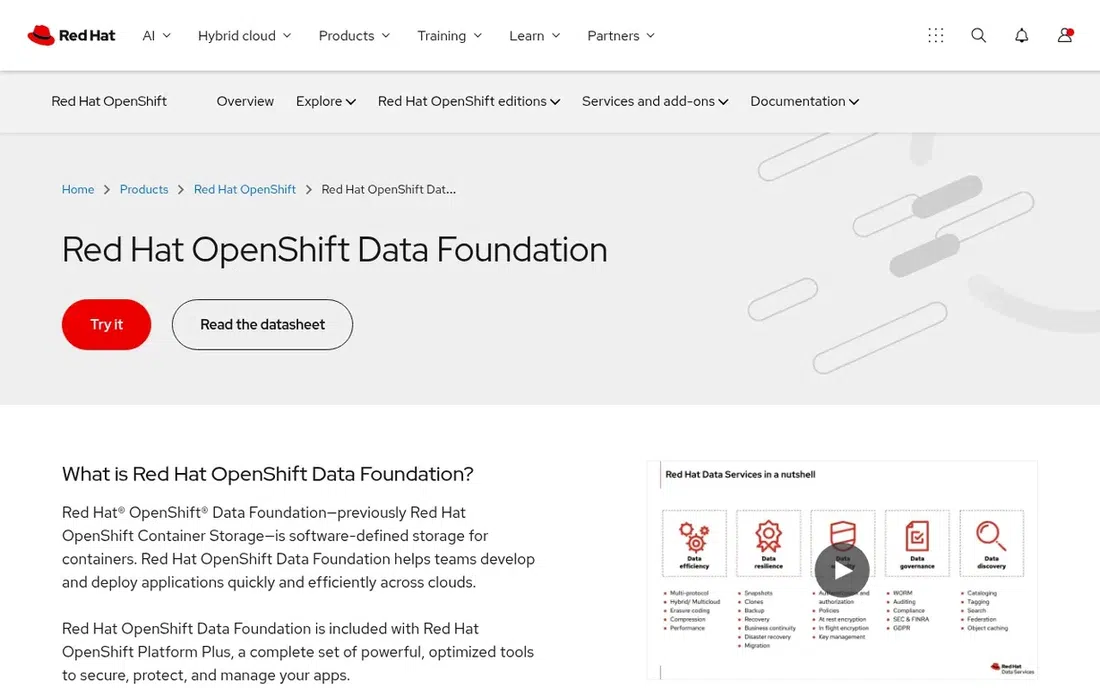
In short, Red Hat OpenShift Data Foundation is for Container-native persistent storage. Red Hat OpenShift Data Foundation is software-defined storage built to provide data a permanent place to live as containers spin up and down and across environments. Worth adding: if you need a more platform-agnostic SDS option, consider alternatives like IBM Storage Ceph or DataCore SANsymphony.
On top of that, the option integrates tightly with the OpenShift product, offering a smooth experience for DevOps teams. On top of that, it needs familiarity with Red Hat technologies. Red Hat OpenShift Data Foundation does not show a starting price in this comparison, so check the vendor site for current pricing. Free plan details: Free trial.
Points against: Restricted to OpenShift ecosystem.
- Works across environments
- Integrated with OpenShift
- Needs Red Hat expertise
HPE Alletra
Best for: Cloud-native data infrastructure
In short, HPE Alletra is for cloud-native data infrastructure. HPE Alletra Storage is a cloud-native data infrastructure portfolio that makes it possible for you to smoothly run any app with a cloud experience for every workload. It is built for organizations looking to modernize their storage with cloud-like agility and simplicity.
On top of that, if you need a more hardware-agnostic SDS, consider IBM Storage Ceph or DataCore SANsymphony. As for the details, Alletra aims to supply a consistent experience across on-premises and cloud environments. The option is tightly integrated with HPE's ecosystem, which may limit adaptability if you use multi-vendor hardware. HPE Alletra does not show a starting price in this comparison, so check the vendor site for current pricing. As for free access: Not stated.
Limits to weigh: Tied to HPE ecosystem.
- Smooth app running
- Cloud experience for every workload
- May need HPE hardware
IBM Storage Ceph
Best for: Open-source unified storage
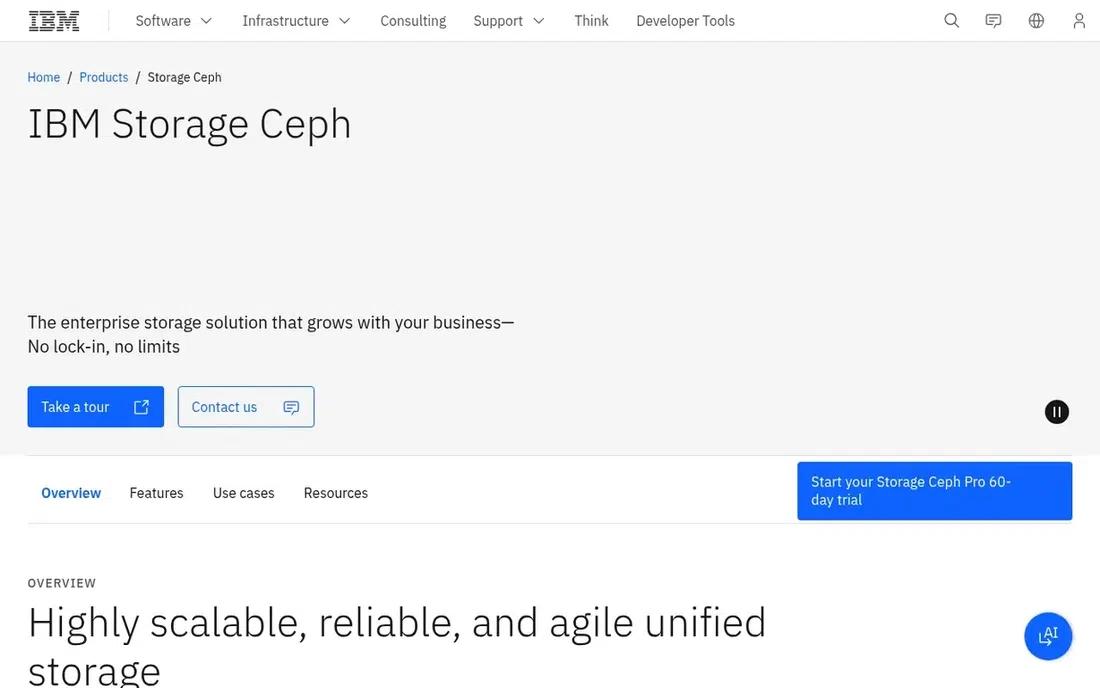
Choose IBM Storage Ceph for open-source unified storage. If you need a more turnkey option, consider HPE Alletra or DataCore SANsymphony. IBM Storage Ceph is an IBM-supported, open-source, software-defined storage platform that supplies scalable object, block, and file storage in a single system.
Points against: Management can be complicated.
It is well suited to organizations seeking an adaptable, open-source option that can manage diverse workloads. That said, Ceph can be complicated to run and needs Linux expertise. It may not be the best fit for teams without dedicated storage administrators. IBM Storage Ceph shows no starting price here, so confirm the cost on the vendor site. As for free access: Not stated.
- Scalable object, block, file
- IBM-supported
- Needs Linux expertise
How we chose
Selection started from tools commonly considered for software-defined storage sds, then narrowed to 6 that have clear pricing information or a clear quote process. Where a price is missing, the vendor does not list one publicly or ties it to a quote. Always confirm before budgeting. Position on the page reflects fit for a typical buyer first, with price clarity and free access breaking ties. Treat it as a guide, not a ruling.
What to check before you buy
- Request quotes from DataCore SANsymphony, IBM Storage Ceph and the others; the list shows no fixed prices.
- Take the trial from Cloudian HyperStore and Red Hat OpenShift Data Foundation and push a live task through it before you pay.
- Before choosing DataCore SANsymphony, weigh its main limit: concentrated on block storage.
- Let daily users try DataCore SANsymphony on real work; their feedback beats any feature checklist.
- Read the plan comparison for IBM Storage Ceph carefully; key features often start on a higher tier.
FAQ
Is DataCore SANsymphony the right pick for everyone comparing software-defined storage sds?
No single tool suits every team. DataCore SANsymphony comes first because it fits high-performance block storage, while Cloudian HyperStore suits cost-effective object storage and Scality RING suits scalable object storage. Match the tool to your own size, budget and workflow before deciding.
How are the tools for software-defined storage sds ordered?
DataCore SANsymphony sits first and IBM Storage Ceph last because the order follows typical fit for software-defined storage sds, then price clarity and free access. It is a judgement call, so read each profile for fit and limits.
Do these tools publish their prices?
No. None of the tools, from DataCore SANsymphony to IBM Storage Ceph, shows a fixed starting price here, so budget time for quotes.
What should I consider when choosing a SDS option?
Consider the storage types you need (block, file, object), compatibility with your existing environment, management complexity, scalability, and support. Also evaluate whether you prefer an open-source or commercial option. Confirm licensing and support choices with vendors.
Does any tool for software-defined storage sds here have a free plan?
No tool in this list, DataCore SANsymphony and IBM Storage Ceph included, has a permanent free plan. Cloudian HyperStore, Red Hat OpenShift Data Foundation offer a trial. Trials and quotes are the usual route, so plan a short evaluation period.
Sources
- https://www.datacore.com/products/sansymphony
- https://cloudian.com/products/hyperstore
- https://www.scality.com/ring
- https://www.redhat.com/en/technologies/cloud-computing/openshift-data-foundation
- https://www.hpe.com/us/en/storage/alletra.html
- https://www.ibm.com/products/storage-ceph