Top 5 Cloud Platforms for Customer Data Storage for 2026 (Prices and Free Plans)
Need the best cloud platforms for customer data storage? We compare 5 tools on cost, free access and who each suits. Short verdicts, no fluff. Start here.
- Editor's choiceMicrosoft Azure SQL Database
Managed relational customer records
Starts atPricing on requestVisit azure.microsoft.comFull review - Great alternative
 Amazon Redshift
AWS-based customer data warehousing
Starts atPricing on requestVisit aws.amazon.comFull review - Also consider
 MongoDB Atlas
Adaptable document-based customer data
Starts atPricing on requestVisit mongodb.comFull review
Direct answer
Microsoft Azure SQL Database comes first here, mainly for managed relational customer records. If your case is different, Amazon Redshift suits AWS-based customer data warehousing and MongoDB Atlas suits adaptable document-based customer data. Free plan facts and limits for all 5 tools follow. None of these vendors publish plan prices, so pricing is on request for every option.
TL;DR:
- Microsoft Azure SQL Database takes the first slot, best suited to managed relational customer records.
- Before buying Amazon Redshift, weigh this: warehouse focus, not app transactions.
- Neither Microsoft Azure SQL Database nor Google BigQuery, nor any of the other 3 tools, has a permanent free plan; trials and quotes are the norm.
- Google BigQuery suits analytics and AI on customer data.
Last checked November 2026. Pricing on request: vendors did not publish plan prices when this guide was last checked (November 2026), so ask each vendor for a written quote.
Quick comparison
| Tool | Best for | Starts at | Free plan? | |
|---|---|---|---|---|
| Microsoft Azure SQL Database | Managed relational customer records | Pricing on request | Not stated | Visit |
| Amazon Redshift | AWS-based customer data warehousing | Pricing on request | Not stated | Visit |
| MongoDB Atlas | Adaptable document-based customer data | Pricing on request | Not stated | Visit |
 Databricks | Unified data, analytics and AI | Pricing on request | Not stated | Visit |
 Google BigQuery | Analytics and AI on customer data | Pricing on request | Not stated | Visit |
Cloud Platforms for Customer Data Storage compared in detail
Choosing cloud platforms for customer data storage usually comes down to price, fit and limits. This LinkVetted guide sets 5 tools side by side on those three points, with the facts kept short and checkable.
Microsoft Azure SQL Database
Best for: Managed relational customer records
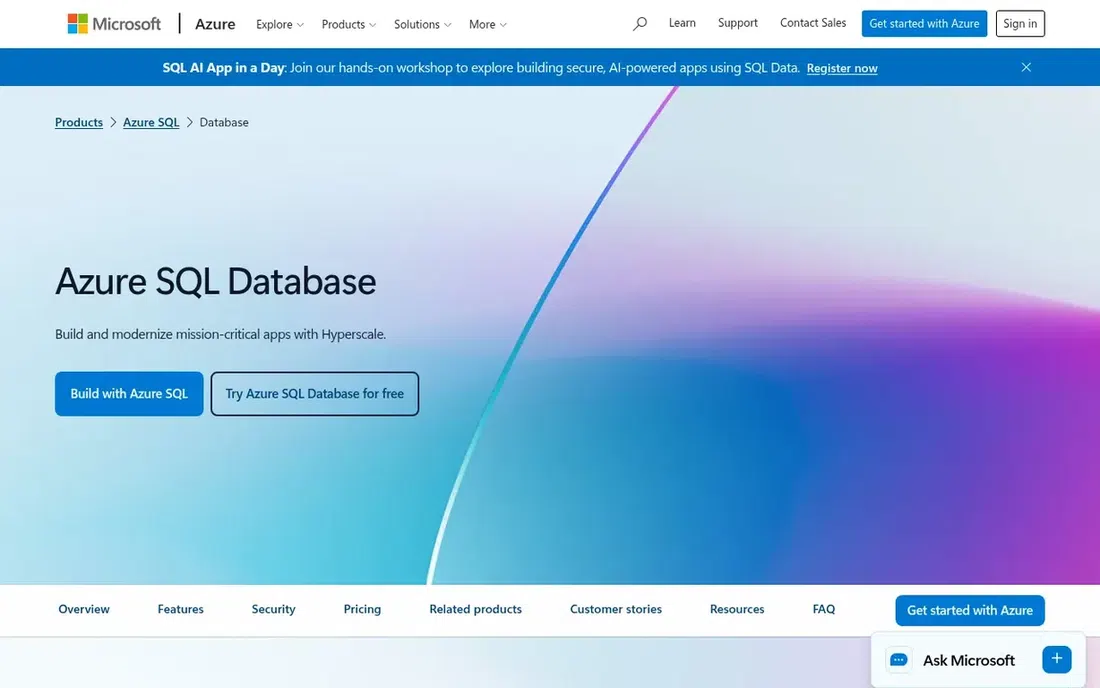
Choose Microsoft Azure SQL Database for managed relational customer records. Azure SQL Database is a completely managed cloud relational database from Microsoft, aimed at high performance and reliability with automation for building and scaling apps.
Watch-outs: Relational schema needs planning.
Consider it when predictable structure and managed relational reliability are the priorities. A relational model means schema decisions matter, and highly variable or document-shaped customer data can become awkward. Microsoft Azure SQL Database does not show a starting price in this comparison, so check the vendor site for current pricing. On free options: Not stated.
- Build and scale apps with automation
- Made for high performance and reliability
- Less suited to unstructured customer data
Amazon Redshift is a good fit for AWS-based customer data warehousing. Redshift is made for analytical queries instead of serving live application traffic, so transactional customer workloads belong elsewhere. It also rewards teams with warehouse tuning experience.
Where it falls short: Tuning large workloads takes expertise.
For customer data storage, it fits teams that consolidate customer records into a warehouse for reporting and analysis, notably those already running workloads on AWS and wanting a familiar managed service. Amazon Redshift is a quick, completely managed cloud data warehouse that makes it straightforward and economical to analyze all your data, based on AWS. No starting price is listed for Amazon Redshift here; confirm pricing on the vendor site. As for free access: Not stated.
- Completely managed cloud data warehouse
- Suits AWS-centric environments
- Warehouse focus, not app transactions
MongoDB Atlas is built with adaptable document-based customer data in mind. MongoDB Atlas is a managed cloud database built on the document model, which MongoDB says eliminates operational complexity whereas supporting resilience, scalability and enterprise-grade security.
The document model asks teams to rethink modeling habits formed around relational databases, and heavy analytical reporting may call for extra tooling. MongoDB Atlas shows no starting price here, so confirm the cost on the vendor site. Free plan details: Not stated.
What to check first: Complicated reporting may need extra tooling.
- Resilience and scalability focus
- Enterprise-grade security features
- Document modeling differs from SQL habits
Think of Databricks for unified data, analytics and AI. Databricks supplies a unified system for data, analytics and AI, with a data-centric approach that eases ETL, data warehousing, governance and AI work.
What to check first: Wide product needs onboarding effort.
For customer data storage, it suits organizations that want to combine storage with transformation and machine learning pipelines on the same system, notably where data engineering teams are already established. On top of that, if you only need a managed database behind an app, a more straightforward service is likely a better match. Check the vendor site for Databricks pricing; none is listed in this comparison. Free options: Not stated.
- Unified product for data and AI
- Contains governance capabilities
- Overkill for straightforward storage needs
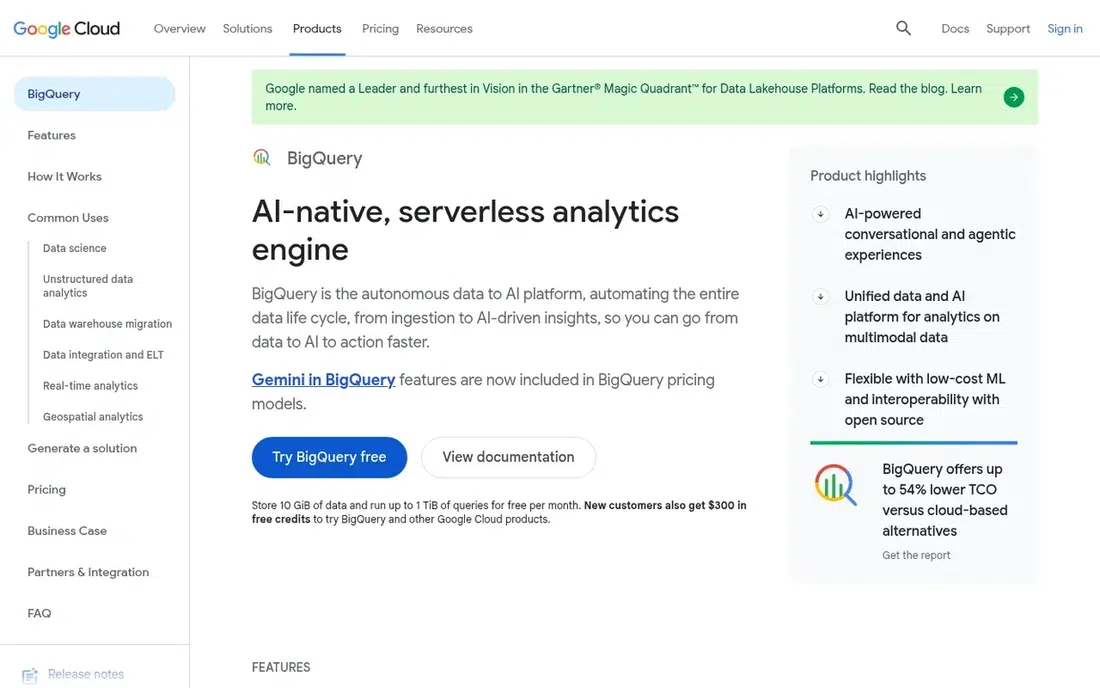
Google BigQuery is a good fit for analytics and AI on customer data. BigQuery is Google Cloud's autonomous data and AI system, positioned around automating the entire data life cycle so teams move from data to AI to action quicker.
As for the details, teams needing application backends should pair it with a relational or document database. Pricing for Google BigQuery is not stated here, so ask the vendor for current figures. Trial and free access: Not stated.
Honest limits: Needs analytics skills to use well.
- Supports data-to-AI workflows
- Autonomous data and AI product
- Warehouse model may not suit transactional apps
How these tools were picked
LinkVetted looked at what each vendor publishes: pricing, plan limits, feature coverage for cloud platforms for customer data storage and stated drawbacks. No hands-on testing is claimed. Where a vendor does not publish a price, the entry says quote. Where a price depends on seats or billing term, the entry says so. The ranking is editorial: typical fit first, then clear pricing, then free access. If your needs are unusual, read the profiles rather than relying on position.
A buyer's checklist
- Confirm the entry price with every vendor: no tool from Microsoft Azure SQL Database to Google BigQuery shows a fixed starting price.
- Before choosing Microsoft Azure SQL Database, weigh its main limit: Relational schema needs planning.
- Read the plan comparison for MongoDB Atlas carefully; key features often start on a higher tier.
- A short pilot of Microsoft Azure SQL Database with your real workflow tells you more than a feature table.
- Work out what Amazon Redshift costs with your real seat count, add-ons and usage, not just the entry price.
FAQ
How are the tools for cloud platforms for customer data storage ordered?
The order follows typical fit for cloud platforms for customer data storage, with Microsoft Azure SQL Database first and Google BigQuery last, then price clarity and free access. It is editorial judgement, not a score, so another team could rank the tools differently.
Can I try these tools before paying?
Not by default. None of the tools, from Microsoft Azure SQL Database to Google BigQuery, lists a free plan or a free trial here, so ask each vendor for a demo before committing.
Do these tools publish their prices?
No. None of the tools, from Microsoft Azure SQL Database to Google BigQuery, shows a fixed starting price here, so budget time for quotes.
Does any tool for cloud platforms for customer data storage here have a free plan?
No tool in this list, Microsoft Azure SQL Database and Google BigQuery included, has a permanent free plan. Trials and quotes are the usual route, so plan a short evaluation period.
Sources
- https://azure.microsoft.com/en-us/products/azure-sql/database
- https://aws.amazon.com/redshift
- https://www.mongodb.com/products/platform/atlas-database
- https://www.databricks.com
- https://cloud.google.com/bigquery