Choosing Smart Cities Software in 2026: 6 Options Compared
Weighing the best smart cities software? We lined up 6 products by cost, free access and fit. Each profile ends with a plain caveat. Skim the table first.
- Editor's choice
 IBM Maximo Application Suite
Asset maintenance and reliability
Starts atPricing on requestVisit ibm.comFull review - Great alternativeSchneider Electric EcoStruxure
OT and IT integration
Starts atPricing on requestVisit se.comFull review - Also considerCisco Kinetic
Edge-to-cloud IoT data movement
Starts atPricing on requestVisit cisco.comFull review
Direct answer
IBM Maximo Application Suite leads the list, best for asset maintenance and reliability. For a different need, Schneider Electric EcoStruxure covers OT and IT integration and Cisco Kinetic covers edge-to-cloud IoT data movement. Free plan facts and limits for all 6 tools follow. None of these vendors publish plan prices, so pricing is on request for every option.
TL;DR:
- IBM Maximo Application Suite takes the first slot, best suited to asset maintenance and reliability.
- AWS IoT Core stands alone as the one tool in this list with a free plan.
- IBM Maximo Application Suite, Verizon ThingSpace and the 4 others all sell by quote; expect sales conversations before you see a price.
- Verizon ThingSpace is the one to check for Cellular IoT connectivity services.
- A fair warning about IBM Maximo Application Suite: wide suite can be complicated to scope.
Last checked November 2026. Pricing on request: vendors did not publish plan prices when this guide was last checked (November 2026), so ask each vendor for a written quote.
Quick comparison
| Tool | Best for | Starts at | Free plan? | |
|---|---|---|---|---|
| IBM Maximo Application Suite | Asset maintenance and reliability | Pricing on request | Not stated | Visit |
| Schneider Electric EcoStruxure | OT and IT integration | Pricing on request | Not stated | Visit |
| Cisco Kinetic | Edge-to-cloud IoT data movement | Pricing on request | Not stated | Visit |
 AWS IoT Core | Secure device connectivity on AWS | Pricing on request | Yes | Visit |
| Cisco Meraki | Cloud-managed city networking | Pricing on request | Not stated | Visit |
| Verizon ThingSpace | Cellular IoT connectivity services | Pricing on request | Not stated | Visit |
Smart Cities Software, one by one
LinkVetted compared 6 tools for smart cities software. The goal is a practical shortlist: published prices, free plan facts, best-fit use cases and honest limits for every entry.
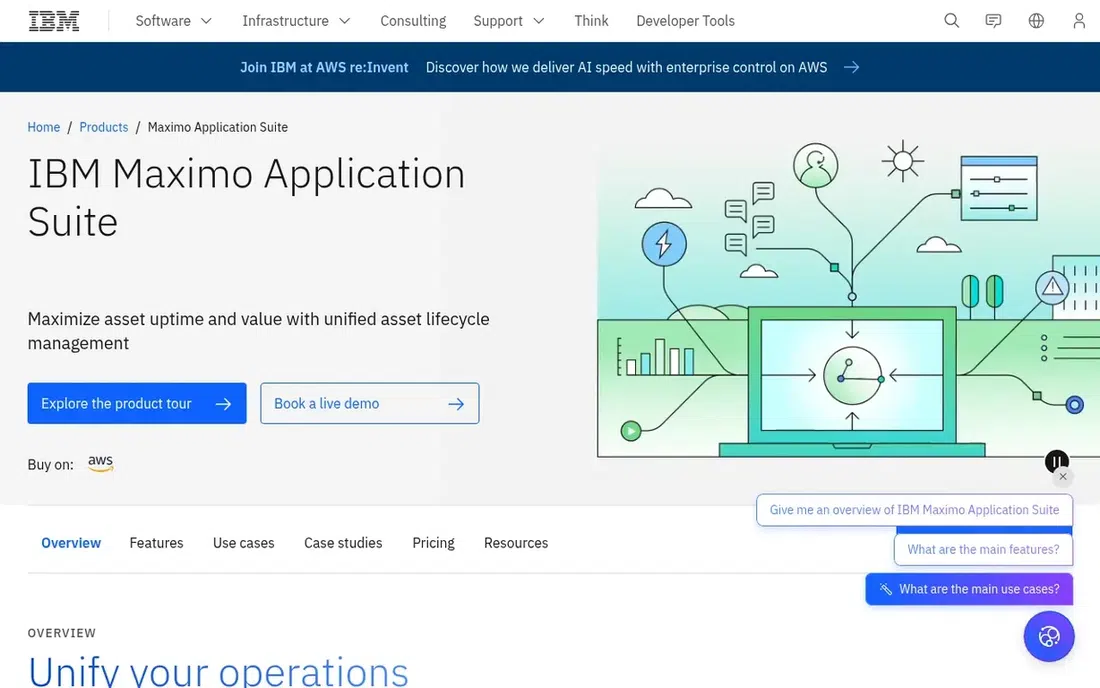
For asset maintenance and reliability, IBM Maximo Application Suite is a natural candidate. For cities, that maps to fleets, facilities, utilities and other long-lived infrastructure that require structured maintenance.
Limits to weigh: Wide suite can be complicated to scope.
From a buyer's view, the suite spans plenty of capabilities, so scoping and data preparation take real effort, and smaller operations may find it heavier than needed. IBM Maximo Application Suite does not show a starting price in this comparison, so check the vendor site for current pricing. Free access: Not stated.
- Supports maintenance and cost control
- AI insights for asset management
- Implementation demands data discipline
Schneider Electric EcoStruxure
Best for: OT and IT integration
Pick Schneider Electric EcoStruxure if this describes you: OT and IT integration. Schneider Electric EcoStruxure is described as a digital backbone connecting operational technology options with IT technology to unlock value in operations.
Also, if your estate is mixed across numerous vendors with no common OT backbone, weigh integration effort carefully before committing. In daily use, in a city context, that means linking energy, building and infrastructure systems into a typical layer for monitoring and control. Schneider Electric EcoStruxure shows no starting price here, so confirm the cost on the vendor site. Free plan details: Not stated.
Watch-outs: Value relies on Schneider equipment.
- Built around an open system approach
- Links operational and IT technology
- Multi-site rollouts need careful design
Cisco Kinetic
Best for: Edge-to-cloud IoT data movement
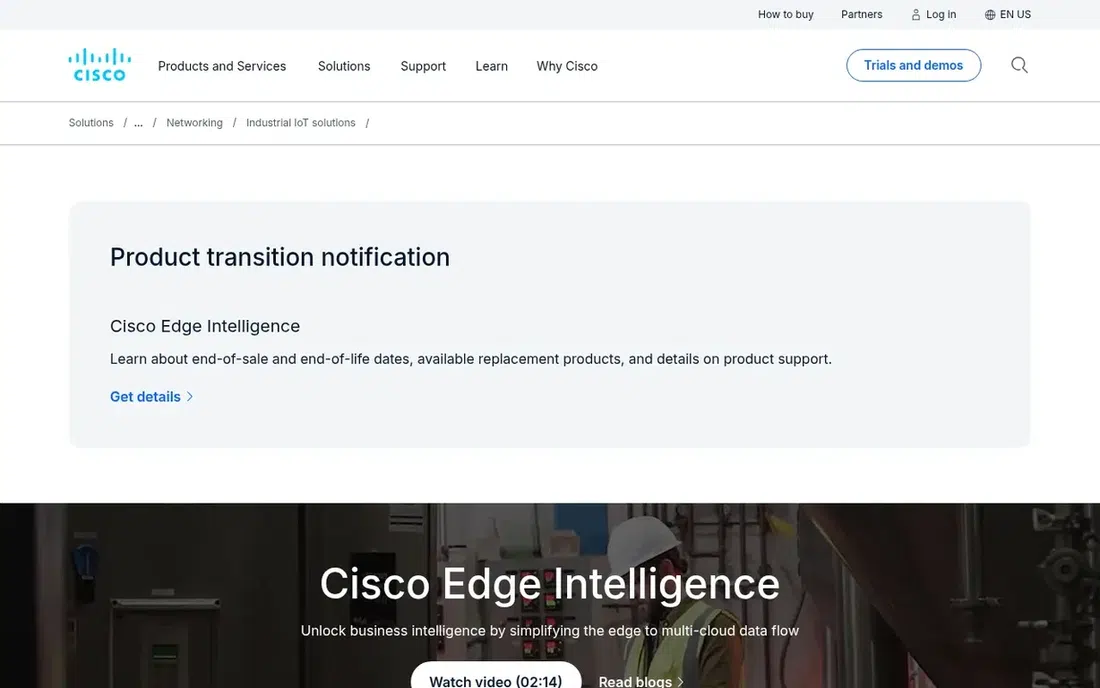
Cisco Kinetic targets edge-to-cloud IoT data movement. Cisco Kinetic is an IoT data product built to ease edge-to-multi-cloud data flow. It lets organizations securely extract and share IoT data with applications, which supports the kind of distributed sensor and device estates typical in city operations.
Teams without Cisco infrastructure, or those wanting a single-cloud approach, may prefer a cloud-native IoT service instead. The system assumes a degree of Cisco ecosystem familiarity, and the overlap with other Cisco IoT offerings can complicate product selection. This comparison lists no price for Cisco Kinetic; ask the vendor. As for free access: Not stated.
Drawbacks to consider: Needs Cisco-centric infrastructure knowledge.
- Extracts and shares data securely
- Moves IoT data from edge to several clouds
- Overlaps with other Cisco IoT products
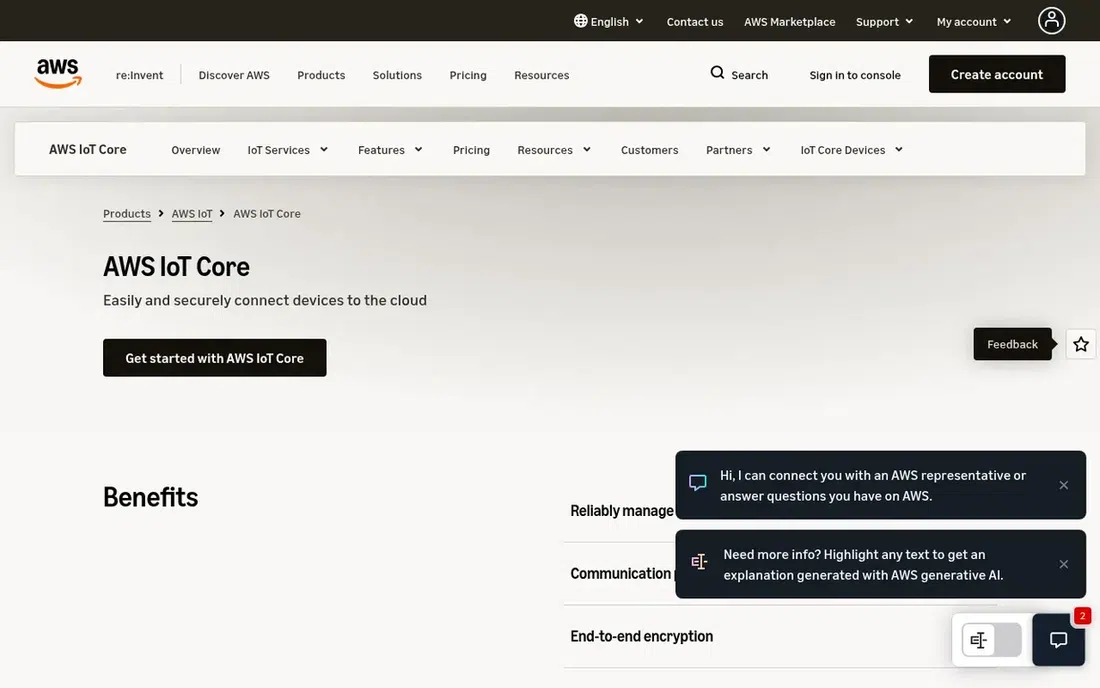
In short, AWS IoT Core is for secure device connectivity on AWS. Consider it when AWS is already your product; otherwise evaluate a comparable service on your existing cloud.
No starting price is listed for AWS IoT Core here; confirm pricing on the vendor site. Free access exists with AWS IoT Core.
The main drawbacks: Configuration needs cloud expertise.
- Two-way communication with connected devices
- Device gateway and SDK capabilities
- Best value inside the AWS ecosystem
Cisco Meraki
Best for: Cloud-managed city networking
Cisco Meraki is built with cloud-managed city networking in mind. For smart city programs, it is the connectivity layer behind cameras, sensors, public Wi-Fi and connected facilities, managed through a centralized cloud interface. As for the details, Meraki is a networking product, so it does not deliver city analytics or asset management on its own.
The hardware ties you to a single vendor. Pair it with an IoT or data product when the goal is insight instead of connectivity. Cisco Meraki shows no starting price here, so confirm the cost on the vendor site. On free options: Not stated.
Downsides: Hardware tied to one vendor.
- Cloud-managed networking dashboard
- Supports safer
- Networking focus, not city analytics
Verizon ThingSpace
Best for: Cellular IoT connectivity services
Verizon ThingSpace was built for Cellular IoT connectivity services. Coverage and service choices rely on the Verizon network, which matters for jurisdictions outside its footprint, and product depth can vary by use case. Beyond that, Verizon ThingSpace spans IoT systems, services and options that help organizations use connected data across their operations.
It is a natural fit for city devices spread across broad areas, for example sensors and monitoring equipment that benefit from cellular connectivity instead of local networks. As for the details, where devices sit on private networks or fixed sites, a network-management or edge system may be the more solid choice. Verizon ThingSpace shows no starting price here, so confirm the cost on the vendor site. Free plan details: Not stated.
Watch-outs: Product depth varies by use case.
- Fits widely distributed devices
- IoT services backed by a carrier network
- Relies on Verizon network coverage
How these tools were picked
LinkVetted used vendor pricing pages and product documentation as the base, then compared plans, free access and documented limits for 6 tools. Where a vendor does not publish a price, the entry says quote. Where a price depends on seats or billing term, the entry says so. Tools are placed by general fit for smart cities software, with price clarity and free access as tie-breakers. A different team can reasonably rank them differently.
What to check before you buy
- Request quotes from IBM Maximo Application Suite, Verizon ThingSpace and the others; the list shows no fixed prices.
- Test the free plan from AWS IoT Core against your real workload before relying on it.
- Before choosing IBM Maximo Application Suite, weigh its main limit: wide suite can be complicated to scope.
- Total up the real monthly cost of AWS IoT Core, including add-ons, extra users and usage-based fees.
- See whether IBM Maximo Application Suite offers onboarding or training, and whether it is included in the price.
FAQ
Can I try these options before paying?
Often, yes. AWS IoT Core has a free plan. Use your own data and a real task during the test, and check what the free tier or trial limits before you rely on it. Each of the 6 options in this smart Cities software guide has its own card above with the price, free plan and limits.
Which options for smart cities software have a free plan?
AWS IoT Core is the only tool in this list with a free plan. Free plans usually cap users, projects or features, so check the limits on the vendor page. All 6 picks in this smart Cities software comparison list a starting price, free plan details and the main limits on their cards above.
How do I choose between an IoT platform and a networking system?
Choose an IoT product when the priority is ingesting and acting on device data. A networking product when the priority is steady connectivity and centralized management across sites. Map your gaps before shortlisting vendors.
How are the tools for smart cities software ordered?
The order follows typical fit for smart cities software, with IBM Maximo Application Suite first and Verizon ThingSpace last, then price clarity and free access. It is editorial judgement, not a score, so another team could rank the tools differently.
Do these tools publish their prices?
No. None of the tools, from IBM Maximo Application Suite to Verizon ThingSpace, shows a fixed starting price here, so budget time for quotes.
Sources
- https://www.ibm.com/products/maximo
- https://www.se.com/ww/en/work/campaign/innovation/overview.jsp
- https://www.cisco.com/c/en/us/solutions/internet-of-things/kinetic.html
- https://aws.amazon.com/iot-core
- https://meraki.cisco.com
- https://www.verizon.com/business/products/internet-of-things