Choosing Remote Patient Monitoring Software for Enterprise in 2026: 6 Options Compared
Need the best remote patient monitoring software for enterprise? We compare 6 tools on cost, free access and who each suits. Read the caveats before you buy.
- Editor's choiceCadence
Chronic care management at scale
Starts atPricing on requestVisit cadence.careFull review - Great alternativeBiofourmis
AI-driven virtual care and RPM
Starts atPricing on requestVisit biofourmis.comFull review - Also considerHealth Recovery Solutions
RPM, CCM, and telehealth options
Starts atPricing on requestVisit healthrecoverysolutions.comFull review
Direct answer
This list puts Cadence first for chronic care management at scale. If your case is different, Biofourmis suits AI-driven virtual care and RPM and Health Recovery Solutions suits RPM, CCM, and telehealth solutions. All 6 tools are compared below on fit, free plan and limits. None of these vendors publish plan prices, so pricing is on request for every option.
TL;DR:
- Cadence sits first on this list: chronic care management at scale.
- No starting price is shown for any of the 6 tools, Cadence and Philips Healthcare included, so plan time for sales calls.
- For Hospital-grade monitoring and informatics, Philips Healthcare is worth a look.
- Neither Cadence nor Philips Healthcare, nor any of the other 4 tools, has a permanent free plan; trials and quotes are the norm.
- Health Recovery Solutions comes with a trade-off: may be less known for enterprise scale.
Last checked November 2026. Pricing on request: vendors did not publish plan prices when this guide was last checked (November 2026), so ask each vendor for a written quote.
Quick comparison
| Tool | Best for | Starts at | Free plan? | |
|---|---|---|---|---|
| Cadence | Chronic care management at scale | Pricing on request | Not stated | Visit |
| Biofourmis | AI-driven virtual care and RPM | Pricing on request | Not stated | Visit |
| Health Recovery Solutions | RPM, CCM, and telehealth options | Pricing on request | Not stated | Visit |
| Epic Systems | Integrated RPM within Epic EHR | Pricing on request | Not stated | Visit |
 Oracle Health | Secure, scalable health options | Pricing on request | Not stated | Visit |
| Philips Healthcare | Hospital-grade monitoring and informatics | Pricing on request | Not stated | Visit |
6 options for remote patient monitoring software for enterprise in detail
If you are comparing remote patient monitoring software for enterprise, this page covers 6 tools in one place: what each is best for, what it costs to start, whether it has a free plan, and the main limit to know about.
Cadence
Best for: Chronic care management at scale
Cadence is built with chronic care management at scale in mind. Cadence provides remote patient monitoring and chronic disease management that boosts outcomes and cuts cost at scale. Its clinical AI and intelligent senior care approach concentrates on working ahead to anticipate patient needs.
It is well-suited for enterprises managing large populations with chronic conditions, such as accountable care organizations and senior care providers. Worth adding: Cadence is optimized for chronic care, so organizations with significant acute or post-acute RPM needs may need extra options. For everyday use, integration specifics are not in-depth on the homepage. No starting price is listed for Cadence here; confirm pricing on the vendor site. Trial and free access: Not stated.
Points against: Restricted public integration details.
- Scalable remote monitoring
- Focus on chronic disease management
- Less emphasis on acute care
Biofourmis
Best for: AI-driven virtual care and RPM
Biofourmis was built for AI-driven virtual care and RPM. Biofourmis partners with healthcare organizations and life science companies to provide options that help expand the delivery of care to everyone, everywhere.
The main drawbacks: May need integration effort.
Its system merges remote patient monitoring with advanced analytics and virtual care capabilities, making it a fit for health systems and life sciences businesses aiming to deliver proactive, data-driven care at scale. Biofourmis shows no starting price here, so confirm the cost on the vendor site. Trial and free access: Not stated.
- AI-powered analytics
- Partnerships with health organizations
- Restricted public feature details
Health Recovery Solutions
Best for: RPM, CCM, and telehealth options
Think of Health Recovery Solutions for RPM, CCM, and telehealth options. Health Recovery Solutions (HRS) provides remote patient care with RPM, chronic care management, longitudinal virtual care, and telehealth options. It aims to drive better outcomes and operational efficiency for healthcare organizations.
Worth adding: Whereas HRS gives you a full suite, its enterprise scalability and depth may vary by module. Worth adding: organizations with highly specialized needs might need extra products. This comparison lists no price for Health Recovery Solutions; ask the vendor. Free options: Not stated.
Where it falls short: Feature depth varies by module.
- Longitudinal virtual care
- Comprehensive RPM and CCM
- May be less known for enterprise scale
Epic Systems
Best for: Integrated RPM within Epic EHR
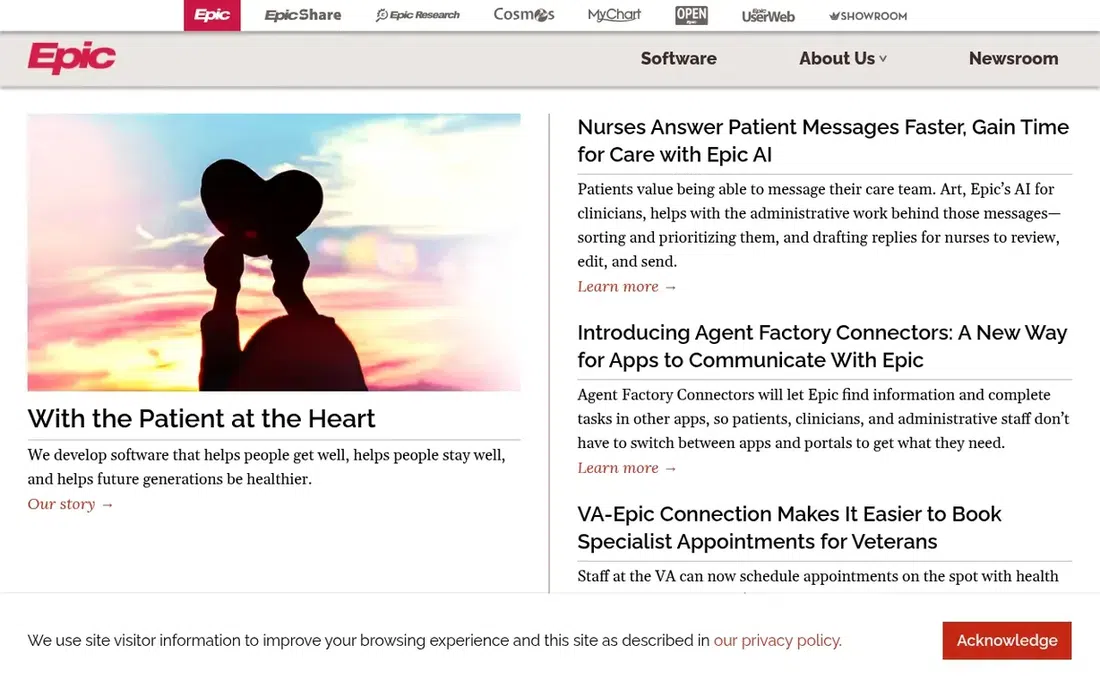
Epic Systems is designed for integrated RPM within Epic EHR. Epic Systems develops software that helps people get well and stay well, with a focus on putting the patient at the heart. Its remote patient monitoring capabilities are built into the Epic EHR, enabling smooth data flow and workflow integration for organizations already using Epic.
This makes it a solid fit for large health systems seeking a unified patient record and RPM within their existing Epic environment. Implementation can be complex and time-consuming. Also, organizations not on Epic should consider standalone RPM products that offer adaptable integration. Check the vendor site for Epic Systems pricing; none is listed in this comparison. Free access: Not stated.
Downsides: Complicated implementation.
- Deep EHR integration
- Wide interoperability
- A good match for Epic customers
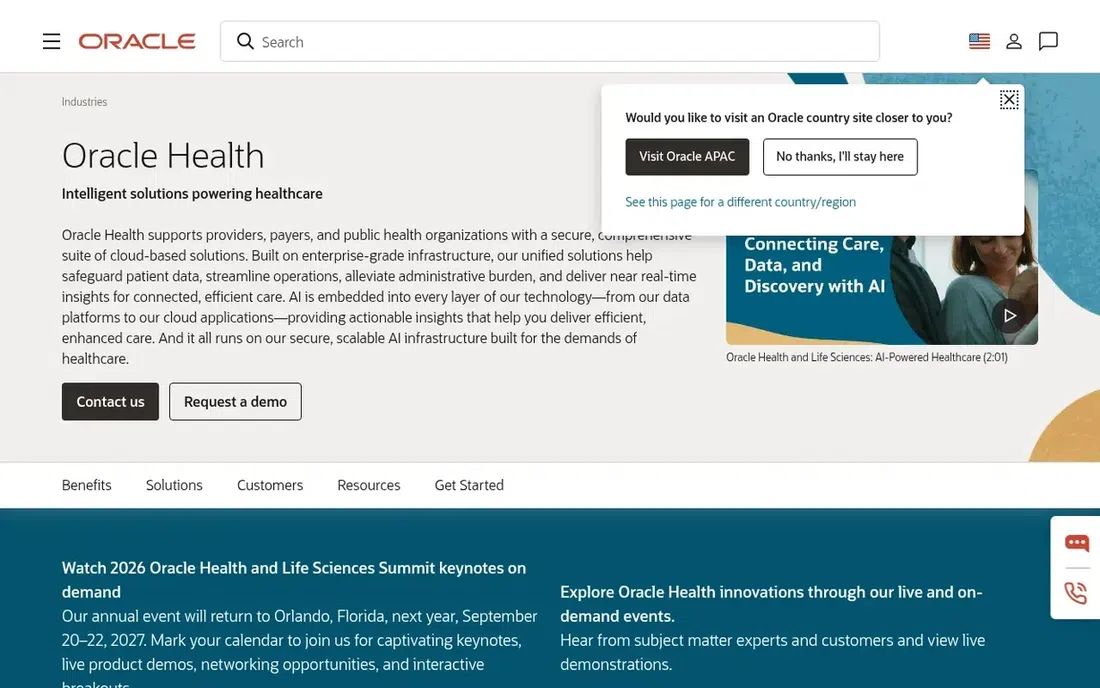
Oracle Health serves secure, scalable health solutions. The system may be most beneficial for those already using Oracle Health options. Specific RPM features are not in-depth on the homepage, so organizations should verify capabilities straight.
Oracle Health advances how health happens by supplying secure and steady options that deliver better healthcare insights and people-centric experiences. Its remote patient monitoring capabilities are part of a broader health system made for enterprise-scale deployments. Pricing for Oracle Health is not stated here, so ask the vendor for current figures. Free options: Not stated.
Honest limits: May need Oracle ecosystem.
- People-centric experiences
- Focus on healthcare insights
- RPM features not in-depth on homepage
Philips Healthcare
Best for: Hospital-grade monitoring and informatics
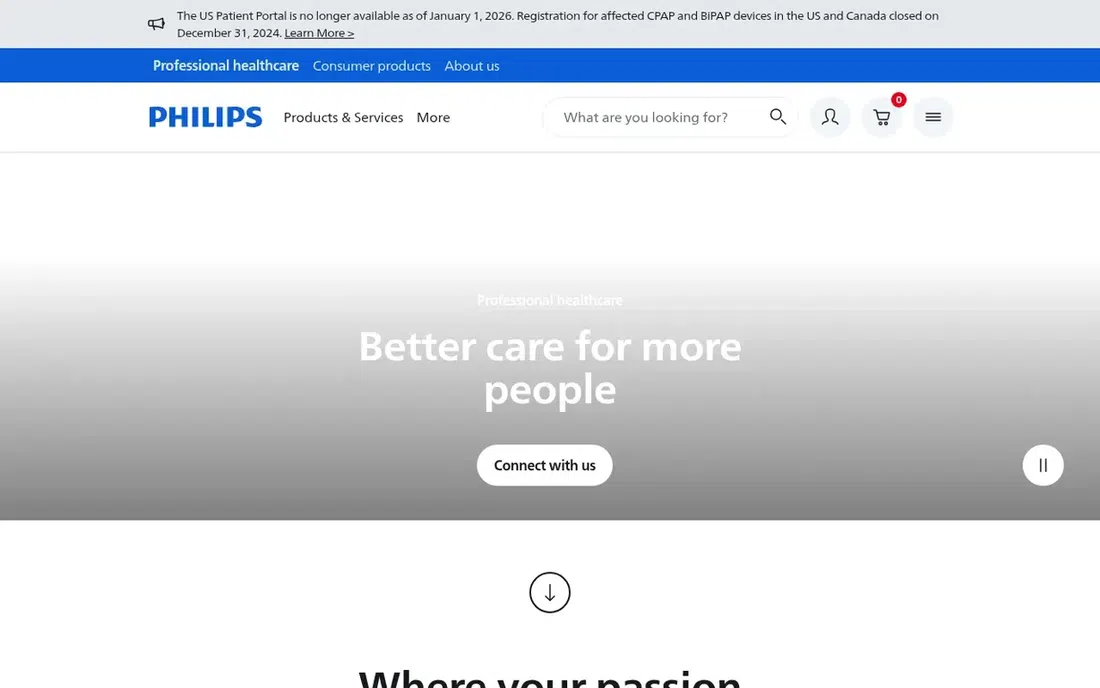
For Hospital-grade monitoring and informatics, Philips Healthcare is a natural candidate. Philips Healthcare boosts people's health and well-being through meaningful innovation in hospital patient monitoring, diagnostic imaging, and enterprise informatics. Its remote patient monitoring offerings use deep expertise in medical devices and enterprise informatics, making it right for hospitals and health systems seeking integrated monitoring options across care settings.
What to check first: Complicated pricing structure.
Organizations seeking a standalone RPM product may find it less focused. Beyond that, consider Philips when you need hospital-grade monitoring integrated with enterprise informatics. Philips' RPM capabilities are often part of a broader suite of clinical and informatics products, which can add complexity. This comparison lists no price for Philips Healthcare; ask the vendor. Free access: Not stated.
- Enterprise informatics
- Focus on meaningful innovation
- RPM may be part of bigger suite
Our selection method
We compared the tools on published pricing, free plan or trial availability, feature coverage for remote patient monitoring software for enterprise, and the limits each vendor documents. Plan names, prices and limits change often. Treat the figures here as a starting point and verify them with the vendor. We ordered the tools by general fit, then by how clearly pricing is shown, then by free access. A buyer with unusual needs may reorder them.
Questions to settle before buying
- Ask each vendor, from Cadence to Philips Healthcare, for a written quote; none of them publishes a starting price.
- Before choosing Cadence, weigh its main limit: less emphasis on acute care.
- Find out whether the entry plan of Philips Healthcare covers your must-haves or only a trimmed-down version.
- Look at the help docs and support options for Epic Systems before you commit.
- Total up the real monthly cost of Health Recovery Solutions, including add-ons, extra users and usage-based fees.
FAQ
Do these tools publish their prices?
No. None of the tools, from Cadence to Philips Healthcare, shows a fixed starting price here, so budget time for quotes.
Can I try these tools before paying?
Not by default. None of the tools, from Cadence to Philips Healthcare, lists a free plan or a free trial here, so ask each vendor for a demo before committing.
How are the tools for remote patient monitoring software for enterprise ordered?
Cadence sits first and Philips Healthcare last because the order follows typical fit for remote patient monitoring software for enterprise, then price clarity and free access. It is a judgement call, so read each profile for fit and limits.
Is Cadence the right pick for everyone comparing remote patient monitoring software for enterprise?
No single tool suits every team. Cadence comes first because it fits chronic care management at scale, while Biofourmis suits AI-driven virtual care and RPM and Health Recovery Solutions suits RPM, CCM, and telehealth solutions. Match the tool to your own size, budget and workflow before deciding.
What should enterprises look for in remote patient monitoring software?
Enterprises should prioritize EHR integration, device compatibility, scalability, security, and workflow support. Also consider vendor experience and the capacity to customize for diverse patient populations.
Sources
- https://www.cadence.care
- https://www.biofourmis.com
- https://www.healthrecoverysolutions.com
- https://www.epic.com
- https://www.oracle.com/health
- https://www.philips.com/healthcare