Best Remote Medical Billing Companies in 2026: 8 Companies Compared
We compared the best remote medical billing companies for 2026, covering revenue cycle services, first-pass claim rates, specialties and pricing in detail.
- Editor's choice
 athenahealth
EHR plus outsourced billing
Starts atSee websiteVisit athenahealth.comFull review - Great alternative
 R1 RCM
Large hospitals and health systems
Starts atSee websiteVisit r1rcm.comFull review - Also consider
 GeBBS Healthcare Solutions
Hospitals and large practices
Starts atSee websiteVisit gebbs.comFull review
TL;DR:
- athenahealth suits practices that want an all-in-one EHR plus outsourced revenue cycle service from one vendor, with a large provider network behind it.
- R1 RCM suits large hospitals and health systems, while GeBBS, Medusind and Medical Billers and Coders suit practices that want an EHR-agnostic billing partner.
- CareCloud, AdvancedMD and Tebra suit independent and midsize practices that want cloud software plus a managed billing option.
- Pricing is usually a percentage of collections or a custom quote, so compare net collection rate, days in accounts receivable and denial rate, not just the fee.
- Ask for specialty-specific results, sample reports, data ownership and exit terms before signing, since switching billing vendors later is disruptive.
Quick comparison
| Tool | Best for | Starts at | Free plan? | |
|---|---|---|---|---|
| athenahealth | EHR plus outsourced billing | See website | No | Visit |
| R1 RCM | Large hospitals and health systems | See website | No | Visit |
| GeBBS Healthcare Solutions | Hospitals and large practices | See website | No | Visit |
 Medusind Solutions | Specialty and dental billing | See website | No | Visit |
 CareCloud | Midsize outsourced billing | See website | No | Visit |
 AdvancedMD | Independent practices | See website | No | Visit |
 Tebra | Solo and small practices | See website | No | Visit |
 Medical Billers and Coders | Specialty-focused billing | See website | No | Visit |
The best remote medical billing companies
Remote medical billing companies handle claims, coding, payment posting, denial management and patient billing from a remote team, so a practice does not need an in-house billing department. The eight companies below cover the main models in 2026: platform plus service, enterprise revenue cycle management, and EHR-agnostic outsourcing. Each one suits a different practice size, specialty mix and technology choice.
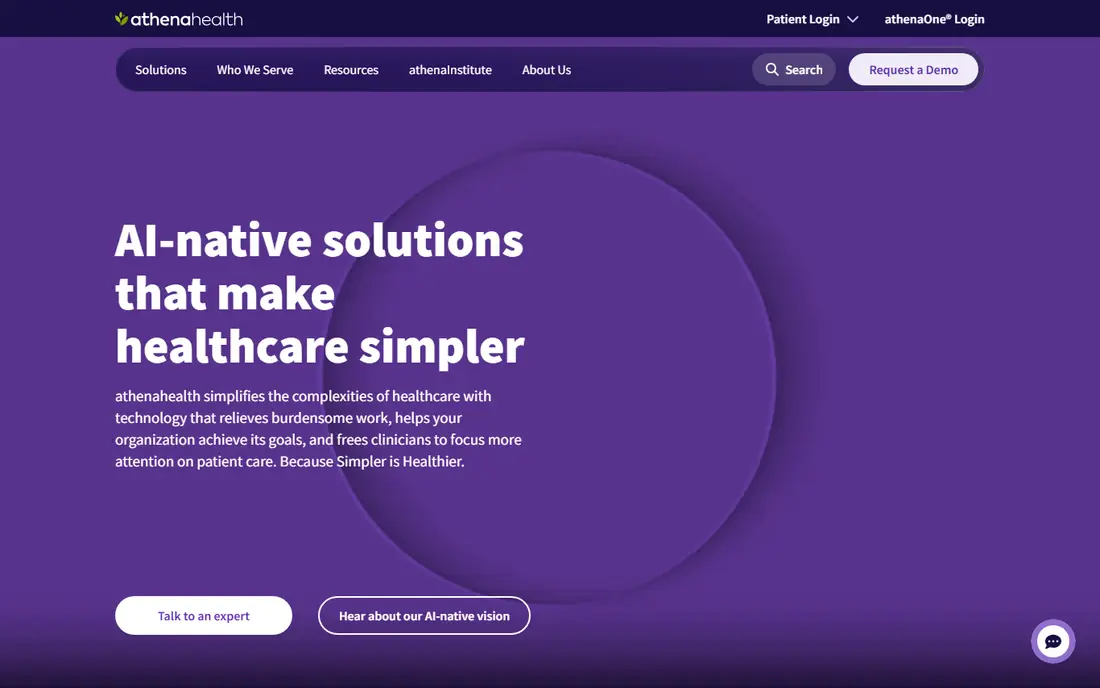
athenahealth is our pick for practices that want one vendor for electronic health records and outsourced billing. Its athenaOne platform combines EHR, practice management and patient engagement, and its revenue cycle service uses network data from many providers to scrub claims, track payer rules and follow up on denials. Independent guides report a claims rejection rate around 1.6 percent for its network, and more than 170,000 providers on the platform, which gives it a large base for benchmarking.
The catch is platform lock-in. athenahealth works best if you use athenaOne, so a practice on another EHR faces a migration to get the full benefit. Pricing is by quote, usually as a percentage of collections plus software fees, so the total cost needs a written proposal. For a multi-specialty group that wants a single vendor and network benchmarks, athenahealth is a strong choice, but a practice that wants to keep its current EHR should look at an EHR-agnostic partner first.
- Integrated EHR, practice management and revenue cycle service
- Large network with benchmarking
- Low claims rejection rate reported
- Easiest if you adopt athenaOne platform
- Pricing is by quote
- Smaller practices may find platform change disruptive
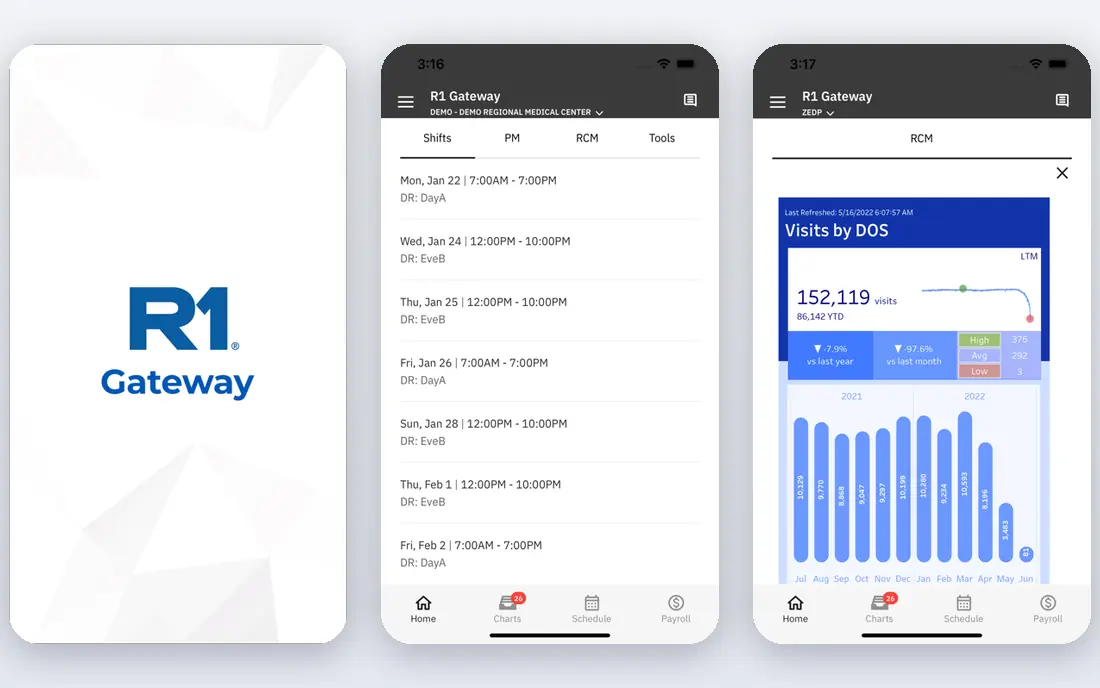
R1 RCM is an enterprise revenue cycle company that works with large hospitals and health systems, including many of the largest US systems. Its services cover end-to-end revenue cycle management, from patient access and charge capture to coding, claims, denials and patient financial experience, supported by analytics and AI tools for automation. That scale suits organizations with many sites, payers and specialties, where a small billing team cannot manage volume or complexity.
R1 is not a fit for a solo practice or a small clinic. Onboarding involves multi-system integration, bespoke service levels and performance-linked pricing, which takes time and senior management attention. For a midsize to large multi-site group or a health system that wants to transform revenue performance rather than just outsource claims, R1 is a leading enterprise option, but smaller practices should shortlist a midsize vendor instead.
- Enterprise scale for hospitals and health systems
- Analytics and AI tools for charge capture and denial work
- Performance-linked pricing options
- Enterprise onboarding is a major project
- Pricing is custom and complex
- Overkill for solo and small practices

GeBBS Healthcare Solutions, based in the United States with global delivery, provides medical coding, billing, revenue cycle outsourcing, audit and compliance services for hospitals and large practices. It employs more than 14,000 people in independent guides, holds HITRUST and SOC 2 Type 2 certification, and is KLAS-rated for coding work, which gives compliance-focused buyers a checkable credential. Its EHR-agnostic model means it can work inside a practice existing EHR rather than forcing a platform change.
The trade-off is scale and process. GeBBS suits a hospital or large practice that needs depth across many specialties and high claim volumes, but a small practice may find its onboarding and account structure heavier than a boutique vendor. Ask for specialty-specific net collection rates, denial rates and days in accounts receivable, and confirm the account team structure, since a large vendor can feel distant without a named contact.
- Large coding and billing workforce
- KLAS-rated coding work
- HITRUST and SOC 2 Type 2 certification
- EHR-agnostic delivery
- Pricing is by custom quote
- Large vendor processes can feel less personal
- Specialty fit needs to be confirmed by case study
Medusind Solutions, based in Miami and founded in 2002, provides medical billing, coding, revenue cycle outsourcing, dental billing, provider credentialing and payment posting. That breadth suits specialty practices and dental groups that want one vendor for billing plus credentialing, rather than separate vendors for each task. Its accounts receivable follow-up service is a core strength, since many practices lose revenue not on claim submission but on unpaid and denied claims that are never worked.
Medusind is a midsize vendor, so it will not match R1 on enterprise scale, but it can offer more personal account handling than a very large firm. Pricing is by custom quote, usually as a percentage of collections, so compare the fee with net collection performance, not alone. Ask for results in your specialty, sample aging reports and the cadence of denial reviews before you sign.
- Medical and dental billing services
- Credentialing and payment posting included
- Accounts receivable follow-up as a core service
- Pricing is by custom quote
- Smaller than R1 or GeBBS
- Specialty depth varies by practice type
CareCloud offers a cloud platform for practice management, EHR and payments, plus a concierge outsourced billing service that handles charge capture through patient payments. Its claim scrubbing tool, CollectiveIQ, aims to catch errors before submission, and independent guides report first-pass rates around 94 to 98 percent depending on source, with denial rates under 3 percent in some reports. Tiered concierge levels let a practice choose how much of the revenue cycle to outsource.
The limit is platform fit. CareCloud works most smoothly on its own platform, so a practice on another EHR should check integration and migration effort. Pricing combines platform fees with percentage-based service fees, so get a total written quote that separates software from service. For an independent or midsize practice that wants bundled software plus outsourced billing, CareCloud is a practical middle ground.
- Cloud practice management, EHR and payments plus concierge billing
- Claim scrubbing with CollectiveIQ
- Tiered concierge service levels
- Works best on CareCloud platform
- Pricing combines software and service fees
- First-pass rates vary by source and specialty
AdvancedMD suits independent and multi-provider practices that want a single cloud suite for scheduling, EHR, billing and patient engagement. Its Claim Inspector tool checks claims for errors before submission, and it reports a guarantee of a 95 percent or higher first-pass clean claim rate for its billing service. That combination of software plus managed billing can simplify operations for a practice without a large admin team.
The catch is that AdvancedMD is a platform vendor first, so a practice that wants to keep a different EHR may not get the same benefit. Its coding and billing service is generalist rather than deeply specialty-focused, so a complex specialty practice should ask for specialty results and coder credentials. For a general independent practice that wants one cloud system plus billing help, AdvancedMD is a solid shortlist option.
- Cloud EHR, practice management and billing in one suite
- Claim Inspector accuracy checks
- Guarantee of 95 percent or higher first-pass clean claim rate reported
- Platform-based, so EHR change may be needed
- Service pricing is by quote
- Specialty coding depth is more generalist than a specialty boutique
Tebra, formed from the combination of Kareo and PatientPop, is built for solo and small practices that need EHR, practice management, scheduling and billing without enterprise complexity. Its platform is known for ease of use, and independent guides note that most of its reviewers are small businesses, which reflects its target market. Its managed billing option, delivered through its platform and partner network, handles claims, denials and patient payments for practices without a billing team.
Tebra is not the best choice for a large multi-site group with complex specialty billing, where R1, GeBBS or athenahealth offer deeper scale. Pricing is by quote, combining software and billing service fees, so a small practice should get a total monthly estimate at its current volume. For a solo provider or a practice with under ten providers, Tebra gives a simple, all-in-one route to remote billing.
- All-in-one platform for solo and small practices
- Easy to use
- Managed billing partner network
- Strong small-business user base
- Best for small practices, less suited to large groups
- Pricing is by quote
- Billing service is via a partner network in some cases
Medical Billers and Coders, known as MBC, is a specialty-focused billing company that works inside a practice existing EHR, rather than requiring a platform change. It reports support for 32 or more specialties, a dedicated account manager model, and a net collection rate around 95 percent in its own guides, with services covering claims, coding, denials, accounts receivable and credentialing. That EHR-agnostic, specialty-led model suits practices that have already invested in an EHR and want a billing partner that learns their specialty.
The honest limit is that reported rates are vendor figures and will vary by specialty, payer mix and practice size. MBC is also smaller than R1 or GeBBS, so enterprise buyers may prefer a larger vendor for very high volumes. Ask MBC for specialty-specific net collection, days in accounts receivable and denial data, plus sample reports and a clear exit clause. For a specialty practice that wants to keep its EHR, MBC is a strong, focused option.
- EHR-agnostic specialty billing across 32 or more specialties
- Dedicated account manager reported
- Net collection rate around 95 percent reported
- Pricing is by custom quote
- Results vary by specialty and payer mix
- Smaller vendor than enterprise rivals
How we picked these
We compared official vendor pages, independent medical billing guides updated in 2026, and market listings for revenue cycle outsourcing. We favored companies that are actively providing remote billing in the United States now, with a clear service model, specialty coverage and compliance credentials where claimed. We excluded vendors with no verifiable US billing service, vendors that only sell software with no managed billing option, and vendors that could not be tied to an official homepage.
We did not audit billing performance for any practice, and rates quoted here are vendor-reported or guide-reported figures, not guarantees for your practice. Your net collection rate, days in accounts receivable and denial rate will depend on specialty, payer mix, coding accuracy and patient payment behavior. Use those metrics, not the fee alone, to judge a vendor during a trial or reference check.
What to check before you hire a remote billing company
Specialty results, not general averages
Ask for net collection rate, first-pass clean claim rate, denial rate and days in accounts receivable for practices in your specialty and of your size, not just a company average. A vendor that excels in primary care may struggle with a surgical specialty, and vice versa. Ask for two or three references in your specialty and call them about communication, reporting and denial handling.
Fee model and total cost
Most remote billing vendors charge a percentage of collections, while platform vendors add software fees on top. A lower percentage fee with a lower collection rate can cost more than a higher fee with a higher collection rate, as independent guides show. Model net revenue at different collection rates, confirm what is included in the fee, and check for setup, credentialing or reporting charges.
Data, compliance and exit terms
Confirm HIPAA compliance, data security certifications, who owns your billing data, how you access reports, and what happens if you leave. Ask for a written exit plan, data export format and timeline, and a notice period that gives you time to transition. A billing vendor holds your revenue data, so data ownership and a clean exit are as important as the monthly fee.
FAQ
How much does remote medical billing cost?
Most remote billing companies charge a percentage of collections, often in the range of 4 to 9 percent depending on specialty, volume and service scope, while platform vendors add software fees. Enterprise vendors price by custom contract. Get a written quote that separates software, billing service and any setup fees, and compare it with net collection performance, not just the percentage.
Will a remote billing company work with my current EHR?
It depends on the vendor. EHR-agnostic vendors such as GeBBS, Medusind and Medical Billers and Coders work inside many EHRs, while platform vendors such as athenahealth, CareCloud, AdvancedMD and Tebra work best on their own platforms. Confirm EHR compatibility, integration steps and any migration cost before you sign, since a forced platform change can disrupt a practice for months.
What is a good first-pass clean claim rate?
A first-pass clean claim rate above 95 percent is a strong benchmark, and several vendors in this list report rates at or above that level. First-pass rate alone is not enough, though, since a claim can pass scrubbing and still be denied by a payer. Track denial rate, days in accounts receivable and net collection rate together to judge real performance.
How long does it take to switch to a remote billing company?
Switching usually takes four to eight weeks for a small practice and longer for a large group, including credentialing checks, EHR access setup, payer enrollment and reporting setup. Ask for a written onboarding timeline, a named implementation contact and a plan for claims in flight during the transition, so no claims are lost between vendors.
Is remote medical billing HIPAA compliant?
A reputable remote billing company should be HIPAA compliant, with signed business associate agreements, secure data handling, staff training and, in some cases, HITRUST or SOC 2 certification. Ask for the business associate agreement, security practices and breach notification process before you share patient data, and confirm where data is stored and who can access it.
Should a small practice outsource billing or hire in-house?
Outsourcing suits a small practice that cannot justify a full-time biller, coder and denial specialist, or that wants specialty expertise and coverage for leave. Hiring in-house suits a practice with high volume, complex billing and a need for daily face-to-face coordination. Compare total in-house cost, including salary, benefits, software and training, with the vendor fee and expected collection gain before you decide.