Best Remote Patient Monitoring Software for Startups (2026): 6 Picks Checked on Vendor Pages
6 best remote patient monitoring software for startups, compared on pricing, free plans and best-fit use. Read the caveats before you buy. Start here.
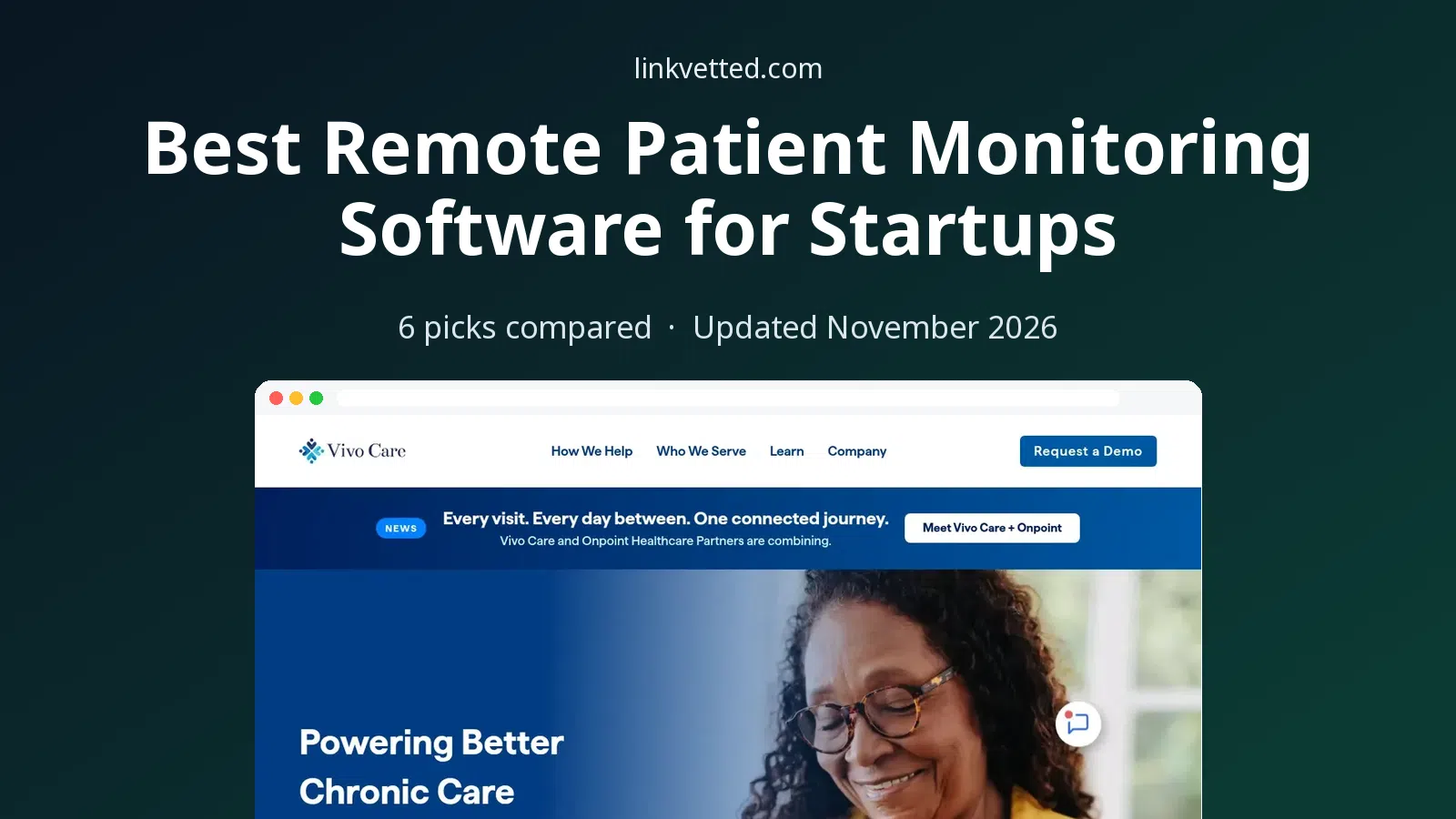
- Editor's choiceOptimize Health
Provider teams wanting nurse-led support
Starts atPricing on requestVisit optimize.healthFull review - Great alternativeBioIntelliSense
Continuous sensor-based early detection
Starts atPricing on requestVisit biointellisense.comFull review - Also considerHuma
Regulated AI system foundation
Starts atPricing on requestVisit huma.comFull review
Direct answer
If you need provider teams wanting nurse-led support, Optimize Health is the first tool to look at here. Look at BioIntelliSense for continuous sensor-based early detection, and at Huma for regulated AI system foundation. The full list of 6 tools follows, with free plan facts. None of these vendors publish plan prices, so pricing is on request for every option.
TL;DR:
- Optimize Health is the opening pick, best for provider teams wanting nurse-led support.
- Pricing across the list, from Optimize Health to Cadence, is by quote only.
- Neither Optimize Health nor Cadence, nor any of the other 4 tools, has a permanent free plan; trials and quotes are the norm.
- Cadence fits AI-driven chronic disease management.
- Check the limits for Optimize Health before you commit: clinical service model may limit pure software use.
Last checked November 2026. Pricing on request: vendors did not publish plan prices when this guide was last checked (November 2026), so ask each vendor for a written quote.
Quick comparison
| Tool | Best for | Starts at | Free plan? | |
|---|---|---|---|---|
| Optimize Health | Provider teams wanting nurse-led support | Pricing on request | Not stated | Visit |
| BioIntelliSense | Continuous sensor-based early detection | Pricing on request | Not stated | Visit |
| Huma | Regulated AI system foundation | Pricing on request | Not stated | Visit |
| Health Recovery Solutions | Wide RPM plus chronic care management | Pricing on request | Not stated | Visit |
| Current Health | Advanced therapies outside the hospital | Pricing on request | Not stated | Visit |
| Cadence | AI-driven chronic disease management | Pricing on request | Not stated | Visit |
The 6 tools in detail
LinkVetted compared 6 remote patient monitoring software for startups. The goal is a practical shortlist: published prices, free plan facts, best-fit use cases and honest limits for every entry.
Optimize Health
Best for: Provider teams wanting nurse-led support
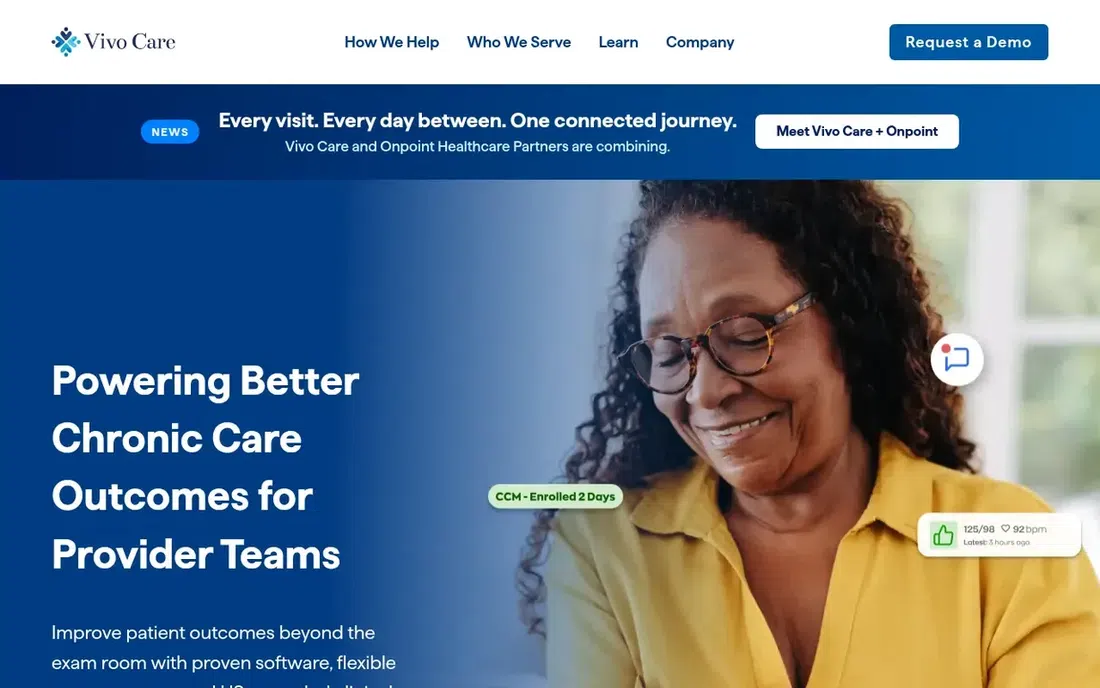
Pick Optimize Health if this describes you: provider teams wanting nurse-led support. It suits organizations serving physician practices and primary care groups.
This comparison lists no price for Optimize Health; ask the vendor. On free options: Not stated.
Where Optimize Health stands out: RPM. Downsides: Clinical service model may limit pure software use.
- Geared toward provider teams
- CCM and APCM in one offering
- Less suited to research or pharma programs
BioIntelliSense
Best for: Continuous sensor-based early detection
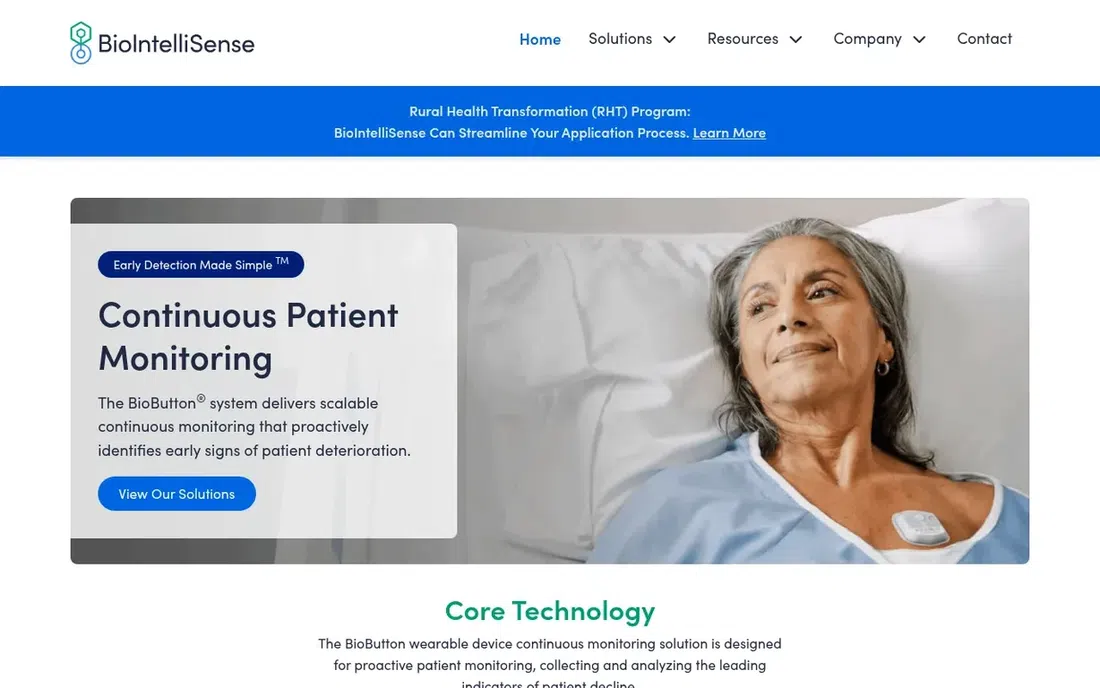
Pick BioIntelliSense if this describes you: continuous sensor-based early detection. A startup that wants wearable sensor data as the core of its offering, like a post-discharge or early warning product, can build around this kind of continuous monitoring approach instead of intermittent readings.
Pricing for BioIntelliSense is not stated here, so ask the vendor for current figures. Free access: Not stated.
Where it is weaker: Hardware-centric instead of a full care suite.
- BioButton system for continuous monitoring
- Focus on early sign detection
- Less emphasis on chronic care workflows
Huma
Best for: Regulated AI system foundation
In short, Huma is for regulated AI product foundation. Since the homepage positions the product broadly, startups should confirm which monitoring and care workflows are documented for their use case before committing.
Where it is weaker: Less detail on specific RPM workflows.
If you need a prebuilt chronic care program with clinical services attached, a more specialized product may get you to market quicker. Huma describes itself as an operating system for AI in regulated industries. No starting price is listed for Huma here; confirm pricing on the vendor site. As for free access: Not stated.
- Wide product framing
- Positions as an operating system for AI
- General positioning needs scoping
Health Recovery Solutions
Best for: Wide RPM plus chronic care management
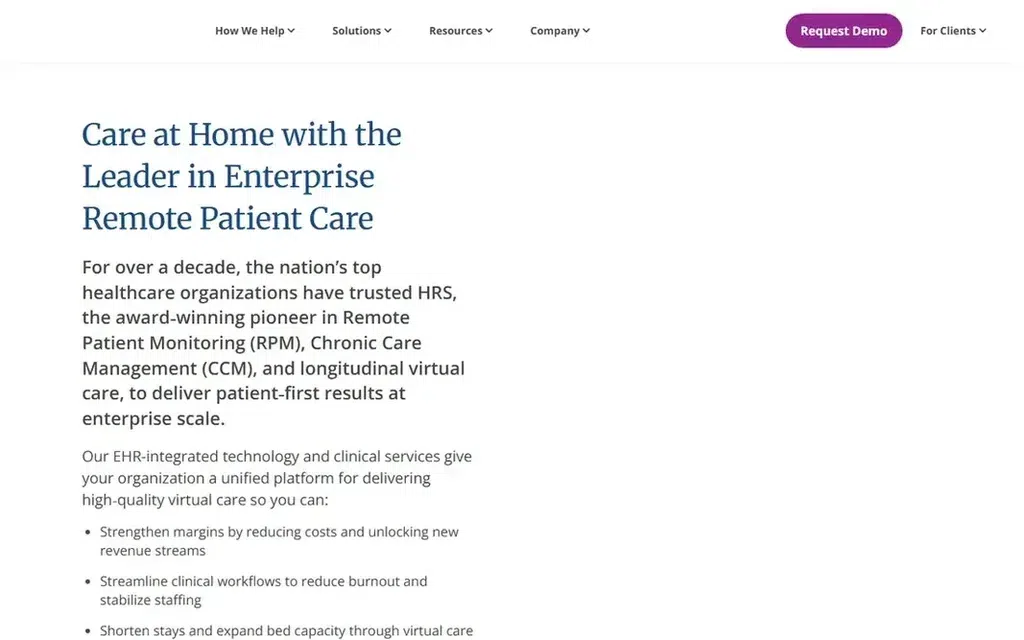
Health Recovery Solutions serves wide RPM plus chronic care management. The wide feature set can be more than a lean startup needs in its first months, and configuration effort may be higher than with a focused tool.
What to check first: Enterprise orientation can feel heavy for early teams.
Health Recovery Solutions presents itself as a system for remote patient monitoring, chronic care management, longitudinal virtual care and telehealth. Pricing for Health Recovery Solutions is not stated here, so ask the vendor for current figures. As for free access: Not stated.
What Health Recovery Solutions does well: Aimed at healthcare organizations.
- CCM and telehealth in one system
- Emphasizes operational efficiency
- Wide scope may overwhelm narrow use cases
Current Health
Best for: Advanced therapies outside the hospital
Pick Current Health if this describes you: advanced therapies outside the hospital. For a startup working with specialty therapeutics, that orientation matters since the monitoring requirements differ from routine chronic care.
It suits firms building products around high-acuity patients managed at home. Check the vendor site for Current Health pricing; none is listed in this comparison. Free plan details: Not stated.
Downsides: Narrow focus on advanced therapies.
- Focus on advanced therapy monitoring
- Serves providers and biotech partners
- Less suited to routine primary care RPM
Cadence
Best for: AI-driven chronic disease management
Where Cadence fits: AI-driven chronic disease management. Cadence describes clinical AI for chronic care, delivering remote patient monitoring and chronic disease management intended to boost outcomes and cut cost at scale.
The main drawbacks: AI-centric framing may need clinical validation.
The AI-first positioning means startups should confirm how recommendations are generated and reviewed by clinicians before relying on them. Check the vendor site for Cadence pricing; none is listed in this comparison. On free options: Not stated.
- Remote monitoring plus disease management
- Clinical AI applied to chronic care
- Less detail on device ecosystem
Our selection method
Selection started from tools commonly considered for remote patient monitoring software for startups, then narrowed to 6 that have clear pricing information or a clear quote process. Figures are shown as the vendors publish them. Billing terms, seat minimums and add-ons can change the real cost. Position on the page reflects fit for a typical buyer first, with price clarity and free access breaking ties. Treat it as a guide, not a ruling.
Things to verify first
- Confirm the entry price with every vendor: no tool from Optimize Health to Cadence shows a fixed starting price.
- Before choosing Optimize Health, weigh its main limit: clinical service model may limit pure software use.
- Run a one or two week pilot of Health Recovery Solutions with the people who will use it every day.
- Check whether Cadence bills monthly or annually, and what cancelling early costs.
- Map your must-have features to a specific Optimize Health plan before you compare prices.
FAQ
Is Optimize Health the right pick for everyone comparing remote patient monitoring software for startups?
No single tool suits every team. Optimize Health comes first because it fits provider teams wanting nurse-led support, while BioIntelliSense suits continuous sensor-based early detection and Huma suits regulated AI platform foundation. Match the tool to your own size, budget and workflow before deciding.
Can I try these tools before paying?
Not by default. None of the tools, from Optimize Health to Cadence, lists a free plan or a free trial here, so ask each vendor for a demo before committing.
How are the tools for remote patient monitoring software for startups ordered?
The order follows typical fit for remote patient monitoring software for startups, with Optimize Health first and Cadence last, then price clarity and free access. It is editorial judgement, not a score, so another team could rank the tools differently.
Do these tools publish their prices?
No. None of the tools, from Optimize Health to Cadence, shows a fixed starting price here, so budget time for quotes.
What should a startup look for in remote patient monitoring software?
Confirm device compatibility, integration options and how much clinical operations support is included, since those factors commonly shape how rapidly a startup can launch.
Sources
- https://optimize.health
- https://biointellisense.com
- https://www.huma.com
- https://healthrecoverysolutions.com
- https://currenthealth.com
- https://cadence.care