Best Podcast Outreach Tools in 2026: 6 Tools Compared
A practical guide to the best podcast outreach tools for 2026, compared from vendor documentation and public sources, with fit, limits and buying checks.
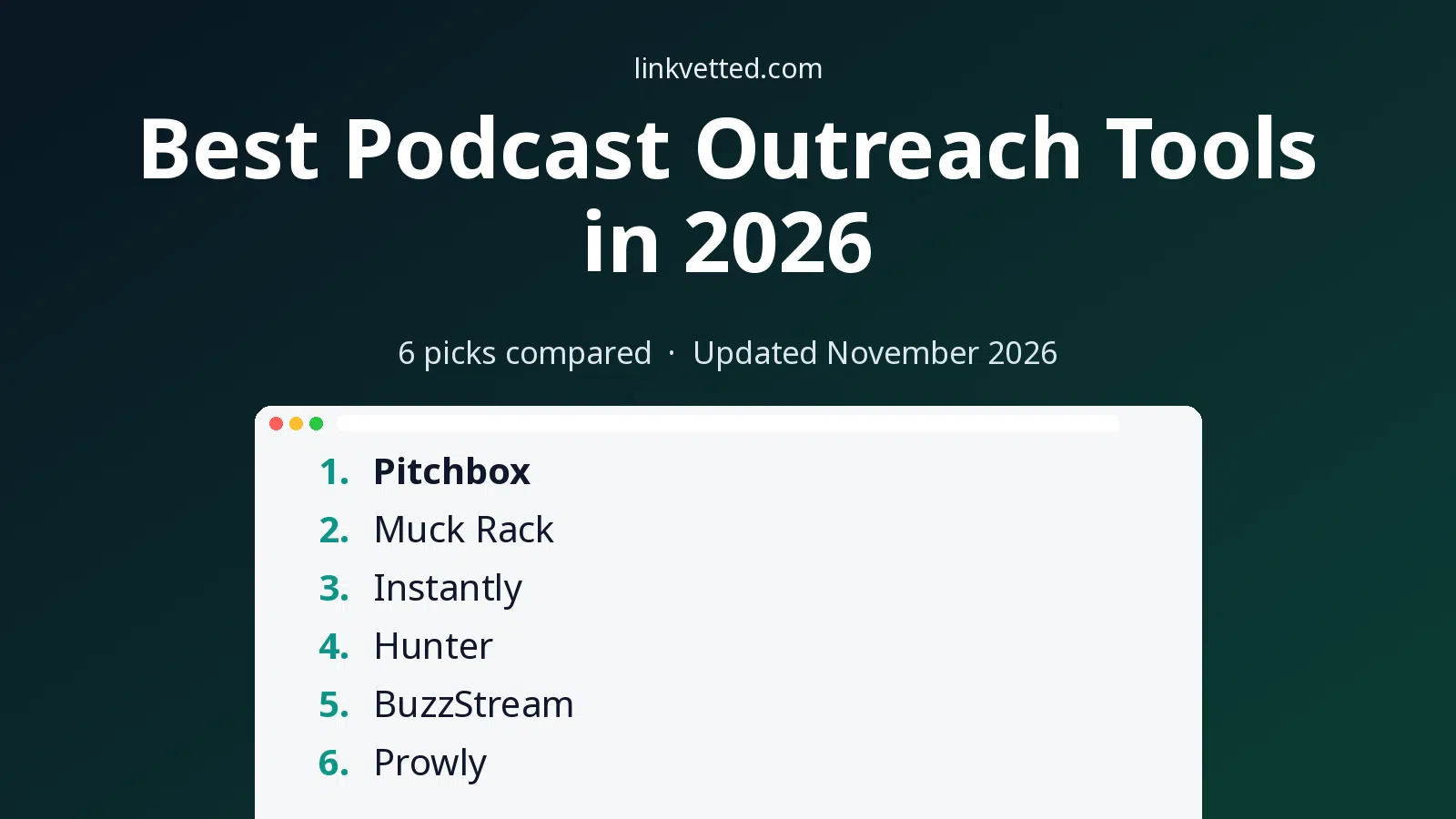
- Editor's choice
 Pitchbox
Repeatable outreach campaigns
Starts atSee websiteVisit pitchbox.comFull review - Great alternative
 Muck Rack
Media research with podcast contacts
Starts atSee websiteVisit muckrack.comFull review - Also consider
 Instantly
Sending and follow-up sequences
Starts atSee websiteVisit instantly.aiFull review
Direct answer
My first pick is Pitchbox, because it is built around prospecting, contact management and campaign tracking for outreach teams, which maps closely to how podcast pitching works. For teams that want a broader media database with podcast contacts, Muck Rack is a strong second. If your workflow is email sequencing and follow-up, Instantly is the lighter option. I compared these from vendor documentation and public sources, not hands-on tests.
TL;DR:
- Podcast outreach needs a contact source, a way to manage pitches, and a follow-up process, so pick a tool that covers the parts you lack.
- Pitchbox fits teams that run repeatable outreach campaigns and want prospecting and tracking in one place.
- Muck Rack is better suited to PR-style media research where podcast hosts sit alongside journalists and other contacts.
- Instantly is useful when your main problem is sending and sequencing cold email rather than finding contacts.
- Check data coverage for podcasts in your niche before you commit, because general media databases vary in how they list shows and hosts.
Last checked November 2026. Plan prices are not quoted in this guide because they change often; see each vendor's own pricing page for current figures before you buy.
Quick comparison
| Tool | Best for | Starts at | Free plan? | |
|---|---|---|---|---|
| Pitchbox | Repeatable outreach campaigns | See website | Not stated | Visit |
| Muck Rack | Media research with podcast contacts | See website | Not stated | Visit |
| Instantly | Sending and follow-up sequences | See website | Free trial | Visit |
 Hunter | Finding and verifying email addresses | See website | Free plan | Visit |
 BuzzStream | Relationship tracking for outreach | See website | Free trial | Visit |
 Prowly | PR pitching with a media database | See website | Free trial | Visit |
The best podcast outreach tools compared
I put this list together from vendor documentation, help pages and public descriptions of each product. I did not run hands-on tests, so treat this as a starting point for your own trial. The tools below solve different parts of podcast outreach: finding contacts, managing pitches, sending email and tracking replies.
Pitchbox is an outreach platform aimed at SEO and marketing teams that run campaigns at volume. For podcast outreach, it gives you a place to build prospect lists, store contact details and track who has replied. It suits agencies and in-house teams that pitch many shows and need a consistent process rather than ad hoc emails.
In a podcast workflow, you can use Pitchbox to organise shows by topic, keep host and producer contacts together, and follow up on pitches that have not had a response. The campaign view helps you see which shows are still open and which have declined. That is useful when you are pitching several related shows and do not want to duplicate effort.
The main limit is that it is designed for teams running structured outreach, so a single person sending a handful of pitches may find it more than they need. Skip it if you only want a simple email sender.
- Prospecting and contact discovery in one place
- campaign and reply tracking
- built for outreach teams
- May be more than a solo operator needs
- setup requires planning
Muck Rack is a media database and PR platform used to find journalists, outlets and contacts. Podcast hosts and producers often appear alongside other media contacts, which makes it useful when your pitch targets both podcast appearances and written coverage. It fits PR and communications teams more than pure SEO outreach.
For podcast outreach, the value is in research: you can look up a show or host, check what they cover and keep notes on your pitch history. That helps you write a specific pitch rather than a generic one. Monitoring features can also show when a host or outlet mentions a topic you care about.
The drawback is that it is built around PR workflows, so podcast-specific steps like episode research and guest pitch tracking may need workarounds. Skip it if podcasts are your only channel and you want a podcast-first tool.
- Broad media database
- journalist and outlet profiles
- monitoring and reporting features
- PR-oriented rather than podcast-first
- coverage of individual shows varies
Instantly is an email outreach platform focused on sending campaigns and managing replies. It is a practical choice when you already have a list of podcast hosts and producers and need a reliable way to send pitches, schedule follow-ups and keep replies organised in one inbox.
In a podcast outreach process, you would import contacts, write a short pitch, set a follow-up sequence and review replies. Keeping follow-ups in one place reduces the chance of pitching the same show twice. It works best alongside a contact source such as a media database or your own research.
The limit is that Instantly does not find podcast contacts for you, so you still need a way to build and verify your list. Skip it if your main gap is contact discovery rather than sending.
- Email sequencing and follow-up
- inbox management for replies
- works with your own contact lists
- Limited native contact discovery
- not a podcast database
Hunter is an email discovery and verification tool. You search by domain or company name and it returns likely email addresses, which you can verify before adding them to a pitch list. For podcast outreach, it helps when you know a show or network website but not the producer's direct address.
The workflow is simple: find the show or network site, search the domain in Hunter, verify the address and add it to your outreach list. It pairs well with a sending tool or a CRM. Verification before sending is the main benefit, because it reduces wasted pitches to addresses that no longer work.
Hunter does not manage campaigns or track podcast replies, so it is a supporting tool rather than a complete outreach system. Skip it if you need an all-in-one platform.
- Email discovery from company domains
- verification to reduce bounces
- simple search workflow
- No campaign management
- not specific to podcasts
BuzzStream is an outreach and relationship management tool used for link building and media outreach. It keeps a history of who you contacted, what you discussed and when you followed up. That makes it useful for podcast pitching, where a host may invite you back or refer you to another show.
For podcast outreach, you can build lists of shows and hosts, log each pitch and keep notes on replies. The relationship history is the main draw: over time you can see which hosts are warm and which pitches went cold. It works well for teams that pitch the same people more than once.
The limit is that it is a general outreach tool, so podcast-specific features are not built in. Expect some setup time before it fits your workflow.
- Contact and relationship history
- outreach tracking
- research tools for prospect lists
- Learning curve for new users
- not podcast-specific
Prowly is a PR platform with a media database, contact management and pitching tools. It fits teams that pitch podcasts as part of a wider media relations effort, where the same contact list covers journalists, editors and hosts. The database and pitch tools sit in one place.
For podcast outreach, you can build a media list, send a pitch and track opens and replies. The reporting side helps you see which pitches got attention. It is most useful when podcasts are one channel among several and you want a single system for media contacts.
The drawback is that podcast coverage in the database depends on your market, so check your niche before relying on it. Skip it if you need a podcast-only contact source.
- Media database and contact management
- pitch and release tools
- reporting features
- Podcast coverage varies by market
- PR-first design
How I chose
I chose these tools by reading vendor documentation, help centre articles and public product descriptions, then mapping each one to the steps of podcast outreach: finding contacts, managing pitches, sending email and tracking replies. I did not run hands-on tests, so the notes here describe what each vendor says the product does and how that fits a podcast workflow. Where a tool is general-purpose, I say so and explain the workaround.
I also looked at limits. A tool can be strong at sending but weak at discovery, or strong at media research but not podcast-first. I kept the list to products I am confident exist and that have a clear role in outreach. I did not include prices, ratings or user counts because those change and should be checked on the vendor site. Use this guide to shortlist tools, then trial them against your own list of shows.
What to check before you buy
- Check whether the tool includes podcast hosts and producers in your niche, or whether you need a separate contact source.
- Confirm how contacts are verified, because bounced pitches waste time and can hurt your sender reputation.
- Look at how the tool handles follow-ups, since most podcast pitches need more than one message.
- Check whether you can log replies and notes per show, so you do not pitch the same host twice.
- See whether the tool supports your sending setup, including your own domain and inbox.
- Ask how you export your contact list, so you are not locked in if you change tools later.
FAQ
What are podcast outreach tools used for?
They help you find podcast hosts and producers, manage a pitch list, send pitches and track replies. Some tools focus on contact discovery, others on email sending or relationship tracking. Most teams use a combination rather than a single product.
Do I need a media database to pitch podcasts?
Not always. A media database helps when you want a broad list of shows and hosts in one place. If you already know the shows you want, you can build a list from show websites and verify addresses with an email discovery tool. The right choice depends on how many pitches you send.
Can I use link building outreach tools for podcasts?
Yes, in many cases. Tools built for link and media outreach already handle contact lists, pitch tracking and follow-ups, which are the same steps podcast pitching needs. Check that the tool lets you store podcast-specific notes and does not force a link-building template onto your pitches.
How do I avoid pitching the same podcast twice?
Keep a record of every show you contact, the contact person and the date. A tool with relationship history or campaign tracking makes this easier. Before a new campaign, check your list against the shows you have already pitched and note any replies.
What should I check before choosing a podcast outreach tool?
Check contact coverage for your niche, how verification works, follow-up handling, reply tracking and export options. Trial the tool with a small list of real shows before committing. Prices and plan limits change, so confirm details on the vendor site.
Sources
- https://www.pitchbox.com
- https://muckrack.com
- https://instantly.ai
- https://hunter.io
- https://www.buzzstream.com
- https://prowly.com