Best Platforms for Human-Robot Collaboration for 2026: Our 5 Vetted Picks
Need the best platforms for Human-Robot collaboration? We compare 5 tools on cost, free access and who each suits. With pricing notes and limits. Facts only.

- Editor's choiceKUKA LBR iiwa
Sensitive force-controlled tasks
Starts atPricing on requestVisit kuka.comFull review - Great alternativeTechman Robot TM Series
Integrated vision and AI
Starts atPricing on requestVisit tm-robot.comFull review - Also considerUniversal Robots
General collaborative robot arms
Starts atPricing on requestVisit universal-robots.comFull review
Direct answer
Our first pick is KUKA LBR iiwa, best for sensitive force-controlled tasks. Techman Robot TM Series is better for integrated vision and AI, and Universal Robots is better for general collaborative robot arms. Free plan facts and limits for all 5 tools follow. None of these vendors publish plan prices, so pricing is on request for every option.
TL;DR:
- Top of the list is KUKA LBR iiwa, which targets sensitive force-controlled tasks.
- For Dual-arm collaborative assembly, ABB YuMi is worth a look.
- Check the limits for MiR (Mobile Industrial Robots) before you commit: not a manipulator arm by default.
- No starting price is shown for any of the 5 tools, KUKA LBR iiwa and ABB YuMi included, so plan time for sales calls.
Last checked November 2026. Pricing on request: vendors did not publish plan prices when this guide was last checked (November 2026), so ask each vendor for a written quote.
Quick comparison
| Tool | Best for | Starts at | Free plan? | |
|---|---|---|---|---|
| KUKA LBR iiwa | Sensitive force-controlled tasks | Pricing on request | Not stated | Visit |
| Techman Robot TM Series | Integrated vision and AI | Pricing on request | Not stated | Visit |
| Universal Robots | General collaborative robot arms | Pricing on request | Not stated | Visit |
| MiR (Mobile Industrial Robots) | Autonomous internal transportation | Pricing on request | Not stated | Visit |
| ABB YuMi | Dual-arm collaborative assembly | Pricing on request | Not stated | Visit |
The 5 tools in detail
If you are comparing platforms for Human-Robot collaboration, this page covers 5 tools in one place: what each is best for, what it costs to start, whether it has a free plan, and the main limit to know about.
KUKA LBR iiwa
Best for: Sensitive force-controlled tasks
KUKA LBR iiwa is built with sensitive force-controlled tasks in mind. The KUKA LBR iiwa is a collaborative robot arm known for its sensitive force-torque control, making it right for tasks that need delicate interaction with humans and objects. From a buyer's view, the LBR iiwa suits research, assembly, and applications where compliance and precision are critical.
Where it falls short: Premium positioning may limit accessibility.
The LBR iiwa is a sophisticated product that may need specialized programming expertise and a higher investment compared with more straightforward cobots. It is less suited for basic pick-and-place if cost and simplicity are priorities. This comparison lists no price for KUKA LBR iiwa; ask the vendor. Trial and free access: Not stated.
- Advanced force-torque sensing
- Solid industrial pedigree
- Higher complexity for programming
Techman Robot TM Series
Best for: Integrated vision and AI
Techman Robot TM Series is aimed squarely at integrated vision and AI. The integration of vision and AI can reduce the need for external components and programming.
From a buyer's view, as a newer entrant compared with some established brands, Techman may have a smaller support network in certain areas. Techman Robot TM Series shows no starting price here, so confirm the cost on the vendor site. As for free access: Not stated.
Limits to weigh: AI features may need setup.
- Eases smart automation
- Native AI engine
- Less established in some regions
Universal Robots
Best for: General collaborative robot arms
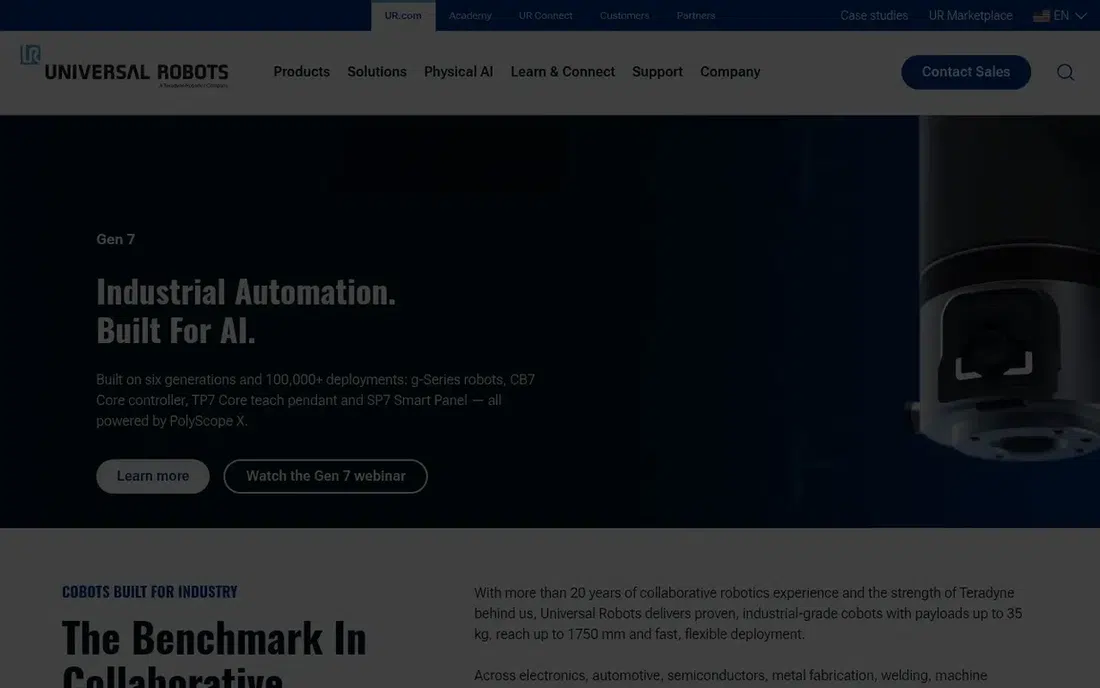
Where Universal Robots fits: general collaborative robot arms. The company emphasizes scalable automation and proven collaborative technology, making its arms a typical choice for tasks like machine tending, assembly, and packaging.
What to check first: Restricted mobile autonomy without added base.
It suits manufacturers seeking a mature ecosystem with wide application support. Check the vendor site for Universal Robots pricing; none is listed in this comparison. Free access: Not stated.
- Scalable for industrial automation
- Proven collaborative robotics technology
- Needs integration for complicated tasks
MiR (Mobile Industrial Robots)
Best for: Autonomous internal transportation
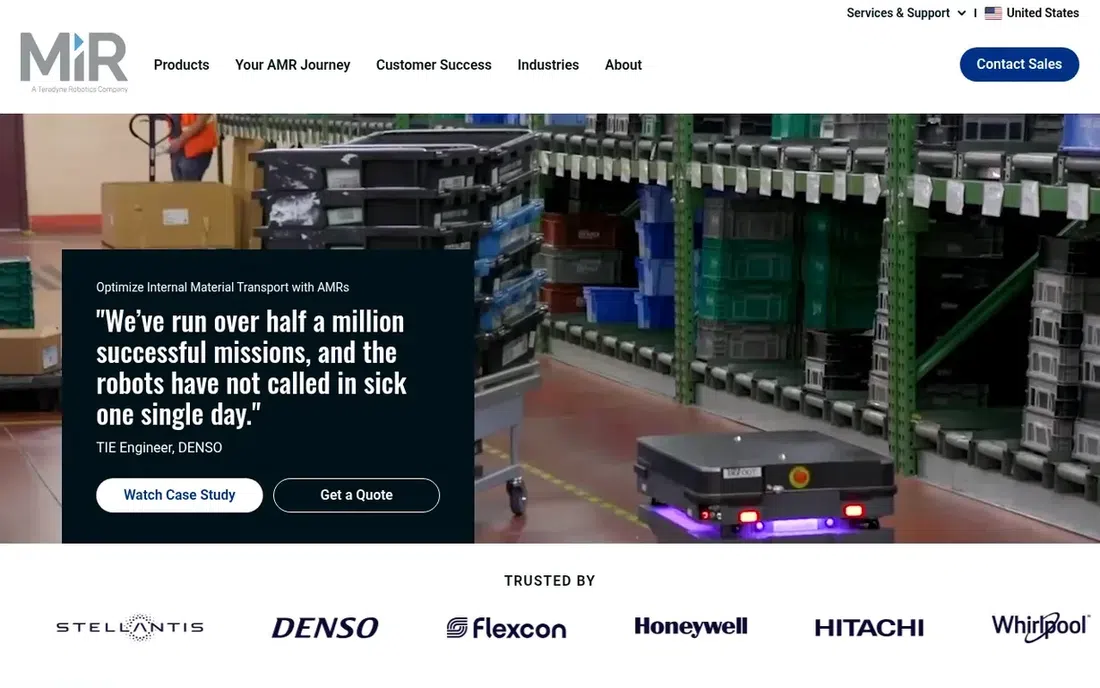
MiR (Mobile Industrial Robots) is designed for autonomous internal transportation. MiR robots are primarily mobile bases instead of collaborative arms, so they are not suited for manipulation tasks like assembly without extra equipment.
They also need mapping and infrastructure setup for navigation. MiR (Mobile Industrial Robots) shows no starting price here, so confirm the cost on the vendor site. Free plan details: Not stated.
The main drawbacks: Needs infrastructure for navigation.
- Focus on internal transportation
- Versatile mobile robots
- Not a manipulator arm by default
ABB YuMi
Best for: Dual-arm collaborative assembly
For Dual-arm collaborative assembly, ABB YuMi is a natural candidate. ABB YuMi is a collaborative dual-arm robot aimed at small parts assembly and tasks that benefit from two arms working together.
Where it is weaker: Restricted payload capacity.
As for the details, consider other products if you need higher payloads or mobile manipulation. This comparison lists no price for ABB YuMi; ask the vendor. As for free access: Not stated.
- Compact footprint
- Dual-arm design for human-like tasks
- Specialized use case may not fit all
How we built this list
For each of the 5 tools we noted price, free plan or trial, fit for platforms for Human-Robot collaboration and the main limit, using vendor pages and documentation. Treat prices as a snapshot: vendors change plans often, so check the vendor site for the figure that applies today. Position on the page reflects fit for a typical buyer first, with price clarity and free access breaking ties. Treat it as a guide, not a ruling.
Before you commit
- Ask each vendor, from KUKA LBR iiwa to ABB YuMi, for a written quote; none of them publishes a starting price.
- Before choosing KUKA LBR iiwa, weigh its main limit: higher complexity for programming.
- Ask ABB YuMi whether prices are locked for the first term and what happens at renewal.
- Check the integration list for MiR (Mobile Industrial Robots) against the tools you run today, and note which ones need a higher plan.
- Ask Techman Robot TM Series which support channels and response times come with the plan you would buy.
FAQ
What is the difference between a collaborative robot arm and a mobile robot?
A collaborative robot arm is generally fixed in place and meant to work alongside humans on manipulation tasks. Some systems combine both for mobile manipulation.
Do these tools publish their prices?
No. None of the tools, from KUKA LBR iiwa to ABB YuMi, shows a fixed starting price here, so budget time for quotes.
Can I try these tools before paying?
Not by default. None of the tools, from KUKA LBR iiwa to ABB YuMi, lists a free plan or a free trial here, so ask each vendor for a demo before committing.
Can I use a collaborative robot in a mobile setup?
Yes, some collaborative arms can be mounted on mobile bases, but this needs integration. MiR gives you mobile robots that can be equipped with top modules, including robot arms, for mobile manipulation.
Does any tool for platforms for Human-Robot collaboration here have a free plan?
No tool in this list, KUKA LBR iiwa and ABB YuMi included, has a permanent free plan. Trials and quotes are the usual route, so plan a short evaluation period.
Is KUKA LBR iiwa the right pick for everyone comparing platforms for Human-Robot collaboration?
No single tool suits every team. KUKA LBR iiwa comes first because it fits sensitive force-controlled tasks, while Techman Robot TM Series suits integrated vision and AI and Universal Robots suits general collaborative robot arms. Match the tool to your own size, budget and workflow before deciding.
Sources
- https://www.kuka.com
- https://www.tm-robot.com
- https://www.universal-robots.com
- https://www.mobile-industrial-robots.com
- https://new.abb.com