Best Platforms for Cloud Data Lake Management for 2026: Our 6 Vetted Picks
6 products for the best platforms for cloud data Lake management, ranked by fit, with starting costs and free tiers. Pros and cons for every tool. No filler.
- Editor's choiceGoogle Cloud Storage
Adaptable multi-redundancy object storage
Starts atPricing on requestVisit cloud.google.comFull review - Great alternativeAmazon Athena
Serverless SQL over data in place
Starts atPricing on requestVisit aws.amazon.comFull review - Also consider
 Microsoft Fabric
AI-powered analytics with data lakes
Starts atPricing on requestVisit microsoft.comFull review
Direct answer
Google Cloud Storage comes first here, mainly for adaptable multi-redundancy object storage. Look at Amazon Athena for serverless SQL over data in place, and at Microsoft Fabric for AI-powered analytics with data lakes. Free plan facts and limits for all 6 tools follow. None of these vendors publish plan prices, so pricing is on request for every option.
TL;DR:
- This list starts with Google Cloud Storage, which is built for adaptable multi-redundancy object storage.
- Azure Data Lake Storage fits secure storage for big data analytics.
- No starting price is shown for any of the 6 tools, Google Cloud Storage and Azure Data Lake Storage included, so plan time for sales calls.
- A permanent free plan is missing from all 6 tools, Google Cloud Storage and Azure Data Lake Storage included; plan for a trial or a premium start.
- One limit worth knowing about Google Cloud Storage: no native query layer.
Last checked November 2026. Pricing on request: vendors did not publish plan prices when this guide was last checked (November 2026), so ask each vendor for a written quote.
Quick comparison
| Tool | Best for | Starts at | Free plan? | |
|---|---|---|---|---|
| Google Cloud Storage | Adaptable multi-redundancy object storage | Pricing on request | Not stated | Visit |
| Amazon Athena | Serverless SQL over data in place | Pricing on request | Not stated | Visit |
| Microsoft Fabric | AI-powered analytics with data lakes | Pricing on request | Free trial | Visit |
| Amazon S3 | Scalable object storage for data lakes | Pricing on request | Not stated | Visit |
| Databricks Lakehouse Platform | Unified data engineering, analytics and AI | Pricing on request | Not stated | Visit |
| Azure Data Lake Storage | Secure storage for big data analytics | Pricing on request | Free trial | Visit |
Platforms for Cloud Data Lake Management compared in detail
LinkVetted compared 6 tools for platforms for cloud data Lake management. The goal is a practical shortlist: published prices, free plan facts, best-fit use cases and honest limits for every entry.
Google Cloud Storage
Best for: Adaptable multi-redundancy object storage
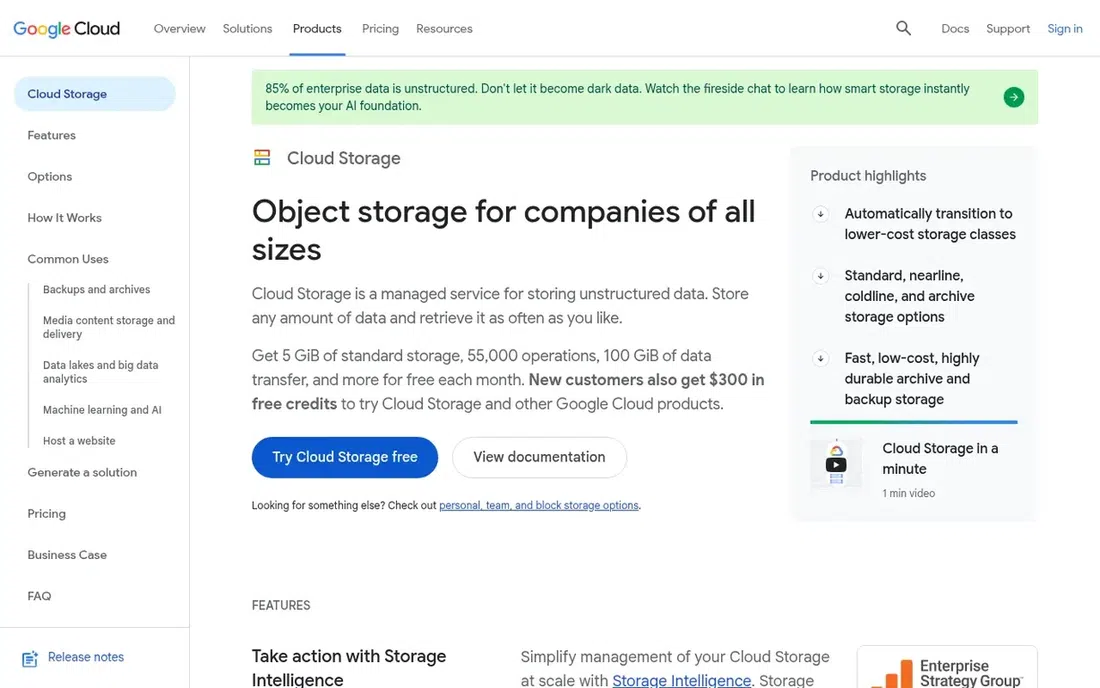
Google Cloud Storage serves adaptable multi-redundancy object storage. Google Cloud Storage lets teams store data with several redundancy choices and keep it virtually anywhere.
Honest limits: Needs related Google Cloud services.
Beyond that, as an object storage service, it does not contain a query engine or a managed lakehouse layer on its own. Google Cloud Storage shows no starting price here, so confirm the cost on the vendor site. Free access: Not stated.
- Several redundancy choices
- Store data virtually anywhere
- No native query layer
Amazon Athena
Best for: Serverless SQL over data in place
Amazon Athena works best for serverless SQL over data in place. Amazon Athena is a serverless, interactive analytics service that offers a simplified, adaptable way to analyze petabytes of data where it lives. That makes it a natural companion to object storage for example Amazon S3, since teams can run SQL without moving or loading data into a separate warehouse first.
Where it falls short: Performance relies on data layout.
If you need combined storage, governance and AI tooling, Databricks or Microsoft Fabric include more of that ground. Athena is a query layer and does not run storage or a full lakehouse catalog on its own, and results rely on how data is organized. Amazon Athena does not show a starting price in this comparison, so check the vendor site for current pricing. Trial and free access: Not stated.
- Serverless
- Queries petabytes where data lives
- Not a storage layer
Microsoft Fabric targets AI-powered analytics with data lakes. It suits organizations that want a single analytics environment spanning lake storage and data science work, especially those already comfortable with Microsoft tooling and services.
Worth adding: if you chiefly need raw object storage, Amazon S3 or Google Cloud Storage is a more straightforward starting point. Microsoft Fabric does not show a starting price in this comparison, so check the vendor site for current pricing. Free plan details: Free trial.
Where it is weaker: Best value within the Microsoft ecosystem.
- Contains data science and data lakes
- Unites data and services in one system
- Wide product needs governance planning
Amazon S3
Best for: Scalable object storage for data lakes
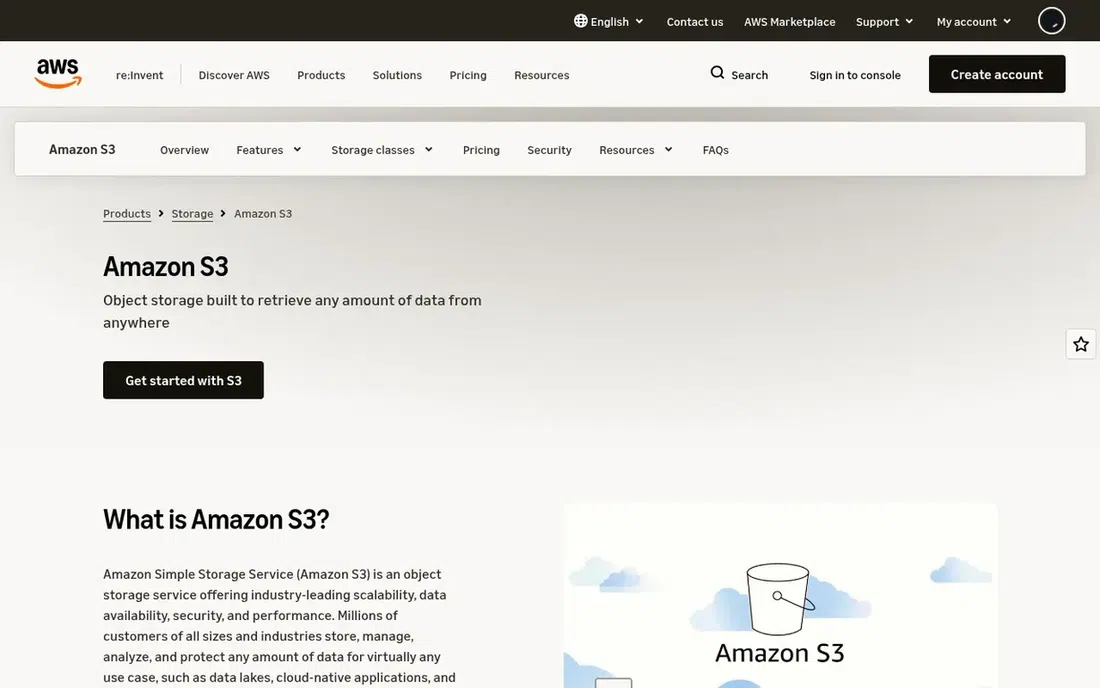
Amazon S3 works best for scalable object storage for data lakes. Its homepage names data lakes as a primary use case alongside mobile applications, backup and restore, archival, IoT devices, ML and AI, making it a typical foundation layer that other analytics services read from.
Check the vendor site for Amazon S3 pricing; none is listed in this comparison. Free access: Not stated.
Watch-outs: Access control needs careful configuration.
- Industry-leading scalability and availability
- Supports backup, archival
- No built-in query engine
Databricks Lakehouse Platform
Best for: Unified data engineering, analytics and AI
In short, Databricks Lakehouse Platform is for unified data engineering, analytics and AI. The breadth of the platform means setup and governance decisions are substantial, and teams without data engineering experience may find it heavy.
Drawbacks to consider: Needs cloud infrastructure planning.
If you only need raw object storage or occasional SQL queries, a more straightforward service for example Amazon S3 or Amazon Athena may be a better fit. Databricks Lakehouse Platform does not show a starting price in this comparison, so check the vendor site for current pricing. Free access: Not stated.
Upsides: warehousing and governance.
- Single system across data teams
- Merges ETL
- Wide scope can feel complicated to start
Azure Data Lake Storage
Best for: Secure storage for big data analytics
Where Azure Data Lake Storage fits: secure storage for big data analytics. Azure Data Lake Storage is described as a secure cloud system supplying scalable, economical storage for big data analytics.
Upsides: Security features for analytics workloads.
Drawbacks to consider: Storage-focused, analytics added separately.
It suits organizations already working in Azure that require a storage layer for large analytical datasets and want security and scale handled at the storage level. Pricing for Azure Data Lake Storage is not stated here, so ask the vendor for current figures. Free plan details: Free trial.
- Made for big data processing
- Economical storage design
- Needs Azure ecosystem familiarity
Our selection method
We compared the tools on published pricing, free plan or trial availability, feature coverage for platforms for cloud data Lake management, and the limits each vendor documents. Prices and plan limits come from vendor pages and can change, so confirm them on the vendor site before you buy. The sequence is a judgement call: typical use case first, then pricing transparency, then free access. Use the profiles to check fit.
A buyer's checklist
- Ask each vendor, from Google Cloud Storage to Azure Data Lake Storage, for a written quote; none of them publishes a starting price.
- Take the trial from Microsoft Fabric and Azure Data Lake Storage and push a live task through it before you pay.
- Read the limits listed for Google Cloud Storage first: no native query layer.
- Before you load data into Amazon S3, check what an export looks like and who can run it.
- Ask Amazon Athena which support channels and response times come with the plan you would buy.
FAQ
Do these tools publish their prices?
No. None of the tools, from Google Cloud Storage to Azure Data Lake Storage, shows a fixed starting price here, so budget time for quotes.
Can I try these tools before paying?
Often, yes. Microsoft Fabric and Azure Data Lake Storage offer a free trial. Use your own data and a real task during the test, and check what the free tier or trial limits before you rely on it.
Is Google Cloud Storage the right pick for everyone comparing platforms for cloud data Lake management?
No single tool suits every team. Google Cloud Storage comes first because it fits flexible multi-redundancy object storage, while Amazon Athena suits serverless SQL over data in place and Microsoft Fabric suits AI-powered analytics with data lakes. Match the tool to your own size, budget and workflow before deciding.
Does any tool for platforms for cloud data Lake management here have a free plan?
A permanent free plan is not offered by Google Cloud Storage, Azure Data Lake Storage or the other tools here. Microsoft Fabric, Azure Data Lake Storage offer a trial. Plan a short evaluation period instead.
Which system fits a team already using Microsoft tools?
Microsoft Fabric unites data and services including data science and data lakes in one analytics product, which suits organizations already working within Microsoft environments.
Sources
- https://cloud.google.com/storage
- https://aws.amazon.com/athena
- https://www.microsoft.com/en-us/microsoft-fabric
- https://aws.amazon.com/s3
- https://www.databricks.com
- https://azure.microsoft.com/en-us/products/storage/data-lake-storage