Top 5 Online Database Management System for 2026 (Prices and Free Plans)
Compare 5 picks for the best online database management system, with prices, free plans and who each fits. Hidden costs and gaps are flagged. See the full list.
- Editor's choice
 PlanetScale
Scalable cloud hosting for Vitess and Postgres
Starts at$5 per monthVisit planetscale.comFull review - Great alternativeRedis Cloud
Live applications needing quick data access
Starts atSee websiteVisit redis.ioFull review - Also consider
 Amazon RDS
Managed relational databases on AWS
Starts atSee websiteVisit aws.amazon.comFull review
Direct answer
Start with PlanetScale if you need scalable cloud hosting for Vitess and Postgres. Listed starting prices: PlanetScale from $5 per month. Redis Cloud fits live applications needing quick data access; Amazon RDS fits managed relational databases on AWS. The other 2 tools in the list cover narrower or pricier cases.
TL;DR:
- Top of the list is PlanetScale, which targets scalable cloud hosting for Vitess and Postgres.
- The main caution on Redis Cloud: not a general relational replacement.
- CockroachDB suits distributed SQL with global resilience.
- Amazon RDS is the only tool of the 5 with a free plan.
Last checked November 2026. Prices and plan details were read from the vendors' own pages in November 2026; vendors change plans often, so confirm the current price on the vendor site before you buy.
Quick comparison
| Tool | Best for | Starts at | Free plan? | |
|---|---|---|---|---|
| PlanetScale | Scalable cloud hosting for Vitess and Postgres | $5 per month | Not stated | Visit |
| Redis Cloud | Live applications needing quick data access | See website | Not stated | Visit |
| Amazon RDS | Managed relational databases on AWS | See website | Yes | Visit |
 MongoDB Atlas | Managed document database for adaptable schemas | See website | Not stated | Visit |
 CockroachDB | Distributed SQL with global resilience | See website | Free trial | Visit |
The full online database management system list
Short on time? The summary and table above give the quick view of 5 tools for online database management system, and the profiles that follow give the detail behind each entry.
Think of PlanetScale for scalable cloud hosting for Vitess and Postgres. Application design and schema choices still determine performance.
What users get: Positioned for quick.
Trade-offs to know: Best fit for teams comfortable with its stack. PlanetScale provides cloud hosting for Vitess, Neki, and Postgres, positioned by the vendor as quick and highly scalable. Price to start with PlanetScale: $5 per month. Free plan details: Not stated.
- Cloud hosting made for scale
- Scalable workloads
- Focused on hosting instead of wide data models
Redis Cloud
Best for: Live applications needing quick data access
Redis Cloud is aimed squarely at live applications needing fast data access. It brings the widely used Redis data store into a managed cloud setting.
Choose Redis Cloud when speed and live behavior are central to the application. Redis Cloud does not show a starting price in this comparison, so check the vendor site for current pricing. As for free access: Not stated.
Honest limits: A good match for specific workload patterns.
- Official Redis-as-a-service offering
- Designed for live experiences
- Not a general relational replacement
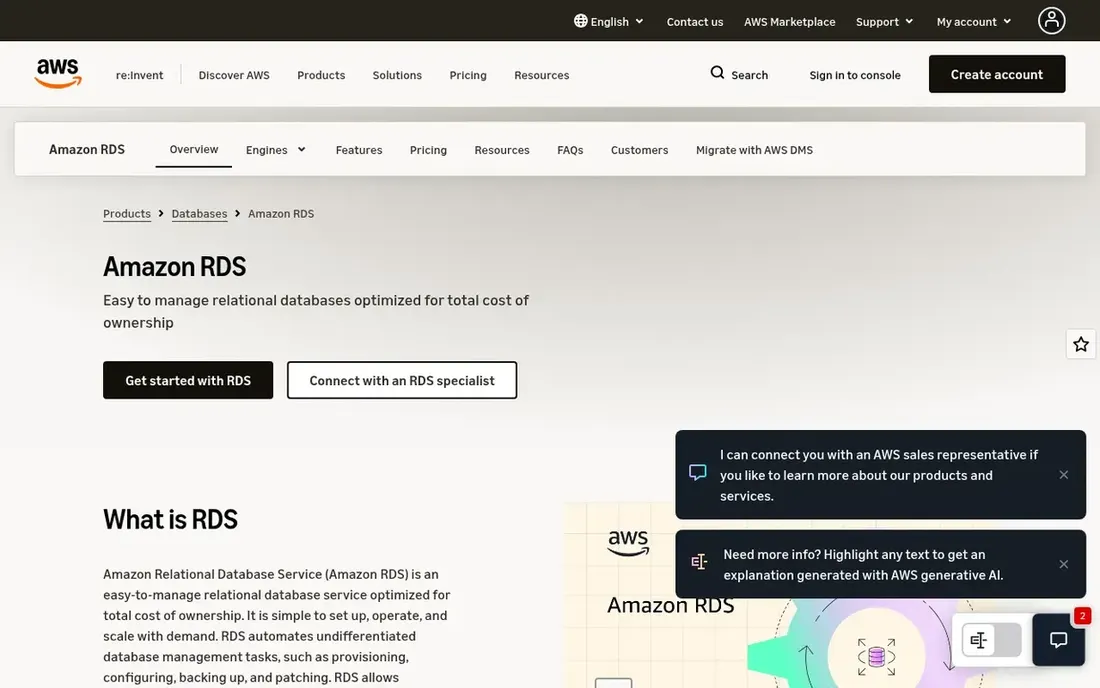
Think of Amazon RDS for managed relational databases on AWS. Since it supports several engines, behavior and tuning vary by engine.
Where it falls short: Engine differences add planning work.
The service assumes some familiarity with AWS networking, identity, and monitoring, so teams on other clouds may prefer a native choice. In practice, the vendor positions it as a way to run familiar relational databases without handling routine administration yourself. Check the vendor site for Amazon RDS pricing; none is listed in this comparison. A free plan is available with Amazon RDS.
- Supports multiple open source and commercial engines
- Completely managed relational service
- Deepest fit if you already use AWS
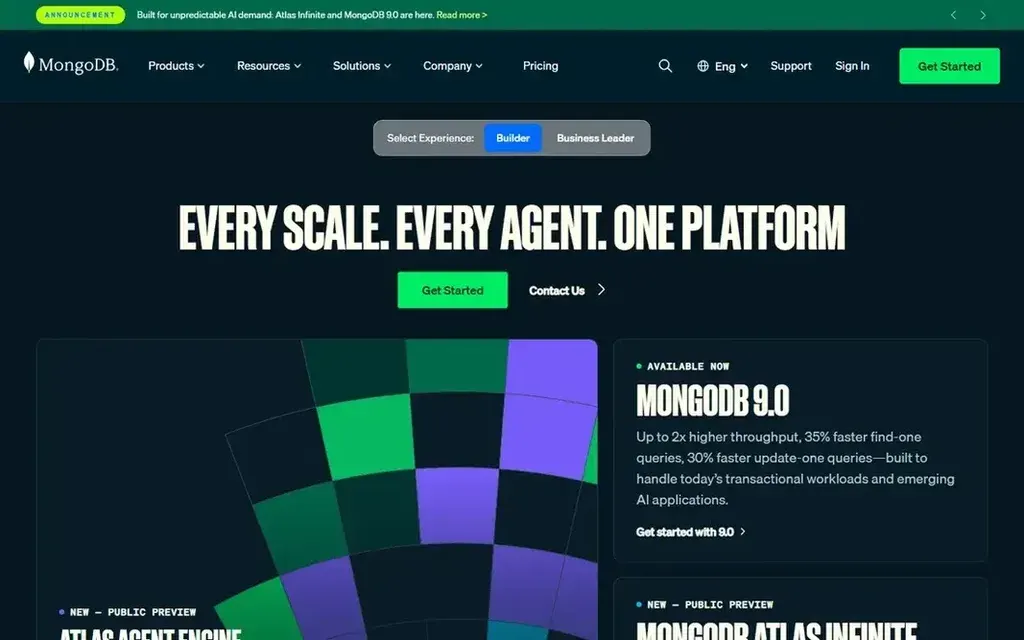
MongoDB Atlas makes the most sense for managed document database for flexible schemas. The document model is a genuine shift if your team is rooted in SQL and relational reporting.
In practice, MongoDB Atlas is the managed cloud database service built around MongoDB's document model. MongoDB Atlas shows no starting price here, so confirm the cost on the vendor site. Free options: Not stated.
What to check first: Requires comfort with document modeling.
- Document model cuts operational complexity
- Built-in resilience and scalability
- Relational workloads may fit elsewhere
Choose CockroachDB for distributed SQL with global resilience. CockroachDB is a cloud-native, distributed SQL database from Cockroach Labs, described as designed for extreme resilience, smooth horizontal scaling, and global deployment.
Distributed SQL introduces concepts around topology and replication that smaller teams may not need. More specifically, the vendor also develops Cockroach Continuum, an agentic database cloud. Pricing for CockroachDB is not stated here, so ask the vendor for current figures. Free options: Free trial.
What to check first: Distributed design layers on operational concepts.
- Distributed SQL database
- Built for extreme resilience
- Overkill for small single-region apps
Selection criteria
LinkVetted looked at what each vendor publishes: pricing, plan limits, feature coverage for online database management system and stated drawbacks. No hands-on testing is claimed. Where a vendor does not publish a price, the entry says quote. Where a price depends on seats or billing term, the entry says so. The ranking is editorial: typical fit first, then clear pricing, then free access. If your needs are unusual, read the profiles rather than relying on position.
What to check before you buy
- Get a written quote from Redis Cloud, Amazon RDS, MongoDB Atlas and CockroachDB; the list shows no starting price for them.
- Test the free plan from Amazon RDS against your real workload before relying on it.
- Use real work to test the free trial from CockroachDB, rather than a demo project.
- Read the limits listed for PlanetScale first: centred on hosting instead of broad data models.
- The entry price of MongoDB Atlas is only the starting point; model the full cost with seats and extras.
- Involve the people who will use CockroachDB daily; a short pilot beats a long feature checklist.
FAQ
Do these tools publish their prices?
Not all of them. Redis Cloud, Amazon RDS, MongoDB Atlas and CockroachDB publish no starting price, so expect a quote request for those. The rest, PlanetScale included, show a starting price, though seats and billing terms still change the final cost.
Can these systems replace a database I administer myself?
You still own schema design, query performance, and access control. Review each vendor's documentation to see exactly which responsibilities move to the provider.
How are the tools for online database management system ordered?
PlanetScale sits first and CockroachDB last because the order follows typical fit for online database management system, then price clarity and free access. It is a judgement call, so read each profile for fit and limits.
Which options for online database management system have a free plan?
Amazon RDS is the only tool in this list with a free plan. Free plans usually cap users, projects or features, so check the limits on the vendor page. One other tool offers a trial instead.
Can I try these tools before paying?
Often, yes. Amazon RDS has a free plan and CockroachDB offers a free trial. Use your own data and a real task during the test, and check what the free tier or trial limits before you rely on it.
Sources
- https://planetscale.com
- https://redis.io/cloud
- https://aws.amazon.com/rds
- https://www.mongodb.com/products/platform/atlas-database
- https://www.cockroachlabs.com