5 Museum Management Software Worth Shortlisting in 2026
Best Museum management software in 2026: 5 tools with starting prices, free plans and limits. Every pick gets a straight assessment. Budget notes included.
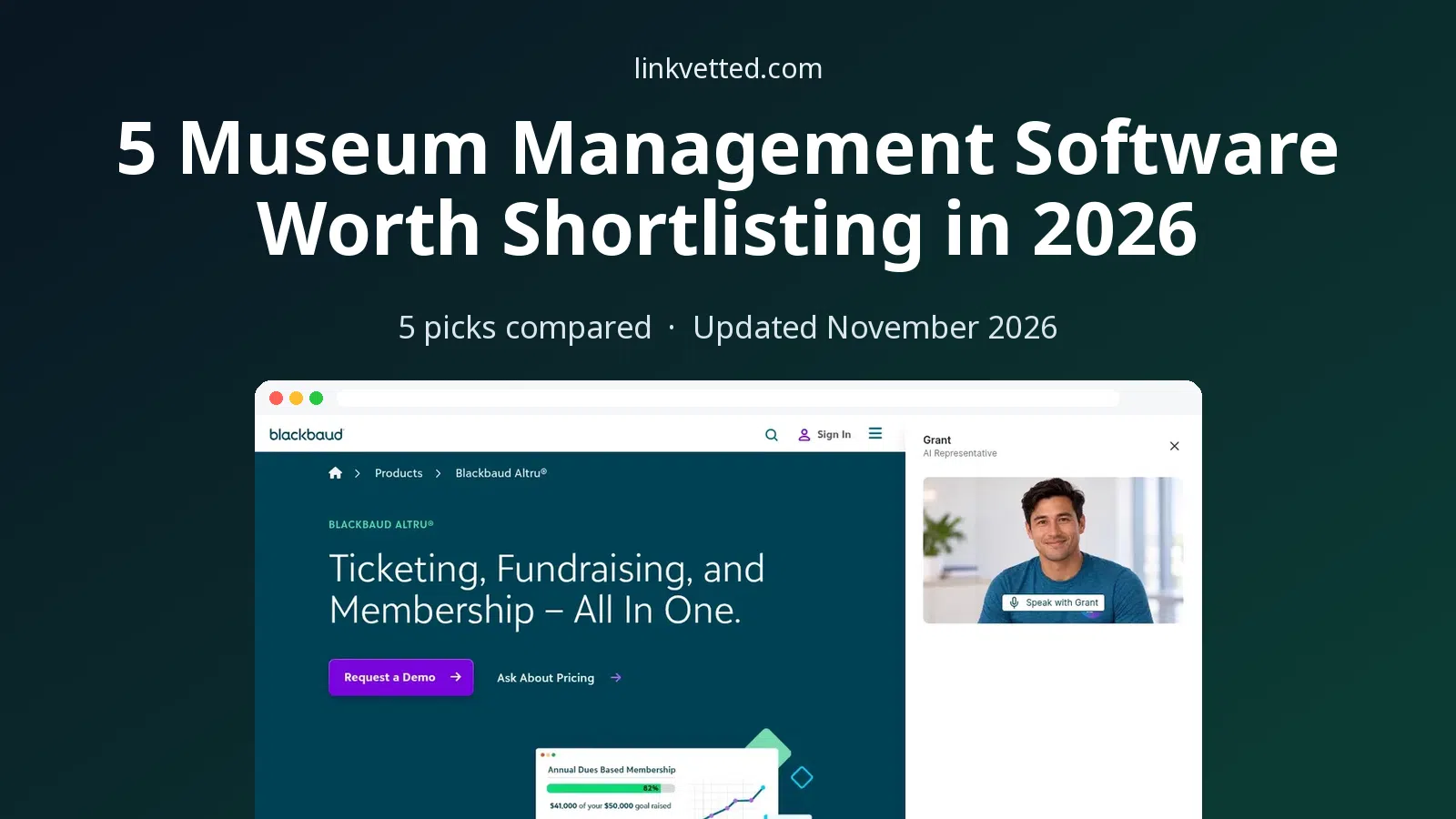
- Editor's choiceBlackbaud Altru
Admissions efficiency and donor insights
Starts atSee websiteVisit blackbaud.comFull review - Great alternativeRe:discovery
Collections management across museum types
Starts at$975Visit rediscov.comFull review - Also considerTessitura
Integrated CRM, ticketing, and fundraising
Starts atSee websiteVisit tessitura.comFull review
Direct answer
For admissions efficiency and donor insights, Blackbaud Altru is where this list starts. Listed starting prices: Re:discovery from $975. Look at Re:discovery for collections management across museum types, and at Tessitura for integrated CRM, ticketing, and fundraising. Details, prices and limits for the rest of the 5 tools are below.
TL;DR:
- Blackbaud Altru is the opening pick, best for admissions efficiency and donor insights.
- None of the 5 tools, from Blackbaud Altru to Gallery Systems TMS, has a free plan, so budget for a subscription or use a trial.
- The main caution on CollectiveAccess: needs technical setup and hosting.
- Gallery Systems TMS suits connected collections and digital asset management.
- For Blackbaud Altru, Tessitura, CollectiveAccess and Gallery Systems TMS, you have to request a quote because no starting price is shown.
Last checked November 2026. Prices and plan details were read from the vendors' own pages in November 2026; vendors change plans often, so confirm the current price on the vendor site before you buy.
Quick comparison
| Tool | Best for | Starts at | Free plan? | |
|---|---|---|---|---|
| Blackbaud Altru | Admissions efficiency and donor insights | See website | Not stated | Visit |
| Re:discovery | Collections management across museum types | $975 | Not stated | Visit |
| Tessitura | Integrated CRM, ticketing, and fundraising | See website | Not stated | Visit |
| CollectiveAccess | Open-source collections management | See website | Not stated | Visit |
| Gallery Systems TMS | Connected collections and digital asset management | See website | Not stated | Visit |
The 5 tools in detail
LinkVetted compared 5 tools for Museum management software. The goal is a practical shortlist: published prices, free plan facts, best-fit use cases and honest limits for every entry.
Blackbaud Altru
Best for: Admissions efficiency and donor insights

Blackbaud Altru is built with admissions efficiency and donor insights in mind. Altru is concentrated on ticketing and fundraising instead of deep collections cataloging.
Drawbacks to consider: May be more than small venues need.
Beyond that, institutions seeking a single system for both collections and visitor commerce may have to pair it with another tool. Blackbaud Altru shows no starting price here, so confirm the cost on the vendor site. As for free access: Not stated.
- Aims to boost admissions efficiency
- Links ticketing with fundraising
- Primarily oriented to arts and cultural organizations
Re:discovery
Best for: Collections management across museum types
Re:discovery is a good fit for collections management across museum types. Re:discovery is collections-focused and does not center on ticketing, membership, or fundraising. Museums with substantial visitor commerce will need extra systems.
What Re:discovery does well: archaeological collections.
It is a reasonable fit for institutions whose primary need is solid cataloging and collection documentation instead of integrated front-of-house operations. As for the details, the vendor positions itself as a leader in this category, nationally and globally. It is built for institutions that require to catalog, run, and offer access to collection records across varied material types and disciplinary standards. What you pay to start with Re:discovery: $975. Trial and free access: Not stated.
Downsides: Restricted visitor-facing features.
- Also used by archives and libraries
- Concentrated on collections management
- May need integration for ticketing
Tessitura
Best for: Integrated CRM, ticketing, and fundraising
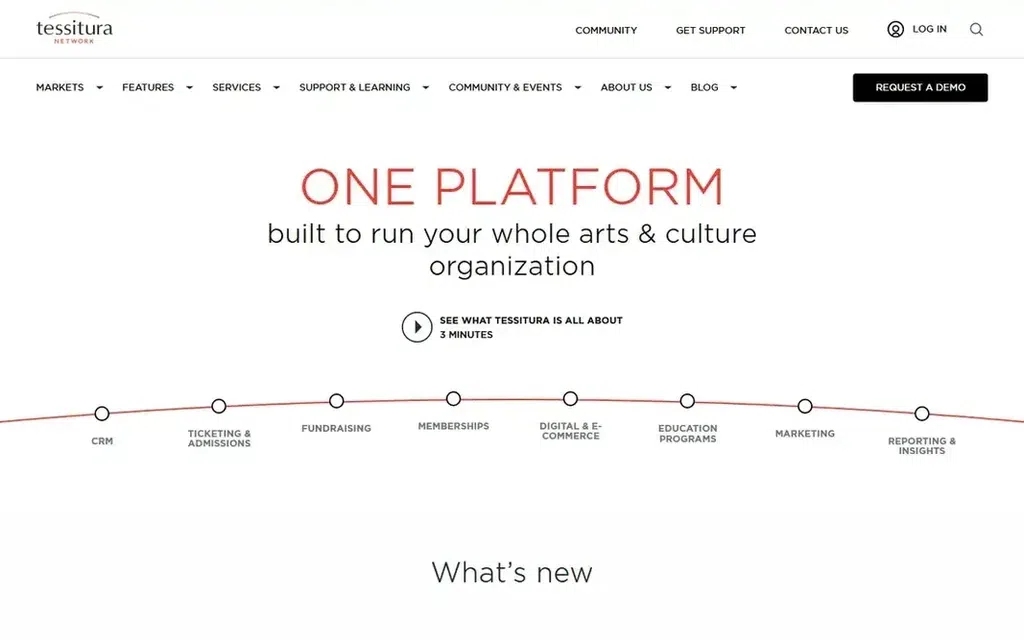
Pick Tessitura if this describes you: integrated CRM, ticketing, and fundraising. It is built for arts and culture organizations that want a single system to run patron relationships and revenue streams.
Downsides: Wide feature set may need training.
On top of that, museums with active membership programs and development teams may find the integrated approach cuts data silos and manual reconciliation across departments. This comparison lists no price for Tessitura; ask the vendor. Free options: Not stated.
- Covers front-of-house operations
- Supports membership and marketing workflows
- A good match for arts and culture organizations
CollectiveAccess
Best for: Open-source collections management
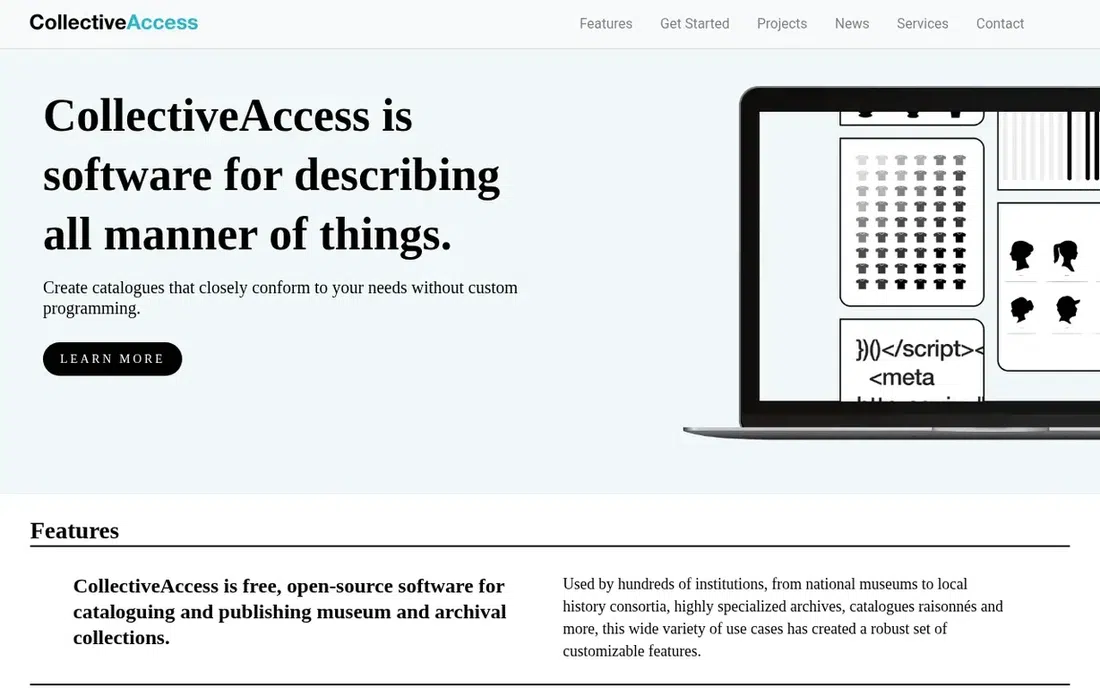
CollectiveAccess serves open-source collections management. It is noted for adaptability in cataloging and describing diverse collection types, and it can be adapted to local workflows.
Drawbacks to consider: Needs technical setup and hosting.
Pricing for CollectiveAccess is not stated here, so ask the vendor for current figures. Trial and free access: Not stated.
- Active community development
- Open-source and configurable
- Less out-of-the-box support than commercial tools
Gallery Systems TMS
Best for: Connected collections and digital asset management
Think of Gallery Systems TMS for connected collections and digital asset management. Gallery Systems TMS is museum and gallery management software for collections, workflows, data, and digital assets on a connected product.
What to check first: Collections-centric.
More specifically, TMS is oriented toward collections and digital asset management instead of ticketing or fundraising. Worth adding: museums with complicated collections and expanding digital asset libraries may find the connected approach useful for keeping documentation and media aligned. No starting price is listed for Gallery Systems TMS here; confirm pricing on the vendor site. On free options: Not stated.
- Deals with digital assets on one system
- Used by museums and galleries
- Implementation may need planning
How the list was put together
The comparison looks at four things: starting price, free access, how well the feature set matches Museum management software, and the main limit of each tool. Plan names, prices and limits change often. Treat the figures here as a starting point and verify them with the vendor. The order reflects how well each tool fits the most common buying scenario for Museum management software, then price clarity, then free plan access. It is a starting point, not a verdict.
What to check before you buy
- Get a written quote from Blackbaud Altru, Tessitura, CollectiveAccess and Gallery Systems TMS; the list shows no starting price for them.
- Before choosing Blackbaud Altru, weigh its main limit: primarily oriented to arts and cultural organizations.
- Check the support hours and onboarding help Tessitura offers; smaller vendors vary a lot here.
- A short pilot of CollectiveAccess with your real workflow tells you more than a feature table.
- Make sure Re:discovery lets you export your data in a format another tool can read.
FAQ
Can I try these options before paying?
Not by default. None of the tools, from Blackbaud Altru to Gallery Systems TMS, lists a free plan or a free trial here, so ask each vendor for a demo before committing.
Is Blackbaud Altru the right pick for everyone comparing Museum management software?
No single tool suits every team. Blackbaud Altru comes first because it fits admissions efficiency and donor insights, while Re:discovery suits collections management across museum types and Tessitura suits integrated CRM, ticketing, and fundraising. Match the tool to your own size, budget and workflow before deciding.
What should we ask vendors before choosing museum software?
Ask about data migration, training, integration choices, and how the system deals with your specific collection types or ticketing scenarios. Confirm hosting arrangements and continuing support.
How are the tools for Museum management software ordered?
The order follows typical fit for Museum management software, with Blackbaud Altru first and Gallery Systems TMS last, then price clarity and free access. It is editorial judgement, not a score, so another team could rank the tools differently.
Can open-source museum software work for a small institution?
Small museums without in-house IT may prefer commercial software with vendor support. Consider total staff time and hosting needs, not just the software itself.
What is the difference between collections management and ticketing software?
Collections management software concentrates on cataloging, documenting, and preserving objects, whereas ticketing software deals with admissions, memberships, and visitor transactions. Some systems combine both, but plenty of museums use separate systems connected by integrations.
Sources
- https://www.blackbaud.com/products/blackbaud-altru
- https://www.rediscov.com
- https://www.tessitura.com
- https://collectiveaccess.org
- https://www.gallerysystems.com