Best Media Database Software for 2026: Our 6 Vetted Picks
A practical guide to the best media database software in 2026 for link building and digital PR, compared from vendor documentation and public sources.
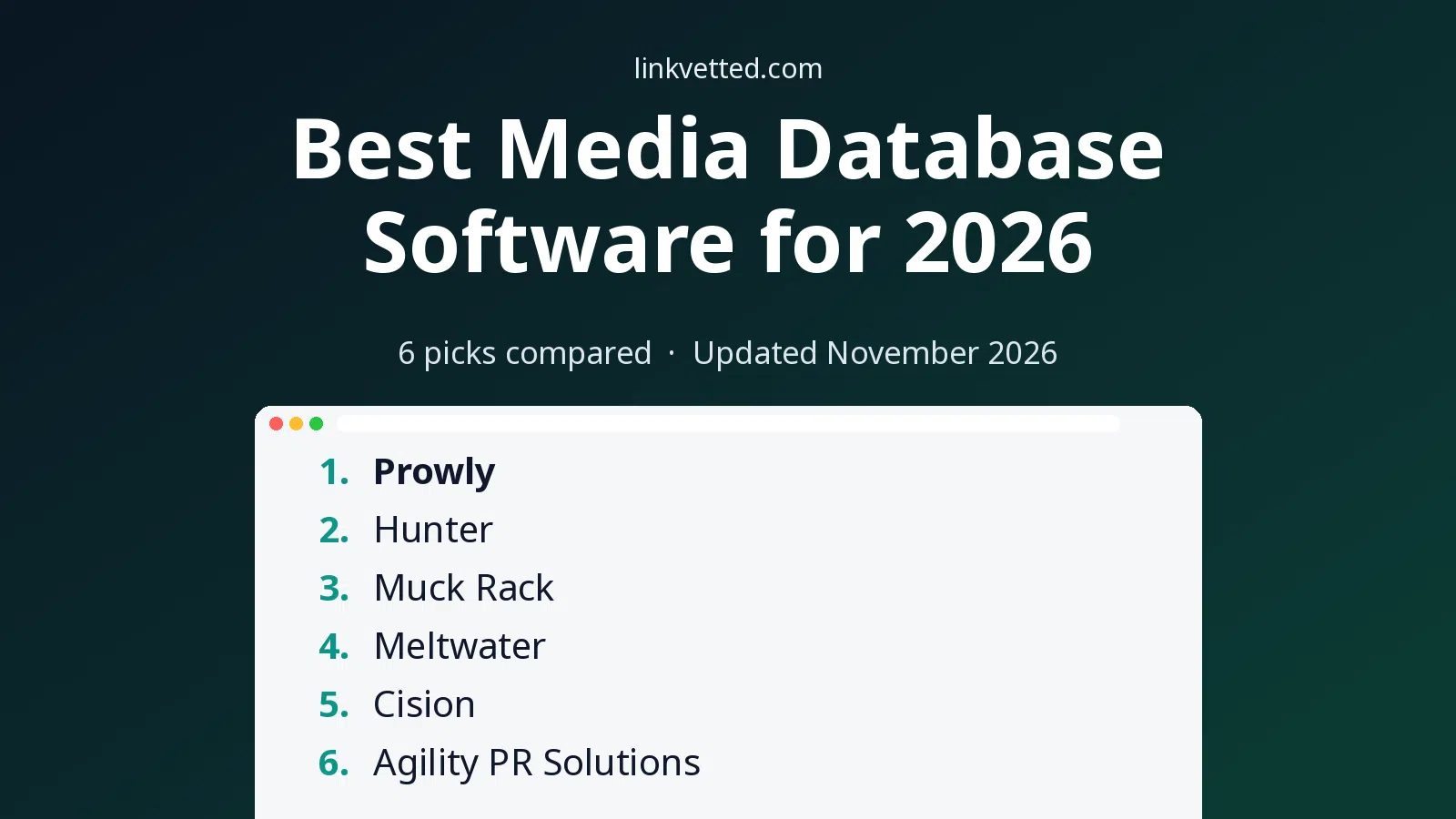
- Editor's choice
 Prowly
Digital PR teams wanting database plus newsroom
Starts atSee websiteVisit prowly.comFull review - Great alternative
 Hunter
Finding journalist email addresses
Starts atSee websiteVisit hunter.ioFull review - Also consider
 Muck Rack
PR teams managing media relations
Starts atSee websiteVisit muckrack.comFull review
Direct answer
My top pick is Prowly, because its media database is packaged with contact management, pitch tracking and newsroom features that suit digital PR outreach. For teams that want a large journalist contact database with a simple search workflow, Hunter is a practical second option. If you mainly need a CRM to organise your own media contacts, Muck Rack is worth a look for larger PR teams.
TL;DR:
- Media database software helps you find journalists and outlets, store contact records and track outreach in one place.
- The right choice depends on whether you need a large built-in contact database or a tool to manage contacts you already have.
- Most tools combine media lists with pitch tracking, so check how the two parts connect before you commit.
- Contact data quality and coverage for your target regions matter more than feature count.
- Export options and CRM integrations decide how easily the tool fits your existing outreach workflow.
Last checked November 2026. Plan prices are not quoted in this guide because they change often; see each vendor's own pricing page for current figures before you buy.
Quick comparison
| Tool | Best for | Starts at | Free plan? | |
|---|---|---|---|---|
| Prowly | Digital PR teams wanting database plus newsroom | See website | Free trial | Visit |
| Hunter | Finding journalist email addresses | See website | Free plan | Visit |
| Muck Rack | PR teams managing media relations | See website | No free plan | Visit |
 Meltwater | Media monitoring plus contact data | See website | Not stated | Visit |
 Cision | Large communications departments | See website | Not stated | Visit |
 Agility PR Solutions | Media monitoring and contact lists | See website | Not stated | Visit |
The best media database software compared
I compared these tools from vendor documentation and public sources, not from hands-on tests. I looked at what each product says it does, how it handles media contacts and outreach, and where the limits sit. That way you can match a tool to your workflow instead of picking on feature lists alone.
Prowly is a PR software platform that combines a media database with contact management, pitching and a newsroom feature. It fits small and mid-sized PR and SEO teams that want to find journalists, build media lists and send pitches without stitching several tools together. The database is the starting point, but the workflow around it is the main draw.
For media database work, Prowly lets you search for journalists, save them to lists and keep notes on each contact. You can then send a pitch and track how it performs, so the database is connected to the outreach rather than sitting apart from it. That connection is useful when you run repeat campaigns and need to remember who you contacted and when.
The limit is that the full workflow sits behind a paid plan, and a solo link builder may not need the newsroom side. If you only want email addresses, a simpler contact finder may be enough. Teams that run regular digital PR campaigns will get more from it.
- Media database combined with pitch tracking
- built-in newsroom and pitching tools
- contact management in one place
- Full feature set needs a paid plan
- smaller teams may find parts unused
Hunter is an email finding and verification tool that many outreach teams use to locate journalist and editor addresses. It is not a media database in the traditional PR sense, but it fills a similar role when your main need is a reliable email address for a named writer or a publication domain. It fits link builders and small agencies that build their own lists.
In a media database workflow, Hunter helps you go from an outlet or a byline to a contact record. You can search by domain, find likely addresses and verify them before adding them to your list. Many teams pair it with a spreadsheet or a CRM, so the database is something they own rather than rent from a PR platform.
The limit is that Hunter does not manage pitches, track coverage or store a full media profile. It is a contact-finding layer, not a media relations platform. If you need a complete PR workflow, look at the other tools here. If you mainly need addresses, it is a practical choice.
- Email finding and verification in one tool
- simple search by domain or name
- works well for building contact lists
- Not a full PR workflow
- contact data needs checking before use
Muck Rack is a PR platform built around journalist profiles, media lists and coverage tracking. It suits communications and PR teams that need to find reporters, manage relationships and monitor what gets published. The database is central to the product, and the surrounding features support ongoing media relations rather than one-off outreach.
For media database work, Muck Rack lets you search journalist profiles, build lists and connect contacts to pitches and coverage. That makes it easier to keep a record of who covers which beat and how your outreach landed. Teams that run ongoing campaigns can keep their contact history in one place instead of scattered across inboxes.
The main limit is fit. Muck Rack is designed for PR teams with a real media relations workload, and the pricing is not public, so smaller SEO teams may find it more than they need. Solo link builders should compare it against simpler contact tools before committing.
- Large journalist profiles and media lists
- coverage monitoring alongside contacts
- collaboration features for teams
- Aimed at larger PR teams
- pricing is not public
Meltwater is a media intelligence platform that combines media monitoring, social listening and journalist contact data. It fits organisations that want to track coverage and find contacts in the same system. The media database is one part of a wider platform, so it suits teams that already need monitoring and reporting.
For media database work, Meltwater provides journalist and outlet data you can use to build lists, and it ties that to coverage tracking. If a pitch leads to a mention, you can see it in the same platform. That link between outreach and monitoring is useful for teams that report on results regularly.
The limit is weight. Meltwater is a broad platform, and teams that only need a contact list may find it more than necessary. Pricing is not public, so you need to talk to sales to judge fit. Small agencies should check whether the monitoring side is something they will actually use.
- Media monitoring and social listening alongside contacts
- broad coverage across regions
- reporting features
- Broad platform that can feel heavy
- pricing is not public
Cision is a communications and media intelligence company with a long history in media contact data, monitoring and analytics. It fits large communications departments and agencies that need a broad suite and can handle an enterprise setup. The media database is one component of a wider platform.
For media database work, Cision provides journalist and outlet records that teams use to build lists and plan outreach. Because it also covers monitoring and analytics, teams can connect contacts to coverage and reporting. That makes it a fit for organisations that want one vendor across several communications functions.
The limit is scale. Cision is built for enterprise workflows, and pricing is not public, so small SEO agencies will usually find it too heavy and too costly for their needs. If you run a small outreach team, the simpler tools on this list are a better starting point.
- Long-established media contact data
- monitoring and analytics in one suite
- suits enterprise workflows
- Enterprise setup and cost
- not aimed at small teams
Agility PR Solutions is a media monitoring and PR software provider that includes media contact data and outreach tools. It fits mid-sized PR and communications teams that want monitoring and contact lists from one vendor. The platform is less widely known than the largest PR suites, which can make it easier to get attention during a sales conversation.
For media database work, Agility provides journalist and outlet records you can use to build lists, and it connects those lists to monitoring and coverage measurement. Teams that need to show what coverage came from a campaign can keep the contact and the result in one place. That is useful for reporting to clients or managers.
The limit is familiarity and transparency. Pricing is not public, and the platform is less known outside PR circles, so you need to check coverage for your target regions and beats. Small SEO teams may find the monitoring side more than they need.
- Media database alongside monitoring
- coverage measurement features
- suits mid-sized PR teams
- Less known outside PR circles
- pricing is not public
How I chose
I chose these tools by reading vendor documentation and public sources, then comparing how each one handles media contacts, lists and outreach. I did not run hands-on tests, and I am not claiming lab results or benchmark scores. Instead, I looked at what each vendor says the product does, which workflows it supports and where the limits sit. That gives you a fair basis for a shortlist, not a lab report.
The second part of the method was fit. A large PR suite and a simple email finder can both be called media database software, but they serve different jobs. I weighed whether a tool is built for finding contacts, managing relationships or monitoring coverage, and I noted when pricing is not public. I also flagged when a tool is aimed at larger teams, because that matters more than a feature checklist for a small agency.
What to check before you buy
- Confirm the database covers the regions, languages and beats you actually pitch, not just the largest markets.
- Check whether you can export contacts and lists, and in what format, so you are not locked in.
- Ask how contact records are updated and whether you can flag or correct bad records.
- Look at how the tool connects contacts to pitches and coverage, since a database alone does little.
- Check integrations with your CRM, email tool or spreadsheet workflow before you commit.
- Ask for a trial or demo that uses your own target outlets, not a generic sample list.
FAQ
What is media database software?
Media database software is a tool that stores journalist and outlet contact records and helps you search, organise and use them for outreach. Many products also include media lists, pitch tracking and coverage monitoring. The database is the core, but the surrounding workflow is what makes it useful for link building and digital PR.
Do I need a paid media database if I build links?
Not always. If you pitch a small number of outlets and keep your own spreadsheet, a contact finder plus a CRM may be enough. A paid media database makes more sense when you run regular campaigns, need coverage across many regions or want contact history in one place.
Can I use these tools for digital PR and link building?
Yes, many teams use media databases to find journalists and editors for digital PR pitches, which can lead to coverage and links. The database helps you find the right contact and keep a record of outreach. It does not guarantee coverage, and results depend on your pitch and story.
How do I judge contact data quality?
Ask the vendor how records are sourced and updated, and test a sample against outlets you know. Check whether you can flag bad records and whether the tool shows when a contact was last updated. Coverage for your target regions matters more than the total number of contacts.
Is pricing public for these tools?
For several of these tools, pricing is not public and you need to contact sales. Prowly and Hunter publish plan information on their websites, while others quote on request. Always confirm what is included in a plan, such as database access, seats and export limits, before you decide.
Sources
- https://prowly.com
- https://hunter.io
- https://muckrack.com
- https://www.meltwater.com
- https://www.cision.com
- https://www.agilitypr.com
Related guides
- Best Cloud Services for Sharing Large Media Files in 2026: 10 Services Compared
- Best Media Relations Software Databases for 2026: Our 5 Vetted Picks
- 5 Best Business Database Software for ERP for 2026, Vetted and Compared
- 6 Best Church Database Software for Volunteer Coordination for 2026, Vetted and Compared