Best Low-Code Platforms for Enterprise Compliance Teams (2026): 5 Picks Checked on Vendor Pages
Best Low-Code platforms for enterprise compliance teams in 2026: 5 contenders with entry costs and free tiers. Each pick lists its main limit. Decide faster.
- Editor's choiceQuickbase
Quick process improvement for complicated work
Starts at$35 per user per monthVisit quickbase.comFull review - Great alternative
 Appian
Orchestrating regulated, process-heavy workflows
Starts atSee websiteVisit appian.comFull review - Also consider
 OutSystems
Modernizing regulated custom applications
Starts atSee websiteVisit outsystems.comFull review
Direct answer
For fast process improvement for complicated work, Quickbase is where this list starts. Listed starting prices: Quickbase from $35 per user per month. For a different need, Appian covers orchestrating regulated, process-heavy workflows and OutSystems covers Modernizing regulated custom applications. All 5 tools are compared below on price, free plan and limits.
TL;DR:
- Number one here is Quickbase, a fit for quick process improvement for complicated work.
- A fair warning about Microsoft Power Apps: governance relies on tenant configuration.
- The lowest published monthly entry price here is $35 per user per month, from Quickbase.
- Microsoft Power Apps is the only tool of the 5 with a free plan.
Last checked November 2026. Prices and plan details were read from the vendors' own pages in November 2026; vendors change plans often, so confirm the current price on the vendor site before you buy.
Quick comparison
| Tool | Best for | Starts at | Free plan? | |
|---|---|---|---|---|
| Quickbase | Quick process improvement for complicated work | $35 per user per month | Free trial | Visit |
| Appian | Orchestrating regulated, process-heavy workflows | See website | Not stated | Visit |
| OutSystems | Modernizing regulated custom applications | See website | Not stated | Visit |
 Microsoft Power Apps | Teams standardized on Microsoft security and data | See website | Yes | Visit |
 Pega Platform | Enterprise workflow automation and legacy modernization | See website | Not stated | Visit |
Low-Code Platforms for Enterprise Compliance Teams compared in detail
LinkVetted compared 5 Low-Code platforms for enterprise compliance teams. The goal is a practical shortlist: published prices, free plan facts, best-fit use cases and honest limits for every entry.
Quickbase
Best for: Quick process improvement for complicated work
Quickbase makes the most sense for quick process improvement for complicated work. Quickbase is presented as a dynamic work and complicated project management system that lets teams rapidly boost any process. Quickbase is less oriented toward large-scale process orchestration or deep integration estates than some enterprise products.
For compliance teams, that translates to quick builds for tracking, approvals and project oversight without heavy engineering. In daily use, if you need broad cross-system orchestration or legacy modernization, a broader product is likely more appropriate. On top of that, governance depends on administrative discipline as usage grows. Quickbase pricing: $35 per user per month. Trial and free access: Free trial.
Highlights: Supports complicated project management.
Downsides: Governance relies on admin discipline.
- Fast process improvement focus
- Accessible for business teams
- Less suited to deep enterprise orchestration
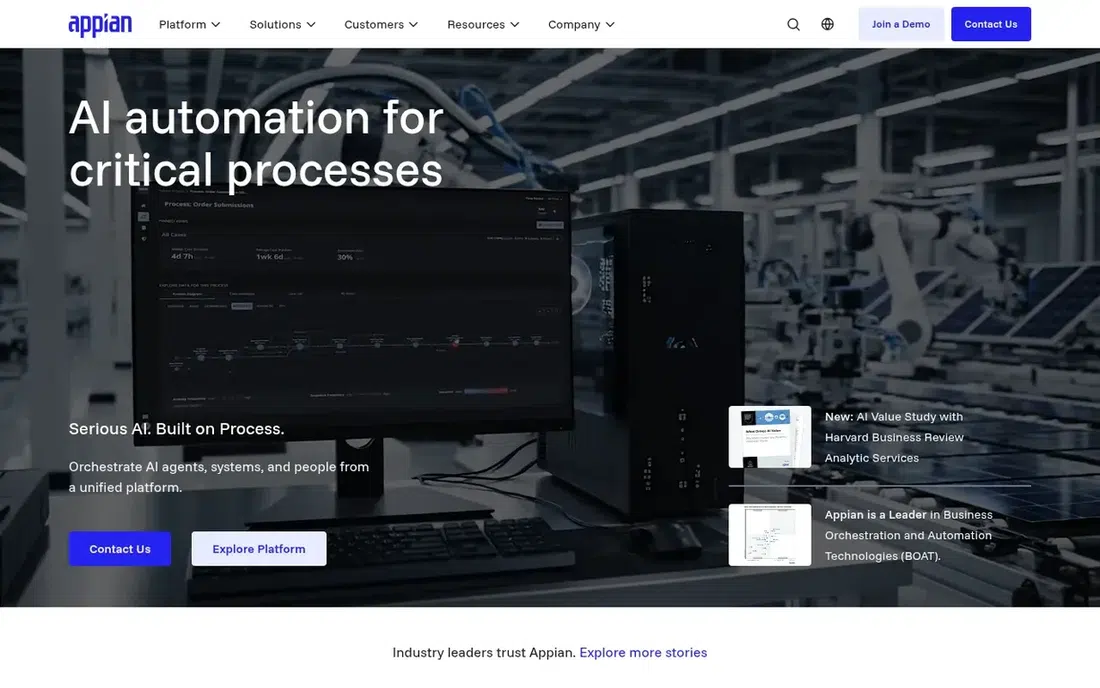
Appian was built for orchestrating regulated, process-heavy workflows. Appian positions itself around AI-powered process orchestration, coordinating AI agents, systems and people on an enterprise system without replacing your existing systems. That makes it a reasonable fit for compliance teams managing approval chains, case handling and controls that span several back-end systems.
In practice, straightforward departmental apps can be built faster elsewhere. In practice, consider other choices if your priority is minimal administration instead of orchestration depth. Pricing for Appian is not stated here, so ask the vendor for current figures. On free options: Not stated.
Limits to weigh: Platform-specific design skills matter.
- Works without replacing existing systems
- Process orchestration across systems and people
- Can be heavy for straightforward apps
Where OutSystems fits: Modernizing regulated custom applications. OutSystems presents itself as a way to build apps and AI agents with confidence, helping enterprises modernize legacy systems and run custom applications that meet customer and regulator demands.
From a buyer's view, for compliance teams, that framing points to controlled delivery of custom applications under regulatory pressure. For everyday use, if your compliance needs are largely forms and light tracking, a more straightforward low-code choice may deliver quicker with less overhead. Check the vendor site for OutSystems pricing; none is listed in this comparison. Free plan details: Not stated.
Downsides: Needs developer involvement.
- Emphasis on meeting regulatory demands
- Legacy modernization focus
- Product lock-in considerations
Microsoft Power Apps
Best for: Teams standardized on Microsoft security and data
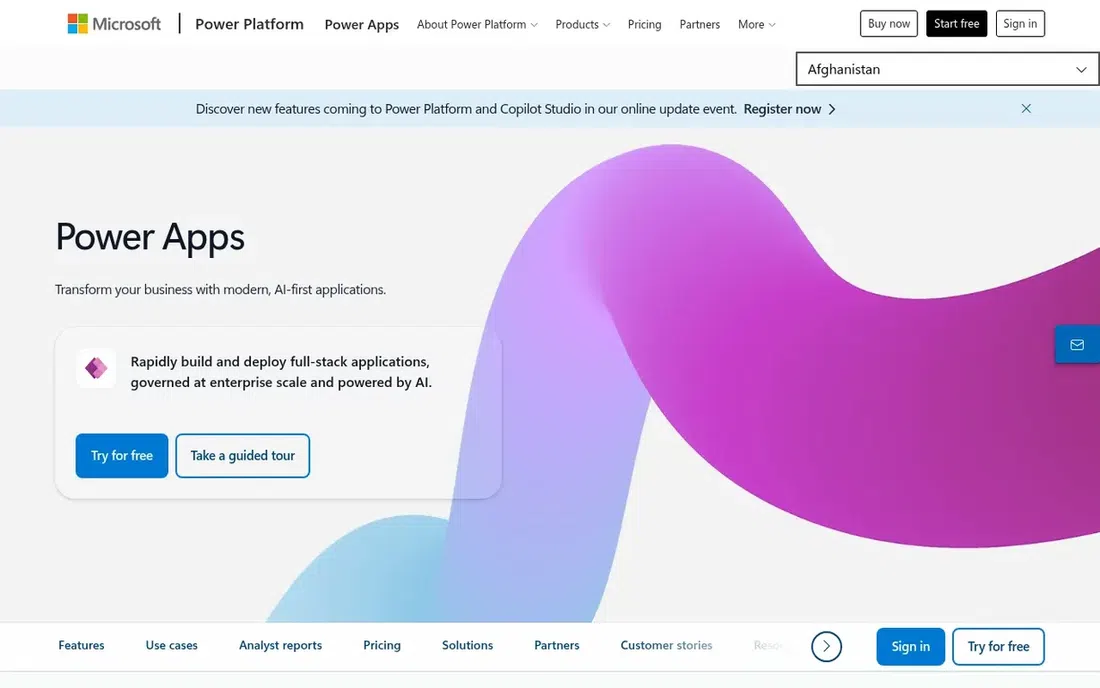
Where Microsoft Power Apps fits: teams standardized on Microsoft security and data. Choose something else when you need deep, purpose-built process orchestration or a platform-neutral governance layer.
Drawbacks to consider: Governance relies on tenant configuration.
Microsoft Power Apps is a low-code app builder for creating custom business apps that simplify processes and boost productivity across an organization. In daily use, for compliance teams, its primary draw is alignment with Microsoft identity, data and security tooling, which can ease access control and record keeping. Check the vendor site for Microsoft Power Apps pricing; none is listed in this comparison. Microsoft Power Apps has a free plan.
- Deep fit with Microsoft identity and data services
- Wide connector ecosystem
- Complicated needs may need pro developer work
Pega Platform makes the most sense for enterprise workflow automation and legacy modernization. Pega Platform describes itself as an AI-powered product for enterprise transformation, used to automate workflows, personalize customer experiences and modernize legacy systems. Its breadth brings configuration overhead, and smaller compliance functions may find the system demanding to administer.
Specialized skills are typically needed to get value rapidly. If you want quick, light process apps with minimal setup, a more straightforward tool is likely a better fit. This comparison lists no price for Pega Platform; ask the vendor. Free options: Not stated.
The main drawbacks: Configuration-heavy for small teams.
- Workflow automation at enterprise scale
- Personalized customer process support
- Steep learning curve
Our selection method
Before you commit
- Get a written quote from Appian, OutSystems, Microsoft Power Apps and Pega Platform; the list shows no starting price for them.
- Test the free plan from Microsoft Power Apps against your real workload before relying on it.
- Use real work to test the free trial from Quickbase, rather than a demo project.
- Before choosing Quickbase, weigh its main limit: less suited to deep enterprise orchestration.
- Check whether the features you need in Pega Platform sit on the entry plan or only on higher tiers.
- Pick one real project and run it in Quickbase first; a small pilot shows fit faster than a checklist.
FAQ
What should we check before choosing a product?
Focus on audit trail depth, access controls, integration with systems of record, data residency and how environments are promoted. Confirm these details straight on vendor sites, since capabilities rely on configuration and edition.
Can compliance teams build apps without developers?
Multiple systems, including Microsoft Power Apps and Quickbase, are built for business-led building. That said, governance, integration and complicated logic usually still benefit from administrative or developer support.
Which low-code product is a good match for audit trails?
Quickbase is the pick this page puts first, mainly for quick process improvement for complicated work. If your situation differs, Appian suits orchestrating regulated, process-heavy workflows, and OutSystems suits Modernizing regulated custom applications. Compare price and limits before you decide.
How are the tools for Low-Code platforms for enterprise compliance teams ordered?
The order follows typical fit for Low-Code platforms for enterprise compliance teams, with Quickbase first and Pega Platform last, then price clarity and free access. It is editorial judgement, not a score, so another team could rank the tools differently.
Can I try these tools before paying?
Often, yes. Microsoft Power Apps has a free plan and Quickbase offers a free trial. Use your own data and a real task during the test, and check what the free tier or trial limits before you rely on it.
Which options for Low-Code platforms for enterprise compliance teams have a free plan?
Microsoft Power Apps is the only tool in this list with a free plan. Free plans usually cap users, projects or features, so check the limits on the vendor page. One other tool offers a trial instead.
Sources
- https://www.quickbase.com
- https://appian.com
- https://www.outsystems.com
- https://powerapps.microsoft.com
- https://www.pega.com